
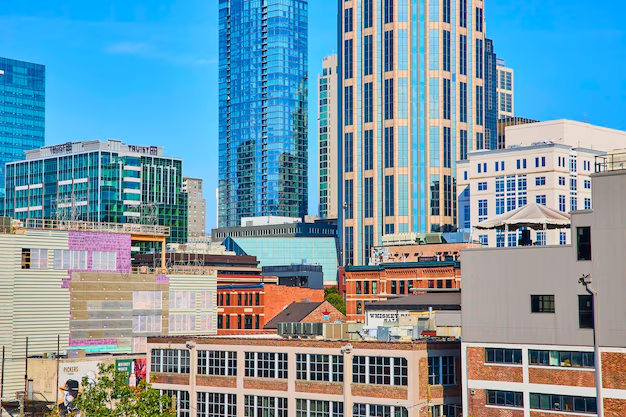
Finding an Apartment in Atlanta: Neighborhoods, Prices, and Smart Local Tips
Looking for apartments in Atlanta, Georgia can feel exciting and overwhelming at the same time. The city is big, fast-growing, and incredibly diverse, which means you have a lot of options—but also a lot of decisions to make.
This guide walks you through what you need to know about Atlanta apartments: neighborhoods, rent expectations, commuting, utilities, local tenant rules, and where to get help if you’re renting in the city.
How the Atlanta Rental Market Works
Atlanta’s apartment scene is shaped by three main factors:
- Sprawl and traffic: Many people balance rent price against commute time.
- Rapid growth: New luxury buildings keep popping up, especially near MARTA and the BeltLine.
- Neighborhood variety: You can find everything from high-rise luxury to older duplexes and garden-style complexes.
In general:
- Areas inside the Perimeter (ITP) (inside I‑285) tend to have higher rents but better access to jobs, restaurants, and transit.
- Areas outside the Perimeter (OTP) can offer more space and lower rents but usually longer drives.
If you’re moving to Atlanta or shifting neighborhoods, it helps to start with where you’ll spend most of your time—work, school, or frequently visited areas—then choose an apartment that fits both your lifestyle and your commute.
Key Atlanta Neighborhoods for Apartments
1. Midtown
Best for: Walkability, nightlife, arts, young professionals
Midtown is one of Atlanta’s most apartment-heavy neighborhoods. You’ll see plenty of high-rises and mid-rises with amenities like pools, gyms, and concierge service.
What to expect:
- Pros:
- Walkable to restaurants, bars, and Piedmont Park
- Close to Georgia Tech, the Arts Center, and major offices
- Multiple MARTA stations (Midtown, Arts Center, North Avenue)
- Cons:
- Higher rent than many other areas
- Paid parking is common; some buildings charge extra for spaces
- Street noise and nightlife might be an issue in some spots
Midtown is a strong option if you want a car-light lifestyle and don’t mind paying more for location and convenience.
2. Buckhead
Best for: Upscale living, shopping, high-rise apartments
Buckhead is known for luxury apartments, especially around Peachtree Road and near Lenox Square and Phipps Plaza.
What to expect:
- Pros:
- Many newer, amenity-rich apartment buildings
- Access to high-end retail and dining
- Two MARTA stations (Buckhead and Lenox) in the core area
- Cons:
- Rents can be among the highest in the city
- Peachtree Road traffic is heavy, especially rush hour
- Walkability varies street by street
If you work in Buckhead’s office towers or want a more polished, high-rise feel, this area is worth exploring.
3. Downtown & Surrounding Areas
Best for: Proximity to government offices, students, and event venues
Downtown and nearby neighborhoods like Castleberry Hill and parts of Old Fourth Ward offer a mix of older lofts, mid-rise buildings, and newer developments.
What to expect:
- Pros:
- Close to Georgia State University, government offices, and major attractions
- Some historic loft-style options in older buildings
- Access to multiple MARTA stations and bus routes
- Cons:
- Street activity can be busy, especially on event days
- Parking can be limited or paid
- Noise from events and traffic in some areas
Downtown can work well if your life is centered around government, university, or hospitality jobs and you want quick access to transit.
4. Inman Park, Old Fourth Ward, and the BeltLine Eastside
Best for: Young professionals, walkability, trendy spots
Areas like Inman Park, Old Fourth Ward (O4W), and Poncey-Highland have become very popular with renters who want to be near the Atlanta BeltLine Eastside Trail, cafes, and nightlife.
What to expect:
- Pros:
- Easy access to the BeltLine for walking, biking, and dining
- Mix of newer apartment communities and older smaller buildings
- A strong neighborhood feel with local shops
- Cons:
- Rents can be high due to demand
- Parking may be limited; some complexes charge extra
- Streets can be busy on weekends and evenings
If you like a social, walkable environment with lots of local character, this cluster of neighborhoods is a strong choice.
5. Virginia-Highland, Morningside, and Surrounding Intown Areas
Best for: Quieter, residential intown living
Neighborhoods like Virginia-Highland, Morningside, and Druid Hills are mostly residential but still offer smaller apartment buildings, duplexes, and basement units.
What to expect:
- Pros:
- Tree-lined streets and a more relaxed feel
- Close to parks and local restaurants
- Easy drive or bike ride to Midtown and Emory University (for some areas)
- Cons:
- Fewer large apartment complexes and amenities
- Older buildings may have dated interiors or fewer upgrades
- Limited direct MARTA rail access in some spots
These areas work well if you want to feel like you’re in a neighborhood, not a business district.
6. West Midtown, Upper Westside, and Nearby Areas
Best for: Industrial-chic, new developments, breweries, and lofts
The West Midtown/Upper Westside corridor has transformed from industrial to a mix of lofts and new apartments.
What to expect:
- Pros:
- Newer complexes, some with a modern, industrial style
- Growing restaurant, retail, and brewery scene
- Easy access to major roads (I‑75, Northside Drive)
- Cons:
- Car-dependent in many parts
- Construction can be frequent and noisy
- Sidewalks and walkability vary widely by street
This area may appeal if you like modern buildings and don’t mind driving more.
7. East Atlanta, Kirkwood, Edgewood, and South Inman Area
Best for: Local feel, older units, potential value relative to core intown
Areas like East Atlanta Village (EAV), Kirkwood, Edgewood, and nearby neighborhoods include small apartment buildings, duplexes, and single-family rentals.
What to expect:
- Pros:
- Some options may be more affordable than Midtown/Buckhead
- Strong local culture and neighborhood identity
- Restaurants, bars, and community events
- Cons:
- Fewer large, full-service apartment complexes
- Street parking is common; dedicated spots may be limited
- Commute times can vary depending on where you work
These neighborhoods fit renters who want something less corporate and more neighborhood-oriented.
8. OTP (Outside the Perimeter): Sandy Springs, Dunwoody, Decatur, and More
Best for: More space, sometimes lower rent per square foot
Popular OTP areas for apartments include:
- Sandy Springs and Dunwoody (especially near Perimeter Center)
- Decatur (City of Decatur and unincorporated Decatur area)
- Smyrna, Vinings, Chamblee, and Doraville
What to expect:
- Pros:
- Larger complexes and more parking
- Often more square footage for the price
- Good access to highways; some areas have MARTA rail stations
- Cons:
- Longer commutes to central Atlanta in rush hour
- Less walkable than core intown neighborhoods
- You may rely more heavily on a car
If you prefer space over walkability and want a quieter feel, OTP apartments are worth a closer look.
Typical Apartment Types in Atlanta
You’ll see a few common apartment styles around the city:
- High-rise (often in Midtown, Buckhead, Downtown)
- Many floors, elevators, extensive amenities, structured parking.
- Mid-rise (common along the BeltLine and major corridors)
- 4–8 stories, often with courtyards, pools, and shared amenities.
- Garden-style (common OTP and older complexes ITP)
- 2–3-story buildings, more spread out, often with surface parking and lawns.
- Loft & warehouse conversions (Castleberry Hill, West Midtown, Old Fourth Ward)
- Exposed brick, tall ceilings, open layouts, often in older buildings.
- Small-scale/multiplex (duplexes, triplexes, fourplexes)
- More residential, often integrated into single-family neighborhoods.
Knowing what style you prefer can help you quickly filter your options.
What Influences Rent Prices in Atlanta
Atlanta rents vary widely based on:
- Neighborhood and proximity to core job centers
- Age and condition of the building
- Amenities (pools, rooftops, gyms, coworking spaces)
- Parking (included vs. paid, garage vs. surface)
- Transit access (near MARTA often costs more)
- In-unit features (washer/dryer, hardwood floors, balconies)
When comparing apartments, pay attention not just to the base rent, but the full monthly cost.
Cost Breakdown: Common Monthly Expenses to Expect
Here’s a simple overview of recurring costs you might see with Atlanta apartments:
| Cost Category | What to Watch For in Atlanta |
|---|---|
| Base Rent | Varies by neighborhood and building age; luxury intown costs more. |
| Parking | Often extra in Midtown/Buckhead/Downtown; surface parking more common OTP. |
| Utilities | Electricity is common separate; sometimes water/trash are flat fees. |
| Internet/Cable | Not always included; some buildings bundle bulk internet. |
| Renters Insurance | Often required by property management. |
| Pet Fees | Pet rent (monthly) + one-time nonrefundable fee are common. |
| Amenities/“Admin” Fees | Admin, amenity, or tech fees may be added monthly or upfront. |
When you tour, ask for a written breakdown of all recurring and one-time fees so there are no surprises.
Lease Terms and Application Process in Atlanta
Most Atlanta apartments follow similar application and lease practices.
Common Requirements
Many properties expect:
- Application fee (per adult)
- Background and credit check
- Proof of income, such as pay stubs or offer letters
- Security deposit or alternative deposit program
- Renters insurance proof before move-in
Some buildings also:
- Require you to earn a certain income multiple of the rent (for example, 2.5–3 times monthly rent).
- Limit the number of occupants per bedroom.
Typical Lease Lengths
You’ll commonly see:
- 12-month leases as the standard
- Shorter leases (3–11 months) at a premium
- Renewal offers that may raise rent
If you’re unsure how long you’ll stay in Atlanta, ask in advance about:
- Early termination fees
- Subletting or lease assignment rules (many large complexes do not allow sublets)
Commuting and Transportation: Matching Your Apartment to Your Route
Atlanta traffic is a real factor in apartment decisions. When choosing where to live, consider:
MARTA Access
Living near a MARTA rail station can significantly reduce your driving time. Popular MARTA-adjacent rental areas include:
- Midtown (Midtown, Arts Center, North Avenue stations)
- Buckhead (Buckhead, Lenox stations)
- Sandy Springs/Dunwoody (Sandy Springs, Dunwoody stations)
- Downtown (Peachtree Center, Five Points, Georgia State stations)
- Chamblee and Doraville (for OTP commuters)
If you’ll work downtown or in major business districts, living within walking distance or a short bus ride of a station can make day-to-day life easier.
Highways and Major Roads
If you drive, focus on your daily route:
- I‑75/I‑85 (the Connector) runs through the heart of the city.
- I‑285 circles the city; many OTP apartments sit near its interchanges.
- GA‑400 and I‑20 shape commutes from north and east/west.
When you find a candidate apartment, try your actual commute route during rush hour at least once before signing a lease. This gives a more realistic picture than maps alone.
Practical Tips for Apartment Hunting in Atlanta
1. Timing Your Search
Atlanta’s rental market is active year-round, but:
- Summer and early fall often see more availability—especially around college start dates and job moves.
- Winter can be slower; some landlords may be more open to negotiation.
Starting about 60 days before your desired move-in date is usually effective.
2. Tour Strategically
When you tour an Atlanta apartment:
- Check parking: Is it gated, covered, or paid? Is guest parking available?
- Ask about noise: Nearby highways, nightlife, train tracks, or construction.
- Look at security features: Gated access, cameras, controlled entrances.
- Visit at different times of day: Evening and weekend visits can reveal noise and traffic patterns.
If you’re relocating and can’t tour in person, request live video tours and photos of the actual unit, not just model units.
3. Understand Utility and Fee Structures
Atlanta complexes often handle utilities differently:
- Some include water, sewer, and trash in rent; others bill them separately.
- Electricity is usually in your name with a utility provider.
- Some buildings add amenity or technology fees monthly (for package lockers, shared Wi‑Fi, etc.).
Ask:
- “Which utilities are in my name, and which are billed by the property?”
- “Are there any monthly building or amenity fees besides rent?”
4. Consider Weather and Building Type
Atlanta’s heat and humidity affect living comfort:
- Top-floor units can get hotter in summer; ask about insulation and HVAC.
- In older buildings, confirm that air conditioning is adequate and maintenance is responsive.
- If you plan to walk or bike, consider how far your unit is from covered parking or transit during storms.
Renters’ Rights and Local Support in Atlanta
While this isn’t legal advice, it’s helpful to know some basic protections and resources available to renters in the Atlanta area.
City and County Contacts
For renters within city limits, the City of Atlanta and Fulton County can be useful starting points:
City of Atlanta Mayor’s Office of Constituent Services
- 55 Trinity Ave SW, Atlanta, GA 30303
- Phone: 404-330-6026
- Can help direct you to relevant city departments for housing-related concerns.
City of Atlanta Code Enforcement (for property condition issues like trash, structural problems on the exterior, or other code violations)
- 818 Pollard Blvd SW, Atlanta, GA 30315
- Main line via ATL 311: Dial 3‑1‑1 inside city limits or 404-546-0311.
Fulton County Government – Housing and Community Development
- 137 Peachtree St SW, Atlanta, GA 30303
- Phone: 404-613-7944
- Handles some housing assistance and community development programs.
Tenant-Focused Organizations
Several Atlanta-area organizations provide information, referrals, or mediation support for renters:
Atlanta Legal Aid Society (Housing Unit)
- 54 Ellis St NE, Atlanta, GA 30303
- Phone: 404-524-5811
- Offers legal help to eligible low-income residents on housing issues such as evictions and habitability.
Atlanta Volunteer Lawyers Foundation (AVLF)
- 54 Ellis St NE, Atlanta, GA 30303
- Phone: 404-521-0790
- Provides programs and clinics that may assist with tenant–landlord disputes for eligible residents.
If you’re facing serious issues such as eviction, unlivable conditions, or disputes over your lease, contacting a local legal aid or tenant-support organization can help you understand your options under Georgia law.
Affordable and Income-Restricted Housing in Atlanta
Atlanta has a mix of market-rate and income-restricted apartments. If you’re looking for reduced-rent or subsidized housing, consider:
Atlanta Housing (formerly Atlanta Housing Authority)
- 230 John Wesley Dobbs Ave NE, Atlanta, GA 30303
- Phone: 404-892-4700
- Administers housing choice vouchers and operates affordable housing programs within the city.
Georgia Department of Community Affairs (DCA)
- 60 Executive Park South NE, Atlanta, GA 30329
- Phone: 404-679-4940
- Oversees certain statewide housing choice vouchers and affordable housing programs that may extend to Metro Atlanta.
Many income-restricted properties have waiting lists, so it’s useful to inquire early and ask about eligibility criteria.
Short-Term, Corporate, and Student Housing in Atlanta
Depending on your situation, you might need something other than a traditional 12‑month lease.
Short-Term and Corporate-Style Rentals
Common users:
- Business travelers on multi-month projects
- People relocating to Atlanta and getting oriented before choosing a long-term home
- Medical professionals on temporary rotations
Some large apartment communities around Midtown, Buckhead, Perimeter Center, and near major hospitals offer furnished or short-term options, sometimes through third-party corporate housing providers. Always confirm:
- Minimum stay
- Furnishings included
- Total monthly cost with all fees and utilities
Student-Friendly Housing
For students at Georgia Tech, Georgia State University, Emory, Morehouse, Spelman, Clark Atlanta, and others:
- Many choose to live in nearby off-campus apartments or student-focused complexes.
- Some properties tailor their leases to the academic calendar or offer roommate-style floor plans.
When looking as a student:
- Ask about individual leases (each roommate has a separate lease) vs. joint leases (all roommates share one lease).
- Confirm noise levels, security, and guest policies—especially around campuses and nightlife zones.
Safety and Quality Checks Before You Commit
Before signing a lease in Atlanta, some practical checks include:
- Drive or walk around the surrounding blocks at night and on weekends.
- Look for street lighting, foot traffic, and general upkeep.
- Ask current residents (if you see them) about their experience.
- Inspect common areas for cleanliness and maintenance (hallways, stairwells, elevators).
- Check for visible leaks, mold, or pest issues in the unit you’re offered—not just the model.
If something doesn’t feel right, it’s reasonable to keep looking; Atlanta has a large stock of apartments, and new options open regularly.
How to Narrow Your Choices in Atlanta
To make the search manageable, define:
Primary location need
- Example: “Easy MARTA access to Downtown” or “Short drive to Perimeter Center.”
Monthly budget (total, not just rent)
- Include utilities, parking, and fees.
Must-haves vs. nice-to-haves
- Must-haves: in-unit laundry, safe parking, pet-friendly, commute under 30 minutes.
- Nice-to-haves: rooftop pool, gym, balcony, walk-in closets.
Lifestyle priorities
- Nightlife & restaurants
- Quiet, residential feel
- Proximity to parks or the BeltLine
- Ability to live car-free or car-light
Once you have these clear, it’s much easier to compare Atlanta apartments and quickly rule out options that don’t fit.
Living in an apartment in Atlanta can offer a wide range of experiences—from high-energy urban high-rises to leafy, residential neighborhoods and spacious OTP complexes. By focusing on neighborhoods, full monthly costs, commute, and your day-to-day lifestyle, you can find a place that fits how you actually want to live in the city.