
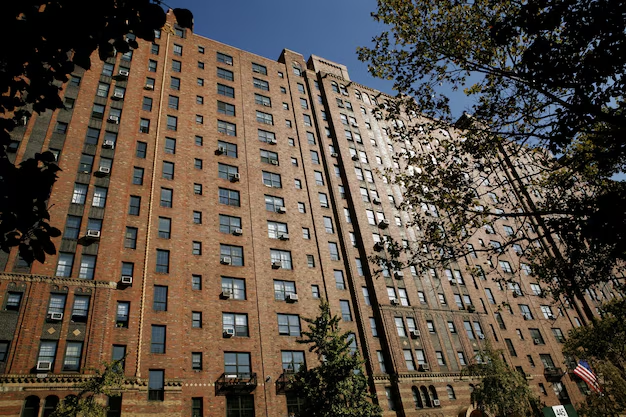
Low-Income Apartments in Atlanta: How to Find Affordable Housing That Fits Your Budget
Finding low-income apartments in Atlanta can feel overwhelming, especially with rising rents across the metro area. But there are programs, properties, and local agencies designed specifically to help renters with limited income.
This guide walks you through how affordable housing works in Atlanta, Georgia, where to search, who to contact, and what to expect at each step.
How “Low-Income Apartments” Work in Atlanta
When people say “low-income apartments” in Atlanta, they usually mean one of these:
- Public housing (run by a housing authority)
- Section 8 Housing Choice Vouchers
- Project-based Section 8 apartments
- LIHTC apartments (Low-Income Housing Tax Credit)
- Income-based or income-restricted units in mixed-income communities
Most of these use household income and family size to decide who qualifies and what your rent will be.
Key idea: Income limits
In Atlanta, income rules are usually based on the Area Median Income (AMI) set for the Atlanta region. Properties and programs might say they’re for households at:
- 30% of AMI – very low income
- 50% of AMI – low income
- 60% or 80% of AMI – moderate to lower-middle income
Each apartment community or program will have its own income chart. Expect to show paystubs, benefit letters, tax returns, or other proof of income.
Main Affordable Housing Programs in Atlanta
1. Atlanta Housing (Housing Authority)
Atlanta Housing (AH) is the main public housing agency for the City of Atlanta. It manages:
- Housing Choice Vouchers (Section 8)
- Project-based voucher properties
- Some senior and family communities
Atlanta Housing – Central Office
230 John Wesley Dobbs Ave NE
Atlanta, GA 30303
Phone: 404-892-4700
Atlanta Housing sometimes opens waiting lists for vouchers or specific properties. When lists are open, you can usually apply online or in person. When they’re closed, you may need to check back periodically.
What AH programs generally look for:
- Household income under program limits
- Citizenship or eligible immigration status for at least one household member
- No serious recent lease violations or unpaid housing authority debts
2. Housing Choice Voucher Program (Section 8) in Atlanta
The Housing Choice Voucher Program, often called Section 8, helps low-income households pay rent in privately-owned apartments across Atlanta.
How it usually works:
- You receive a voucher after being selected from a waitlist.
- You find a landlord in Atlanta who accepts vouchers.
- The housing authority will usually pay part of your rent directly to the landlord.
- You typically pay 30–40% of your adjusted income toward rent and utilities.
In the City of Atlanta, vouchers are managed by Atlanta Housing. In surrounding parts of the metro area, different county housing authorities manage vouchers for those areas (for example, in DeKalb, Fulton outside the city limits, Cobb, Gwinnett, etc.).
Because voucher waitlists in Atlanta can open and close, it’s important to:
- Create or update an online profile if the authority offers one
- Keep your contact information current so you don’t miss notifications
- Respond quickly when asked for documents
3. Public and Project-Based Housing in Atlanta
Some low-income apartments are tied directly to a subsidy—you don’t take a voucher anywhere; instead, the discount is attached to the apartment itself. These are often called:
- Project-based Section 8
- Project-based vouchers
- Public housing replacement or mixed-income communities
Examples (names may change over time, but this gives a sense of what to look for):
- Mixed-income communities that replaced older public housing, such as properties in areas like Westside, Old Fourth Ward, or Mechanicsville
- Senior-focused apartments with income-based rents
With project-based units:
- You apply directly with the property’s management office.
- If approved, your rent is often based on your income, similar to voucher rules.
4. LIHTC Apartments (Tax Credit Properties)
Many apartment communities in Atlanta are built using the Low-Income Housing Tax Credit (LIHTC) program. These are often newer or renovated communities that reserve a portion of units for income-eligible renters.
Key features:
- Rents are lower than typical market rates in the area.
- You must be under a certain income limit for your household size.
- Rent is not always strictly income-based (unlike public housing or vouchers), but capped at an affordable level set by program rules.
LIHTC communities can be found in neighborhoods across Atlanta, including:
- South Atlanta / Jonesboro Road areas
- Southwest Atlanta
- Parts of Midtown and West Midtown with mixed-income developments
- Areas around Edgewood, Kirkwood, and East Lake
To find LIHTC apartments:
- Look for communities that list themselves as “income-restricted,” “tax credit,” or “affordable housing” in their leasing office or marketing.
- Ask the leasing office:
- Whether they participate in a tax credit or affordable housing program
- What the current income limits and rent levels are
Where to Start: Key Atlanta Resources
Here are practical starting points if you’re searching for low-income apartments in Atlanta.
Georgia Department of Community Affairs (DCA)
DCA oversees many affordable housing programs statewide, including LIHTC properties.
Georgia Department of Community Affairs – Main Office
60 Executive Park South NE
Atlanta, GA 30329
Phone: 404-679-4940
They can help you:
- Locate tax credit and other affordable properties in metro Atlanta
- Get general information on statewide rental assistance resources
- Find contacts for local housing agencies
United Way of Greater Atlanta – 2-1-1
United Way 2-1-1 connects residents to emergency rental assistance, shelter, and affordable housing leads.
How to reach them:
- Dial 2-1-1 from most phones in the Atlanta area
- Or call 404-614-1000 (main Greater Atlanta office line)
They can:
- Provide lists of low-cost or income-based apartments
- Connect you to nonprofits that help with housing searches, deposits, or applications
- Point you to legal aid and eviction prevention resources if needed
City of Atlanta – Housing & Community Development
The City of Atlanta works on affordable housing policy and partners on many local developments.
City of Atlanta – Department of City Planning / Housing Initiatives Generally Coordinated Downtown
55 Trinity Ave SW
Atlanta, GA 30303
Phone (City Hall Main): 404-330-6000
You can:
- Ask for guidance on affordable housing programs within the city
- Learn about new developments or down payment / homebuyer assistance if you’re eventually looking beyond renting
What to Expect When You Apply
Most low-income apartments and programs in Atlanta will require similar documentation and steps.
Typical documents you may need
Prepare copies of:
- Photo IDs for adult household members
- Social Security cards (or official numbers)
- Birth certificates for children
- Proof of income:
- Recent pay stubs (often last 4–8 weeks)
- Social Security or disability benefit letters
- Unemployment benefit documentation
- Proof of child support or alimony (if applicable)
- Tax returns or W-2s (sometimes for the last one or two years)
- Current lease and utility bills, if you’re already renting
Having these ready can speed up your application and help you respond quickly to deadlines.
Common steps in the process
- Find properties or programs that fit your situation (family size, age, disability status, etc.).
- Join waitlists when they are open (for vouchers or popular properties).
- Submit full applications with complete documentation.
- Attend interviews or appointments, often at a leasing office or housing authority.
- Pass screenings, which may include:
- Rental history check
- Criminal background check (with program rules about specific offenses)
- Credit check (varies by property; many affordable properties have more flexible standards, but not always)
⚠️ Tip: Keep a folder (paper or digital) with all your documents. Many Atlanta renters lose opportunities because they can’t provide paperwork quickly when spots open.
Types of Low-Income Apartments by Household Need
Family Apartments
For households with children or multiple adults, look for:
- 2- or 3-bedroom income-based units
- Mixed-income communities with family-sized LIHTC units
- Properties near MARTA bus or rail stations if you don’t drive
Areas across Southwest Atlanta, South Atlanta, and the Westside have multiple family-oriented affordable properties, though availability changes often.
Senior Apartments (55+ or 62+)
Atlanta has several senior-specific low-income apartment communities:
- Age-restricted senior buildings with income-based or income-limited rents
- Some with on-site services, transportation options, or community activities
To find senior low-income apartments:
- Ask Atlanta Housing about senior properties
- Contact DCA for a list of senior LIHTC communities in the Atlanta area
- Check with senior centers and Area Agency on Aging resources for housing referrals
Apartments for People with Disabilities
Some Atlanta-area affordable housing options are designed or set aside for:
- Individuals with physical disabilities needing accessible units
- People with developmental disabilities
- Those with serious mental illness connected to supportive services
To explore these:
- Check with Atlanta Housing and DCA for disability-accessible units
- Call United Way 2-1-1 and ask specifically about supportive housing or permanent supportive housing
- Connect with local disability service organizations, which often partner with housing providers
Balancing Location, Price, and Transportation in Atlanta
Atlanta’s size and traffic mean location decisions matter when choosing low-income housing.
Consider:
Transit access:
- Proximity to MARTA rail stations (Five Points, West End, H.E. Holmes, Lakewood/Ft. McPherson, etc.)
- Nearby MARTA bus routes if you commute to downtown, Midtown, Buckhead, or Perimeter
Daily needs:
- Grocery stores, pharmacies, and clinics
- Schools if you have children (APS or nearby charter schools)
Job access:
- Distance to areas like Downtown, Midtown, Buckhead, Airport area, or Perimeter where many jobs are clustered
Sometimes, a slightly higher rent in a better location can save you time and transportation costs, so compare the full picture.
Practical Tips to Improve Your Chances
✅ Apply widely:
Don’t rely on one property or program. In Atlanta’s tight housing market, it often helps to get on multiple waitlists at once.
✅ Check waitlist status regularly:
Programs sometimes open lists for just a few days. Follow Atlanta Housing, DCA, and city updates, or call periodically.
✅ Be honest and complete on applications:
Leaving blanks or not disclosing something that will show up on a background check can lead to denials.
✅ Prepare references:
Some landlords ask for previous landlord contact information or character references. Having these ready can help if your credit isn’t strong.
✅ Ask about reasonable accommodations:
If you have a disability, you can ask housing providers about reasonable accommodations or modifications, such as:
- Ground-floor units
- Permission for service animals or emotional support animals (with proper documentation)
- Adjusted communication methods (written notices, large print, etc.)
Quick Reference: Main Low-Income Housing Contacts in Atlanta
| Resource | What They Help With | Contact Info |
|---|---|---|
| Atlanta Housing | Vouchers, project-based units, public housing options | 230 John Wesley Dobbs Ave NE, Atlanta, GA 30303 • 404-892-4700 |
| Georgia Dept. of Community Affairs | LIHTC properties, statewide affordable housing info | 60 Executive Park South NE, Atlanta, GA 30329 • 404-679-4940 |
| United Way of Greater Atlanta – 2-1-1 | Referrals to affordable housing & rental assistance | Dial 2-1-1 • Main line 404-614-1000 |
| City of Atlanta (City Hall) | Local housing policy info, program direction | 55 Trinity Ave SW, Atlanta, GA 30303 • 404-330-6000 |
If you’re searching for low-income apartments in Atlanta, the process can take time—especially with waitlists—but using these programs and contacts strategically can significantly expand your options. Focus on gathering documents, staying organized, and keeping in regular contact with agencies and property managers while you search.