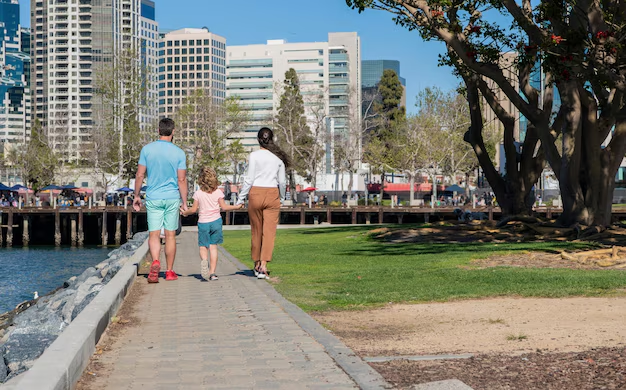
Best Family-Friendly Neighborhoods in Atlanta: Where to Live and Why It Works for Families
Finding the best places to live in Atlanta for families means balancing schools, commute times, safety, parks, walkability, and overall lifestyle. Atlanta is a big, varied metro area, and what works for one family may not fit another.
This guide focuses on family-friendly neighborhoods and suburbs in and around Atlanta, Georgia, with local context on schools, traffic, housing feel, and nearby amenities so you can narrow down what fits your family’s priorities.
How to Think About “Best Places to Live in Atlanta for Families”
Before diving into specific areas, it helps to decide what “best” means for your household. In the Atlanta area, most families weigh:
- School options (public, charter, private, and early childhood programs)
- Commute to Downtown, Midtown, Perimeter, or Hartsfield-Jackson Atlanta International Airport
- Housing type and price (single-family homes vs. townhomes or condos)
- Walkability and parks
- Access to daily essentials (groceries, healthcare, child care, activities)
A quick way to compare areas:
| Area Type | Typical Family Priorities It Fits | Common Trade-Offs |
|---|---|---|
| Intown neighborhoods | Short commute, culture, walkability | Smaller yards, higher prices per square ft. |
| Close-in suburbs | Good schools, more space, still near the city | Heavier traffic at rush hour |
| Outer suburbs | Larger homes, quieter feel, master-planned communities | Longer commute, fewer transit options |
Use this as you read through neighborhoods—match the feel and trade-offs to your own needs.
Top Intown Neighborhoods in Atlanta for Families
These are within the City of Atlanta or very close to it, good for families who want to stay near the core.
1. Virginia-Highland
Best for: Walkability, historic charm, active neighborhood life.
Virginia-Highland (often “Va-Hi”) offers tree-lined streets, craftsman-style homes, and walkable restaurants and shops. Families often appreciate:
- Schools: Zoned to Atlanta Public Schools (APS). Many families explore a mix of public, charter, and private options.
- Parks & play: Close to John Howell Park and Orme Park, with easy access to Piedmont Park.
- Lifestyle: You can walk to coffee shops, family-friendly restaurants, and small boutiques along North Highland Avenue.
Trade-off: Home prices can be high, and lots may be smaller than farther-out suburbs.
2. Morningside–Lenox Park
Best for: Quiet, upscale intown living with strong community feel.
Right next to Virginia-Highland, Morningside–Lenox Park features larger lots, older homes, and newer builds.
- Schools: Zoned to highly sought-after APS schools; many parents see this as a major draw.
- Green space:Morningside Nature Preserve offers trails and creek access, popular for families and dog owners.
- Convenience: Short drive to Midtown, Buckhead, and Emory University.
Trade-off: Housing costs are generally among the higher intown price points.
3. Grant Park
Best for: Historic homes, big park, and a real neighborhood feel close to downtown.
Centered around Grant Park, one of Atlanta’s oldest parks, this neighborhood appeals to families who want character homes and community events.
- Parks & attractions:
- Grant Park with playgrounds, open fields, and walking paths
- Zoo Atlanta (inside Grant Park), a major family destination
- Housing: Mix of restored Victorian, Craftsman, and newer townhomes.
- Lifestyle: Farmer’s markets, local coffee shops, and a strong neighborhood association.
Trade-off: Some streets are busier and older homes may require more maintenance or renovation.
4. Inman Park & Candler Park
Best for: BeltLine access, walkability, and community events.
These neighboring intown areas are favorites for families who want to walk or bike to things.
- BeltLine: The Eastside Trail runs through Inman Park, connecting to Old Fourth Ward, Ponce City Market, and beyond.
- Parks:
- Candler Park with playgrounds, a pool (seasonal), and sports fields
- Easy access to Freedom Park trails
- Schools: Many families use a combination of APS schools, charter schools, and private schools nearby.
Trade-off: Limited inventory and strong demand can make home shopping competitive.
5. Decatur (City of Decatur)
Best for: Intown feel with its own school system and walkable downtown.
Technically a separate city just east of Atlanta, Decatur feels like a small town with intown access.
- Schools: Operates its own city school system; families often move here specifically for school options.
- Walkability:
- A dense downtown area with restaurants, shops, and a MARTA station
- Sidewalks throughout many neighborhoods
- Parks & events: Multiple parks plus community festivals and family-friendly gatherings year-round.
Trade-off: Property values and property taxes are typically higher than some nearby areas.
Family-Friendly Close-In Suburbs Around Atlanta
If you want more space while still staying relatively close to the city, these areas are common choices for families.
6. Sandy Springs
Best for: Proximity to Perimeter employment centers, strong amenities, and varied housing.
Located just north of Buckhead, Sandy Springs mixes single-family neighborhoods with newer townhome and condo developments.
- Schools: Served by Fulton County Schools and various private/independent schools nearby.
- Parks:
- Morgan Falls Overlook Park overlooking the Chattahoochee River
- Access to river recreation through the Chattahoochee River National Recreation Area
- Commuting: Close to GA-400 and I-285; multiple MARTA stations (North Springs, Sandy Springs, Dunwoody) along the Red Line.
Trade-off: Heavier traffic around Perimeter Center and I-285, especially at rush hour.
7. Dunwoody
Best for: Suburban feel, strong community groups, and easy highway access.
Just northeast of Sandy Springs, Dunwoody is known for cul-de-sac neighborhoods and active family life.
- Schools: DeKalb County School District, with many families also considering nearby private options.
- Parks & activities:
- Brook Run Park with large playgrounds, trails, dog park, and skate park
- Frequent events and food trucks, popular with families
- Shopping & services: Close to Perimeter Mall and major medical centers.
Trade-off: Commutes into Midtown or Downtown can be slow during peak hours.
8. Brookhaven
Best for: Close-to-city living with a suburban, family-friendly vibe.
Just north of Buckhead, Brookhaven offers walkable pockets, particularly near Town Brookhaven and Brookhaven Village.
- Schools: Combination of DeKalb County public schools and popular private schools.
- Parks:
- Blackburn Park and Murphey Candler Park (ball fields, trails, lake)
- Lifestyle: Many families enjoy being close to both I-85 and Peachtree Road for city access, while still having a “neighborhood” feel.
Trade-off: Some areas closer to major roads can be busier and more traffic-heavy.
9. Smyrna & Vinings
Best for: Access to The Battery/Truist Park, newer homes, and family amenities.
South of I-285 and west of Atlanta, Smyrna has become a go-to for young families.
- Schools: Served by Cobb County School District, with a range of school options and magnet programs.
- Parks & amenities:
- Smyrna Market Village with restaurants and community events
- Close to The Battery Atlanta at Truist Park for entertainment (baseball games, concerts, shops)
- Housing: Mix of traditional homes and newer townhome communities.
Trade-off: Increasing popularity has led to rising housing prices and more traffic near The Battery.
10. Tucker
Best for: Family-oriented neighborhoods and relative affordability near the perimeter.
Located northeast of Atlanta along I-285, Tucker offers established neighborhoods and a small, revitalized downtown area.
- Schools: DeKalb County public schools serve Tucker; some families look to magnet and theme programs within the district.
- Parks:
- Henderson Park with trails, playground, lake, and ball fields
- Lifestyle: Feels more laid-back and residential; good option if you want space without going far out.
Trade-off: Some shopping and services may require short drives rather than walking.
Popular Outer Suburbs for Atlanta Families
These areas typically mean more house and yard for your money, with longer commutes into the city.
11. Alpharetta & Milton
Best for: Master-planned communities, parks, and extensive family amenities.
North of Atlanta off GA-400, Alpharetta and Milton are major family hubs.
- Schools: Served by Fulton County Schools; many families seek out specific school zones in this area.
- Parks & downtowns:
- Downtown Alpharetta and Avalon offer restaurants, shops, and green spaces
- Milton has more of a semi-rural, horse-country feel with larger lots in some areas
- Activities: Youth sports, community events, and organized family activities are very common.
Trade-off: Commute times into Midtown/Downtown can be significant, especially in rush hour.
12. Roswell
Best for: Historic charm along the Chattahoochee River and solid suburban amenities.
West of Alpharetta, Roswell blends history, riverfront access, and strong neighborhoods.
- Historic district:Canton Street area has restaurants, boutiques, and festivals.
- Outdoor options:
- Roswell Area Park
- Chattahoochee River parks with trails and water access
- Schools: Fulton County Schools; many established neighborhoods with long-time residents.
Trade-off: Some roads through Roswell get congested during commute hours, and older homes may need updating.
13. Johns Creek
Best for: Planned subdivisions and a strong focus on family life.
To the northeast of Atlanta, Johns Creek is largely residential and very family-oriented.
- Housing: Many swim/tennis neighborhoods, cul-de-sacs, and HOA communities.
- Parks:
- Newtown Park, Ocee Park, and others, often with youth sports programs
- Schools: Fulton County Schools with multiple highly regarded campuses.
Trade-off: It can feel far from the city’s cultural centers, and commutes into Atlanta are longer.
14. Peachtree City (Farther Out)
Best for: Master-planned community, golf cart paths, and slower-paced life.
Southwest of Atlanta, Peachtree City is known for its extensive golf cart path system, allowing families to travel to schools, shopping centers, and parks by cart.
- Schools: Fayette County Public Schools serve Peachtree City; the area has a reputation for strong school options.
- Lifestyle: Lots of green space, lakes, and neighborhood amenities.
- Transportation: Many residents work locally, but some commute to Atlanta or Hartsfield-Jackson.
Trade-off: The distance to central Atlanta is significant; expect a longer drive for city-based jobs or events.
Key Factors Families Should Weigh in Atlanta
Schools and Educational Options
Across the Atlanta area, families consider:
- Public school district (Atlanta Public Schools, Fulton, Cobb, DeKalb, Gwinnett, Fayette, etc.)
- Magnet, charter, and theme schools that may be available within your district
- Pre-K and child care centers near home or work
- Proximity to libraries, tutoring centers, and extracurricular programs
A practical step is to call or visit your local school district office for zoning and program information. A few main district contacts:
- Atlanta Public Schools – Center for Learning and Leadership
130 Trinity Ave SW, Atlanta, GA 30303 • Main line: (404) 802-3500 - Fulton County Schools – Administrative Center
6201 Powers Ferry Rd NW, Atlanta, GA 30339 • Main line: (470) 254-3600 - Cobb County School District – Central Office
514 Glover St SE, Marietta, GA 30060 • Main line: (770) 426-3300 - DeKalb County School District – Administrative & Instructional Complex
1701 Mountain Industrial Blvd, Stone Mountain, GA 30083 • Main line: (678) 676-1200
Always confirm current zoning maps and program availability directly with the district, since boundaries and offerings can change.
Commute and Transportation
Atlanta is known for traffic, so where you live vs. where you work is critical.
Questions to ask yourself:
- Will you commute to Downtown, Midtown, Buckhead, Perimeter, or the Airport?
- Is living near a MARTA rail station (e.g., in Decatur, Brookhaven, Sandy Springs, Dunwoody) realistic and useful for your routine?
- Is your schedule flexible enough to work around peak traffic, or do you need a shorter door-to-door commute?
Families who value time at home often prioritize a shorter commute over a larger home farther out.
Housing Type and Neighborhood Feel
In and around Atlanta you’ll find:
- Historic intown neighborhoods with older homes and walkable streets
- Suburban subdivisions with HOAs, pools, and tennis courts
- Townhomes and condos near employment hubs and MARTA lines
Consider:
- Do you want a large yard, or is low maintenance more important?
- Are you comfortable with HOA rules and fees in swim/tennis communities?
- Do you prefer a quiet cul-de-sac or a neighborhood where you can walk to restaurants and parks?
Parks, Recreation, and Family Activities
Access to outdoor space is a major plus for Atlanta families. Many areas offer:
- City or county parks with playgrounds and trails
- Recreation centers with youth sports, classes, and camps
- Proximity to the Chattahoochee River National Recreation Area (in Sandy Springs, Roswell, Johns Creek, and others)
You can search by county (Fulton, DeKalb, Cobb, Gwinnett, etc.) for parks and recreation departments to see which programs they offer for children and teens.
Everyday Convenience
When choosing a neighborhood, also look at:
- Grocery stores and pharmacies within a short drive
- Pediatricians, family doctors, and urgent care centers nearby
- After-school care or activities close to your home or your job
- Libraries and community centers with free or low-cost programs
A quick drive around during weekday evenings and weekend mornings can give you a realistic feel for how family life works in the area you’re considering.
How to Narrow Down the Best Atlanta Area for Your Family
To move from “overwhelmed” to a short list:
Pick your must-haves.
- Example: 30 minutes or less to Midtown, access to a particular school cluster, walkable park.
Decide on your housing budget and style.
- Choose whether you’re targeting intown neighborhoods (smaller, pricier, more walkable) or suburbs (larger, car-dependent, often more house for the money).
Create a shortlist of 3–5 areas.
- For city living with kids: Virginia-Highland, Morningside, Grant Park, Decatur.
- For close-in suburbs: Sandy Springs, Dunwoody, Brookhaven, Smyrna.
- For more space: Alpharetta/Milton, Roswell, Johns Creek, Peachtree City.
Visit at real-life times.
- Drive or walk through at school drop-off, rush hour, and weekend afternoons.
- Check noise, traffic, and how many kids you actually see playing outside or at local parks.
Talk to local parents and schools.
- Call school front offices to ask about enrollment, programs, and transportation.
- Ask neighbors or local parent groups (online or in person) about daily life in that specific community.
By matching your commute, school preferences, budget, and lifestyle to these Atlanta-area options, you can narrow down the best places to live in Atlanta for families that genuinely fit how your household lives day to day.