
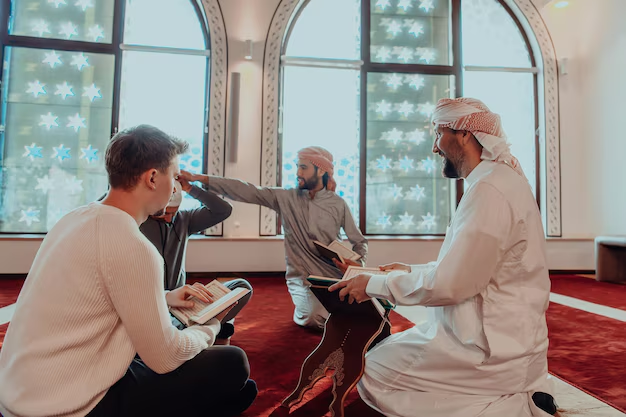
Atlanta Islamic Center: A Practical Guide for Worshippers and Visitors in Metro Atlanta
For Muslims living in or visiting Atlanta, Georgia, finding a welcoming place for prayer, learning, and community is often a top priority. When people search for “Atlanta Islamic Center,” they’re usually looking for where to pray, how to connect with the Muslim community, and what services are available nearby.
Atlanta doesn’t have just one single “Atlanta Islamic Center.” Instead, the metro area is home to multiple Islamic centers and masajid (mosques) serving different neighborhoods and communities. This guide walks you through how Islamic centers work in Atlanta, key locations to know, what to expect when you visit, and practical tips to help you choose the right place for your needs.
What Is an Islamic Center in Atlanta?
An Islamic center in Atlanta typically functions as:
- A place of worship for daily prayers and Jumu’ah (Friday prayer)
- A community hub offering classes, youth programs, and social services
- A cultural and educational space for both Muslims and non-Muslims
- An organizing base for charity drives and local outreach
Some centers are large and well-established, with full-time staff, schools, and extensive programming. Others are smaller masajid or musallas (prayer spaces) that may focus mainly on daily prayers and Jumu’ah.
In metro Atlanta, Islamic centers are spread across city neighborhoods (like Downtown, Midtown, and the West End) and suburban communities (such as Norcross, Duluth, Alpharetta, and Marietta), giving many residents and visitors options within a reasonable driving distance.
Major Islamic Centers Serving the Atlanta Area
Below is a high-level snapshot of some well-known Islamic centers that people commonly consider when searching for an “Atlanta Islamic Center.” This is not an exhaustive list, but it gives you a sense of the landscape.
Key Centers in and Around Atlanta
| Area / Region | Type of Facility | What It Commonly Offers* |
|---|---|---|
| West End / Southwest ATL | Large masjid & community center | Jumu’ah, daily prayers, classes, community events |
| North Atlanta / Suburbs | Large multi-service Islamic centers | Schools, youth programs, family events, counseling referrals |
| East & Northeast ATL | Masajid and musallas | Jumu’ah, daily prayers, some weekend classes and lectures |
| Downtown / Campus Area | Campus-based or small prayer spaces | Jumu’ah (often during school sessions), student programming |
*Offerings vary by center; always check directly with the specific organization.
Common Services Atlanta Islamic Centers Provide
While each center has its own character and priorities, many Atlanta-area Islamic centers tend to offer some combination of:
1. Prayer and Religious Services
- Five daily prayers (Fajr, Dhuhr, Asr, Maghrib, Isha)
- Jumu’ah (Friday) prayer, sometimes with multiple khutbah (sermon) times to manage crowds
- Taraweeh prayers and special programming during Ramadan
- Eid prayers for Eid al-Fitr and Eid al-Adha, often held at large centers or rented halls/parks
Some centers may also help arrange or host:
- Nikah ceremonies (Islamic marriages)
- Janazah (funeral) prayers and burial coordination, often in partnership with local funeral homes and cemeteries
2. Educational Programs
Many Atlanta Islamic centers support Islamic education for both children and adults:
- Weekend schools for kids (Qur’an, Arabic basics, Islamic studies)
- Hifz and Qur’an classes
- Adult study circles (halaqas) and lectures
- New Muslim support and introductory Islam classes
If you have children, checking whether a center has a structured weekend school or youth program can be an important factor.
3. Social and Community Services
Community-focused offerings may include:
- Food drives and charity distributions, especially during Ramadan and winter
- Zakat and sadaqah collection, with local distribution channels
- Counseling referrals (family, marriage, youth) through local professionals or partner organizations
- Programs for college students, young professionals, and converts
- Interfaith events with churches, synagogues, or community groups around Atlanta
4. Youth and Family Activities
Some larger centers in the Atlanta metro area place special emphasis on youth engagement, including:
- Sports activities and recreation
- Mentorship and leadership development programs
- Youth camps, retreats, or overnight events
- Family nights, game nights, and community dinners
If you’re a parent or guardian, it’s worth calling a few centers to ask about age-specific programs that match your children’s needs.
How to Find an Islamic Center Near You in Atlanta
Because metro Atlanta is spread out, your closest option may be outside the Atlanta city limits but still easy to reach. Here’s how to locate the most convenient Islamic center for you:
1. Use Your Address or Hotel Location
Start with your:
- Home address
- Temporary housing
- Hotel or conference venue
From there, search specifically for:
- “mosque near [your neighborhood] Atlanta GA”
- “Islamic center near [suburb name] Georgia”
(e.g., Norcross, Duluth, Marietta, Alpharetta, Decatur, Clarkston)
This usually surfaces several nearby masajid along your usual commuting routes.
2. Consider Traffic and Travel Time
Atlanta traffic can be heavy, especially during rush hours. When choosing an Islamic center, factor in:
- Distance plus typical travel time around Jumu’ah
- Whether you need parking on-site or can use surrounding streets
- If public transit is important to you, whether you’re near a MARTA station or bus route that connects to that area
3. Ask About Language, Culture, and Programming
Different Islamic centers in Atlanta may naturally reflect the communities that built them, with khutbahs or classes sometimes offered in Arabic, English, Urdu, Somali, Turkish, Bengali, or other languages.
If language or a certain community environment matters to you, you can:
- Call ahead and ask, “Is the Friday khutbah in English or another language?”
- Inquire about diverse programming (e.g., sisters’ classes, convert support, youth events)
- Visit more than one center to see where you feel most comfortable
Visiting an Islamic Center in Atlanta for the First Time
If you’re new to Atlanta, newly practicing, or visiting from out of town, here’s what to expect and how to prepare.
1. Dress and Etiquette
Most Atlanta Islamic centers follow standard mosque etiquette:
- Dress modestly:
- Men: long pants and a modest shirt; a hat or kufi is optional.
- Women: long, loose clothing and a headscarf if you are comfortable wearing one.
- Remove shoes before entering the prayer area (shelves or cubbies are usually provided).
- Arrive a bit early for Jumu’ah or special events to find parking and a suitable place to sit.
If you are not Muslim but wish to observe, you are generally welcome at many centers—calling ahead is a good idea so staff or volunteers can guide you.
2. Men’s and Women’s Areas
Many Atlanta Islamic centers have separate areas or designated sections for men and women. This can vary:
- Completely separate rooms with their own entrances
- A shared prayer hall with a divider
- A balcony section for women
If you’re unsure where to go, you can ask a greeter, security staff, or anyone near the entrance; people are usually accustomed to guiding newcomers.
3. Parking and Security
At larger centers, especially on Fridays and during Ramadan:
- Parking volunteers may direct cars to maximize space.
- Some centers have on-site security or work with local law enforcement for large gatherings.
- In busy neighborhoods, you may need to allow extra time to find parking and walk a short distance.
📝 Tip: On major holidays like Eid, some Atlanta-area Islamic centers hold prayers at larger venues or parks; always check announcements in advance.
Programs for Non-Muslims and Interfaith Visitors
Many Islamic centers in and around Atlanta make an effort to be open and accessible to neighbors, students, and interfaith partners. Depending on the location, you may find:
- Open house events explaining the basics of Islam
- Tours and Q&A sessions for school or university groups
- Panel discussions on topics like faith, social justice, or community service
- Interfaith service projects (food drives, neighborhood cleanups, etc.)
If you’re a teacher, faith leader, or local organizer, you can usually contact a center’s office or outreach committee to schedule a visit or arrange a speaker for a civic or educational event.
Choosing the Right Islamic Center in Atlanta for Your Needs
When multiple centers are within reach, it helps to think through what matters most to you or your family. Here are some factors many Atlantans consider:
1. Proximity and Convenience
- Is it close to home, school, or work?
- Can you realistically attend Jumu’ah there each week?
- Is it practical for daily prayers, or will you mainly come for Fridays and events?
2. Religious Atmosphere and Approach
Within mainstream Islamic practice, different centers may emphasize different aspects of spirituality, scholarship, or culture. To get a feel for this, you can:
- Attend a few Jumu’ahs and listen to the khutbah style
- Observe how welcoming it feels for newcomers and families
- Ask whether they have programming that matches your interests (study circles, Qur’an classes, etc.)
3. Family and Youth Support
If you have children or teens, you might look for:
- Weekend Islamic school with clear schedules and curriculum
- Youth-specific programs (mentoring, sports, volunteer opportunities)
- Events that involve entire families, creating a sense of community
4. Community Services and Support
Consider whether the center:
- Helps coordinate funeral services and Janazah needs
- Offers or refers to counseling (marriage, family, youth)
- Maintains regular charity programs, especially if you want to give locally
Practical Tips for Atlanta Residents and Visitors
Here are a few Atlanta-specific pointers that can help you make the most of the city’s Islamic centers:
Ramadan in Atlanta:
- Many centers host community iftars (breaking fast together) and late-night prayers.
- Plan ahead for traffic before Maghrib and around Taraweeh times, especially in denser neighborhoods.
College Students:
- If you attend or are visiting a college like Georgia Tech, Georgia State University, Emory University, or nearby institutions, you’ll often find student Muslim organizations and prayer spaces on or near campus, in addition to larger community centers.
New to Islam in Atlanta:
- Many Islamic centers offer new Muslim classes, mentorship, or support groups.
- When you call or visit, ask directly if they have a convert support program or someone who can guide you through basics and community integration.
Using Public Transit (MARTA):
- Some Islamic centers are more easily reached by car, but certain neighborhoods closer to MARTA stations or bus routes can be more accessible if you do not drive.
How to Prepare Before You Go
To avoid confusion or unnecessary travel, it’s a good idea to:
Call the center’s office during their posted hours to confirm:
- Jumu’ah time(s)
- Whether they are open for all five daily prayers
- Any special instructions for visitors or first-timers
Check for updates:
- Temporary changes to prayer times
- Special events that might affect parking or building access
- Holiday schedules (Eid, Ramadan, local events)
Ask about accessibility if needed:
- Wheelchair access
- Elevator availability
- Designated family or quiet areas
Atlanta’s Islamic centers play a central role in the spiritual and social lives of many residents and visitors. Whether you’re looking for a regular place to pray, a community to join, or simply trying to understand how Islamic life is organized in Atlanta, Georgia, exploring a few of these centers, asking questions, and attending programs is the best way to find the environment that feels right for you.