
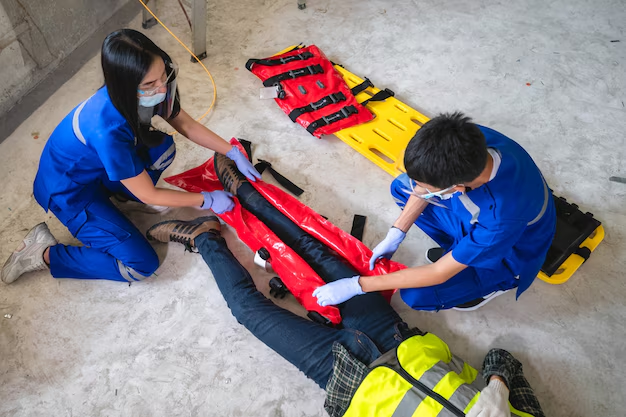
Atlanta Trauma Centers: How to Find Help Quickly in an Emergency
If you live in or are visiting Atlanta, Georgia, it’s important to know where to go when a serious injury or life‑threatening emergency happens. Atlanta is home to several major trauma centers that are specifically equipped and staffed to handle critical situations such as severe car crashes, falls, gunshot wounds, serious burns, or major medical emergencies that require advanced, immediate care.
This guide explains how trauma centers work in Atlanta, where they are, how the 911 system connects you to them, and what you can do to be prepared.
What Is a Trauma Center?
A trauma center is a hospital with:
- Specially trained trauma surgeons, anesthesiologists, and nurses available 24/7
- Advanced diagnostic tools (like CT scans) on standby
- Operating rooms ready for emergency surgery
- Systems in place to rapidly evaluate and treat severe, often life‑threatening injuries
This is different from a standard emergency room. Many ERs can treat broken bones, cuts, and common emergencies, but not all ERs are designated trauma centers. Trauma centers go through a formal review process and are assigned a level based on the scope of services they provide.
Trauma Center Levels in Atlanta
In Georgia, trauma centers are designated by levels (I through IV). In and around Atlanta, you will most commonly hear about Level I and Level II trauma centers.
What the Levels Generally Mean
Level I Trauma Center
- Provides the highest level of surgical and trauma care
- Has specialists available in virtually all major disciplines
- Often involved in training medical professionals and trauma research
- Can treat the most complex, severe injuries for both adults and often children
Level II Trauma Center
- Offers high-level trauma care similar to Level I
- Manages many types of serious injuries
- May transfer the most complex cases to a Level I center
Atlanta’s trauma system is interconnected. If one hospital is full or if a patient’s injury needs a more specialized facility, patients may be transferred between trauma centers.
Major Trauma Centers Serving Atlanta
Below is a simple overview of some key Atlanta‑area trauma centers that the 911 system and EMS providers commonly use. You generally will not choose one yourself in an emergency; paramedics and 911 dispatchers decide based on your condition and location.
| Trauma Center (Atlanta Area) | Typical Focus / Notes* | General Location (Atlanta Metro) |
|---|---|---|
| Grady Memorial Hospital | Major adult Level I trauma care; burn and stroke care | Downtown Atlanta |
| Children’s Healthcare of Atlanta – Egleston / Scottish Rite | Pediatric trauma care | Northeast / North Atlanta |
| Emory University Hospital Midtown | Adult emergency and specialty care, trauma‑capable | Midtown / Downtown border |
| Northside Hospital Atlanta | High‑volume surgical and emergency services | Sandy Springs (North Atlanta) |
| Wellstar Kennestone Hospital | Adult trauma services for northwest metro area | Marietta |
*Designations and capabilities can change over time; rely on 911 and EMS guidance in an emergency.
These facilities work together with regional EMS services to make sure seriously injured patients reach the most appropriate center as quickly as possible.
When to Go to a Trauma Center vs. an ER or Urgent Care
In Atlanta, you have several options for urgent health needs:
- Call 911 / Trauma Center: For life‑threatening or potentially life‑threatening emergencies.
- Hospital ER (non‑trauma): For serious but not necessarily specialized trauma-level cases.
- Urgent Care: For less severe issues that still need prompt attention.
Situations that may require a trauma center (call 911):
- Major car, truck, or motorcycle crash on I‑75, I‑85, I‑20, the Downtown Connector, or Peachtree Street with:
- Loss of consciousness
- Trouble breathing
- Severe bleeding
- Obvious broken bones or deformity
- Falls from a significant height (buildings, scaffolding, stadium seating)
- Gunshot or stab wounds
- Severe burns (house fires, industrial accidents, explosions)
- Crush injuries (construction sites, industrial facilities, MARTA rail areas)
- Serious head injury with confusion, seizures, or repeated vomiting
If you are unsure whether something is life‑threatening, err on the side of caution and call 911. Dispatchers in Atlanta are trained to help you decide the best next step.
How Atlanta’s 911 and EMS System Connects You to a Trauma Center
In the city of Atlanta, the emergency system is designed to move critical patients to the right place as fast as possible.
What typically happens when you call 911
You call 911
Describe what happened, where you are, and what symptoms you see (bleeding, not breathing, not waking up, etc.).Dispatchers assess the situation
They may ask focused questions to understand the severity and type of injury.EMS is sent to your location
In the City of Atlanta, this may involve local fire rescue and ambulance services, depending on where you are (Downtown, Buckhead, West End, airport area, etc.).On‑scene assessment
Paramedics determine how serious the injuries are. They use established trauma triage guidelines to decide whether a trauma center is needed.Transport to the most appropriate hospital
Based on your condition, location, and hospital availability, they decide:- Which trauma center or ER to go to
- Whether a Level I center is needed
- Whether to bypass a closer, non‑trauma ER for a more specialized facility
In critical situations, Atlanta EMS teams often alert the hospital before arrival so trauma teams can be ready at the door.
Key Atlanta Trauma and Emergency Locations (Reference Only)
These are commonly recognized hospital campuses in and around Atlanta that provide trauma or major emergency services. You should not rely on this list in place of calling 911 in an emergency, but it can help orient you:
Grady Memorial Hospital
- 80 Jesse Hill Jr Dr SE, Atlanta, GA 30303
- Serves: City of Atlanta and broader region; centrally located near downtown government and campus areas.
Children’s Healthcare of Atlanta – Egleston Hospital
- 1405 Clifton Rd NE, Atlanta, GA 30322 (near Emory University)
- Focus: Pediatric emergency and specialized care.
Children’s Healthcare of Atlanta – Scottish Rite Hospital
- 1001 Johnson Ferry Rd NE, Atlanta, GA 30342 (near the Perimeter area)
- Focus: Pediatric emergency and surgical services.
Emory University Hospital Midtown
- 550 Peachtree St NE, Atlanta, GA 30308
- Serves: Midtown, Downtown, and surrounding neighborhoods.
Northside Hospital Atlanta
- 1000 Johnson Ferry Rd NE, Atlanta, GA 30342
- Serves: North Atlanta, Buckhead, Sandy Springs, Perimeter area.
Wellstar Kennestone Hospital
- 677 Church St, Marietta, GA 30060
- Serves: Northwest metro region (Marietta, Kennesaw, Smyrna, etc.).
For time‑sensitive emergencies (stroke, heart attack, severe trauma) in or near the city, 911 dispatchers and EMS professionals decide which facility is most appropriate based on current protocols.
Special Considerations: Children, Burns, and Specific Injuries
Different types of trauma sometimes need different kinds of centers. In the Atlanta region:
Pediatric trauma (children and teens)
- Children’s Healthcare of Atlanta hospitals focus on infants, children, and adolescents.
- If a child is critically injured in the Atlanta area, EMS may bypass an adult facility and go directly to a pediatric‑focused hospital, when appropriate and feasible.
Severe burns
- Some serious burns may require transfer to a specialized burn center, which may be located within or separate from a trauma center.
- EMS and hospital teams coordinate these transfers.
Complex head, spine, or orthopedic injuries
- Atlanta’s major trauma centers often work closely with neurosurgery and orthopedic specialists.
- In some cases, a patient may first stabilize at one hospital and then be transferred to another for specialized surgery or rehabilitation.
How to Be Prepared in Atlanta for a Trauma Emergency
You cannot predict a serious accident, but you can take basic steps so you and your family are better prepared in Atlanta:
- Save emergency contacts in your phone
- Include “ICE” (In Case of Emergency) contacts.
- Know your general location
- In a large metro like Atlanta, knowing nearby landmarks (MARTA station name, interstate exit, major intersection) helps 911 find you faster.
- Carry key medical information
- Allergies, major medical conditions, and current medications.
- If you drive in Atlanta
- Keep a basic emergency kit in your car (flashlight, phone charger, simple first‑aid items).
- At workplaces, schools, or event venues
- Note where first‑aid kits and AEDs are located, and identify who on site is trained in basic first aid.
📝 Important: In a serious injury situation anywhere in Atlanta—on the Connector, at the airport, in a neighborhood, at a stadium, or on a college campus—calling 911 is the fastest way to access the trauma system. Do not try to drive a critically injured person across the city yourself unless emergency services are not available.
If You’re Visiting Atlanta
If you are visiting from out of town:
- You do not need to know the exact trauma center to request; 911 handles that.
- Your out‑of‑state ID or insurance generally does not affect whether you are taken to a trauma center in a life‑threatening situation.
- Keep your hotel address, event venue, or rental address handy so you can clearly tell 911 where you are.
Non‑Emergency Follow‑Up After a Trauma Visit
After a stay at an Atlanta trauma center, patients often need:
- Follow‑up visits with:
- Primary care providers
- Surgeons or specialists
- Physical or occupational therapists
- Medical records for:
- Personal use
- Work, school, or legal matters
- Insurance claims
Most major hospitals in Atlanta have:
- Medical records departments that can provide discharge summaries, imaging reports, and other documentation.
- Patient portals where you can view visit summaries, lab results, and instructions.
- Social workers or case managers who help arrange rehabilitation, equipment, or home health services when leaving the hospital.
If you are unsure how to get records or schedule follow‑up, call the hospital’s main number listed on your discharge paperwork and ask for medical records or patient services.
By understanding how Atlanta trauma centers fit into the city’s emergency care system, you can act faster and more confidently when seconds matter. In any suspected life‑threatening emergency in Atlanta, your first and most important step is always the same: dial 911.