
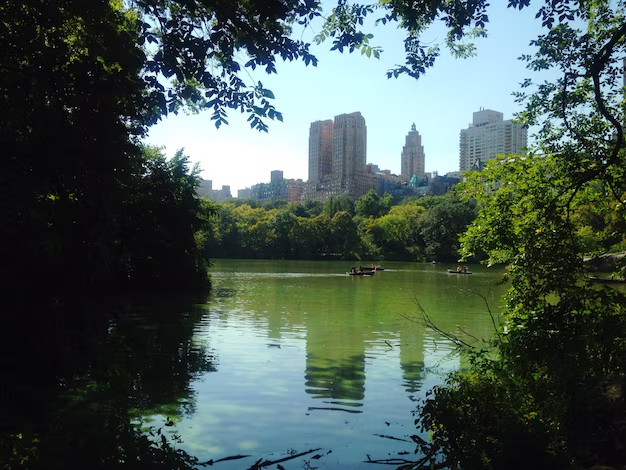
Atlanta: Why “The City in a Forest” Really Fits 🌳
Atlanta is often called “The City in a Forest”—and if you’ve ever flown into Hartsfield-Jackson or driven along Peachtree Street in the summer, you’ve seen why. The skyline rises out of a sea of green, with trees weaving through neighborhoods, highways, and even commercial districts.
For people who live in Atlanta, visit Atlanta, or are thinking about moving here, understanding what “city in a forest” means can help you make sense of our neighborhoods, weather, lifestyle, and even how the city plans for growth.
What “City in a Forest” Means in Atlanta
The nickname reflects a few things that are especially true inside and around Atlanta:
- Tree canopy everywhere – Streets, sidewalks, and backyards are shaded by oaks, pines, magnolias, and more.
- Pockets of woods between development – It’s common to see small forests between subdivisions, highways, and office parks.
- Green woven into daily life – Parks, trails, and the BeltLine connect many parts of the city through leafy corridors.
- A strong culture of tree protection – City codes, local nonprofits, and neighborhood groups often focus on keeping Atlanta’s canopy intact.
For residents, that means cooler streets, greener views, and more shade, but also some real-world trade-offs like falling limbs in storms, roots near foundations, and the need for regular tree maintenance.
How Atlanta’s Tree Canopy Shapes Neighborhood Life
Leafy Neighborhoods You’ll Notice First
Many of Atlanta’s most recognizable neighborhoods are defined by their trees. A few examples:
- Virginia-Highland & Morningside-Lenox Park – Charming bungalows under mature oaks and maples; walkable, shady streets.
- Inman Park – Historic homes, big porches, and tree-lined sidewalks close to the BeltLine Eastside Trail.
- Druid Hills – Winding roads, rolling lawns, and iconic old trees near Emory University.
- Buckhead (especially Garden Hills, Peachtree Heights) – Residential streets that feel like they’re nestled in a forest, even near busy commercial corridors.
- West End & Westview – Tree-shaded streets with historic homes near the Westside Trail of the BeltLine.
If you’re choosing where to live, the tree cover affects:
- How walkable and shaded your daily routes feel.
- Whether you get strong natural light indoors or more filtered light.
- How your yard and outdoor spaces can be used year-round.
Trees and Lifestyle: What to Expect
Living in Atlanta’s urban forest usually comes with:
- More time outdoors – Shaded paths and parks make walking, jogging, and dog-walking more comfortable most of the year.
- Yard maintenance – Leaves in the fall, pine needles year-round, and occasional limb trimming are part of life.
- Storm watch – Heavy thunderstorms and occasional ice events can bring down limbs; some residents prioritize regular tree inspections for safety.
- Wildlife sightings – Squirrels, birds, owls, chipmunks, and sometimes deer, foxes, or raccoons, especially near creek corridors.
Key Green Spaces That Make Atlanta Feel Like a Forest
Even near downtown and Midtown, Atlanta includes major parks and green corridors that define the “city in a forest” feel.
Major Intown Parks
1. Piedmont Park (Midtown)
Atlanta’s central park, bordered by Midtown and Ansley Park, is a hub for:
- Walking and running paths (many shaded).
- Open lawns with skyline views.
- Access to the Atlanta BeltLine Eastside Trail.
- Dog parks, playgrounds, and sports fields.
Location: Near 10th St NE & Monroe Dr NE, Atlanta, GA 30309
2. Grant Park (Southeast Atlanta)
One of the city’s oldest parks, wrapped around a historic neighborhood and Zoo Atlanta.
- Old-growth trees and quiet walking paths.
- Rolling hills and shady picnic spots.
- Historic homes surrounding the park.
Location: Around 800 Cherokee Ave SE, Atlanta, GA 30315
3. Chastain Park (North Buckhead area)
A large park in north Atlanta with:
- Shaded walking paths and trails.
- An amphitheater, golf course, and ball fields.
- Mature trees around neighborhoods and recreation areas.
Location: Near 140 Chastain Park Ave NW, Atlanta, GA 30342
Green Corridors and Trails
The Atlanta BeltLine
The BeltLine’s Eastside, Westside, and Southside Trails run through neighborhoods but often feel like green tunnels, thanks to trees and landscaping along the paths. For many residents, it’s a daily, car-free route woven through wooded segments, parks, and mixed-use developments.
PATH Foundation Trails
Off-street multi-use trails like:
- PATH Eastside, connecting Atlanta neighborhoods with Decatur.
- PATH Southside and Westside, linking to the BeltLine and parks.
These are popular for cycling, jogging, and commuting in shaded, tree-lined settings.
Forested Escapes Within the Metro Atlanta Area
For a place known as a major metro, Atlanta offers quick access to almost-true-forest experiences.
Chattahoochee River National Recreation Area
Multiple units along the Chattahoochee River provide:
- Riverside trails under dense tree canopy.
- Kayaking, paddling, and fishing access.
- Wooded escapes only a short drive from intown neighborhoods.
Popular locations near Atlanta include:
- Palisades Unit – Paces Mill (near Vinings and Buckhead)
- Cochran Shoals (often accessed from I-285 area)
Stone Mountain Park
East of Atlanta, Stone Mountain Park combines open rock faces with heavily wooded grounds.
- Forested walking, biking, and hiking trails.
- Lakes, picnic areas, and campgrounds surrounded by trees.
Location: 1000 Robert E. Lee Blvd, Stone Mountain, GA 30083
Local Nature Preserves and Urban Forest Spots
Within or close to Atlanta city limits, many residents visit:
- Fernbank Forest (near Druid Hills) – A protected old-growth forest area adjacent to the natural history museum.
- Blue Heron Nature Preserve (North Buckhead) – A small but surprisingly wooded escape with trails along a creek.
- Morningside Nature Preserve – Wooded trails and a popular dog-friendly area by South Fork Peachtree Creek.
These spaces let you experience an actual forest setting without leaving the city.
How Trees Affect Weather, Comfort, and Energy Use in Atlanta
Atlanta’s trees do more than look nice. They also shape daily comfort and home life.
Shade and Heat
In summer, Atlantans rely on trees for:
- Cooler sidewalks and streets – Tree-shaded areas can feel significantly more comfortable than open pavement.
- Reduced direct sunlight on homes – Trees near windows and roofs can help keep interiors cooler, especially in older houses.
Residents often notice substantial differences in comfort walking:
- On a tree-lined residential street vs.
- Along an exposed commercial corridor or unshaded parking lot.
Energy Considerations
For many homeowners and renters:
- Shade trees can help moderate indoor temperatures, especially in older homes with original windows or less insulation.
- Tree placement matters—large trees on the west and south sides of a house are often valued for late-afternoon shade.
At the same time, some residents weigh:
- The benefit of shade vs. the risk of limbs over roofs or power lines.
- Whether to remove or trim a tree if it’s too close to structures.
Many people in Atlanta choose to get professional assessments of large trees near their homes, especially after major storms.
Tree Rules and Protection in the City of Atlanta
Atlanta doesn’t just call itself a city in a forest—it actively regulates and protects trees, especially on private property and during construction.
City of Atlanta Arborist Division
Within city limits, the Office of Buildings – Arborist Division oversees:
- Tree removal permits.
- Plan reviews for development projects affecting trees.
- Enforcement of the City of Atlanta Tree Protection Ordinance.
General contact location (City Hall):
City of Atlanta – Arborist Division
55 Trinity Ave SW
Atlanta, GA 30303
Main City Hall line (for routing): (404) 330-6000
Residents typically interact with the Arborist Division when:
- Removing a large tree on private property.
- Building an addition, new home, or driveway that affects trees.
- Filing a concern about potentially unsafe or improperly removed trees.
When a Tree Permit May Be Needed
While exact rules can change, within the City of Atlanta:
- Most large, healthy trees require a permit to remove, even on private property.
- Dead, dying, or hazardous trees may be handled differently, but the city often requires documentation or inspection.
- Construction projects usually need a tree plan, showing which trees will be preserved, removed, or replanted.
If you live in the City of Atlanta (not just an Atlanta mailing address), checking with the Arborist Division before removing a large tree is usually the safest route.
Practical Tips for Living in Atlanta’s “City in a Forest”
For Homeowners and Renters
Ask about trees before signing or buying
When viewing a home, look for:- Large trees close to the roof or driveway.
- Roots near the foundation or sidewalks.
- Evidence of regular trimming or professional care.
Keep an eye on tree health
Many residents schedule periodic assessments with certified arborists to:- Identify dead or weakened limbs.
- Decide whether to prune, cable, or remove a tree.
- Balance shade benefits with storm safety.
Know your local rules
If you’re inside Atlanta city limits, understand:- Whether a permit is required before tree removal.
- Any replanting obligations tied to that permit.
For Visitors
Plan time in shaded areas
In warmer months, visitors often prefer:- Morning or evening walks on the BeltLine, Piedmont Park, or Grant Park.
- Activities along shaded trails instead of open plazas at mid-day.
Explore both skyline and canopy views
For a clear picture of Atlanta as a “city in a forest,” pair:- A skyline view (like from Piedmont Park, Jackson Street Bridge, or a Midtown rooftop)
With: - A forested experience (like a BeltLine walk under trees, a visit to Fernbank Forest, or a Chattahoochee trail).
- A skyline view (like from Piedmont Park, Jackson Street Bridge, or a Midtown rooftop)
Balancing Growth and Green: How Atlanta Is Changing
Atlanta is still growing, and with that growth comes tension between development and tree preservation.
Development Pressures
Across the city and metro area, residents see:
- Older homes replaced with larger new builds.
- Small wooded parcels cleared for townhomes, apartments, or retail.
- Increasing attention to stormwater, erosion, and shade as trees are removed.
In many neighborhoods, residents, neighborhood planning units (NPUs), and city officials discuss:
- How to preserve mature trees while allowing new housing and infrastructure.
- Where to prioritize new tree planting along streets and in parks.
Community and Nonprofit Involvement
Local groups focus on tree planting, education, and advocacy, often partnering with the city, schools, and neighborhood associations. Residents who care about preserving the “city in a forest” character often:
- Join tree planting days.
- Support neighborhood tree care efforts.
- Stay informed about rezoning and development proposals that affect canopy cover.
Quick Reference: Atlanta as “City in a Forest” at a Glance
| Aspect | What It Means in Atlanta |
|---|---|
| Nickname | “City in a forest” due to extensive tree canopy within and around the urban core |
| Neighborhood feel | Tree-lined streets, shaded sidewalks, backyard woods in many intown and Buckhead areas |
| Major intown parks | Piedmont Park, Grant Park, Chastain Park, plus dozens of smaller neighborhood parks |
| Forest-like escapes nearby | Chattahoochee River NRA, Stone Mountain Park, Fernbank Forest, local nature preserves |
| Benefits for residents | Shade, cooler streets, scenic views, outdoor recreation, wildlife, neighborhood character |
| Common challenges | Storm-related limb falls, maintenance needs, leaf cleanup, development pressure |
| City oversight of trees | City of Atlanta Arborist Division and Tree Protection Ordinance within city limits |
| Who should pay attention | Homeowners, renters, developers, visitors who plan outdoor activities |
Atlanta’s identity as a “City in a Forest” is more than a slogan. For anyone living in or visiting the area, the trees shape daily life—from the neighborhoods you choose, to how you handle home maintenance, to where you head for a quiet walk after work. Understanding that forest backdrop helps you make better decisions about housing, recreation, and how you fit into the city’s evolving, but still very leafy, landscape.