
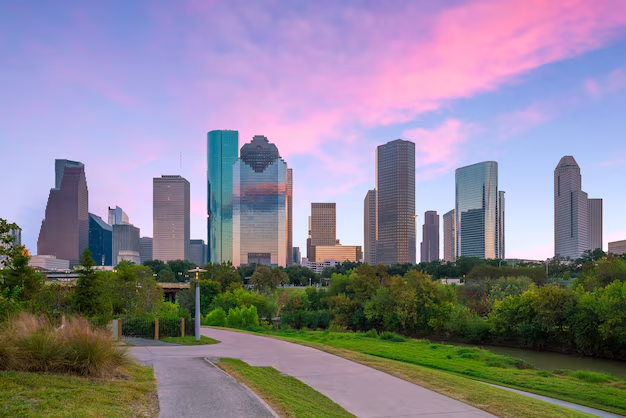
Atlanta, GA: A Practical Guide to the City for Residents and Visitors
Atlanta, Georgia is a fast-growing, diverse Southern city known for its business centers, historic neighborhoods, green spaces, and vibrant culture. Whether you live here, are planning a visit, or are just trying to understand how the city works, this guide walks through the essentials of Atlanta as a city—from neighborhoods and transportation to government services and things to do.
Where Atlanta Is and How the City Is Organized
Atlanta is the capital city of Georgia and the core of the larger Atlanta metropolitan area. When people say “Atlanta,” they might mean:
- The City of Atlanta (within Fulton and DeKalb counties)
- Metro Atlanta, which includes surrounding cities and suburbs
If you’re dealing with things like utilities, permits, city taxes, or local services, you usually care specifically about the City of Atlanta government, not just the metro area.
Key Government Basics
The City of Atlanta operates under a mayor–city council system.
Main city government location:
- Atlanta City Hall
55 Trinity Ave SW
Atlanta, GA 30303
Phone (main switchboard): (404) 330-6000
Here’s what the city government typically handles for residents and visitors:
- Water and sewer service
- Public safety (Atlanta Police, Atlanta Fire Rescue)
- Trash and recycling pickup
- Zoning, permits, and code enforcement
- Parks and recreation
- Local street maintenance within city limits
Many other services are handled at the county level (for example, property assessment, some courts, and certain health services), so it’s important to know if you’re in Fulton County, DeKalb County, or another nearby county.
Neighborhoods and Areas of Atlanta
Atlanta is often described as a “city of neighborhoods.” Each area has its own character, housing style, and feel. A few of the better-known areas include:
Downtown, Midtown, and Buckhead
Downtown Atlanta
The city’s historic core, home to government buildings, major attractions, and event venues. You’ll find:- State government offices
- Mercedes-Benz Stadium
- State Farm Arena
- Georgia World Congress Center
- Centennial Olympic Park
- Georgia Aquarium and World of Coca-Cola
Midtown
A dense, walkable area known for arts, dining, and high-rises:- High Museum of Art
- Fox Theatre
- Piedmont Park (Atlanta’s signature in-town park)
- Major office towers and condos/apartments
Buckhead
Often associated with upscale shopping and business:- Lenox Square and Phipps Plaza malls
- Many corporate offices
- Mix of high-rise condos and residential neighborhoods
Intown Neighborhoods
Closer-in neighborhoods surround Downtown and Midtown, many popular with people who like shorter commutes and walkable streets. Examples include:
- Virginia-Highland
- Inman Park
- Old Fourth Ward
- Grant Park
- Cabbagetown
- West Midtown
- East Atlanta Village
These areas commonly feature:
- Older homes (bungalows, craftsman houses)
- Local restaurants and coffee shops
- Access to Atlanta BeltLine trails
- Small neighborhood parks
Southwest and Southeast Atlanta
These parts of the city are a mix of historic neighborhoods, new development, and long-standing communities:
- Southwest Atlanta neighborhoods (often called “SWATS”) such as Cascade, West End, and Oakland City
- Southeast Atlanta areas like Lakewood, Ormewood Park, and Peoplestown
These areas are seeing:
- Renewed interest in older houses
- Transit-adjacent development along MARTA lines
- Community-focused arts and culture
Getting Around Atlanta: Transportation Options
Atlanta is known for traffic, but you have several ways to get around. Which one works best often depends on where you live or stay.
Driving and Highways
Major interstates intersect in Atlanta:
- I-75 / I-85 (they combine through Downtown, often called the Downtown Connector)
- I-20 (east–west)
- I-285 (the “Perimeter” loop around the city)
Many residents rely on cars for commuting and errands. If you’re new:
- Expect rush-hour congestion in the morning and late afternoon
- Plan extra time for travel during major events, like sporting events, concerts, and conventions
- Parking rules can be strict in some neighborhoods and commercial districts—always check signs
MARTA: Trains and Buses
MARTA (Metropolitan Atlanta Rapid Transit Authority) runs:
- Rail lines connecting:
- Hartsfield–Jackson Atlanta International Airport
- Downtown
- Midtown
- Buckhead
- Parts of Decatur and North Fulton/DeKalb
- Bus routes across much of the city
MARTA’s main rail hubs in the city include:
- Five Points Station (Downtown transfer hub)
- Peachtree Center Station (Downtown core)
- Midtown Station
- Arts Center Station
- Lindbergh Center Station (Buckhead area)
MARTA is especially useful if you:
- Live or stay near a station
- Commute to Downtown or Midtown
- Travel to or from the airport
Atlanta Streetcar and BeltLine
- The Atlanta Streetcar currently runs a loop around parts of Downtown and the Sweet Auburn area.
- The Atlanta BeltLine is a growing network of multi-use trails and planned transit circling the city’s core, connecting neighborhoods like:
- Inman Park
- Old Fourth Ward
- Virginia-Highland
- West End
For short trips, walking or biking the BeltLine is a popular alternative to driving.
Rideshare, Bikes, and Scooters
In many parts of the city—especially Midtown, Downtown, Old Fourth Ward, and around the BeltLine—you’ll find:
- Rideshare services
- Bike lanes (varies by street)
- Scooters and bike share in some areas
These are often used for last-mile connections from transit or for quick local trips.
City Services in Atlanta: What Residents Need to Know
If you live in the City of Atlanta, you’ll typically interact with the city on issues like water, trash, permits, and public safety.
Water and Sewer
Water and sewer in most of the city are managed by:
- City of Atlanta Department of Watershed Management
City Hall East / Offices vary by service
Main customer service: (404) 546-0311
Residents may contact Watershed Management for:
- Starting or stopping water service
- Billing questions
- Reporting leaks or water quality concerns
Trash, Recycling, and Yard Waste
Solid waste services are handled by:
- City of Atlanta Department of Public Works – Solid Waste Services
Common topics:
- Weekly trash collection
- Recycling schedule
- Bulk item pickup (large appliances, furniture)
- Yard trimmings pickup
Collection days vary by address; the city provides schedules and guidelines for what can be recycled or set out at the curb.
Public Safety
Key public safety agencies for the City of Atlanta:
Atlanta Police Department (APD)
Public Safety Headquarters
226 Peachtree St SW
Atlanta, GA 30303
Non-emergency: (404) 658-6666
Emergency: 911Atlanta Fire Rescue Department (AFRD)
Handles fire suppression, rescue, and emergency medical response within city limits.
Residents and visitors can explore which APD zone they are in, which helps with neighborhood-level contact and crime information.
Atlanta City Government and Civic Services
Understanding how to work with the city can save time when you need permits, records, or help with a neighborhood issue.
City Council and Local Representation
The Atlanta City Council is made up of:
- District council members (representing geographic council districts)
- At-large council members (representing the whole city)
Council meetings typically address:
- Local ordinances
- Zoning changes
- City budgets and policy
Residents often:
- Contact their district council member for neighborhood concerns
- Attend or watch council meetings to stay informed on city decisions
Permits, Licenses, and Zoning
If you’re building, renovating, or opening a business in Atlanta, you’ll likely work with:
- Office of Buildings / Department of City Planning
Typically handles:- Building permits
- Zoning review
- Certificates of occupancy
- Business Licensing (often administered through specific city offices)
Common tasks:
- Getting a building permit for home additions or major renovations
- Checking if a property is zoned for residential, commercial, or mixed use
- Applying for business licenses within city limits
Courts and Legal Matters
Within Atlanta, different courts handle different matters:
- Municipal Court of Atlanta
150 Garnett St SW
Atlanta, GA 30303
Often handles:- Traffic citations given by APD
- Some city ordinance violations
- Certain misdemeanor cases
For more serious cases or property disputes, residents may deal with county-level courts in Fulton or DeKalb County, depending on where they live.
Parks, Recreation, and Green Spaces
One of the best parts of Atlanta is its parks and tree canopy. The city maintains numerous parks, trails, and recreation centers.
Major City Parks
Some of the most notable green spaces within Atlanta include:
Piedmont Park (Midtown)
Large urban park with trails, dog parks, sports fields, and event spaces.Grant Park (Southeast Atlanta)
Historic park surrounding Zoo Atlanta, with playgrounds and open space.Westside Park
Newer large park built around the Bellwood Quarry area, offering city skyline views and trails.Chastain Park (North Buckhead area)
Features an amphitheater, paths, and sports facilities.
The city’s Department of Parks and Recreation oversees:
- Park maintenance
- Recreation centers
- Youth and adult sports programs
- Swimming pools and splash pads (seasonal)
The Atlanta BeltLine
The Atlanta BeltLine is central to how people experience the city on foot and by bike. It offers:
- Multi-use trails connecting multiple neighborhoods
- Access to parks, restaurants, and public art
- A convenient way to move around without a car in certain areas
Popular segments include:
- Eastside Trail (connecting Inman Park, Old Fourth Ward, Virginia-Highland, etc.)
- Westside Trail (through West End and Southwest Atlanta)
Arts, Culture, and Landmarks
Atlanta has a rich civil rights history, strong arts community, and a growing film and entertainment industry.
Notable Cultural Sites
Some key places within the city of Atlanta:
Martin Luther King Jr. National Historical Park
Includes Dr. King’s birth home, Ebenezer Baptist Church, and King Center.Atlanta History Center (Buckhead)
Exhibits on regional history, plus historic homes and gardens.High Museum of Art (Midtown)
Major art museum featuring modern, contemporary, and classic works.Fox Theatre (Midtown)
Historic theatre hosting touring Broadway shows, concerts, and events.
Events and Festivals
Across the year, Atlanta hosts a variety of events, many centered around:
- Music and arts festivals
- Food and restaurant weeks
- Neighborhood block parties and markets
- Sports events (professional football, basketball, soccer, baseball within the metro)
Residents and visitors can expect larger crowds and heavier traffic around Downtown, Midtown, and stadium areas during major events.
Living in Atlanta: Housing, Cost, and Daily Life
People choose Atlanta for different reasons—job opportunities, schools, culture, or proximity to family. If you’re considering living in the city, here are a few practical points.
Housing Types
Within the City of Atlanta, you’ll find:
- Single-family homes (especially in older neighborhoods and in Southwest/Southeast Atlanta)
- Townhomes and small multifamily buildings
- High-rise and mid-rise apartments and condos (especially in Midtown, Buckhead, West Midtown, and parts of Downtown)
Housing costs vary widely by neighborhood, with generally higher prices in intown and northern areas and more variation in south and west neighborhoods.
Schools and Education
City of Atlanta residents may be served by:
- Atlanta Public Schools (APS)
Covers K–12 for most addresses within the city limits. - Charter and magnet schools within APS
- Private and independent schools throughout the metro
Families often pay close attention to attendance zones and school options when choosing a neighborhood.
Working in Atlanta
Many residents work in:
- Downtown and Midtown office cores
- Buckhead business district
- Film and TV production sites across the city
- Hospitals and universities (for example in the Emory area and around Midtown)
- Technology and logistics companies inside and just outside city limits
Commuting conditions differ sharply based on whether you:
- Live close to your workplace
- Have access to MARTA rail
- Drive across or around the Perimeter (I-285)
Visiting Atlanta: Practical Tips
If you’re visiting Atlanta, GA, understanding the basic layout and transit options makes it easier to plan your trip.
Arriving by Air
Most visitors arrive through:
- Hartsfield–Jackson Atlanta International Airport (ATL)
Located just south of the city, within Atlanta’s reach by:- MARTA rail (Airport Station at the Domestic Terminal)
- Taxis and rideshare services
- Rental cars
From the airport, you can take MARTA directly to Downtown and Midtown without transferring.
Where Visitors Commonly Stay
Many out-of-town visitors choose hotels or rentals in:
- Downtown (close to major attractions and convention sites)
- Midtown (arts, dining, and easy MARTA access)
- Buckhead (shopping and business)
- Near the airport (for short stays or early flights)
If you plan to rely on MARTA rather than renting a car, staying within walking distance of a MARTA rail station can be a big advantage.
Popular Things to Do
Common activities for visitors inside the city:
Downtown / Centennial Park area
- Georgia Aquarium
- World of Coca-Cola
- College Football Hall of Fame
- CNN area (visitor-access may vary over time)
Midtown
- Piedmont Park
- Atlanta Botanical Garden
- High Museum of Art
- Fox Theatre shows
Historic and cultural neighborhoods
- Martin Luther King Jr. National Historical Park (Sweet Auburn)
- Inman Park and Old Fourth Ward (restaurants, BeltLine access)
- West End (historic homes and arts scene)
Quick Reference: Key Atlanta City Contacts
Below is a simple summary table of core city-oriented contacts that are useful for many residents and visitors.
| Need / Topic | Office or Department | Typical Purpose | Phone (General) |
|---|---|---|---|
| City general information | Atlanta City Hall | Main city government switchboard | (404) 330-6000 |
| Water and sewer | Dept. of Watershed Management | Start/stop service, billing, leaks | (404) 546-0311 |
| Trash and recycling | Dept. of Public Works – Solid Waste Services | Collection days, bulk pickup, service issues | Often via 311 / city lines |
| Police (non-emergency) | Atlanta Police Department | Non-urgent reports, information | (404) 658-6666 |
| Emergencies (citywide) | Police / Fire / EMS via 911 | Life safety and urgent emergencies | 911 |
| Traffic / city code issues | City of Atlanta (311 service line, where active) | Potholes, code concerns, some city services requests | Local 311 / main city |
| Courts (city-level) | Municipal Court of Atlanta | Traffic tickets, city ordinance violations | Main court line (varies by department) |
☎️ Tip: For many everyday city questions (missed trash pickup, potholes, general info), residents often start with Atlanta’s 311-style service or the main City Hall number and are routed to the right department.
Understanding Atlanta as a city—its neighborhoods, transportation options, city services, and key institutions—makes it much easier to live here comfortably, visit efficiently, or plan a move. With a basic grasp of how the City of Atlanta government is organized, how to get around, and where important services and landmarks are located, you can navigate Atlanta with far more confidence and fewer surprises.