
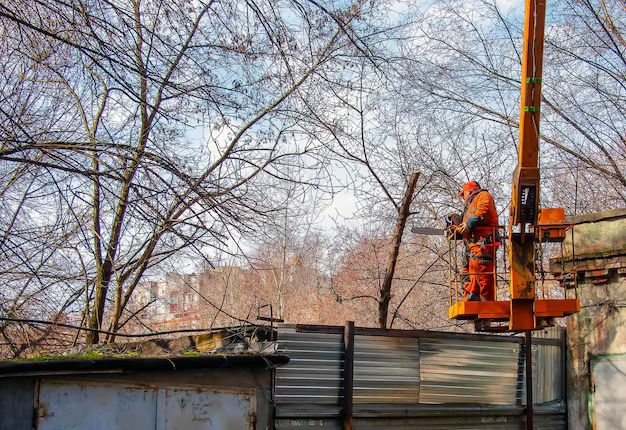
Tree Removal in the City of Atlanta: What Homeowners Need to Know
Atlanta is known as the “City in a Forest” for a reason. Trees are everywhere—lining streets in Buckhead, shading backyards in East Atlanta, and towering over older homes in neighborhoods like Grant Park and West End.
Because trees are such a big part of the city’s character, Atlanta tightly regulates tree removal, even on private property. If you live in Atlanta and are thinking about removing a tree, you need to understand how the City of Atlanta tree ordinance, permits, and processes work so you avoid fines and delays.
This guide walks you through when you need a tree removal permit, how to apply, common exceptions, what it costs, and who to contact—all specifically for Atlanta, Georgia.
How Tree Removal Works in the City of Atlanta
In the City of Atlanta limits (this is different from just having an “Atlanta” mailing address), tree removal is governed by the City of Atlanta Tree Protection Ordinance. This ordinance applies to:
- Most trees on private property
- Trees on public property, including parks and rights-of-way
- Construction and development projects
In general, if you want to remove a tree that meets the city’s definition of a “protected tree,” you’ll need advance approval and a permit from the city.
What Counts as a “Protected Tree” in Atlanta?
In Atlanta, a lot of trees are considered protected, and that’s where many homeowners are surprised.
A tree is typically protected if:
- It is 6 inches or more in diameter at breast height (DBH) on a single-family residential lot, or
- It is larger (often 6–12 inches DBH or more) on other types of properties, or
- It is a street tree or on public property, or
- It is a hardwood or long-lived species (like oak) of a certain size
DBH is measured at about 4.5 feet above the ground. If you’re unsure whether your tree qualifies, many residents either:
- Measure the trunk circumference with a tape measure and divide by 3.14 to get DBH, or
- Ask a certified arborist to confirm DBH and condition.
Because rules can be updated, it’s smart to confirm current thresholds with the City of Atlanta Arborist Division before taking action.
When You Need a Tree Removal Permit in Atlanta
You generally need a tree removal permit in Atlanta if:
- The tree is a protected size and on your private property
- You want to remove a tree for construction, additions, driveways, or landscaping changes
- The tree is healthy, but you prefer it gone for sunlight, space, or aesthetics
- The tree is near a property line, and you plan to cut it down entirely
Even if the tree is dead, dying, or hazardous, Atlanta usually requires documentation and approval so it can be properly recorded and fees or replanting requirements (if any) can be handled correctly.
When You May Not Need a Permit
There are some limited situations where a full permit may not be necessary, though you may still need to document the condition:
- Small trees below the protected size threshold
- Emergency situations where a tree has already fallen on a house, car, or across a road during a storm
- Routine pruning that does not kill or severely damage the tree
Even with emergencies, residents often follow up with the City Arborist or Code Enforcement so there’s a clear record of what was done and why.
When in doubt, check first. Acting without clarification can lead to fines, stop-work orders, or required replacement trees.
Who Oversees Tree Removal in Atlanta?
Tree removal inside the City of Atlanta is mainly handled by the Office of Buildings – Arborist Division.
Commonly contacted offices include:
- City of Atlanta Arborist Division
- Office of Buildings (within the Department of City Planning)
- 55 Trinity Avenue SW, Atlanta, GA 30303
- Main City information line: (404) 330-6000 (you can request transfer to the Arborist Division)
Residents typically:
- Confirm whether their address is inside city limits (not just “Atlanta” ZIP code).
- Contact the Arborist Division or check with a local arborist familiar with Atlanta’s tree ordinance.
If you’re in unincorporated Fulton County, DeKalb County, or another nearby city like Sandy Springs or Decatur, different rules apply. The city ordinance covered here applies only to parcels within the City of Atlanta municipality.
Step-by-Step: How to Get a Tree Removal Permit in Atlanta
While details can change over time, most Atlanta homeowners can expect some version of the steps below.
1. Verify Your Jurisdiction
Make sure your property is actually within the City of Atlanta:
- Tax records, city property maps, and utility bills can help confirm.
- Properties with an “Atlanta” address may still fall under another city or county.
2. Evaluate the Tree
You’ll want to know:
- Species (oak, pine, maple, etc.)
- Size (DBH)
- Visible condition (leaning, dead limbs, decay, fungus, storm damage)
- Location relative to house, driveway, property line, and utilities
Many residents hire a certified arborist to provide a written assessment and photos, especially when the tree is claimed to be hazardous.
3. Determine Permit Type
Common situations in Atlanta:
- Single-tree removal, no construction – Homeowner requests to remove a tree not related to a building permit.
- Tree removal tied to construction – Removal as part of remodeling, new home, deck, or driveway.
- Public/right-of-way trees – May involve Public Works or Parks along with the Arborist Division.
Permit requirements and fees often differ depending on why you’re removing the tree.
4. Submit Application and Documentation
You may be asked to provide:
- Application form for tree removal
- Site sketch or survey showing property lines, house, and tree locations
- Photos of the tree, including base, trunk, and overall canopy
- Arborist report for hazardous, sick, or structurally unsound trees
- For construction: plans stamped or drawn to scale showing all existing and proposed changes
Applications are typically submitted through the City of Atlanta permitting system or at the Office of Buildings.
5. City Arborist Review or Site Visit
The City Arborist may:
- Review your documents remotely, or
- Visit your property to visually inspect the tree(s)
They will determine:
- Whether the tree is hazardous, dead, dying, or diseased
- Whether removal is justified or if alternative measures (such as pruning or cabling) might preserve the tree
- Whether recompense (tree replacement or fees) is required
6. Permit Approval and Conditions
If approved, your permit may include:
- Permission to remove specific tree(s)
- Requirements to replant new trees of certain sizes or species
- A recompense payment into the city’s tree fund if replanting on-site isn’t feasible
Keep a copy of the permit with you or with your tree service so it can be shown if an inspector or neighbor raises concerns.
Atlanta Tree Removal Costs and Recompense
There are usually two separate cost areas to consider in Atlanta:
Removal cost itself
- Paid to a tree service or contractor
- Varies based on tree size, access, equipment, and risk (for example, a large pine between houses in Inman Park will generally cost more than a small tree in an open backyard).
City fees or recompense
- Related to tree protection requirements and calculated based on tree size, species, and replacement standards.
- In some cases you may need to either:
- Plant replacement trees on your property, or
- Pay into the City of Atlanta Tree Trust Fund when on-site replanting isn’t practical.
Costs can vary significantly by situation. Many homeowners get several quotes from insured tree services and double-check all city-related fees directly with the Arborist Division.
Common Reasons for Tree Removal in Atlanta
Residents in Atlanta often seek tree removal for:
- Hazard or safety risk – Leaning trees, large dead limbs, or roots destabilizing a porch or foundation.
- Storm damage – After heavy rains or wind, pines and hardwoods can split or uproot.
- Construction or renovation – House expansions, new driveways, or ADUs (accessory dwelling units) often conflict with existing trees.
- Infrastructure conflicts – Trees interfering with sidewalks, driveways, sewer lines, or overhead power lines.
For trees near Georgia Power lines or other utilities, residents often coordinate with both a tree service and the utility company for safe removal or trimming.
What Happens if You Remove a Tree Without a Permit in Atlanta?
Removing a protected tree without proper approvals can lead to serious consequences in the City of Atlanta, including:
- Fines and penalties per tree
- Requirements to pay recompense fees
- Orders to plant replacement trees
- Stop-work orders for construction projects
The city takes unauthorized removal seriously because of Atlanta’s focus on protecting its urban tree canopy. Before cutting, verify whether a permit is needed—even if the tree appears to be dead or hazardous.
Practical Tips for Atlanta Homeowners Considering Tree Removal
Before you schedule any work, consider these steps tailored to Atlanta:
- ✅ Confirm city limits – Check that your property is inside the City of Atlanta jurisdiction, not another municipality.
- ✅ Document the tree – Take clear photos (base, trunk, canopy, and any damage or decay).
- ✅ Measure DBH – Measure trunk circumference at 4.5 feet high; divide by 3.14 for an approximate DBH.
- ✅ Talk to a certified arborist – Especially for borderline or hazardous trees.
- ✅ Check with the Arborist Division – Ask what type of permit or documentation is required for your situation.
- ✅ Use an insured tree contractor – Ask for proof of insurance and experience working under Atlanta’s tree ordinance.
- ✅ Keep all paperwork – Permit approvals, arborist reports, and invoices can be helpful if questions arise later.
Simple Overview: Tree Removal Rules Inside the City of Atlanta
| Topic | What Atlanta Residents Should Know |
|---|---|
| Jurisdiction | Rules here apply only inside City of Atlanta limits |
| Protected trees | Most trees ≥ 6" DBH on residential lots are treated as protected |
| Permit usually required? | Yes, for most removals of protected trees |
| Hazardous or dead trees | Often still require city review/documentation |
| Oversight | City of Atlanta Office of Buildings – Arborist Division |
| Possible conditions | Replanting new trees or recompense payments may be required |
| Risk of skipping permit | Potential fines, penalties, and replacement requirements |
Key Contacts and Next Steps in Atlanta
If you’re ready to move forward or just need clarification, Atlanta residents commonly start with:
- City of Atlanta – Office of Buildings (Arborist Division)
- 55 Trinity Avenue SW
- Atlanta, GA 30303
- Main City Information: (404) 330-6000 (ask for the Arborist Division or tree-related permits)
You can also:
- Ask a local certified arborist to evaluate the tree and help you navigate the city process.
- Contact your neighborhood planning unit (NPU) or homeowners association if there are additional neighborhood-level guidelines.
Understanding how tree removal works in the City of Atlanta before you cut can save you money, protect your property, and help maintain the urban forest that makes Atlanta unique.