
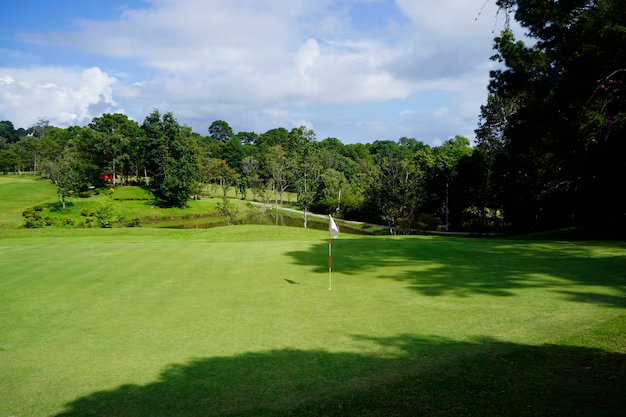
Country Clubs in Atlanta, GA: Where to Play, Network, and Relax
Atlanta has a long tradition of private country clubs that mix golf, tennis, swimming, dining, and social events. Whether you’re new to the city, relocating inside the metro area, or comparing memberships, it helps to understand how country clubs in Atlanta, GA typically work, what they cost, and which neighborhoods they serve.
This guide focuses on Atlanta-area clubs, common membership options, and what everyday Atlantans usually consider before joining.
How Country Clubs Work in Atlanta
Most Atlanta country clubs follow a similar structure:
- Private membership: You apply, pay an initiation fee, and then ongoing monthly dues. Some clubs have waitlists.
- Family-focused amenities: Golf, tennis, pools, fitness, kids’ programs, and social events are common.
- Dress codes and rules: Many clubs have standards for attire, cell phone use, and guest access.
- Location-driven culture: Clubs tend to serve specific areas (in-town, North Fulton, East Cobb, etc.), and each has its own feel.
If you live inside the Perimeter (ITP) vs. outside the Perimeter (OTP), traffic and drive time can make a big difference in which club actually fits your lifestyle.
Main Types of Country Club Memberships in Atlanta
While each club has its own categories, you’ll usually see versions of:
Full Golf Membership
Access to golf, practice facilities, tennis, pool, fitness, and social events. Typically the highest initiation fee and dues.Social / Clubhouse Membership
Access to dining, social events, and often pool and fitness. Limited or no golf privileges (sometimes pay-per-round with restrictions).Sports / Athletic Membership
Emphasis on tennis, pickleball, fitness, and pool. Golf access may be restricted or extra.Junior / Young Professional Membership
Discounted for members under a certain age (often mid-30s or early 40s), popular with younger Atlantans building careers and networks.Corporate Membership
Offered by some clubs to businesses, allowing multiple designees to use the club.
Most country clubs in Atlanta will walk you through options with a membership director and can provide current pricing, guest rules, and wait times.
Key Atlanta Country Club Areas and Notable Clubs
Below is a high-level overview of well-known Atlanta-area country club zones. This is not a complete list of every club, but it covers many of the names you’ll hear in local conversations.
In-Town and Close-In North Atlanta
These clubs appeal to people in Buckhead, Brookhaven, Sandy Springs, and in-town neighborhoods who want to avoid long OTP drives.
Atlanta Athletic Club – Johns Creek
- Area served: North Fulton/Johns Creek, often popular with families in Duluth, Johns Creek, Alpharetta.
- Known for: Championship-level golf, extensive tennis and aquatics, strong junior programs.
- Typical fit: Golf-focused families and serious players willing to drive a bit further for top-tier facilities.
Cherokee Town & Country Club – Buckhead & Sandy Springs
Cherokee operates two campuses: the Town Club in Buckhead and the Country Club in Sandy Springs.
- Area served: Buckhead, Chastain Park, Sandy Springs, North Atlanta.
- Known for: Traditional private-club environment, multiple dining options, extensive sports and social offerings.
- Typical fit: Families and professionals wanting a longstanding, multi-generational club culture.
Capital City Club – Brookhaven & Downtown
Another multi-campus club with facilities in Brookhaven (golf and family amenities) and downtown Atlanta (city club).
- Area served: In-town neighborhoods, Brookhaven, Buckhead.
- Known for: Classic atmosphere, golf, dining, and city-club networking.
- Typical fit: Professionals who value both a city club and a traditional country club environment.
North Fulton & Alpharetta / Milton
This region has become a major hub for golf and country club living, especially for families in Alpharetta, Milton, Johns Creek, and Roswell.
The Country Club of the South – Johns Creek
- Area served: Johns Creek, Alpharetta, East Roswell.
- Known for: Gated community living, golf course integrated into a residential neighborhood, family-friendly amenities.
- Typical fit: Homeowners in the community or nearby looking for a central gathering place for golf and social events.
The Golf Club of Georgia – Alpharetta
- Area served: Alpharetta, Milton, Cumming.
- Known for: Multiple courses, golf-centric culture, practice facilities.
- Typical fit: Golf-first members who prioritize course quality and practice over a full-on “resort” experience.
White Columns Country Club – Milton
- Area served: Milton, Alpharetta, North Fulton suburbs.
- Known for: Golf, tennis, pool, and a traditional neighborhood-club atmosphere.
- Typical fit: Families who want a local hub for activities without driving into the city.
Brookfield Country Club – Roswell
- Area served: Roswell, East Cobb, North Fulton.
- Known for: Established neighborhood club with golf, tennis, pool, and social events.
- Typical fit: Families looking for a mid-sized, community-focused club environment.
East Cobb, Marietta & West/Northwest Atlanta
For those living in Marietta, East Cobb, Smyrna, and Kennesaw, there are several notable options on the northwest side.
Atlanta Country Club – Marietta
- Area served: East Cobb, Marietta, some Roswell residents.
- Known for: Historic presence in Atlanta golf, scenic course, and proximity to the Chattahoochee River.
- Typical fit: Golfers and families wanting a traditional club feel with strong local roots.
Indian Hills Country Club – Marietta
- Area served: East Cobb, Marietta.
- Known for: Large tennis program, swim teams, multiple nines of golf, and active junior activities.
- Typical fit: Busy families seeking a highly social, neighborhood-focused club.
Marietta Country Club – Kennesaw/Marietta
- Area served: West Cobb, Kennesaw, Marietta.
- Known for: Multiple golf nines, pool, tennis, and broad family programming.
- Typical fit: Households on the northwest side of the metro who don’t want to drive into North Fulton.
Southside, Fayette, and Peachtree City
If you’re near Hartsfield–Jackson Airport, Fayetteville, Newnan, or Peachtree City, these clubs can be more convenient than driving north.
Peachtree City & Fayetteville Area Clubs
- Area served: Peachtree City, Fayetteville, Tyrone, Senoia.
- Known for: Golf-cart-friendly communities, multiple courses in close proximity, and a strong family orientation.
- Typical fit: Residents in planned communities who want to incorporate golf, tennis, and swimming into daily life.
Quick Comparison: How Atlanta Country Clubs Differ
Use this simplified table to think about what might fit your situation. It’s a general local snapshot, not a ranking.
| Priority | Best-Fit Areas to Explore | What to Expect Locally |
|---|---|---|
| Short commute from in-town | Buckhead, Brookhaven, Sandy Springs | More established clubs, higher demand, “city-adjacent” culture |
| Top-tier golf focus | Johns Creek, Alpharetta, Milton, Marietta | Multiple courses, strong practice facilities, active golf scene |
| Family & kids’ activities | East Cobb, North Fulton neighborhoods, Peachtree City | Swim teams, junior clinics, summer camps, holiday events |
| Networking & business use | In-town city/country clubs (Buckhead, Downtown) | Business lunches, client events, professional mixers |
| More space / quieter feel | Milton, West Cobb, Peachtree City | Larger properties, more residential integration |
Typical Costs and Financial Considerations in Atlanta
Costs vary widely from club to club, but some common Atlanta patterns:
Initiation fees
Can range from lower four figures to well into the five-figure range, depending on the club’s prestige, location, and demand. Many Atlanta clubs charge more for full golf memberships than for social or athletic memberships.Monthly dues
Often tiered by membership type (golf vs. social) and sometimes by age. Expect ongoing charges for carts, guest fees, events, and some clinics.Food and beverage minimums
Many clubs require members to spend a minimum amount per month or quarter in dining venues.Assessments
Periodic improvement assessments can occur when clubs renovate facilities or courses.
Because Atlanta’s cost of living and real estate have risen, country club pricing may be higher than newcomers expect, especially at in-demand in-town and North Fulton clubs. Always ask for a clear breakdown of all fees before joining.
What Amenities Atlanta Residents Commonly Look For
When Atlantans compare country clubs, they usually focus on a combination of:
Drive time in traffic
A 10–15 mile drive can easily turn into 30+ minutes at rush hour. Where you live (ITP vs. OTP) often matters more than which club looks best on paper.Golf course quality and access
- Number of courses or holes
- Tee time availability on weekends
- Tournament and league options
Tennis and pickleball
Atlanta has a very active ALTA (Atlanta Lawn Tennis Association) scene, so many clubs have strong tennis programs. Pickleball has also grown rapidly.Pools and swim teams
Family-oriented clubs usually run summer swim teams, lessons, and kids’ pool events, which can be a big draw for East Cobb and North Fulton families.Fitness and wellness
On-site gyms, group exercise, personal training, and sometimes spa services.Kids’ and teen programming
Camps, holiday events, junior golf and tennis clinics, and teen socials are common expectations in family-heavy suburbs.Dining and social life
Members often use clubs for date nights, Sunday brunch, holiday dinners, and business meals. Some in-town clubs also host more formal events.
How to Choose the Right Atlanta Country Club for You
Use these steps to narrow down your options:
1. Map Your Commute
- Draw a realistic 15–25 minute drive radius from home and, if important, from work.
- Focus on clubs inside that radius to ensure you’ll actually use your membership.
2. Decide What Matters Most
Ask yourself:
- Do you want serious golf or just occasional play?
- Is this mainly for family activities (pool, camps, kids’ sports)?
- How important are business networking and formal events?
- Do you want a traditional, formal environment or a more relaxed feel?
Rank your priorities so you can weigh trade-offs between course quality, social scene, and cost.
3. Compare Membership Types
When you speak with membership staff, clarify:
- Which amenities each membership level includes
- Guest policies (for out-of-town family or clients)
- Age-based options (young professional, junior memberships)
- Any current waitlists or restrictions on certain categories
4. Schedule Tours and Trial Visits
Most Atlanta clubs will:
- Offer guided tours of the course, clubhouse, fitness areas, and pool
- Arrange meet-and-greet opportunities with current members or staff
- Sometimes allow trial rounds or limited access days so you can get a feel for the environment
Pay attention to how busy the club feels at your likely visit times (weekend mornings, late afternoons, summer weekends, etc.).
5. Understand the Full Cost
Before you sign:
- Request a written outline of all fees (initiation, dues, cart fees, storage, assessments, minimums).
- Ask how often dues increase and how assessments have worked in the past.
- Clarify exit rules if you later move away from Atlanta or need to resign.
Atlanta-Specific Tips for Getting the Most Out of Membership
Leverage ALTA and local leagues
If you play tennis, Atlanta’s league culture is huge. Many clubs actively participate, giving you a built-in social and competitive network.Use the club as a traffic workaround
Some members schedule workouts, meals, or practice sessions around rush hour, using the club as a “third place” instead of sitting on GA-400 or I-285.Think school districts and carpools
If you have kids in North Fulton, East Cobb, or Gwinnett schools, choose a club where teammates and classmates are likely to join—this can simplify carpooling to practices and events.Check seasonal patterns
In Atlanta, summer is pool and camp season, while spring and fall are peak golf and tennis. Visit at different times of year if possible to see how the club adapts.Ask about reciprocal arrangements
Some Atlanta clubs have reciprocal access with other clubs in Georgia or out of state, which can be useful if you travel or have a second home.
If You’re Just Visiting Atlanta
If you’re in town temporarily and want a country-club-style experience:
- Some private clubs allow guest access when you’re accompanied by a member.
- Certain hotels and resorts north of the city offer public or semi-private golf courses with amenities similar to clubs, without membership.
- If you frequently visit Atlanta for work, a city club with affiliated country club privileges might be worth exploring.
Summary: Finding Your Place in Atlanta’s Country Club Scene
For country clubs in Atlanta, GA, your best match usually comes down to:
- Where you live and drive daily
- Whether you prioritize golf, family amenities, or networking
- Your budget for initiation and ongoing dues
- The club culture that feels comfortable to you
By focusing on location, amenities, and membership structure, and by visiting a few clubs across Atlanta’s main areas—Buckhead/Brookhaven, North Fulton, East Cobb/Marietta, and the Southside suburbs—you can quickly narrow your options to the clubs that fit your life in Atlanta right now.