
Apartments in Atlanta’s Old Fourth Ward: How to Find the Right Place for You
Looking for apartments in Old Fourth Ward, Atlanta, GA puts you right in the middle of one of the city’s most walkable, fast-changing intown neighborhoods. You’re close to the BeltLine Eastside Trail, the MLK Historic District, and a long list of restaurants, bars, and parks that make day-to-day life feel urban and convenient.
This guide walks you through what to expect from Old Fourth Ward apartments, typical price ranges, key streets and sub-areas, parking and transit realities, and how to decide if this is the right neighborhood for your budget and lifestyle.
Why Old Fourth Ward Is So Popular for Renters
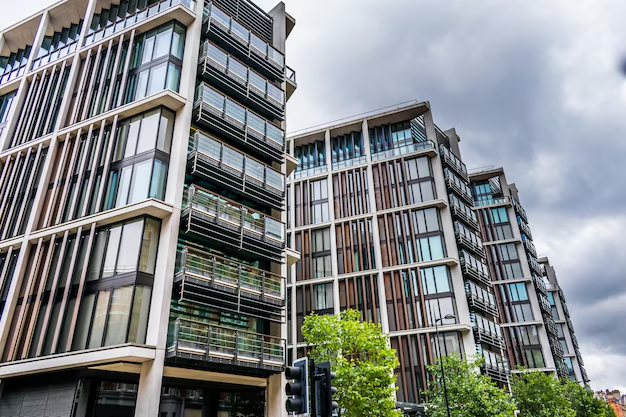
Old Fourth Ward (often shortened to O4W) sits just east of Downtown and south of Midtown. It blends historic residential streets with new mid-rise and high-rise apartment buildings.
People looking for apartments in Old Fourth Ward are often drawn by:
- Walkability and biking to work, nightlife, and groceries
- Easy access to the Atlanta BeltLine Eastside Trail
- Proximity to Downtown, Midtown, Inman Park, and Poncey-Highland
- A mix of luxury apartments, renovated lofts, and older budget-friendlier buildings
- Strong sense of Atlanta history, especially around Martin Luther King Jr. National Historical Park
If you want an intown, car-optional lifestyle, Old Fourth Ward is one of the top spots in Atlanta to make that work.
What Types of Apartments Are in Old Fourth Ward?
You’ll find a wide variety of apartment styles packed into a relatively small area.
1. Newer Luxury and Mid-Rise Buildings
These are usually clustered near:
- Ponce City Market area
- Along or near the BeltLine Eastside Trail
- Edgewood Avenue and Highland Avenue corridors
Common features include:
- Studio, 1-bedroom, 2-bedroom, and sometimes 3-bedroom floor plans
- In-unit laundry, modern kitchens, and central air
- Amenities like pools, gyms, rooftop decks, coworking spaces, and pet spas
- Controlled access garages or parking decks
If your priority is modern finishes and amenities and you want to live right off the BeltLine or next to nightlife, this type of building is common in O4W.
2. Historic Loft-Style Apartments
Closer to Downtown and near older commercial buildings, you may find:
- Converted warehouse or factory buildings with tall ceilings
- Exposed brick, large windows, and open floor plans
- A more industrial, “loft” feel than standard apartments
These buildings often trade some amenities for character. Parking may be more limited or surface-lot only.
3. Smaller Walk-Up and Garden-Style Apartments
On residential side streets away from the BeltLine, you’ll see:
- Smaller 2–3 story buildings
- More basic amenities
- Limited or no on-site gyms/pools, but often slightly lower rents than brand-new complexes
These can be a sweet spot if you want to live in Old Fourth Ward but avoid top-tier luxury pricing.
4. Single-Family Homes Split Into Units
Some older houses are divided into:
- Duplexes, triplexes, or roommate-style rentals
- Units that may not have the polish of big complexes but can offer more space or a yard
These are more scattered and often listed through individual landlords or small property managers.
Typical Rent Ranges in Old Fourth Ward
Exact prices change frequently, but you will usually see Old Fourth Ward apartments priced on the higher side of Atlanta’s average because of location and demand.
Use these rough patterns as a quick reference (assuming market-rate buildings):
| Apartment Type | General Price Pattern (Old Fourth Ward vs. Many Other ATL Areas) |
|---|---|
| Studio | Often higher than citywide average |
| 1-bedroom | Typically moderate to high for intown neighborhoods |
| 2-bedroom | Frequently high, especially near BeltLine & Ponce City Market |
| 3-bedroom or larger units | Less common; often premium-priced |
| Older / basic walk-up units | Can be more affordable, but still not “cheap” |
If you’re comparing to farther-out neighborhoods like parts of Westside, South Atlanta, or Perimeter suburbs, expect to pay more for the same square footage in Old Fourth Ward in exchange for location and walkability.
Key Micro-Areas Within Old Fourth Ward
Old Fourth Ward is not uniform. Where you choose to rent will shape your daily life.
Near Ponce City Market & BeltLine Eastside Trail
- Very popular for newer luxury apartments
- Steps from Ponce City Market, BeltLine, and plenty of bars/restaurants
- Great for people who want a car-light lifestyle
- Heavier crowds, traffic, and noise, especially on weekends
Best if you value being in the center of the action and don’t mind higher rent.
Edgewood Avenue & Highland Avenue Corridors
- A mix of apartments, townhomes, and retail
- Good access to Inman Park, downtown Edgewood, and the BeltLine
- Nightlife and restaurants within walking distance
Appeals to renters who want a strong social and dining scene without being directly on the BeltLine.
MLK Historic District / Auburn Avenue Area
Around Auburn Ave NE, Jackson St NE, Boulevard NE and nearby streets:
- Closer to Martin Luther King Jr. National Historical Park
- Walking distance to the King Center and historic churches
- Mix of older apartments, some newer infill buildings, and historic homes
This area is more about history and neighborhood feel than high-rise luxury, though some newer projects are appearing.
Residential Streets South of Freedom Parkway
Between Old Fourth Ward and Inman Park/Poncey-Highland:
- Quieter, with more tree-lined streets and houses
- Some smaller apartment buildings and house-based rentals
- Still walkable or bikeable to BeltLine and Ponce City Market
Good if you want Old Fourth Ward access but a slightly softer, residential feel.
Transportation, Parking, and Getting Around
When you’re apartment-hunting in Old Fourth Ward, think carefully about how you plan to get around Atlanta.
Driving and Parking
- Many newer buildings include garage parking (often with an extra monthly fee).
- Street parking can be tight, especially near the BeltLine and Ponce City Market.
- Weekend evenings can bring heavy traffic on North Avenue, Boulevard, and Ponce de Leon Avenue.
If you commute by car to places like Perimeter, Cobb, or south of the airport, factor in rush-hour traffic from central Atlanta.
MARTA Access
Old Fourth Ward doesn’t have a heavy-rail MARTA station inside the neighborhood, but nearby options include:
- Inman Park/Reynoldstown Station (MARTA Rail – East/West line)
- King Memorial Station (MARTA Rail – East/West line)
- Several MARTA bus routes running along major streets like Boulevard and North Avenue
If using transit daily, ask leasing offices or landlords about the nearest MARTA bus stops and your walk time to rail.
Walking and Biking
One of the biggest reasons people pick O4W is the ability to:
- Walk to groceries, gyms, bars, and coffee shops
- Use the BeltLine Eastside Trail for commuting or recreation
- Bike to Midtown, Inman Park, Virginia-Highland, and Downtown
If walkability is your priority, specifically look for apartments:
- Within a few blocks of the BeltLine
- Near Ponce City Market, Edgewood Ave, or Highland Ave corridors
Safety and Noise: What Local Renters Consider
Like other intown Atlanta neighborhoods, safety can vary block by block.
Common renter considerations:
- Busy nightlife areas can bring noise, late-night foot traffic, and occasional property crime.
- Blocks closer to the BeltLine and major bars may be louder but more active and well-lit.
- More residential sections may be quieter but less continuously busy.
Useful habits for apartment hunting:
- Visit the area at night and on weekends, not just weekday afternoons.
- Check lighting, building access controls, and parking security.
- Talk with current residents if possible to get a feel for day-to-day life.
For citywide public safety information or questions, you can reach:
- Atlanta Police Department Zone 5 (which covers parts of Old Fourth Ward)
- Zone 5 Precinct: 200 Spring St NW, Atlanta, GA 30303
- Non-emergency line (through APD): 404-614-6544
For emergencies, always use 911.
Utilities, Fees, and Cost of Living Details
When comparing Old Fourth Ward apartments, look past the base rent.
Common Additional Costs
- Parking fees: Garage or reserved spaces may add to your monthly bill.
- Pet rent and pet deposits: Most luxury and mid-rise buildings are pet-friendly but charge for it.
- Amenity fees: Some buildings bundle pool, gym, and community space costs into a separate fee.
- Trash, sewer, and other building charges: These can be listed separately on your lease.
Ask leasing agents to explain all monthly and move-in fees so you can compare units fairly.
Utility Considerations
- Many buildings have individually metered electric (often Georgia Power).
- Water and gas may be sub-metered or allocated by the building.
- Older units or converted houses may have different insulation and HVAC efficiency, which affects bills.
You can contact Georgia Power for general electric service info:
- Georgia Power Customer Service (residential): 1-888-660-5890
Choosing the Right Old Fourth Ward Apartment for Your Lifestyle
Before you sign a lease, get clear on your top priorities. Old Fourth Ward offers many options, but not every building or block will fit every lifestyle.
If You Want Maximum Walkability
Focus on:
- Apartments near Ponce City Market
- Buildings directly off the BeltLine Eastside Trail
- Units close to Edgewood Ave or Highland Ave
Trade-offs: higher rent, more noise and crowds, and heavier weekend traffic.
If You Want Relative Quiet and Neighborhood Feel
Look for:
- Smaller buildings or house-based units on side streets
- Streets a bit farther from the BeltLine and nightlife, but within biking distance
- Areas south or southeast of Freedom Parkway, or deeper into residential sections off Boulevard
Trade-offs: fewer in-building amenities and sometimes longer walks to major dining/retail clusters.
If You’re Budget-Conscious but Want to Stay in O4W
Consider:
- Older mid-century or basic walk-up buildings
- Smaller independents or property-managed buildings with limited amenities
- Being a few blocks further from the BeltLine or Ponce City Market to reduce rent
You can also compare nearby neighborhoods like Inman Park, Poncey-Highland, and Sweet Auburn if you’re flexible about exact boundaries but still want to stay close by.
How to Start Your Old Fourth Ward Apartment Search
Here’s a simple step-by-step way to approach it:
Map Your Daily Life
- Where do you work or study?
- How often will you visit Midtown, Downtown, or the airport?
- Do you want to walk to groceries, gyms, and nightlife, or are you fine driving?
Set a Full Monthly Budget
- Include rent + parking + utilities + pet/amenity fees.
- Decide your max monthly cost before touring.
Pick 2–3 Micro-Areas in O4W
- Example: “Near BeltLine,” “near MLK Historic District,” and “quiet residential side streets.”
- This helps you compare apartments within the same general environment.
Tour at Different Times of Day
- Visit in the morning, rush hour, and weekend evenings.
- Listen for noise, watch traffic, and check lighting and parking.
Review the Lease Carefully
- Confirm lease length, renewal terms, and fee structure.
- Ask about maintenance response times and policies for packages, guests, and pets.
If you’re relocating from outside Atlanta, plan at least a few days of in-person touring so you can walk the neighborhood and decide which parts of Old Fourth Ward feel right.
Apartments in Old Fourth Ward, Atlanta, GA offer an unusually urban, walkable lifestyle for a largely car-dependent city. If you balance your budget, commute needs, and desired level of nightlife and activity, you can find a spot that gives you the best of both worlds: quick access to the BeltLine and intown energy, with a home base that fits how you actually live day to day.