
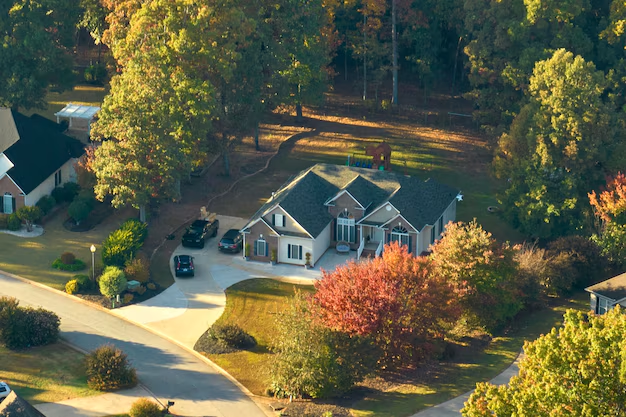
Atlanta, GA Houses for Rent: How to Find the Right Home in the City
Looking for an Atlanta, GA house for rent can feel overwhelming. The metro area is huge, neighborhoods vary a lot, and prices can change quickly block by block. With a little structure and local insight, though, you can narrow things down and find a place that actually fits your life.
This guide focuses specifically on renting a house in Atlanta, Georgia—what to expect, where to look, how much you may pay, and how the local rental process usually works.
Key Things to Know Before Renting a House in Atlanta
Before you dive into listings, get clear on a few Atlanta-specific factors:
Commute and traffic matter more than distance.
A 10-mile commute in Atlanta can be fast or painfully slow, depending on the route and time of day. Always map your drive during rush hour.Inside vs. Outside the Perimeter (ITP vs. OTP).
I-285 (the Perimeter) is a big dividing line:- ITP: Closer to city amenities, often higher rent, older homes, more walkable pockets.
- OTP: More space, newer construction in many areas, often lower rent, but more car-dependent.
Schools can heavily influence rent.
In many northside suburbs and certain in-city pockets, school clusters drive up demand and prices, even for rentals.Houses rent fast in popular neighborhoods.
Well-priced single-family homes in prime parts of Midtown, Inman Park, Virginia-Highland, Kirkwood, Decatur, Brookhaven, Smyrna, Sandy Springs, and similar areas often go quickly.
Popular Areas in and Around Atlanta to Rent a House
Where you look depends a lot on your lifestyle, budget, and commute. Here is a simplified overview.
Intown Atlanta (Inside the Perimeter)
These neighborhoods are closer to downtown and Midtown, with more access to MARTA, restaurants, and nightlife.
Examples of house-rental-friendly intown areas:
Grant Park / Ormewood Park / Summerhill
- Mix of historic homes and renovated bungalows.
- Close to Zoo Atlanta, Georgia State University area, and the BeltLine Southside Trail.
- Good for: People who want a neighborhood feel plus quick access to downtown.
Kirkwood / East Atlanta / Edgewood
- Trendy, with many craftsman bungalows and renovated cottages.
- Growing dining and coffee shop scene, several parks, and some BeltLine connectivity.
- Good for: Young professionals, small families, and roommates.
Virginia-Highland / Morningside / Inman Park
- Highly walkable, with older homes, tree-lined streets, and strong demand.
- Near BeltLine Eastside Trail and Midtown.
- Rents are often on the higher end for intown houses.
Westside (West Midtown, Riverside, Bolton)
- Mix of older homes, new developments, and industrial-to-residential conversions.
- Easy access to I-75, Georgia Tech, and Midtown.
- Increasingly popular, with rising but still sometimes more moderate rents than some eastside hotspots.
Just Outside the Perimeter (Close OTP)
These spots are often a good balance of space and convenience.
Decatur (City of Decatur + unincorporated Decatur area)
- Strong reputation for schools in the City of Decatur.
- Walkable downtown, restaurants, and MARTA access.
- Single-family homes can be pricey but very desirable.
Smyrna / Vinings
- Convenient for people working near The Battery Atlanta / Truist Park, Cumberland, or north I-75 corridor.
- Many rental houses in established subdivisions and townhome communities.
- Generally more suburban feel, but with growing retail and dining.
Brookhaven / Chamblee
- Mix of mid-century ranch homes, renovated houses, and new builds.
- Good access to Peachtree corridor and Buckhead/Midtown via Peachtree Road or MARTA.
- Popular with renters wanting a neighborhood feel but city access.
Further OTP Suburbs
If you need more space or a lower price per square foot, you may find better house rental value in:
- Sandy Springs, Roswell, Alpharetta, Johns Creek (north)
- Duluth, Peachtree Corners, Lawrenceville (northeast)
- Mableton, Austell, Powder Springs (west/southwest)
- McDonough, Stockbridge, Jonesboro (south)
These areas are typically more car-dependent but can offer larger homes, yards, and quieter streets.
Typical Price Ranges for Houses for Rent in Atlanta
Exact prices change often, but you can expect:
| Type of House (General) | Intown Atlanta (ITP) | Near OTP (Decatur, Smyrna, etc.) | Further OTP Suburbs |
|---|---|---|---|
| Small 2 bed / 1–2 bath house | Higher end of moderate to high | Moderate to moderate-high | Lower to moderate |
| 3 bed / 2 bath standard home | Moderate-high to high | Moderate to moderate-high | Often lower to moderate |
| 4+ bed or large house | High, especially in walkable areas | Moderate-high to high | Moderate, depending on school zone |
Prices vary based on:
- Neighborhood and school district
- House condition and updates
- Yard size and parking
- Proximity to MARTA, BeltLine, or major employers
If you see something that looks significantly underpriced for the area, look more closely for:
- Needed repairs
- Unclear lease terms
- Unusual move-in fees
…or potential scams.
Where to Search for Houses for Rent in Atlanta
Most renters in Atlanta use a combination of:
Major rental listing websites and apps
Search using filters such as:- Location (by neighborhood or ZIP code)
- Price range
- Number of bedrooms/bathrooms
- Pet-friendly homes
- House vs. apartment/townhome
Local property management companies
Many single-family homes are managed by:- Local real estate brokerages with rental divisions
- Dedicated property management firms with their own websites
Searching “Atlanta GA property management” and then browsing each company’s rental inventory can reveal homes that don’t always appear on the big listing sites.
Real estate agents
In the Atlanta area, some licensed real estate agents:- Help renters find houses for rent
- Have access to FMLS / Georgia MLS, which can include single-family rentals
- Sometimes can be paid by the landlord/owner, depending on the situation
Neighborhood social media groups and local boards
In some areas, homeowners prefer to rent via:- Neighborhood Facebook groups
- Local bulletin boards
- Community email lists
For these, always verify ownership and be cautious with personal info and deposits.
Understanding the Atlanta Rental Application Process
Most Atlanta landlords and property managers follow a similar process:
1. Pre-Screening
Expect questions about:
- Move-in date
- Number of occupants
- Pets (type, size, breed)
- Income range and employment
Many listings will clearly state:
- Income requirements (for example, 2.5–3x the monthly rent)
- Pet policy
- Minimum credit score guidelines
2. Formal Application
Usually done online and often includes:
- Application fee (commonly per adult applicant)
- Consent for:
- Credit check
- Background check
- Rental history verification
- Employment/income verification
Have these ready:
- Recent pay stubs or offer letter
- Employer contact info
- Prior landlord contact info
- Photo ID
3. Approval and Holding Deposit
If approved, the landlord may:
- Ask for a holding deposit to take the home off the market
- Set a move-in date and lease-signing deadline
In Atlanta, it’s common for the security deposit to be:
- Around one month’s rent, sometimes higher if:
- You have pets
- Your credit is weaker
- The landlord has a stricter policy
Always get receipts for any deposits and read the conditions under which they’re refundable or nonrefundable.
Common Lease Terms in Atlanta House Rentals
Leases for Atlanta, GA houses for rent often include:
Length:
- Standard: 12 months
- Sometimes: 18–24 months or month-to-month (usually at a premium)
Rent payment terms:
- Due date (often the 1st of the month)
- Grace period details, if any
- Late fee amounts and when they apply
Maintenance responsibilities:
Clarify who handles:- Lawn care and landscaping
- Pest control
- HVAC filter changes
- Minor vs. major repairs
Utilities:
Find out what you pay vs. what the landlord covers:- Electric, gas, water, sewer, trash
- Internet and cable
- Any HOA-related utilities (if in a community)
HOA rules (if applicable):
If the home is in a neighborhood with a homeowners association, you may have:- Parking rules
- Exterior appearance standards
- Noise or use restrictions (RV/boat parking, short-term guests, etc.)
Ask for a copy of the HOA rules before signing so you know what you’re agreeing to.
Pet Policies in Atlanta Rental Houses
Many houses for rent in Atlanta are pet-friendly, but policies vary:
Breed or size restrictions
Common in some managed communities or HOAs.Pet deposits and pet rent
You might see:- Nonrefundable pet fee
- Refundable pet deposit
- Monthly pet rent (per pet)
Number of pets allowed
Some landlords limit cats or dogs to one or two.
If you have large dogs or multiple pets, you may have better luck with single-family homes versus apartments, but you’ll often pay a bit more and may have fewer options in stricter HOAs.
Avoiding Rental Scams in Atlanta
Because Atlanta is a fast-moving rental market, scams do appear. To protect yourself:
🔒 Verify ownership
- Look up the property in the appropriate county tax assessor’s database (for example, Fulton County Board of Assessors for much of Atlanta) to confirm the listed owner.
💳 Never pay in cash, gift cards, or apps to an individual you haven’t verified.
Use traceable methods and ensure you have a written lease before paying large sums.🏠 Insist on seeing the inside of the home
Be wary if:- The “owner” says they’re out of the country
- They refuse to meet anyone in person
- They claim you can’t see the property yet but must pay now
📄 Compare details across multiple sites
If the same house is listed at different prices on different platforms, or one listing looks far cheaper, proceed carefully.
If you suspect fraud, you can contact:
- Atlanta Police Department (APD) non-emergency line: 404-658-6666
- Georgia Attorney General’s Consumer Protection Division for guidance on reporting scams.
Local Contacts and Resources That Can Help
For renters who want to understand their rights or need help with disputes, several Atlanta-area and Georgia-wide resources may be useful:
Georgia Department of Community Affairs (DCA)
Offers information on housing programs and renter assistance.- Main office: 60 Executive Park South NE, Atlanta, GA 30329
- Phone: 404-679-4840
Atlanta Legal Aid Society (for eligible low-income tenants)
Provides legal help in landlord–tenant matters in the Atlanta area.- Central Office: 54 Ellis St NE, Atlanta, GA 30303
- Main phone: 404-524-5811
Fulton County Magistrate Court – Landlord/Tenant Division
Handles dispossessory (eviction) cases within its jurisdiction.- Justice Center Tower: 185 Central Ave SW, Atlanta, GA 30303
- General info: 404-613-5360
These offices do not find rentals for you, but they can provide guidance on legal issues, especially around leases, evictions, and disputes.
Practical Tips for Renting a House in Atlanta
To make your Atlanta house hunt more efficient:
- Decide on your top 2–3 acceptable areas instead of searching the entire metro.
- Set a realistic budget based on total housing costs (rent + utilities + commuting).
- Check commute routes using map apps at your actual work hours.
- Drive the neighborhood in the evening and on weekends to get a feel for noise, parking, and traffic.
- Have documents ready so you can apply quickly when you find a good house.
- Read every part of the lease, especially around maintenance, fees, and early termination.
- Document the home’s condition (photos and a move-in checklist) when you take possession.
If your search is “Atlanta GA house for rent,” focus first on where in or around Atlanta you want to live, then match your budget and commute to the right neighborhood. With clear criteria and some local awareness, you can navigate the city’s rental landscape much more confidently and find a house that fits how you actually live in Atlanta.