
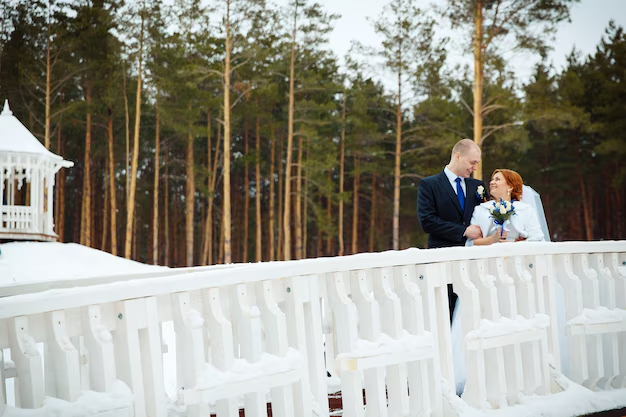
Event Spaces in Atlanta, GA: How to Find the Right Venue for Any Occasion
Atlanta has no shortage of event spaces, from historic lofts and rooftops with skyline views to hotel ballrooms and funky intown warehouses. Whether you’re planning a wedding, corporate retreat, birthday party, conference, or community meetup, you can usually find a spot in the metro area that fits your size, style, and budget.
This guide walks through the main types of event spaces in Atlanta, GA, what they’re best for, typical locations, and practical tips on permits, parking, and planning.
How to Start Choosing Event Spaces in Atlanta
Before you start touring venues, get clear on a few basics:
- Guest count (realistic, not wishful)
- Type of event (wedding, workshop, trade show, nonprofit gala, graduation party, etc.)
- Location preferences (Midtown, Downtown, Buckhead, Westside, Decatur, airport area, suburbs)
- Budget range (and whether you need catering, A/V, decor, security)
- Date and flexibility (weekday vs. weekend, peak season vs. off-peak)
In Atlanta, traffic and parking are huge factors. When you narrow down event spaces, think about:
- Proximity to MARTA stations if guests won’t drive
- Access from I‑75/85, I‑20, and GA‑400
- On-site parking vs. nearby garages or street parking
- Rideshare pickup and drop-off areas
Major Types of Event Spaces in Atlanta
1. Hotels and Conference Centers
Best for: Corporate events, conferences, conventions, galas, large weddings, out-of-town guests.
Atlanta’s hotel corridors—Downtown, Midtown, Buckhead, and near Hartsfield‑Jackson Atlanta International Airport—are packed with event-ready spaces. These typically offer:
- Ballrooms and breakout rooms
- In-house catering and bar service
- A/V support, staging, and lighting
- Discounted room blocks for guests
Common patterns:
- Downtown & Convention District: Close to the Georgia World Congress Center (285 Andrew Young International Blvd NW) and major hotels. Good for large conferences and trade shows.
- Midtown: Popular for creative and tech events, easier walkability, access to MARTA and attractions like Piedmont Park.
- Buckhead: Skews more upscale, often used for galas, fundraisers, and higher-budget weddings.
- Airport area (College Park/Hapeville): Useful for trainings, national meetings, and events where attendees fly in and out the same day.
Pros: Turnkey packages, professional staff, lodging on-site.
Cons: Can be more expensive; more rules on outside vendors and decor.
2. Historic Buildings, Lofts, and Industrial Spaces
Best for: Weddings, milestone birthdays, photo shoots, creative industry events, brand launches.
Atlanta’s historic neighborhoods and former industrial areas offer many renovated warehouses and loft-style venues, especially around:
- West Midtown / Westside
- Old Fourth Ward (O4W)
- Cabbagetown / Reynoldstown
- Castleberry Hill
- Areas near the Atlanta BeltLine Eastside and Westside Trails
Common features:
- Exposed brick, beams, and large windows
- Flexible open floor plans
- Ability to bring in your own caterer or bar service (varies by venue)
- Indoor + outdoor courtyards or patios
These spaces are popular for customized events, where you want to bring in your own decor, food, and entertainment.
Pros: Character, flexibility, often great photo backdrops.
Cons: You may need to arrange more yourself (rentals, decor, staff, insurance).
3. Parks, Gardens, and Outdoor Event Spaces
Best for: Daytime weddings, family reunions, festivals, picnics, and community events.
Atlanta is known for its tree canopy and park network, so outdoor event spaces can be a strong option—especially in spring and fall.
Popular public and semi-public options include:
- Piedmont Park (1320 Monroe Dr NE) – Large lawns, city skyline views, rentable shelters and venues.
- Historic Fourth Ward Park (680 Dallas St NE) – Near the BeltLine; good for smaller gatherings and outdoor photography.
- Grant Park (537 Park Ave SE) – Shaded areas, playgrounds, picnic spots.
- Freedom Park, Chastain Park, and others maintained by the City of Atlanta Department of Parks and Recreation.
Many parks have:
- Pavilions you can reserve for parties
- Open fields for field days, tournaments, or festivals
- Walking paths and playgrounds that are great for family events
For permits and reservations in City of Atlanta parks, the main office:
- City of Atlanta Department of Parks and Recreation
233 Peachtree St NE, Suite 1700
Atlanta, GA 30303
Phone: (404) 546‑6813 (main parks and recreation line)
If you’re considering state parks near Atlanta (like Sweetwater Creek State Park in Lithia Springs), you’ll need to work with the Georgia Department of Natural Resources for shelter or group area reservations.
Pros: Scenic, often more affordable, family-friendly.
Cons: Weather risk, noise restrictions, and permit requirements.
4. Museums, Cultural Centers, and Attractions
Best for: Corporate receptions, nonprofit galas, educational events, and special celebrations.
Many of Atlanta’s major attractions and cultural institutions offer event rentals, including:
- Atlanta History Center (130 West Paces Ferry Rd NW) – Historic houses and gardens.
- High Museum of Art (1280 Peachtree St NE) – Modern indoor spaces.
- Fernbank Museum (767 Clifton Rd) – Grand lobbies and dinosaur hall.
- Center for Civil and Human Rights (100 Ivan Allen Jr Blvd NW) – Often used for mission-aligned events.
- Georgia Aquarium (225 Baker St NW) – Known for events with aquatic backdrops.
These venues typically include:
- Access to certain exhibit or lobby areas
- On-site or preferred catering and bar services
- Professional event staff and security
Pros: Built-in atmosphere, memorable setting, central locations.
Cons: Higher price points, stricter timelines and rules.
5. Community Centers, Libraries, and Civic Buildings
Best for: Community meetings, trainings, smaller banquets, youth events, club gatherings.
If you need something more budget-conscious or community-focused, look at:
- City of Atlanta recreation centers located in neighborhoods across the city
- Fulton County and DeKalb County libraries with meeting rooms
- Some city and county civic buildings that rent rooms after-hours
A few key points of contact:
City of Atlanta Recreation & Community Centers
- Find centers through Parks and Recreation administration:
233 Peachtree St NE, Suite 1700, Atlanta, GA 30303
Phone: (404) 546‑6813
Fulton County Government Center & Facilities
- 141 Pryor St SW
Atlanta, GA 30303
Main line: (404) 612‑4000
(Ask about community room rentals or meeting spaces within county facilities.)
Atlanta-Fulton Public Library System (Central Library)
- 1 Margaret Mitchell Sq
Atlanta, GA 30303
Phone: (404) 730‑1700
(Can provide information about reservable rooms at branches.)
Community spaces often have:
- Lower rental rates
- Basic tables and chairs
- Simple A/V setups for presentations
Pros: Affordable, neighborhood-based, good for recurring meetings.
Cons: Limited decor and scheduling flexibility; stricter policies.
6. Restaurants, Breweries, Lounges, and Rooftops
Best for: Birthdays, rehearsal dinners, holiday parties, alumni events, networking mixers.
Many Atlanta restaurants and breweries have private or semi-private rooms, and some intown rooftops offer skyline views of Downtown and Midtown.
Typical locations:
- Midtown and Old Fourth Ward: Trendy restaurants and rooftops near the BeltLine.
- Inman Park, Virginia-Highland, West Midtown: Popular for group dinners and casual parties.
- Downtown and Buckhead: Lounges and hotel rooftop bars for more formal or nightlife-style events.
These spaces usually:
- Require food and beverage minimums instead of a flat rental fee
- Supply staff and basic decor
- Have built-in music and sometimes A/V
Pros: Easy planning (food and drink handled in-house), built-in ambiance.
Cons: Noise, time limits, and sometimes limited customization.
7. Co‑Working Spaces and Creative Studios
Best for: Workshops, panels, networking events, pop-ups, launch events, small conferences.
Atlanta’s co-working hubs and studios—especially around Midtown, Downtown, Old Fourth Ward, West Midtown, and Buckhead—often rent out:
- Training rooms
- Conference rooms
- Flexible open areas for after-hours events
Common use cases:
- Startup pitch nights
- Professional association events
- Creative classes or content shoots
Pros: Strong Wi‑Fi, A/V ready, central locations.
Cons: Less suited for loud parties or late-night events.
Quick Comparison: Common Atlanta Event Space Types
| Type of Space | Best For | Typical Areas in Atlanta | Main Tradeoffs |
|---|---|---|---|
| Hotel / Conference Center | Conferences, large weddings, galas | Downtown, Midtown, Buckhead, Airport area | Higher cost, more structure |
| Historic / Industrial Loft | Weddings, creative events, photo shoots | West Midtown, O4W, Castleberry Hill, BeltLine | More DIY, rental coordination needed |
| Park / Outdoor Space | Reunions, casual weddings, festivals | Piedmont, Grant Park, Chastain, O4W, others | Weather risk, permits, noise limits |
| Museum / Attraction | Receptions, fundraisers, high-impact events | Midtown, Downtown, Druid Hills | Higher pricing, strict rules |
| Community Center / Library | Meetings, youth programs, local events | Neighborhoods across the city and counties | Limited flexibility, simpler amenities |
| Restaurant / Rooftop / Brewery | Parties, mixers, rehearsal dinners | Midtown, O4W, Buckhead, West Midtown, intown | Noise, time limits, F&B minimums |
| Co‑Working / Studio Space | Workshops, panels, small conferences | Midtown, Downtown, BeltLine-adjacent areas | Less party-friendly, office vibe |
Local Logistics: Permits, Noise, and Parking in Atlanta
Permits and Special Events
For large events—especially outdoors or involving street closures, amplified sound, or alcohol—permits may be required.
Key local contacts:
City of Atlanta Mayor’s Office of Special Events
- 55 Trinity Ave SW
Atlanta, GA 30303
Phone: (404) 330‑6741
(Handles permits for festivals, parades, and large public events on city property.)
City of Atlanta Department of Parks and Recreation
- 233 Peachtree St NE, Suite 1700
Atlanta, GA 30303
Phone: (404) 546‑6813
(Park pavilion and field reservations, some event approvals.)
If your event includes street closures, amplified outdoor sound, or large crowds, discuss this with the venue and the city well in advance.
Noise Considerations
Atlanta neighborhoods have quiet hour rules that can affect:
- Outdoor music end times
- Use of amplified sound in residential areas
- How late events can run if they’re near homes or apartments
Ask each venue:
- Their latest allowed event end time
- Restrictions on DJs, bands, or outdoor speakers
- Any neighborhood or building rules they must follow
Parking and Transit
Atlanta is still car-heavy, but many attendees will consider MARTA or rideshare, especially for intown events.
When evaluating event spaces:
- Check if there is on-site parking or a dedicated garage.
- Ask about validation or negotiated rates for guests.
- Look at the nearest MARTA station (e.g., Peachtree Center, Midtown, Arts Center, Buckhead, Airport).
- Designate a rideshare pickup/drop-off spot in your invitations.
For large events, some organizers work with nearby lots or garages to arrange overflow parking and shuttle service, particularly around busy areas like Downtown, Midtown, Atlantic Station, and the BeltLine.
Budgeting for Event Spaces in Atlanta
Atlanta offers options from low-cost community rooms to premium, high-end venues. When you get pricing, clarify:
- What’s included: Tables, chairs, linens, A/V equipment, security, cleaning, setup/breakdown time.
- Food and beverage rules:
- In-house catering only?
- Approved vendor list?
- Corkage fees if you bring your own alcohol?
- Taxes and service charges: These can significantly increase your final cost.
- Deposit and payment schedule: When are payments due and what’s refundable?
To keep costs manageable:
- Consider weekdays or Sunday events instead of Saturday nights.
- Look at off-peak months (often summer for outdoor-unfriendly events or deep winter).
- Use community centers, libraries, or park pavilions for meetings and casual gatherings.
- Opt for shorter rentals (e.g., 3–4 hours instead of full day) if your group is small.
Practical Steps to Finding an Event Space in Atlanta
Define your must‑haves.
Guest count, general area (e.g., “within 15 minutes of Midtown”), rough budget, and event type.Choose two or three neighborhood targets.
For example:- Corporate retreat: Midtown or Buckhead
- Artsy wedding: West Midtown or Old Fourth Ward
- Family reunion with kids: Near a park in Grant Park, Inman Park, or another neighborhood with green space
Decide on indoor vs. outdoor (or hybrid).
In Atlanta, factor in:- Hot, humid summers (June–August)
- Potential for spring storms
- Pleasant shoulder seasons (often April–May, September–October)
Shortlist 5–10 spaces.
Look for:- Capacity that matches your actual guest count
- Accessibility for guests (MARTA, parking, ADA access)
- Included amenities
Call or email for availability and pricing.
Have your date range ready. Ask:- What’s the total cost, including all mandatory fees?
- What’s the policy on outside vendors and decor?
- What’s the backup plan if part of the event is outdoors?
Schedule site visits.
When touring:- Check restrooms, coatroom, and green room areas
- Ask to see lighting controls and A/V setups
- Walk the guest arrival route from parking/transit
Review the contract carefully.
Pay close attention to:- Cancellation terms
- Damage and liability rules
- Overtime or late departure fees
When You Might Need Extra Support
For larger or more complex events in Atlanta—multi-day conferences, public festivals, large weddings—many people choose to work with:
- Local event planners familiar with Atlanta vendors, traffic patterns, and permitting
- Catering companies that know the common venues’ layouts and rules
- A/V companies used to working in hotels, museums, or outdoor park settings
While not required, having professionals who regularly operate in Atlanta can help prevent surprises around noise rules, timing, and logistics.
With clear priorities and a bit of planning around Atlanta’s neighborhoods, transportation, and weather, you can usually find an event space that fits your needs—whether that’s a downtown ballroom, a BeltLine-adjacent loft, a neighborhood community center, or a shaded park pavilion.