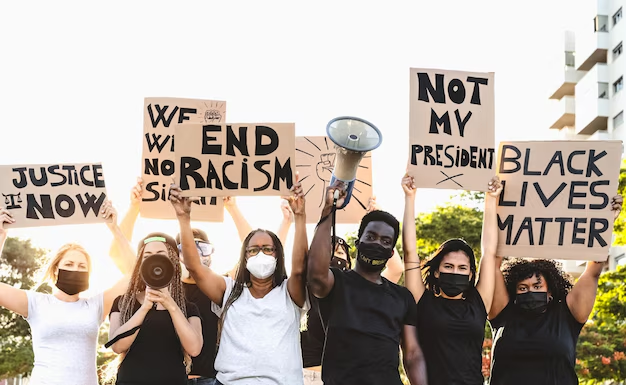
Atlanta has a long history as a center of protest, activism, and civic engagement. From the civil rights movement to modern demonstrations, seeing protesters in Atlanta, GA—especially downtown or near major campuses—is common and often peaceful.
If you live in Atlanta, are visiting the city, or are trying to understand how protests work here, this guide will walk you through:
People protest in Atlanta for many reasons, including:
Demonstrations can range from small sidewalk gatherings to large, organized marches that temporarily affect traffic, MARTA routes, and access to certain areas.
Atlanta’s role as a transportation hub, political center, and historic civil rights city means it’s often chosen as a location for major rallies and marches that draw people from across Georgia and beyond.
While a protest can be held in many public places, certain locations in Atlanta are more frequently used for gatherings and marches.
These areas are popular because they are close to government buildings, courts, and major public spaces.
Common downtown protest locations include:
Georgia State Capitol
206 Washington St SW, Atlanta, GA 30334
Demonstrations often take place on the sidewalks and public areas nearby.
City of Atlanta Government Buildings
Woodruff Park
91 Peachtree St NW, Atlanta, GA 30303
A central public park that is a common meeting and staging area for marches.
Liberty Plaza (across from the State Capitol)
Frequently used for organized rallies about statewide issues.
Georgia State University (Downtown Campus) and Georgia Tech (Midtown):
Student-led protests and campus-focused actions often start here and may spill into surrounding streets.
Midtown Arts District:
Near Peachtree St, 10th St, and around major cultural venues such as the Woodruff Arts Center, you may see organized marches or rallies.
Protests sometimes move through or originate in high-traffic neighborhoods:
Most organized events are announced in advance by organizers or reported in local media, but spontaneous gatherings also occur in response to breaking news or major incidents.
Many larger protests in Atlanta are permitted events, which means organizers coordinate with the City of Atlanta and, in some cases, the Georgia Department of Public Safety.
Typical permitted activities might include:
While peaceful protest is generally allowed in public spaces, organizers often seek permits when they:
Depending on the location, you may see one or more of these agencies present during protests:
Atlanta Police Department (APD)
226 Peachtree St SW, Atlanta, GA 30303
Non-emergency line: 404-658-6666
Georgia State Patrol / Georgia Department of Public Safety
959 E Confederate Ave SE, Atlanta, GA 30316
Georgia State Capitol Police
Provide security around the Capitol complex.
Their roles typically include traffic control, crowd management, and public safety, not determining the content of the protest.
While laws can be interpreted by courts and lawyers, there are general patterns of how protest rights are understood in Atlanta:
People in Atlanta generally have the right to:
However, rights may be more limited:
Activity that is usually not protected includes:
If you have specific legal concerns, you would need to speak with a licensed attorney who practices in Georgia for advice; general information cannot substitute for legal guidance.
If you plan to join protesters in Atlanta, GA, consider the following:
1. Plan your route and exit options
2. Dress and pack wisely
3. Stay aware of your surroundings
4. Go with a group if possible
5. Keep personal information handy
You might not be protesting yourself but still need to live, work, commute, or visit downtown Atlanta during a demonstration.
To anticipate where protesters in Atlanta, GA may affect your day:
Expect occasional:
Businesses in areas where protests commonly occur often take simple steps to be prepared:
Many Atlanta businesses operate normally during protests, especially when demonstrations are peaceful and coordinated.
If protesters in Atlanta, GA are near your home, workplace, or hotel and you’re unsure what to do, it can help to know key contacts.
Non-emergency and information:
Emergencies only:
For road closures and traffic impacts:
Quick summary for residents, visitors, and workers:
| Topic | What to Know in Atlanta, GA |
|---|---|
| How common are protests? | Fairly common, especially near downtown, the Capitol, and campuses |
| Typical locations | Georgia State Capitol, Liberty Plaza, Woodruff Park, City Hall areas |
| Impact on daily life | Possible traffic delays, detours, noise, and temporary crowding |
| General rights | Peaceful protest is usually allowed in public spaces within legal limits |
| Safety tips | Plan routes, stay aware, go with others, follow lawful instructions |
| Who to call | 911 for emergencies; APD non-emergency for general safety concerns |
Understanding how protests work in Atlanta makes it easier to participate safely, navigate the city smoothly, and respect the role of public demonstration in local civic life.