
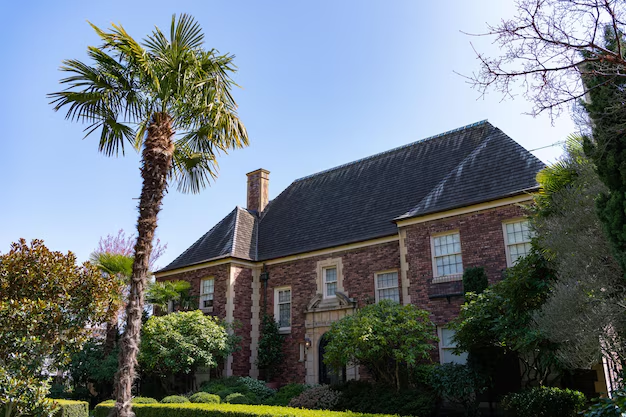
Houses for Sale in Atlanta: A Local Guide to Buying a Home in the City
Looking for houses for sale in Atlanta can feel exciting and overwhelming at the same time. Atlanta is a fast-growing city with historic bungalows, new townhome communities, luxury estates, and everything in between—often within a short drive of major job centers.
This guide walks through what you need to know to buy a house specifically in Atlanta, Georgia: the main neighborhoods, price expectations, common property types, local rules and taxes, and practical next steps if you’re ready to start your search.
Understanding the Atlanta Housing Market
Atlanta’s housing market is known for:
- Relatively strong demand due to job growth and incoming residents
- Diverse housing options, from starter homes to high-end properties
- Neighborhood-by-neighborhood differences in price, style, and pace of sales
When you search for houses for sale in Atlanta, you’re really searching multiple sub-markets that can behave very differently—Midtown vs. West End vs. Chamblee vs. Buckhead, for example.
Key Factors That Shape Home Prices in Atlanta
Several local factors affect what you’ll pay:
- Proximity to job centers: Areas near Downtown, Midtown, Buckhead, Perimeter Center, and major hospitals or universities often command higher prices.
- School districts: In-town neighborhoods zoned for sought-after public schools or near respected private schools tend to have higher values.
- Access to transit: Homes near MARTA rail stations or major highways (I-75/85, I-20, GA-400, I-285) can be priced higher due to commuting convenience.
- Historic vs. new construction: Historic neighborhoods (Grant Park, Inman Park, West End) often have charming older homes with character, while newer developments may offer modern finishes and energy efficiency.
If you already live in Atlanta, it helps to think of your home search not as “finding a house” but as “finding a neighborhood that fits your life, then finding a house inside it.”
Popular Areas to Find Houses for Sale in Atlanta
Atlanta’s neighborhoods each have a distinct personality. Here are some of the most commonly searched areas for houses for sale, all within the Atlanta metro or City of Atlanta limits.
Intown Atlanta Neighborhoods (Inside the Perimeter)
These areas are generally inside I-285 and closer to the city’s core.
1. Buckhead
Known for: Upscale homes, shopping, major employment centers
- Mix of luxury single-family homes, older ranches, and newer infill construction
- Close to Lenox Square, Phipps Plaza, and many corporate offices
- Highly sought-after sub-neighborhoods include Peachtree Hills, Garden Hills, and Chastain Park
Best for buyers who want: Higher-end homes, established neighborhoods, and shorter commutes to Buckhead or Midtown offices.
2. Midtown & Old Fourth Ward (O4W)
Known for: Walkability, culture, and BeltLine access
- Midtown proper has more condos and townhomes, but nearby streets and side neighborhoods offer single-family homes.
- O4W and surrounding streets (like near Ponce City Market) have historic homes and renovated properties.
- Direct access to Atlanta BeltLine Eastside Trail, restaurants, and nightlife.
Best for buyers who want: Urban living, walkability, and quick access to arts, dining, and public transit.
3. Virginia-Highland, Morningside, and Inman Park
Known for: Historic homes, tree-lined streets, strong community feel
- Many bungalows, Craftsman-style homes, and renovated older houses.
- Walkable to local shops, bars, and restaurants.
- Easy access to Piedmont Park and the BeltLine.
Best for buyers who want: Intown charm, strong neighborhood identity, and character homes.
4. Grant Park & East Atlanta
Known for: Historic charm and lively local scene
- Grant Park offers Victorian and early 20th-century homes around the park and Zoo Atlanta.
- East Atlanta Village (EAV) has a more eclectic, artsy vibe with a range of renovated and more modest homes.
- Popular among buyers looking for intown living at a relatively more attainable price point than some northern intown neighborhoods.
Best for buyers who want: Historic feel, community events, and local restaurants/bars.
5. West End & Southwest Atlanta
Known for: Historic homes, BeltLine access, and rapid change
- Many charming older homes, some fully renovated, others needing work.
- West End is along the Atlanta BeltLine Westside Trail.
- Various neighborhoods in Southwest Atlanta offer larger lots and lower prices compared with east/north intown.
Best for buyers who want: Potential value, older architecture, and are comfortable with areas in transition.
Close-In Suburbs and City-Adjacent Areas
These might have an Atlanta mailing address or be just outside city limits but function as part of the everyday Atlanta market.
6. Brookhaven & Chamblee
- North of Buckhead, popular for renovated ranch homes and new construction.
- Proximity to MARTA and major employment hubs.
- Mix of older neighborhoods and rapidly redeveloping corridors.
7. Decatur (City of Decatur and Nearby Unincorporated Areas)
- Technically its own city, but often part of the “Atlanta” house search.
- Known for strong schools, community feel, and walkable downtown.
- Many buyers searching “houses for sale Atlanta” end up considering Decatur as a close alternative.
Snapshot: How Areas Compare
This table is a simplified overview, not a price quote. It’s meant to help orient you to typical trade-offs.
| Area / Neighborhood | General Vibe | Typical Housing Types | Key Advantages |
|---|---|---|---|
| Buckhead | Upscale, established | Luxury homes, ranches, infill | Shopping, jobs, higher-end properties |
| Midtown / O4W | Urban, walkable | Condos, townhomes, some houses | Culture, BeltLine, MARTA |
| Virginia-Highland/Morningside | Historic, residential | Bungalows, historic homes | Charm, walkability, parks |
| Grant Park / EAV | Historic, lively | Older homes, renovations | Community, intown access, local nightlife |
| West End / SW Atlanta | Historic, transitioning | Older homes, some new builds | BeltLine, potential value |
| Brookhaven / Chamblee | Suburban-urban blend | Ranches, new construction | Transit access, growing dining/retail |
| Decatur | Small-city feel | Bungalows, cottages, infill | Community, walkable downtown, schools |
Types of Houses for Sale in Atlanta
When browsing listings in Atlanta, you’ll typically see:
Single-Family Detached Homes
The classic standalone house with its own yard. In Atlanta, these range from:
- Historic bungalows and Victorians near the city core
- Mid-century ranch homes in neighborhoods developed in the 1950s–1970s
- New construction infill homes built on subdivided lots in intown areas
- Larger suburban-style homes in north and west Atlanta or just outside city limits
Townhomes
Townhomes are common in areas where land is expensive but demand is high, such as:
- West Midtown
- Old Fourth Ward
- Brookhaven
- Chamblee
They usually include shared walls, multiple levels, and may have an HOA that covers exterior maintenance or amenities.
Fixer-Uppers and Investor-Friendly Properties
Atlanta has a significant stock of older homes that may need cosmetic work or full renovation, especially in:
- Parts of Southwest and Southeast Atlanta
- Some Westside neighborhoods
These can appeal to buyers who:
- Want to build equity by updating a property
- Are comfortable with contractors and permits
- Can handle the risks and unpredictability of renovation
What It Costs to Buy a House in Atlanta
Exact prices change over time, but you can expect:
- Intown, highly sought-after neighborhoods (Virginia-Highland, Inman Park, much of Buckhead) to command higher prices, especially for updated or larger homes.
- Transitional or farther-out neighborhoods to offer more space for the money, often with trade-offs in commute time, walkability, or school zoning.
- New construction to be priced higher than similarly sized, older homes, reflecting modern finishes, energy efficiency, and builder costs.
To get a realistic feel for current pricing, many buyers:
- Set up saved searches on major listing platforms limited to “Single Family Residential” and specific ZIP codes or neighborhoods.
- Talk with a local real estate agent who can provide recent comparable sales (“comps”) for areas they’re considering.
Local Buying Process: How Atlanta Home Purchases Typically Work
The steps to buy a house in Atlanta are similar to the rest of Georgia but can have local nuances.
1. Get Pre-Approved
Before you seriously shop, local buyers usually obtain a pre-approval from a mortgage lender. This helps you:
- Understand your price range
- Show sellers you’re serious
- Move quickly when a desirable house hits the market
Atlanta has many local and regional lenders familiar with Georgia-specific issues like property taxes and homestead exemptions.
2. Choose a Real Estate Agent (Optional but Common)
Most buyers in Atlanta work with a licensed real estate agent. An agent can:
- Suggest neighborhoods based on your commute and lifestyle
- Screen listings and set up tours
- Help you structure competitive offers, especially in hot areas
- Navigate local customs around option periods, inspection timelines, and earnest money
While you’re not required to have an agent, many consumers find it helpful in a complex market.
3. Tour Houses and Neighborhoods
In Atlanta, neighborhood feel can change dramatically in just a few blocks. When touring:
- Drive the area at different times of day (rush hour vs. weekends).
- Check proximity to MARTA stations or bus routes if transit matters.
- Consider noise from highways, train tracks, or nearby nightlife.
Tip: If schools are important to you, confirm school zoning directly through Atlanta Public Schools or the relevant county system—zoning lines can shift and neighborhood assumptions aren’t always accurate.
4. Make an Offer
An offer in Atlanta generally includes:
- Purchase price
- Earnest money amount
- Proposed closing date
- Inspection periods and contingencies (financing, appraisal, etc.)
In competitive neighborhoods, buyers may:
- Offer above list price
- Limit certain contingencies (while understanding the risks)
- Be flexible on closing date to accommodate the seller
5. Inspection and Due Diligence
Inspections are especially important with older Atlanta homes, which may have:
- Aging roofs, HVAC systems, or plumbing
- Foundation settling
- Outdated electrical systems
Common inspections used by local buyers include:
- General home inspection
- Termite / wood-destroying organisms
- Radon testing in some areas
- Sewer scope (especially for older homes and mature tree-lined streets)
Repairs or credits are often negotiated based on inspection findings.
6. Closing
Closings in Atlanta typically occur at real estate law firms or title companies. At closing, you:
- Sign loan documents
- Pay closing costs and remaining down payment
- Receive keys to your new home
Property Taxes, Homestead Exemption, and Local Costs
When comparing houses for sale in Atlanta, it’s important to account for ongoing ownership costs, not just the purchase price.
Property Taxes in Atlanta
Property taxes depend on:
- Whether your home is inside the City of Atlanta
- The county (Fulton, DeKalb, etc.)
- Your home’s assessed value and applicable exemptions
For information on current property tax rates and assessments, you can contact:
Fulton County Tax Assessor’s Office
- 235 Peachtree Street NE, Suite 1400, Atlanta, GA 30303
- Phone: (404) 612-6440
DeKalb County Tax Assessor’s Office
- 120 West Trinity Place, Room 208, Decatur, GA 30030
- Phone: (404) 371-0841
Homestead Exemption
If you buy a house in Atlanta and use it as your primary residence, you may qualify for a homestead exemption, which can reduce your property tax bill.
To apply, homeowners typically:
- Confirm their eligibility (primary residence, ownership by January 1 of tax year in many cases)
- File the homestead exemption application with the appropriate county tax office
For example, within the City of Atlanta in Fulton County, you may work with:
- Fulton County Tax Commissioner’s Office
- 141 Pryor Street SW, Atlanta, GA 30303
- Phone: (404) 613-6100
It’s important to check current filing deadlines and required documentation directly with the county.
Zoning, Permits, and Renovations in Atlanta
Atlanta has its own zoning rules and permitting processes, which affect what you can do with a property you purchase.
Zoning Basics
Neighborhoods might be zoned for:
- Single-family residential
- Multifamily
- Mixed-use or commercial
Zoning can impact whether you can:
- Add an accessory dwelling unit (ADU) or in-law suite
- Operate a home-based business
- Subdivide a lot
To confirm zoning details for a specific property, many buyers and owners contact:
- City of Atlanta Department of City Planning
- 55 Trinity Avenue SW, Atlanta, GA 30303
- Phone: (404) 330-6145
Building Permits
If you’re planning renovations—especially structural changes, additions, or major systems upgrades—you may need permits from the City of Atlanta.
Typical permit-triggering work includes:
- Structural changes (adding/removing walls, additions)
- Electrical, plumbing, or HVAC changes beyond basic repairs
- New decks, porches, or accessory structures
Checking in with the Office of Buildings within the Department of City Planning can help clarify what permits are needed.
Commuting and Transportation Considerations
When choosing a house in Atlanta, commuting time is often just as important as the house itself.
MARTA Access
Living near a MARTA rail station can make daily commuting much more manageable, especially if you work in:
- Downtown
- Midtown
- Buckhead
- Perimeter Center
Popular intown stations include:
- Midtown Station
- North Avenue Station
- Lindbergh Center Station
- Inman Park/Reynoldstown Station
If you rely on transit, consider mapping out how far a potential house is from the nearest station or bus stop.
Highways and Surface Streets
Atlanta’s major interstates (I-75, I-85, I-20, I-285) and surface roads can get congested, especially during rush hours. When touring houses:
- Test the drive from the house to your usual destinations (work, school, etc.).
- Consider alternate routes and side streets you might use.
A house that looks perfect on paper may feel less ideal if it adds an hour to your daily commute.
Schools and Education Options
For many Atlanta buyers, school options significantly influence where they search for houses.
Public Schools
If you buy a house inside the City of Atlanta, you may be zoned to Atlanta Public Schools (APS). Surrounding areas may fall under Fulton County Schools, DeKalb County School District, or other county systems.
Because school attendance zones can shift, buyers often:
- Use official district zoning tools to confirm which schools serve a specific address.
- Visit school websites for program information.
- Contact school administration or central offices with specific questions.
For example:
- Atlanta Public Schools (APS)
- 130 Trinity Avenue SW, Atlanta, GA 30303
- Phone: (404) 802-3500
Private and Charter Schools
Atlanta also has a range of private schools and public charter schools, which may have separate admissions processes and deadlines. If these options matter to you, factor them into your timeline and neighborhood choice.
Practical Tips for Searching Houses for Sale in Atlanta 🏡
To make the most of your home search:
Define your must-haves vs. nice-to-haves
- Bedrooms, bathrooms, yard size, parking, commute time, school needs.
Narrow neighborhoods first, then browse houses
- It’s easier to compare similar homes within a few target neighborhoods than to search all of metro Atlanta at once.
Watch for HOA fees and rules
- Many new construction communities and townhome developments in Atlanta have HOAs that affect both cost and how you can use the property.
Budget for higher summer utility bills
- Atlanta’s hot, humid summers mean air conditioning costs can be substantial, especially in older or less efficient homes.
Consider floodplains and topography
- Atlanta has areas prone to drainage issues and localized flooding. An inspection, flood map check, and conversation with your insurance provider can help you understand risk.
Factor in parking and driveways
- Some intown neighborhoods have narrow streets and limited off-street parking. If you have multiple cars, this can be a daily-life issue.
Where to Go for Local Help and Information
If you’re serious about buying a house in Atlanta, these local resources can be helpful:
City of Atlanta Department of City Planning
For zoning, permits, and planning questions.- 55 Trinity Avenue SW, Atlanta, GA 30303
- Phone: (404) 330-6145
Fulton County Tax Commissioner’s Office
For tax bills and homestead exemption within parts of Atlanta.- 141 Pryor Street SW, Atlanta, GA 30303
- Phone: (404) 613-6100
DeKalb County Tax Commissioner’s Office (for parts of Atlanta/Decatur area)
- 4380 Memorial Drive, Suite 100, Decatur, GA 30032
- Phone: (404) 298-4000
Atlanta Public Schools (APS)
To verify school zoning for a specific property inside City of Atlanta boundaries.- 130 Trinity Avenue SW, Atlanta, GA 30303
- Phone: (404) 802-3500
Along with these public offices, many buyers also rely on local real estate agents, mortgage lenders, and home inspectors who work regularly in Atlanta neighborhoods and understand the city’s specific housing quirks.
Searching for houses for sale in Atlanta is ultimately about aligning three things: the neighborhood, the home, and your daily life—commute, schools, budget, and lifestyle. With a clear sense of your priorities and an understanding of how the Atlanta market works, you can narrow your options and focus on homes that truly fit how you want to live in the city.