
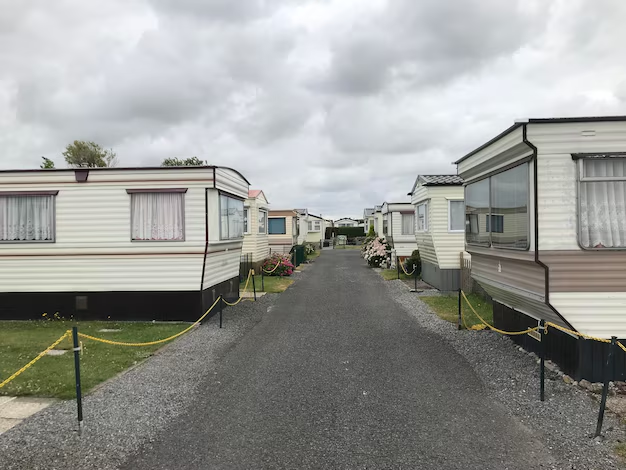
Tiny House Movement in Atlanta: How It Works and Where to Start
The tiny house movement in Atlanta is growing, but it doesn’t work here the same way it might in a rural county or on TV shows. If you live in Atlanta, are moving here, or are considering building or parking a tiny home, you’ll need to understand local zoning, building rules, and realistic options inside and around the city.
Below is a clear, Atlanta-focused guide to what’s possible, what’s challenging, and how to move forward.
What “Tiny House” Means in Atlanta
In everyday conversation, a tiny house usually means a home:
- Typically under 400–600 square feet
- Often built on a trailer (THOW – Tiny House on Wheels) or as a small permanent foundation home
- Designed for efficient, minimalist living
In the City of Atlanta and most nearby jurisdictions, the law doesn’t usually say “tiny house.” Instead, tiny homes are treated as:
- Accessory Dwelling Units (ADUs) – small second homes on a lot with a main house
- Single-family homes on a small footprint
- Recreational vehicles (RVs), if they’re on wheels, in many cases
Understanding which category your tiny house fits into is step one to figuring out if it’s legal on your property.
Why Tiny Houses Appeal to Atlantans
People in Atlanta look into tiny houses for different reasons:
- High housing costs in popular in-town neighborhoods
- Desire to live closer to the city without a large mortgage
- Interest in downsizing, sustainability, or simpler living
- Adding an ADU in the backyard for rental income, aging parents, or adult children
- Building a small home on a smaller lot in an older neighborhood
The challenge is less about building the structure and more about where you can legally put it and how it must be built.
Key Legal Concepts: Zoning, Building Codes, and ADUs
When you talk about tiny homes in Atlanta, three concepts matter most:
1. Zoning (Where You Can Put It)
Zoning rules control:
- What type of housing can go on a property
- Minimum lot size, setbacks, and how many units per lot
- Whether ADUs are allowed
In Atlanta, zoning is overseen by:
City of Atlanta Department of City Planning
55 Trinity Ave SW, Suite 3900
Atlanta, GA 30303
Phone: 404-330-6150
If your address is inside the city limits, you are under Atlanta’s zoning code, not Fulton County’s or DeKalb County’s, even if your mailing address says “Atlanta.”
2. Building Codes (How It Must Be Built)
Building codes focus on:
- Structural safety and materials
- Electrical, plumbing, and mechanical systems
- Fire safety, emergency exits, and insulation
In Georgia, tiny houses built on a permanent foundation typically must comply with the state building codes as adopted by the local jurisdiction. That often means:
- Meeting minimum room sizes
- Meeting ceiling height requirements
- Having proper stairs or ladders to lofts if the loft is considered habitable
3. ADUs (Accessory Dwelling Units)
An ADU is a small secondary home on the same lot as a primary home. It can be:
- Detached (a backyard cottage)
- Attached (a basement apartment, garage apartment, or addition)
In many parts of Atlanta, ADUs are increasingly allowed or encouraged, but:
- The size, height, and placement are regulated
- ADUs often cannot be used as a short-term rental under many local rules
- Off-street parking requirements may apply, depending on the zoning district
If your tiny house is on a foundation and used as an ADU, this may be the most realistic legal path inside city neighborhoods.
Tiny Houses on Wheels in Atlanta: The Toughest Category
Tiny houses on wheels (THOWs) are popular in media, but they are the hardest to place legally in Atlanta.
Common issues:
- Many cities, including Atlanta and nearby suburbs, treat THOWs like RVs, which are often not allowed as permanent residences on residential lots.
- Parking a THOW in a backyard and living in it full-time is often not permitted under current zoning rules.
- Long-term occupancy of a THOW is often limited to RV parks, some mobile home parks, or specific campgrounds, usually outside the urban core.
If your dream is a tiny house on wheels, be prepared for:
- Limited legal parking options inside the city
- Possibly needing to locate in more rural counties around Metro Atlanta that are more flexible, or in RV/mobile home communities that allow full-time living
Tiny Houses on Foundations: More Realistic in Atlanta
Tiny homes on permanent foundations fit more naturally into Atlanta’s existing zoning and building framework. They may be:
- A small single-family home on its own lot
- A detached ADU in your backyard
- A garage conversion or basement ADU
Where This Is Most Feasible
Tiny houses on foundations tend to work best in:
- Older neighborhoods with alleys or larger lots
- Areas where the city has rezoned or updated regulations to encourage ADUs or “missing middle” housing
- Parts of Metro Atlanta (outside city limits) where counties and small cities have adopted more flexible zoning
Because zoning maps and ordinances change over time, it’s important to:
- Check the official zoning for your address
- Confirm that ADUs or small homes are allowed in your particular zoning district
You can verify zoning for a City of Atlanta property by contacting or visiting:
Office of Buildings – City of Atlanta
55 Trinity Ave SW
Atlanta, GA 30303
Phone: 404-330-6150
Typical Paths to a Tiny Home in Atlanta
Here are the most common real-world options people pursue in or around Atlanta:
1. Build an ADU Behind an Existing Home
If you already own a house in Atlanta, you may be able to:
- Build a detached tiny house in the backyard
- Use it as long-term rental, guest house, office, or family housing
Key steps typically include:
- Confirm zoning for your parcel (what district you’re in and whether ADUs are allowed).
- Review size, height, and setback rules for ADUs in that zoning district.
- Hire a licensed architect or designer who understands Atlanta codes.
- Submit plans and permit applications to the Office of Buildings.
- Construct the ADU following approved plans and inspections.
This is often the cleanest legal path to a tiny home lifestyle while staying in the city.
2. Build a Small Primary Home on a Lot
If you don’t need an ADU but want a small main house:
- You can build a code-compliant small house on a standard lot where single-family homes are allowed.
- Your home must still meet building codes, but there’s usually no minimum house size written as “must be at least 2,000 sq ft,” for example. Instead, limitations come from:
- Setbacks from property lines
- Lot coverage limits
- Height and floor area ratio rules
Architects and builders familiar with in-town Atlanta infill projects can help design a small but fully compliant home.
3. Place a Tiny House on Wheels in a Legal Community or Park
For a THOW, legal placement options in Metro Atlanta are more limited but may include:
- RV parks or campgrounds that allow long-term stays
- Manufactured home or mobile home communities that accept RV-style tiny homes
These are more often found in outer suburbs or nearby counties, not in dense in-town neighborhoods. Rules, lease terms, and residency limits vary, so you’ll need to speak directly with the property manager wherever you’re considering parking.
4. Locate in a Nearby County With Flexible Rules
Some people explore placing a tiny home on land in less densely populated counties around Metro Atlanta, where:
- Zoning may allow smaller dwellings, or
- Officials may be more open to case-by-case approvals, especially for foundation-built units
You’ll need to contact the planning or community development department of the specific county or municipality you’re considering (for example, Fulton, DeKalb, Clayton, Cobb, Gwinnett, Cherokee, Henry, etc.).
Practical Considerations Before You Build or Buy
Utility Connections
Whether you’re in Atlanta or nearby, a legally occupied tiny home generally needs:
- Power: Either a standard electrical hookup or approved solar system.
- Water: Tied into the municipal water system or an approved well.
- Sewer: Connection to Atlanta Department of Watershed Management sewer lines or an approved septic system (outside city sewer areas).
- Trash: Access to approved trash and recycling services.
In the City of Atlanta, check service options with:
Atlanta Department of Watershed Management (Water & Sewer)
72 Marietta St NW
Atlanta, GA 30303
Customer Service: 404-546-0311
City of Atlanta Department of Public Works (Solid Waste Services)
55 Trinity Ave SW, Suite 4700
Atlanta, GA 30303
Main: 404-330-6240
Parking and Access
Even for a very small house, you may need:
- Off-street parking for residents, depending on your zoning district
- Driveway or alley access for construction and emergency vehicles
- Adequate fire access if the structure is in a backyard
These factors can affect design, placement, and sometimes whether the city will approve your plans.
Financing and Insurance
Lenders and insurers sometimes treat tiny homes differently:
- Foundation-built ADUs and small houses are more likely to be treated as standard residential construction.
- Tiny homes on wheels may be treated more like RVs, influencing both financing and insurance.
Many Atlantans work with:
- Local banks or credit unions for home equity loans or construction loans for ADUs
- Insurance providers experienced with small homes or rental units
Tiny House Movement vs. Short-Term Rentals in Atlanta
A lot of people consider building a tiny house or ADU for short-term rental use (for example, vacation rentals). In Atlanta:
- Short-term rentals are subject to separate rules and permitting from standard housing.
- ADUs and small units may not always be eligible for short-term rental use, or may be subject to tighter restrictions.
Before designing a tiny house with a short-term rental business in mind, you should:
- Review the City of Atlanta’s rules on short-term rentals
- Confirm whether your zoning district and property type allow them
- Factor in registration, taxes, and occupancy rules
Pros and Cons of Tiny Living in Atlanta
Here’s a quick comparison to help you think through whether a tiny home fits your Atlanta lifestyle:
| Aspect | Potential Benefits in Atlanta | Potential Challenges in Atlanta |
|---|---|---|
| Cost of Housing | Lower construction cost than a large house; may reduce rent or mortgage | Land cost still high in popular areas; construction and permits add up |
| Location | Possible to live closer in-town with a smaller footprint | Zoning and code limits may restrict where you can build or park |
| Flexibility | ADUs can serve as guest space, office, or long-term rental | Short-term rental rules restrict some uses |
| Lifestyle | Encourages minimalism, lower utility use, simpler living | Less storage and living space; may not fit every household’s needs |
| Regulation | Foundation tiny homes can be fully legal as ADUs or small homes | Tiny homes on wheels often have very limited legal residential options |
Key Local Offices and Contacts for Next Steps
If you’re serious about a tiny house in or around Atlanta, you will likely need to speak with one or more of these offices:
1. Zoning & Planning – City of Atlanta
To understand what is allowed on a city property.
- Department of City Planning
55 Trinity Ave SW, Suite 3900
Atlanta, GA 30303
Phone: 404-330-6150
2. Building Permits & Inspections – City of Atlanta
To review building code requirements and permit applications.
- Office of Buildings
55 Trinity Ave SW
Atlanta, GA 30303
Phone: 404-330-6150
3. County or Nearby City Planning Departments
If you plan to locate a tiny home outside city limits, contact the planning or community development department for that specific county or municipality (for example, Fulton County Department of Planning and Community Services, DeKalb County Planning & Sustainability, etc.).
When you contact these offices, it helps to be specific:
- Whether you want a foundation-built tiny home or a tiny house on wheels
- Whether the tiny home will be a primary residence, ADU, or rental
- The address or parcel you’re considering
Practical Tips for Atlantans Exploring Tiny Houses
- Start with zoning, not design. ✅ Before you fall in love with floor plans, confirm what’s legally allowed on your property or target area.
- Think foundation-first in the city. Tiny homes on foundations as ADUs or small houses generally have the clearest path to approval in Atlanta.
- Plan for utilities early. Check water, sewer, and power options as you’re conceptualizing your project, not at the end.
- Work with local professionals. Architects, designers, and contractors who have actually built ADUs or small homes in Atlanta can help you avoid costly mistakes.
- Be realistic about THOWs. Treat tiny houses on wheels as a special case with limited legal options inside the city; be prepared to look at RV parks, mobile home communities, or more flexible nearby counties.
By understanding how the tiny house movement intersects with Atlanta’s zoning, building codes, and neighborhood patterns, you can make informed choices—whether that means adding a small backyard cottage, building a compact house on a city lot, or looking just beyond the city limits for a more flexible setup.