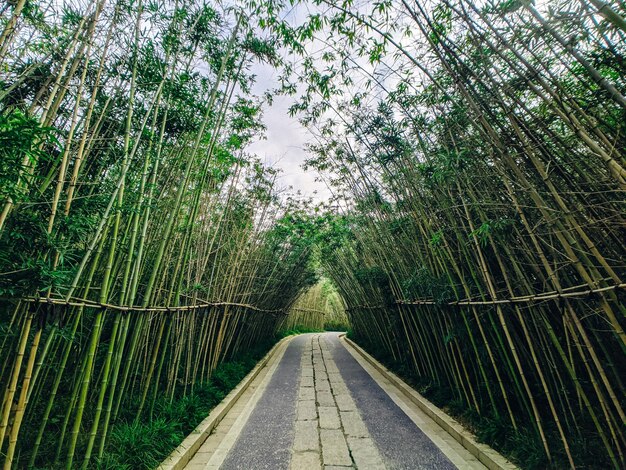
Bamboo shows up in a lot of different ways around Atlanta, Georgia—as a landscape plant, a building material, a design feature in restaurants, and even a privacy screen in backyards. If you’ve searched “Bamboo Atlanta,” you might be looking for places to buy bamboo, wondering whether bamboo is invasive here, or trying to decide if it works in your yard or design project.
This guide walks through how bamboo fits into Atlanta’s climate, neighborhoods, and local rules, and what to know before you plant, buy, or remove it.
Atlanta’s humid subtropical climate is generally well-suited for many kinds of bamboo. Our:
…create conditions where several bamboo species can thrive.
That said, bamboo in Atlanta falls into two broad groups:
For most homeowners and small spaces in Atlanta, clumping bamboo is usually the lower‑risk option. Running bamboo can work, but only with very careful containment and maintenance.
You’ll hear about bamboo in a few different local contexts:
Understanding which of these you care about makes it easier to find the right type of bamboo and the right supplier or professional in Atlanta.
Most of metro Atlanta is considered USDA Hardiness Zone 7b–8a. Many bamboos that tolerate temperatures down to about 0–10°F can do reasonably well here.
In Atlanta, people most often use:
When planning bamboo in a typical Atlanta property, consider:
Sun vs. shade
Soil type
Slope and drainage
Clumping bamboo is usually better for urban and suburban Atlanta:
Running bamboo needs serious management:
If you’re in a tight intown lot or close to a property line, consider:
If you choose running bamboo in Atlanta, most landscape professionals recommend:
This is especially important in dense Atlanta neighborhoods where property lines are tight and root systems can spread into neighbors’ yards or utility easements.
In the first 1–2 years after planting:
After establishment, many bamboos handle Atlanta’s summers well but may still appreciate deep watering during prolonged dry spells.
You can see bamboo used in a variety of settings around the city:
Public gardens and parks
Some botanical gardens and landscaped parks include bamboo among their plant collections or in themed areas, where you can observe how it looks at maturity and how it’s contained.
Restaurant patios and courtyards
Many Atlanta restaurants and cafes use bamboo planters, poles, or screens to create privacy or a relaxed outdoor vibe.
Residential neighborhoods
You’ll notice stands of bamboo behind fences or along property boundaries, particularly in mid‑century neighborhoods and parts of older intown areas where it was planted decades ago as a quick screen.
Seeing how bamboo behaves on existing properties can be useful before you plant it yourself.
Around Atlanta, you can typically find bamboo through:
Local nurseries and garden centers
Many carry at least a few varieties of bamboo suited to our climate, especially in spring and early summer.
Specialty bamboo or ornamental grass suppliers (regional)
Some operations focus on bamboo or hard‑to-find ornamentals and may serve the metro area or operate nearby.
Landscape companies
Some landscapers source bamboo directly and install it as part of a privacy or design project.
When shopping in the Atlanta area, it’s helpful to ask:
Residents and businesses use bamboo for:
Some Atlanta homeowners inherit old bamboo plantings that have spread too far. Managing or removing it can be a multi‑step process.
In the Atlanta area, people commonly use:
Mechanical removal
Ongoing mowing or cutting
Professional removal
If bamboo is near utility lines, public sidewalks, or shared property lines, it may be worth talking with:
Atlanta does not treat bamboo in the same way as some regulated nuisance plants, but there are a few things to keep in mind:
Property line issues
If bamboo crosses onto a neighbor’s property, it can lead to disputes similar to those over trees or hedges. It’s usually best to discuss plans before planting near boundaries.
Neighborhood and HOA guidelines
Some communities in the metro area set standards for hedge height, invasive species, or unsightly overgrowth that might affect how bamboo can be used.
Stormwater and natural areas
Near creeks, drainage areas, or public greenspaces, unmanaged bamboo stands can sometimes impact access or native vegetation. If bamboo is spreading from your property toward a public area or right‑of‑way, it may draw attention from local authorities or neighbors.
For questions about property or vegetation issues within the City of Atlanta, residents often start with:
Staff can typically direct you to the appropriate division (such as zoning, inspections, or code enforcement) if your bamboo situation intersects with local codes.
Here’s a quick reference tailored to Atlanta conditions:
| Goal | Good Bamboo Choice | Key Local Tips |
|---|---|---|
| Fast privacy screen in a close‑in neighborhood | Clumping bamboo | Plant several feet inside your property line; space plants to allow mature width; water well first 1–2 years. |
| Tall visual barrier along a back fence | Carefully contained running bamboo or tall clumping types | Install a deep barrier; inspect yearly; talk with neighbors before planting. |
| Decorative planting in a shaded intown yard | Shade‑tolerant clumping species | Check how much sun your yard actually gets; bamboo in deep shade may be thinner and slower. |
| Container planting on a balcony or patio | Compact clumping bamboo | Use a large, sturdy container with good drainage; water more often in summer heat. |
| Removing an old, overgrown stand | Not a plant choice, but a removal plan | Combine cutting, digging, and repeated follow‑up; consider professional help for large areas. |
Beyond planting in the ground, bamboo shows up in many Atlanta spaces as:
If you’re renovating in Atlanta and like the look of bamboo, local designers and contractors are familiar with using bamboo as an aesthetic material, even if the plant itself isn’t on your property.
By understanding how bamboo behaves specifically in Atlanta’s neighborhoods and climate, you can decide whether it belongs in your yard, on your patio, or simply as part of the city’s landscape you enjoy from a distance.