
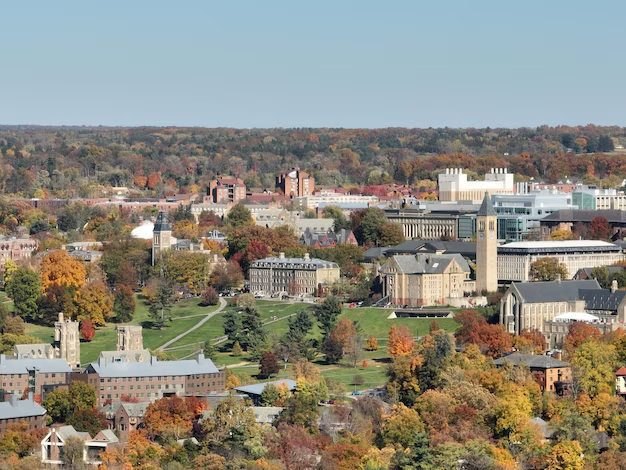
Colleges in Atlanta: Your Local Guide to Higher Education Options
Atlanta is one of the South’s biggest college hubs. Whether you live in the city, are planning a move, or are helping a student compare options, Atlanta’s colleges and universities offer almost every type of program—from community college certificates to elite research degrees.
This guide walks through the major colleges in Atlanta, Georgia, what makes each group unique, and how to choose the right fit if you want to study in or around the city.
Quick Overview: Types of Colleges in Atlanta
Atlanta’s higher education scene can be grouped into a few main categories:
| Type of School | Examples in/around Atlanta | Good For |
|---|---|---|
| Major research universities | Georgia Tech, Georgia State, Emory | STEM, business, research, graduate degrees |
| Historically Black Colleges and Universities (HBCUs) | Spelman, Morehouse, Clark Atlanta, Morris Brown | Students seeking HBCU culture and smaller communities |
| Public universities (state system) | Georgia State, Kennesaw State (metro area), Clayton State | Broader access, in‑state tuition, many majors |
| Private universities & colleges | Emory, Oglethorpe, Atlanta’s theology schools | Smaller classes, specialized programs |
| Community & technical colleges | Atlanta Technical College, Georgia Piedmont Tech, Perimeter College | Lower cost, trades, 2‑year degrees, transfer paths |
Major Research Universities in Atlanta
These schools are typically the most visible to people who live and work in Atlanta. They also draw students from around the country and world.
Georgia Institute of Technology (Georgia Tech)
Location: Midtown Atlanta, roughly along North Avenue NW and Ferst Drive
Type: Public research university
Georgia Tech is known nationally for engineering, computer science, and technology-focused programs, but it also offers strong majors in business, sciences, and design.
Key things locals often care about:
- Urban campus in Midtown, close to MARTA and major employers
- Strong ties to Atlanta’s tech, logistics, and film industries
- Popular for co‑op and internship opportunities with local companies
- Competitive admissions, especially for engineering and computing
If you’re Atlanta-based and aiming for a highly technical career, Georgia Tech is usually one of the first schools people consider.
Georgia State University (GSU)
Location: Downtown Atlanta, around Courtland St SE and Decatur St SE
Type: Public research university
Georgia State has grown into a large, urban campus integrated into downtown Atlanta. Many students commute from across the metro area.
GSU is known for:
- Business, public policy, education, health, and arts & sciences majors
- A strong reputation for serving first‑generation and transfer students
- Perimeter College campuses (Clarkston, Decatur, Dunwoody, Newton, and Alpharetta) for 2‑year and transfer‑oriented programs
- Easy access to downtown employers, courts, and government offices—useful for business, law‑related majors, and public service
For Atlanta residents who want to stay in the city, use public transit, and possibly work while in school, Georgia State is a common choice.
Emory University
Location: Druid Hills area, just east of the City of Atlanta limits (still part of the metro core)
Type: Private research university
Emory is widely recognized for:
- Pre‑med, public health, nursing, and biology programs
- The Emory School of Medicine and Rollins School of Public Health
- A quieter, tree‑lined campus compared with downtown and Midtown
- Connections to Emory University Hospital and the CDC (Centers for Disease Control and Prevention), which is nearby
Many Atlantans consider Emory when looking at health‑related careers or smaller, private‑school learning environments while still being close to the city’s job market and cultural life.
Atlanta’s HBCUs and the Atlanta University Center
Atlanta is home to one of the country’s best‑known clusters of Historically Black Colleges and Universities (HBCUs), located at the Atlanta University Center (AUC) near West End.
Spelman College
Location: Westview Dr SW & Lee St SW area
Type: Private HBCU, women’s liberal arts college
Spelman is known for:
- Being one of the leading women’s HBCUs in the country
- Strong liberal arts and sciences programs
- A tight‑knit campus culture with deep Atlanta community connections
Many local families look at Spelman when seeking a small, academically rigorous environment with strong alumni support.
Morehouse College
Location: Adjacent to Spelman, along Atlanta Student Movement Blvd SW
Type: Private HBCU, men’s college
Morehouse emphasizes:
- Leadership, social justice, and service
- Liberal arts majors with strong humanities and social science offerings
- A long history of influential alumni in politics, business, and the arts
For men looking for an HBCU experience rooted in leadership and identity development, Morehouse is a flagship option in Atlanta.
Clark Atlanta University
Location: Part of the Atlanta University Center complex
Type: Private HBCU
Clark Atlanta offers:
- A broad mix of business, communication, education, STEM, and arts programs
- A campus experience that combines research, community engagement, and HBCU traditions
- Access to shared AUC resources and cross‑registration with nearby AUC schools
It’s a frequent choice for students who want HBCU community life with a mix of professional and academic programs in the heart of Atlanta.
Morris Brown College
Location: Near Vine City and the AUC area
Type: Private HBCU
Morris Brown has a long Atlanta history and has been in the process of rebuilding and re‑establishing programs. Locals who value a smaller, community‑driven environment sometimes look here as the college continues to redevelop.
Public Universities in the Atlanta Metro Area
Beyond Georgia Tech and Georgia State, several other public universities serve metro Atlanta residents.
Kennesaw State University (KSU)
Locations:
- Kennesaw campus (northwest of Atlanta)
- Marietta campus (also northwest, closer to the Perimeter)
KSU is part of the University System of Georgia and is popular with:
- Students from Cobb County and the northern suburbs
- Those seeking business, engineering, education, and arts programs
- Commuters who prefer to avoid downtown or Midtown traffic and parking
While not in the City of Atlanta, KSU is often on the list for metro Atlanta residents comparing in‑state options.
Clayton State University
Location: Morrow, south of Atlanta, near I‑75
Type: Public university
Clayton State is a go‑to school for many students from south metro communities. Students often consider it for:
- Business, health sciences, and arts & sciences degrees
- A campus that’s smaller and generally less dense than downtown schools
- Easier access if you live in Clayton, Henry, or Fayette counties
Community and Technical Colleges Serving Atlanta
For many people in Atlanta, starting at a community or technical college is the most practical option—especially if you’re working, changing careers, or cost-conscious.
Atlanta Technical College
Location: Metropolitan Pkwy SW, south of downtown
Type: Public technical college (part of the Technical College System of Georgia)
Atlanta Tech specializes in:
- Technical and career programs (e.g., automotive, HVAC, welding, construction)
- Health care fields (such as medical assisting, certain allied health programs)
- Short‑term certificates and diplomas that can lead directly to jobs
It’s commonly used by Atlantans who want hands‑on skills and a quicker route into the workforce.
Georgia Piedmont Technical College
Primary locations:
- Clarkston (east of Atlanta, near I‑285)
- Newton campus (Covington)
Georgia Piedmont offers:
- Technical and skilled trade programs
- Information technology, advanced manufacturing, and public safety paths
- Adult education and GED preparation, often appealing to adult learners in the Atlanta area
Perimeter College at Georgia State University
Campuses: Clarkston, Decatur, Dunwoody, Newton, Alpharetta
Perimeter focuses on:
- Associate degrees and courses designed to transfer to 4‑year schools
- More flexible schedules for commuters and working students
- A lower‑cost starting point for students planning to transition to Georgia State’s main campus or other universities
If you live in the metro suburbs but want to be connected to Georgia State, Perimeter is a common entry point.
Private Colleges and Specialized Schools in Atlanta
Oglethorpe University
Location: Near Brookhaven, just north of the Atlanta city limits
Type: Private liberal arts college
Oglethorpe offers:
- A smaller liberal arts environment within reach of Atlanta’s job market
- Programs in arts, humanities, business, and sciences
- A compact campus feel compared to larger public universities
Many students choose Oglethorpe for small class sizes while still living within the Atlanta area.
Theological and Seminary Schools
Atlanta has several religious and theology-focused institutions, including:
- Interdenominational Theological Center (ITC) – part of the Atlanta University Center, focusing on Christian theology and ministry
- Other local seminaries linked to specific denominations
These are more niche but significant if you’re pursuing religious leadership or advanced theological study in Atlanta.
How to Choose a College in Atlanta
If you’re trying to narrow down options, think about these Atlanta-specific factors:
1. Location, Commute, and Transit
Atlanta traffic is a real consideration.
- If you rely on MARTA rail or buses, campuses in Midtown, Downtown, and West End (Georgia Tech, Georgia State, AUC schools) are generally easier to reach without a car.
- If you live in the northern suburbs, Kennesaw State or Perimeter’s Dunwoody/Alpharetta campuses may cut down commute time.
- For southside residents, Clayton State or Atlanta Technical College are often more convenient.
🚌 Tip: When you visit campuses, do the trip at the same time of day you’d normally commute to see what traffic and transit are really like.
2. Program Type and Career Goals
Ask yourself:
- Do you want a four‑year degree, two‑year degree, or a short skills certificate?
- Are you aiming for research and graduate study, or job-ready training?
In Atlanta:
- Georgia Tech, Emory, Georgia State, and the AUC schools tend to be preferred for traditional bachelor’s and graduate programs.
- Atlanta Technical College and Georgia Piedmont are more aligned with technical, trade, and applied skills.
- Perimeter College is popular for starting low-cost, then transferring.
3. Campus Culture and Size
There’s a big difference between walking across Georgia Tech’s Midtown campus, attending class in a high‑rise at Georgia State, or living on a compact residential campus like Spelman or Oglethorpe.
Common preferences among Atlanta students:
- Those wanting a tight-knit, mission-driven community often lean toward HBCUs or smaller private colleges.
- Students who enjoy a busy, city-integrated feel and diverse student body often choose Georgia State.
- Students attracted to intense academic focus in STEM frequently consider Georgia Tech.
- Those who want a suburban feel may look at KSU, Oglethorpe, or Clayton State.
If possible, attend an open house or campus tour to see which atmosphere feels right.
4. Cost and Financial Aid
For Atlanta-area residents, consider:
- In‑state tuition at Georgia public institutions (Georgia Tech, GSU, KSU, Clayton State, Perimeter, Atlanta Tech, Georgia Piedmont) is usually lower than out‑of‑state rates.
- Technical and community colleges often have the lowest tuition, with flexible schedules for working adults.
- Private colleges (Emory, Oglethorpe, AUC schools) tend to have higher sticker prices but may offer institutional scholarships and need‑based aid.
It can be helpful to:
- Compare total cost of attendance, including housing, parking, and transit in Atlanta.
- Check if the school connects students with Atlanta-based internships that can offset costs over time.
Practical Next Steps for Atlanta Residents
If you’re ready to move forward:
List your top priorities
Examples: staying inside I‑285, HBCU culture, strongest engineering program, smallest possible classes, or quickest path to a trade.Match those priorities to 3–5 Atlanta‑area schools
- STEM + urban campus → Georgia Tech, Georgia State
- HBCU experience → Spelman, Morehouse, Clark Atlanta, Morris Brown
- Technical skills → Atlanta Technical College, Georgia Piedmont
- Suburban + public → Kennesaw State, Clayton State
- Pre‑health + private → Emory
Visit campuses if you can
Pay attention to transit routes, parking, nearby neighborhoods, and how comfortable you feel on campus.Contact admissions and advising offices
Ask about:- Program details
- Transfer credit (if you’re coming from another school)
- Evening or online options if you’ll be working
- Local internship or co‑op partnerships in Atlanta
Plan around Atlanta life
Think realistically about traffic, housing costs, and work schedules so your college choice fits your everyday life in the city.
Atlanta offers an unusually wide range of colleges, universities, and technical programs within a relatively compact metro area. With options ranging from Downtown high‑rises to historic HBCU campuses and suburban universities, most people living in or near Atlanta can find a school that fits their goals, budget, and daily routine.