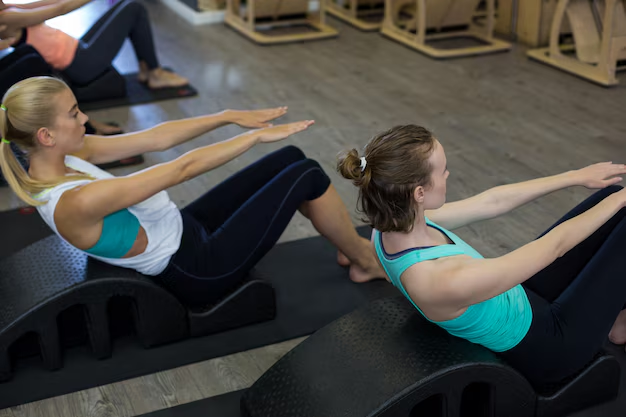
Atlanta has a strong Pilates community, from boutique studios in Buckhead and Midtown to low-cost options at neighborhood recreation centers. Whether you live in the city or are just here for a few weeks, you can almost always find a class that fits your schedule, budget, and experience level.
This guide walks you through how Pilates works in Atlanta—types of classes, typical prices, what to look for in a studio, and how to match options to your neighborhood and lifestyle.
Pilates is a low-impact exercise method that focuses on:
In Atlanta, people commonly use Pilates to:
You’ll find Pilates offered in:
Understanding the different formats helps you pick the right spot before you commit to a package or membership.
Mat Pilates uses a mat on the floor and small props like rings, light weights, or balls.
Reformer Pilates uses a spring-based machine (the reformer) for resistance training and assisted stretching. This is what many boutique Pilates studios in Atlanta specialize in.
Some Atlanta studios go beyond reformers and offer:
These are often used in private sessions or small groups for more customized work.
Prices vary widely based on neighborhood, format, and whether it’s a boutique studio or a community program. Below is a general, city-focused snapshot:
| Type of Class/Access | Typical Atlanta Range (Approximate) | Where You Might See It |
|---|---|---|
| Community center mat class | $5–$15 per class | City of Atlanta rec centers, YMCAs |
| Gym-based mat class (with membership) | Included in membership or $10–$25 drop-in | Larger gyms, yoga/fitness studios |
| Boutique mat class | $20–$30 per class | Smaller studios in Midtown, Old Fourth Ward |
| Group reformer class | $25–$45 per class | Boutique Pilates studios citywide |
| Private Pilates session | $70–$140+ per session | Specialized studios, some physical therapy centers |
Prices can change, so it’s best to contact the studio or facility directly for current rates and packages.
You don’t have to drive across town to find Pilates. Different neighborhoods tend to offer different mixes of options.
You’ll also see Pilates classes woven into mixed-use developments and apartment fitness amenities along the BeltLine, especially near the Eastside Trail.
If you’re outside city limits—in areas like Marietta, Roswell, Alpharetta, or Jonesboro—you’ll still find Pilates at:
If boutique studio pricing isn’t realistic right now, there are still several ways to do Pilates around the city.
Atlanta’s Department of Parks and Recreation supports a wide range of group fitness programs at local rec centers. These sometimes include Pilates or Pilates-inspired mat classes.
You can contact or visit:
Schedules differ by center, and class lineups can change seasonally.
Several YMCA branches offer mat Pilates-style classes as part of membership, and some occasionally feature reformer-style or core-focused programming.
Administrative contact:
Each branch (e.g., in Buckhead, Decatur, East Lake, Midtown) has its own schedule, so you’ll need to check class calendars for offerings labeled Pilates, core, or mind–body.
If you’re a student, faculty member, or staff at institutions like Georgia State University, Georgia Tech, or nearby colleges, campus recreation centers often include Pilates-style classes in their group fitness schedules.
These are typically only open to campus community members or paying recreation center users.
There are many options; the key is matching the studio’s style to your goals, comfort level, and commute.
Ask yourself:
Do I want to try Pilates with minimal cost and equipment?
→ Start with mat classes at a gym, rec center, or multi-use studio.
Do I want more guided, resistance-based work with machines?
→ Look into reformer studios in your neighborhood.
Atlanta traffic can make even a short drive feel long. To stay consistent, pick something that fits easily into your routine:
Many Midtown and Buckhead studios are near major transit corridors and office buildings, which is convenient for before/after-work classes.
Studios often describe their approach:
Pay attention to whether a studio emphasizes:
When evaluating studios, consider:
You can call ahead and ask how they handle new clients, especially if you haven’t exercised in a while or are concerned about specific movements.
Whether you’re in Midtown or Marietta, most Pilates classes in the area follow a similar structure.
You can generally expect:
In Atlanta studios, you’ll typically see a mix of:
If something doesn’t feel right, you can always talk with the instructor after class and ask how to modify certain movements next time.
You don’t have to choose Pilates alone. Many Atlantans blend Pilates with:
Pilates is often used as a complement rather than a replacement, especially for people looking to improve core strength, balance, and posture to support other activities.
Here are practical steps to begin:
Pick your area first.
Focus on neighborhoods you can realistically reach: Midtown, Buckhead, Decatur, West Midtown, or your closest suburb.
Start with a beginner-friendly or fundamentals class.
Many studios label certain classes as Intro, Foundations, or Level 1.
Ask about trial options.
Some places may offer:
Check policies before you go.
Understand:
Go at a time you can stick with.
In Atlanta traffic, consistency is easier if you choose:
Pilates is generally low-impact, but certain situations call for individualized medical or professional guidance before joining group classes. Consider checking with a licensed health professional before starting if you:
Some Atlanta studios and therapy centers offer Pilates-informed private sessions specifically for people working with physical limitations. If needed, you can ask your doctor or physical therapist whether they recommend Pilates and what type of setting would be safest for you.
For anyone living in or visiting Atlanta, Pilates can fit into almost any schedule and budget—from community center mat classes to high-end reformer sessions in Buckhead or Midtown. Once you identify your neighborhood, comfort level, and price range, you can narrow down a few nearby options, call ahead with questions, and try a beginner-friendly class to see how it feels in your body.