
Navigating Spaghetti Junction in Atlanta: What Locals and Visitors Need to Know
If you spend any time driving in metro Atlanta, Spaghetti Junction is almost impossible to avoid. Known formally as Tom Moreland Interchange, this massive highway interchange is a landmark of Atlanta traffic life—and a source of confusion for many drivers.
Below is a practical guide to what Spaghetti Junction is, where it is, how to drive it safely, and what to know if you live, commute, or visit the Atlanta area.
What Is Spaghetti Junction in Atlanta?
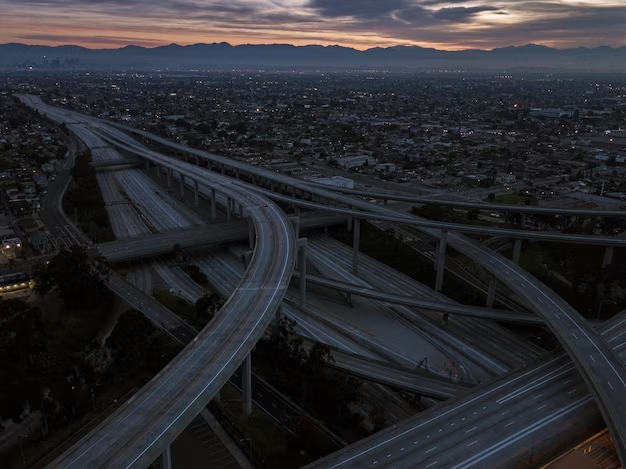
Spaghetti Junction is the nickname for the interchange of I‑285 and I‑85 on the northeast side of Atlanta, in DeKalb County. Its tangle of bridges, ramps, and lanes resembles a plate of spaghetti when viewed from above—hence the name.
Key points:
- Official name: Tom Moreland Interchange
- Common nickname: Spaghetti Junction
- Highways involved:
- I‑285 (Atlanta’s perimeter loop)
- I‑85 (major north–south interstate)
- Location: Near Doraville, northeast of downtown Atlanta
This interchange is one of the busiest in the region and is a critical connection point for:
- Commuters between Gwinnett County, DeKalb County, and the City of Atlanta
- Travelers heading to and from Hartsfield–Jackson Atlanta International Airport
- Long-distance drivers moving through Georgia and the Southeast
Where Exactly Is Spaghetti Junction?
For navigation purposes, Spaghetti Junction is located where:
- I‑285 East/West meets
- I‑85 North/South in northeast metro Atlanta
Nearby Landmarks and Areas
If you’re trying to picture it on the map, Spaghetti Junction is close to:
- Doraville
- Chamblee
- The Peachtree Industrial Boulevard area (west)
- The Pleasantdale Road and Jimmy Carter Boulevard corridors (north)
Approximate center point for navigation apps:
Tom Moreland Interchange, I‑285 & I‑85, Doraville, GA 30340
Why Spaghetti Junction Matters in Atlanta
For people who live in or visit Atlanta, Spaghetti Junction isn’t just a curiosity—it directly affects daily travel.
A Major Commuter Hub
Spaghetti Junction is a central connector between:
- I‑85 North toward Gwinnett County (Norcross, Duluth, Lawrenceville)
- I‑85 South toward Midtown, Downtown Atlanta, and the airport (via I‑75/I‑85 connector)
- I‑285 East toward Tucker, Decatur, Stone Mountain
- I‑285 West toward Perimeter Center, Sandy Springs, Smyrna, and I‑75
If your job, school, or regular errands require crossing between the northeast suburbs and other parts of the metro area, there’s a good chance you’ll pass through this interchange.
Freight and Long-Distance Traffic
Spaghetti Junction also serves:
- Freight trucks heading across the Southeast
- Long-distance travelers traveling on I‑85 between South Carolina, North Carolina, and Alabama
- Drivers using I‑285 to bypass central Atlanta
That mix of local commuters and through-traffic is one reason the area can feel so congested.
What to Expect When Driving Through Spaghetti Junction
Driving through Spaghetti Junction can feel intimidating, especially if you are:
- New to Atlanta
- Driving a rental car during a visit
- Changing lanes frequently to catch the right exit
Here’s what you can expect.
Lane Changes and Signage
The interchange includes multiple levels of flyover ramps, collector–distributor lanes, and closely spaced exits. You’ll often see:
- Multiple overhead signs in quick succession
- Dedicated exit-only lanes that split off earlier than you might expect
- Heavy merging where lanes from I‑285 and I‑85 combine or separate
👉 Tip: If you’re unsure of the route, set your navigation app ahead of time and zoom in on the ramp layout so you know your exit number and direction before you reach the interchange.
Typical Traffic Patterns
Traffic conditions can vary widely by time of day:
Morning rush (approx. 6:30–9:30 a.m.)
- Heavy inbound traffic toward Atlanta and major job centers
- Slowdowns on I‑85 South and I‑285 West and East approaching the interchange
Evening rush (approx. 3:30–7:00 p.m.)
- Congestion heading away from Downtown/Midtown
- Backups common on I‑85 North, I‑285 East, and I‑285 West ramps
Weekends and holidays
- Variable: sometimes lighter, but football games, concerts, and big events in Atlanta can cause major surges
Simple Route Guide: Common Movements Through Spaghetti Junction
Use this quick-reference overview to better understand common directions through the interchange.
| If You’re On… | And You Want To Go… | Watch For / General Guidance |
|---|---|---|
| I‑85 South | I‑285 East (to Decatur/Tucker) | Stay alert for early lane signs; follow I‑285 East / Augusta signs. |
| I‑85 South | I‑285 West (to Perimeter/Smyrna) | Move to lanes signed for I‑285 West / Chattanooga / Birmingham. |
| I‑85 North | I‑285 East (to Stone Mountain) | Look for I‑285 East / Greenville or Augusta directional signage. |
| I‑85 North | I‑285 West (to Sandy Springs) | Shift toward lanes marked I‑285 West; ramps can appear quickly. |
| I‑285 East | I‑85 South (to Atlanta) | Follow I‑85 South / Atlanta / Airport signs; traffic often heavy. |
| I‑285 East | I‑85 North (to Gwinnett) | Move early into lanes for I‑85 North / Greenville. |
| I‑285 West | I‑85 South (to Downtown) | Choose I‑85 South / Atlanta ramp and be ready for merges. |
| I‑285 West | I‑85 North (to Norcross/Lawrenceville) | Follow I‑85 North; stay right or left based on overhead arrows. |
Note: The exact lane assignments can change for construction or re-striping, so rely on real-time signage while using this as a general orientation.
Safety Tips for Driving Through Spaghetti Junction
Because of its complexity, drivers in Atlanta often treat Spaghetti Junction with extra caution. A few practical habits can make a big difference:
1. Plan Your Route Before You Enter
- Know whether you need I‑85 or I‑285, and in which direction.
- Check Atlanta traffic apps or navigation for incidents ahead of time.
- If you’re visiting and unfamiliar, consider reviewing the route in satellite or 3D map view.
2. Get in the Correct Lane Early
Last-minute lane changes at Spaghetti Junction are stressful and risky. When you see the advance signs:
- Start moving one lane at a time toward the lane your exit uses.
- Avoid aggressive weaving; if you miss your ramp, take the next exit and safely turn around.
3. Watch for Trucks and Rapid Speed Changes
You’ll usually see a mix of:
- Large trucks entering or exiting the interchange
- Drivers braking suddenly for congestion or confusion
Maintain:
- A safe following distance
- A steady speed appropriate for conditions, not just the posted limit
4. Minimize Distractions
This is not the place to check messages or fiddle with your GPS:
- Set your destination and audio directions before approaching.
- Use voice guidance so you can keep eyes on the road.
- If you need to reprogram your route, exit to a surface street or parking lot.
Alternatives to Driving Through Spaghetti Junction
If you live in or visit Atlanta, you might want to avoid Spaghetti Junction during peak congestion when possible.
1. Surface Street Routes
Depending on your origin and destination, you may be able to use major surface roads, such as:
- Buford Highway (US‑23)
- Peachtree Industrial Boulevard
- Chamblee Tucker Road
- Pleasantdale Road
These routes can sometimes be slower in distance but less stressful than getting stuck on the interstate in stop‑and‑go conditions.
2. Adjusting Your Schedule
If your routine allows:
- Shift commutes earlier or later than the main rush hour.
- Plan airport runs and long drives to avoid the morning and evening peaks at Spaghetti Junction.
3. Using MARTA and Park-and-Ride Options
While MARTA rail does not run directly through Spaghetti Junction, you can:
- Park at a MARTA rail station such as Doraville Station (6000 New Peachtree Rd, Doraville, GA 30340)
- Ride into central Atlanta instead of driving I‑85/I‑285 the entire way
MARTA also operates bus routes that serve the Doraville, Chamblee, and Norcross areas, which can help avoid some highway segments.
For schedules and routes, you can contact or visit:
- Metropolitan Atlanta Rapid Transit Authority (MARTA)
- Headquarters: 2424 Piedmont Rd NE, Atlanta, GA 30324
- Customer service phone lines are typically listed on MARTA’s official materials.
Local Services and Agencies Connected to Spaghetti Junction
Several local and state entities manage and monitor conditions in and around Spaghetti Junction.
Georgia Department of Transportation (GDOT)
GDOT is responsible for the design, maintenance, and operation of interstate highways such as I‑85 and I‑285.
- GDOT Atlanta District Office (District 7 – Metro Atlanta)
- 5025 New Peachtree Rd, Chamblee, GA 30341
You can use GDOT’s resources to:
- Check for construction projects or lane closures near Spaghetti Junction
- Learn about future improvements or modifications planned for the interchange
Traffic Information and Incident Response
Local drivers often rely on:
- GDOT traffic cameras and message boards located along I‑85 and I‑285
- City and county public safety agencies for incident response in the interchange area
In an emergency, dial 911. For non-emergency incident reporting in nearby areas, you can use the local non-emergency lines published by:
- DeKalb County Police Department (for much of the area around Spaghetti Junction)
Living Near Spaghetti Junction: What Residents Consider
Many Atlantans live in neighborhoods close to Spaghetti Junction, including parts of Doraville, Chamblee, Norcross, and Tucker. If you’re considering moving nearby or already live there, here are some practical considerations.
Commute Patterns
Pros:
- Fast access to both I‑85 and I‑285, making trips around metro Atlanta more direct
- Reasonable connectivity to Perimeter Center, Downtown, Midtown, and Gwinnett County
Challenges:
- Potential exposure to rush‑hour congestion and noise
- Need to develop alternate routes when major incidents shut down ramps or lanes
Noise and Air Quality Considerations
Areas close to large interchanges can experience:
- Higher traffic noise levels
- More frequent presence of heavy vehicles
Prospective residents sometimes look for:
- Buildings or homes set back from the main interstate
- Sound‑buffering features such as fences, trees, or interior insulation
Visiting Atlanta and Encountering Spaghetti Junction for the First Time
If you’re flying into Hartsfield–Jackson Atlanta International Airport and driving to the northeast suburbs, your route will often involve:
- I‑85 North from central Atlanta
- Transitioning to I‑285 East or West at Spaghetti Junction depending on your final destination
To make it easier:
- Consider saving a favorite route in your GPS from the airport to your hotel or rental.
- If you’re uncomfortable with complex interchanges, you can choose routes that use more surface streets once you’re on the north side of the city.
Key Takeaways for Navigating Spaghetti Junction in Atlanta
- Spaghetti Junction = the massive I‑85 / I‑285 interchange in northeast Atlanta, officially the Tom Moreland Interchange.
- It’s a crucial connector for commuters, freight, and travelers moving around metro Atlanta and across the Southeast.
- Expect heavy traffic and complex lane patterns, especially at rush hour.
- Prepare in advance: know your exit, direction, and lane before entering the interchange.
- Consider alternate routes, adjusted travel times, or MARTA if you want to avoid the stress of driving through it regularly.
- Local oversight and maintenance come primarily from Georgia Department of Transportation (GDOT), with public safety supported by DeKalb County and nearby municipalities.
Understanding how Spaghetti Junction works—and planning your route with it in mind—can make driving in Atlanta noticeably smoother, whether you’re a long-time local or just passing through.