
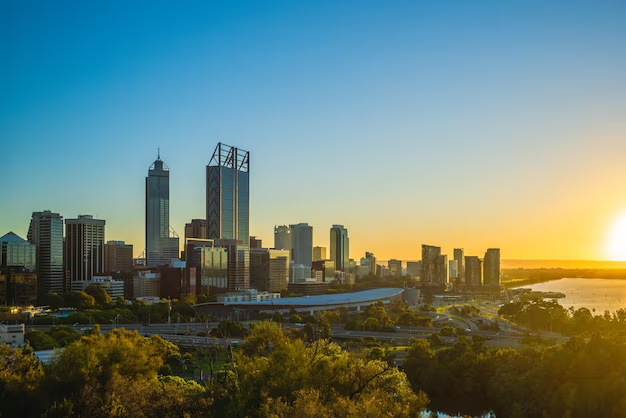
Exploring Atlanta: Neighborhoods, Landmarks, and Places You Should Know
Atlanta is a city of distinct neighborhoods, iconic landmarks, and hidden local gems. Whether you live here, you’re planning a trip, or you’re trying to get a feel for how the city is laid out, understanding Atlanta’s places makes it much easier to get around, plan your time, and enjoy what the city has to offer.
Below is a practical guide to key Atlanta places – from major districts and tourist spots to transportation hubs and essential city services.
Getting Your Bearings: How Atlanta Is Laid Out
Atlanta doesn’t follow a simple grid. Instead, it’s a mix of intown neighborhoods, major corridors, and suburban-style pockets that blur into each other.
Key features of Atlanta’s layout:
- Downtown, Midtown, Buckhead: The city’s main north–south spine along Peachtree Street.
- The Perimeter (I‑285): The loop highway that encircles the core city; locals use “inside the Perimeter (ITP)” and “outside the Perimeter (OTP)” to describe where things are.
- Interstates I‑75, I‑85, and I‑20: Major routes that cross near Downtown and help define directions (north, south, east, west “sides” of the city).
- MARTA Rail Lines: Red, Gold, Blue, and Green train lines connect many of the most important places.
Knowing which general “side” of Atlanta a place is on (Downtown, Midtown, Westside, Eastside, Southside, or Buckhead/Northside) helps with planning travel time and transit options.
Major Districts and Neighborhoods in Atlanta
Downtown Atlanta
Best for: Major attractions, conventions, sports, and government services.
Highlights include:
- Centennial Olympic Park (265 Park Ave W NW) – A central green space surrounded by major attractions.
- Georgia Aquarium (225 Baker St NW) – One of the largest aquariums in the world.
- World of Coca‑Cola (121 Baker St NW) – Brand museum and interactive exhibits.
- State Farm Arena (1 State Farm Dr) – NBA games, concerts, and events.
- Mercedes‑Benz Stadium (1 AMB Dr NW) – NFL, MLS, and large events.
- Georgia State Capitol (206 Washington St SW) – Home to Georgia’s state government.
Downtown is also where you’ll find many state and federal offices, large hotels, and the Five Points MARTA Station, a key transfer point for rail and bus lines.
Midtown Atlanta
Best for: Arts, culture, nightlife, and walkability.
Midtown is one of Atlanta’s most pedestrian-friendly areas, with:
- Piedmont Park (1320 Monroe Dr NE) – Atlanta’s “Central Park,” with trails, fields, and events.
- Atlanta Botanical Garden (1345 Piedmont Ave NE) – Gardens, exhibits, and skyline views.
- Fox Theatre (660 Peachtree St NE) – Historic theater for shows, concerts, and tours.
- High Museum of Art (1280 Peachtree St NE) – Major art museum with rotating exhibitions.
- Colony Square & Peachtree corridor – Dining, offices, and residential towers.
Midtown is well served by several MARTA rail stations (Arts Center, Midtown, North Avenue), making it convenient without a car.
Buckhead
Best for: Upscale shopping, dining, and business.
Located north of Midtown, Buckhead is known for:
- Lenox Square (3393 Peachtree Rd NE) – Large shopping mall with national retailers.
- Phipps Plaza (3500 Peachtree Rd NE) – Higher-end shopping and dining.
- Buckhead Village District – Walkable area with boutiques and restaurants.
- Numerous headquarters and office towers along Peachtree Road.
Buckhead is easiest to access via car or MARTA’s Red Line (Lenox, Buckhead, or Lindbergh Center stations).
The Westside (West Midtown & Surrounding Areas)
Best for: Converted industrial spaces, food halls, and creative businesses.
Key Westside spots:
- Atlantic Station (1380 Atlantic Dr NW) – Mixed-use district with shops, restaurants, and residences.
- Westside Provisions District (around Howell Mill Rd NW & 14th St) – Trendy dining and shopping.
- The Works ATL (1295 Chattahoochee Ave NW) – Retail, breweries, and food concepts.
- West Midtown industrial corridor – Home to studios, breweries, and creative offices.
Access is mainly by car or bus; Atlantic Station also offers shuttles to the Arts Center MARTA Station.
Eastside Neighborhoods
Best for: Walkable streets, local restaurants, and neighborhood charm.
Popular Eastside places include:
- Virginia‑Highland – Bungalow-lined streets with cafes and local shops.
- Little Five Points – Alternative neighborhood known for vintage stores and music venues.
- Inman Park – Historic homes and access to the BeltLine Eastside Trail.
- Old Fourth Ward (O4W) – Rapidly redeveloped area with:
- Ponce City Market (675 Ponce De Leon Ave NE) – Food hall, offices, shopping, and rooftop activities.
- Historic Fourth Ward Park – Green space with a lake and amphitheater.
Much of the Eastside is accessible and bikeable via the Atlanta BeltLine Eastside Trail, which connects to Midtown and other intown neighborhoods.
The Atlanta BeltLine: A Key Place and Pathway
The Atlanta BeltLine is a growing network of multi-use trails and future transit lines encircling intown Atlanta along former rail corridors.
Important sections:
- Eastside Trail – Runs roughly from Piedmont Park south toward Reynoldstown, passing Ponce City Market, Old Fourth Ward, and Inman Park.
- Westside Trail – Connects neighborhoods such as West End, Adair Park, and Oakland City.
The BeltLine functions as both a place to visit (for walking, biking, dining, and events) and a way to connect different parts of the city without a car.
Historic and Culturally Significant Places
Atlanta has many places tied to civil rights, history, and culture.
Key sites:
Martin Luther King Jr. National Historical Park
450 Auburn Ave NE
Includes Dr. King’s birth home, Ebenezer Baptist Church, and The King Center.Auburn Avenue / Sweet Auburn Historic District – Once a thriving Black business corridor, still home to important institutions.
Atlanta University Center (AUC) – Cluster of historically Black colleges and universities (Clark Atlanta University, Morehouse College, Spelman College), located on the west side of the city.
Oakland Cemetery (248 Oakland Ave SE) – Historic cemetery and garden-style park with city views.
These places offer context for understanding Atlanta’s role in American history and ongoing cultural life.
Parks and Outdoor Places in Atlanta
Atlanta’s nickname, the “City in a Forest,” reflects its abundance of trees and green spaces.
Major Parks and Green Spaces
- Piedmont Park – Central gathering place with trails, dog parks, and festivals.
- Freedom Park – Linear park connecting several intown neighborhoods.
- Grant Park – Home to Zoo Atlanta (800 Cherokee Ave SE) and playgrounds.
- Chastain Park (north Buckhead area) – Golf, amphitheater, tennis, and trails.
- Atlanta BeltLine trails – Increasingly used as both recreation and transportation corridors.
For locals, these parks are not just recreational; they’re common venues for events, farmers markets, and community activities.
Sports, Events, and Entertainment Places
Atlanta hosts major sports, concerts, and conventions year-round.
Major Sports and Event Venues
| Place | Location | What Happens There |
|---|---|---|
| Mercedes‑Benz Stadium | 1 AMB Dr NW (Downtown/Westside) | NFL, MLS, concerts, major events |
| State Farm Arena | 1 State Farm Dr (Downtown) | NBA, concerts, large indoor events |
| Truist Park | 755 Battery Ave SE (Cobb Co.) | Professional baseball and entertainment district |
| Georgia World Congress Ctr | 285 Andrew Young Intl Blvd NW | Conventions, trade shows, large meetings |
| Fox Theatre | 660 Peachtree St NE (Midtown) | Broadway shows, concerts, special events |
The Battery Atlanta, next to Truist Park, is a mixed-use entertainment district with restaurants, retail, and year-round activities, even on non-game days.
Transportation Places: How to Move Around Atlanta
Understanding key transportation hubs and places helps you plan routes and manage travel time.
MARTA (Metropolitan Atlanta Rapid Transit Authority)
MARTA Rail serves many important places:
- Hartsfield‑Jackson Atlanta International Airport Station – At the airport’s Domestic Terminal.
- Five Points Station – Main transfer hub for all rail lines, in Downtown.
- Peachtree Center Station – Convenient for hotels and offices in Downtown.
- Midtown, Arts Center, North Avenue Stations – Access to Midtown destinations and Georgia Tech (main campus between Midtown and North Avenue).
- Buckhead, Lenox, Lindbergh Center Stations – Connect to Buckhead and surrounding areas.
MARTA Headquarters & Customer Service Center
2424 Piedmont Rd NE
Atlanta, GA 30324
Customer service phone (commonly used by riders): (404) 848‑5000
Hartsfield‑Jackson Atlanta International Airport
One of the world’s busiest airports:
- Address: 6000 N Terminal Pkwy, Atlanta, GA 30320
- Domestic Terminal: Accessible by car, ride-share, and MARTA Airport Station.
- International Terminal (Concourse F): Separate access via Interstate 75 (usually a different drop-off/pickup area from Domestic).
For most visitors, the airport is the primary gateway into Atlanta, and its direct MARTA connection makes it easier to reach Downtown and Midtown without driving.
Major Highways and Commuting Corridors
Key routes to know:
- I‑75/I‑85 (“Downtown Connector”) – Combined interstate running north–south through the heart of the city.
- I‑20 – Runs east–west, crossing the Connector near Downtown.
- I‑285 (“The Perimeter”) – Encircles Atlanta; exit numbers indicate how far around the loop you are.
- GA‑400 – North–south corridor connecting Buckhead to northern suburbs.
These highways influence where people live, where traffic bottlenecks appear, and how long it takes to reach different places.
Government, Civic, and Essential Service Places
If you live in or around Atlanta, certain official places are useful to know.
City of Atlanta Government
City Hall
55 Trinity Ave SW
Atlanta, GA 30303
Main line (commonly listed): (404) 330‑6000
City Hall is where you’ll find many city services, including information on permits, city ordinances, and services like sanitation or water billing.
Fulton County and DeKalb County
Most of the city of Atlanta lies in Fulton County, with some neighborhoods in DeKalb County.
Fulton County Government Center
141 Pryor St SW
Atlanta, GA 30303
DeKalb County Government (near Atlanta)
1300 Commerce Dr
Decatur, GA 30030
These county offices handle property records, some court services, and county-level services for residents.
Public Safety Places
For emergencies anywhere in Atlanta, call 911.
Non-emergency numbers are used for reporting less urgent issues, but 911 is the standard for immediate emergencies.
Key law enforcement jurisdictions within the city limits often include:
- Atlanta Police Department (APD) – Primary police service inside city limits.
HQ: 226 Peachtree St SW, Atlanta, GA 30303 - Georgia State Patrol – Patrols state routes and assists during major events.
- Campus police for major universities such as Georgia State University and Georgia Tech.
Educational and Campus Places
Several major higher education institutions are based in Atlanta, and their campuses function as important districts themselves.
Notable campuses:
Georgia Institute of Technology (Georgia Tech)
North Avenue NW & surrounding streets (Midtown/Westside area).Georgia State University (GSU)
Primarily in Downtown, around Decatur St SE and Piedmont Ave SE.Atlanta University Center (AUC)
Southwest of Downtown, anchored by:- Morehouse College
- Spelman College
- Clark Atlanta University
These places often host public lectures, performances, museums, and sporting events that are open to the broader Atlanta community.
Visitor-Focused Places and Practical Tips
If you’re visiting Atlanta, a few clusters of places make planning easier.
Popular Visitor “Zones”
Downtown Cluster
- Georgia Aquarium
- World of Coca‑Cola
- Centennial Olympic Park
- National Center for Civil and Human Rights
- CNN Center area (for events and nearby hotels)
Midtown Cluster
- Piedmont Park
- Atlanta Botanical Garden
- Fox Theatre
- High Museum of Art
- Midtown’s Peachtree corridor (restaurants and bars)
Eastside/BeltLine Cluster
- Ponce City Market
- Old Fourth Ward Park
- Inman Park / Krog Street Market area
- Little Five Points
Staying in or near one of these zones can reduce how much you rely on a car and make it easier to explore by MARTA, rideshare, or walking.
How Locals Talk About Places in Atlanta
When someone in Atlanta gives directions or talks about where they live, you’ll often hear:
- “I’m ITP/OTP” – Inside or outside the I‑285 Perimeter.
- “I’m off Peachtree” – Referring to one of the many Peachtree-named streets (Peachtree St, Peachtree Rd, Peachtree Industrial Blvd, etc.); context matters.
- “The Westside/Eastside” – Generally describing neighborhoods west or east of Downtown/Midtown.
- “Near the BeltLine” – A shorthand for being in a walkable, intown area adjacent to BeltLine trails.
Understanding this language helps you quickly place where things are relative to the rest of the city.
Quick Reference: Core Atlanta Places at a Glance
Key Attraction Areas
- Downtown: Centennial Olympic Park, Georgia Aquarium, World of Coca‑Cola
- Midtown: Piedmont Park, Fox Theatre, High Museum of Art
- Eastside: Ponce City Market, BeltLine Eastside Trail, Little Five Points
Transportation Hubs
- Hartsfield‑Jackson Airport – 6000 N Terminal Pkwy
- Five Points MARTA Station – Downtown transfer hub
- Midtown & Arts Center MARTA Stations – Access to Midtown attractions
Government & Civic
- City Hall – 55 Trinity Ave SW
- Georgia State Capitol – 206 Washington St SW
- Fulton County Government Center – 141 Pryor St SW
Using these anchor points, you can orient yourself, plan routes, and better understand how different Atlanta places connect to each other in daily life or during a visit.