
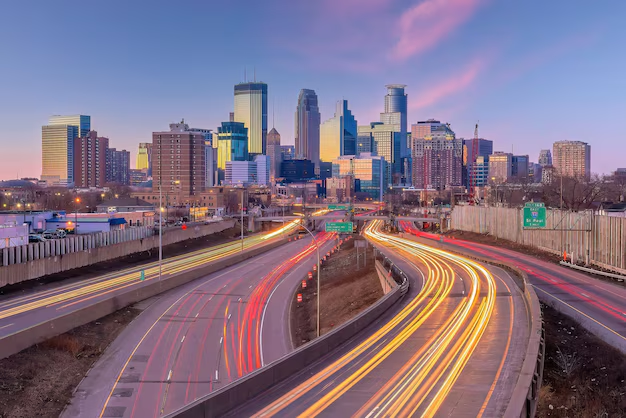
Atlanta, Georgia, United States: A Local Guide to the Capital of the South
Atlanta, Georgia is more than just a dot on the map of the United States. It’s a fast-growing Southern metropolis with distinct neighborhoods, heavy traffic, big opportunities, and a deep history in civil rights, business, music, and culture. Whether you already live in Atlanta, are planning a visit, or are trying to understand how life works here, this guide breaks the city down in practical, local terms.
Where Atlanta Fits in Georgia and the United States
Atlanta is the capital city of the state of Georgia and often called the economic and transportation hub of the Southeast United States.
Key basics:
- State: Georgia
- Region: Southeastern United States
- County (core): Fulton County, with parts extending into DeKalb County
- Metro area: Includes nearby cities and suburbs like Sandy Springs, Marietta, Decatur, College Park, and more
Atlanta is known for:
- The world’s busiest airport by passenger traffic
- Major corporate headquarters
- A central role in the Civil Rights Movement
- A rapidly growing film, TV, and music industry
If you’re moving here or visiting, expect a mix of modern skyscrapers, tree-lined neighborhoods, and historic districts, all tied together by major interstates and MARTA trains.
Neighborhoods and Areas: Understanding the Layout
Locals don’t usually navigate by “north/south/east/west Atlanta” alone. Instead, people talk in terms of intown neighborhoods, Perimeter, and OTP (Outside the Perimeter).
Intown Atlanta (Inside the Perimeter)
“ITP” refers to areas inside I‑285, the circular highway around the city. Many visitors and new residents start here.
Popular intown neighborhoods and districts include:
Downtown Atlanta
- Home to State Farm Arena, Mercedes‑Benz Stadium, Georgia State University, and many government buildings.
- Feels more business- and event-focused, with big attractions and convention spaces.
Midtown
- Known for Piedmont Park, the High Museum of Art, and a mix of corporate offices and high-rise living.
- Strong arts, nightlife, and LGBTQ+ community presence.
Buckhead
- Often associated with upscale shopping, high-rise condos, and major office towers.
- Features commercial centers like Lenox Square and Phipps Plaza, plus quiet residential streets just off the main corridors.
Old Fourth Ward, Inman Park, Virginia‑Highland, Edgewood, Grant Park
- Walkable, historic neighborhoods with a mix of bungalow homes, townhomes, and newer developments.
- Close to the Atlanta BeltLine Eastside Trail, a favorite for walking, biking, and dining.
The Perimeter and OTP (Suburban Atlanta)
“The Perimeter” usually refers to the area around the interchange of I‑285 and GA‑400, especially near the Perimeter Center business district (Sandy Springs/Dunwoody).
“OTP” means outside I‑285 and includes many popular suburbs:
- Sandy Springs, Dunwoody, Brookhaven – dense business districts, apartments, single-family homes, and direct MARTA access.
- Decatur – small-city feel with a walkable downtown, popular schools, and a strong sense of community.
- Marietta, Smyrna, Alpharetta, Roswell, Stone Mountain, College Park – all have distinct personalities, from historic squares to business parks and residential communities.
For someone considering living in Atlanta, a big decision is whether to be ITP (closer in, often more walkable) or OTP (typically more space and suburban feel).
Local Government and Essential Services in Atlanta, Georgia
If you’re dealing with utilities, permits, taxes, or resident services, know which city and county you’re actually in. Many people say “Atlanta” but technically live in another municipality within the metro.
City of Atlanta Government
Most core city services are managed by the City of Atlanta.
- Atlanta City Hall
- Address: 55 Trinity Ave SW, Atlanta, GA 30303
- Main city administration, including the Mayor’s Office and City Council chambers.
Services handled by the City of Atlanta include:
- Water and sewer billing
- Building permits and inspections
- Zoning and planning
- Business licenses
- City property taxes (separate from county taxes)
For daily life, residents often interact with:
- Atlanta Department of Watershed Management – for water service, leaks, and billing questions.
- Atlanta Department of City Planning – for building permits, zoning questions, and development issues.
County Government: Fulton and DeKalb
Atlanta residents are primarily in Fulton County, with parts of the city in DeKalb County. County governments typically handle:
- Courts (probate, state, superior)
- Property assessments
- Public health services
- Some public safety and jail services
Key locations:
Fulton County Government Center
- Address: 141 Pryor St SW, Atlanta, GA 30303
DeKalb County Government – main offices (for residents in Atlanta’s DeKalb portion)
- Common hub: near 1300 Commerce Dr, Decatur, GA 30030
If you own property or are planning to, you’ll want to know which county’s tax assessor you’re dealing with, because bills, exemptions, and procedures are county-based.
Transportation: Getting Around Atlanta, Georgia, United States
Traffic is a major part of living in or visiting Atlanta, but there are workable options if you plan ahead.
Driving and Major Highways
Atlanta is structured around a network of interstates:
- I‑75 and I‑85 merge through Downtown as the “Downtown Connector.”
- I‑20 runs east–west, intersecting the Connector.
- I‑285 forms a loop, often called “the Perimeter.”
Locals often reference directions like:
- “Inside the Perimeter (ITP)” – more central, often more traffic but shorter distances.
- “Outside the Perimeter (OTP)” – can involve longer commutes, but often more housing options.
Rush hours can be intense, especially:
- Morning: roughly 6:30–9:00 a.m.
- Evening: roughly 4:00–7:00 p.m.
When planning daily life or a visit, factor in extra time for driving, particularly if crossing the city on interstates.
MARTA: Trains and Buses
MARTA (Metropolitan Atlanta Rapid Transit Authority) operates the main rail and bus system in the Atlanta area.
Key MARTA highlights:
- Rail lines connect Hartsfield‑Jackson Airport, Downtown, Midtown, Buckhead, and up into the Perimeter area (North Springs, Doraville, etc.).
- Bus routes extend beyond the train lines to many neighborhoods.
Main central stations:
- Five Points Station – Downtown, major transfer hub.
- Peachtree Center, Civic Center, North Avenue – connect to central business and hotel districts.
If you’re flying into Atlanta and staying intown, MARTA from the airport can be a practical alternative to renting a car, depending on where you’re staying.
Hartsfield‑Jackson Atlanta International Airport (ATL)
- Address: 6000 N Terminal Pkwy, Atlanta, GA 30320
Key points:
- Major domestic and international gateway for the United States.
- Direct MARTA rail access from the airport station into Downtown and Midtown.
- Multiple terminals and concourses connected by an underground train system.
Travelers often appreciate building in extra time to navigate security and the concourse layout, especially on busy days.
Cost of Living, Housing, and Everyday Life
Atlanta, Georgia is often described as more affordable than some major U.S. coastal cities, but costs have been rising.
Housing and Neighborhood Choice
You’ll generally see:
Intown neighborhoods:
- Higher rents and home prices near attractions, parks, and MARTA.
- Mix of older homes, renovated bungalows, modern townhomes, and apartments.
Suburban areas (OTP):
- More single-family homes, often with yards.
- Commute times can be longer but may offer lower price-per-square-foot in some areas.
When choosing where to live in Atlanta, people commonly consider:
- Commute time to work or school
- Access to MARTA or major interstates
- School districts (public or private)
- Walkability and nearby amenities
Utilities and City Services
In most of the City of Atlanta:
- Water and sewer – handled by the City of Atlanta Department of Watershed Management.
- Trash and recycling – managed by the City of Atlanta Department of Public Works.
If you live in another city within the metro (e.g., Decatur, Sandy Springs, College Park), you’ll use that municipality’s utility departments instead.
Education: Schools and Universities in Atlanta
Atlanta, Georgia supports a wide range of public, charter, and private schooling options, plus several major universities.
K–12 Public Education
Within the city of Atlanta, the primary public system is:
- Atlanta Public Schools (APS)
- Central office commonly located near 130 Trinity Ave SW, Atlanta, GA 30303
Key notes:
- Zoned schools depend on your residential address.
- APS offers traditional neighborhood schools, some magnet and charter options, and specialized programs.
Outside the City of Atlanta, school systems vary by county and city:
- Fulton County Schools – for much of North Fulton outside Atlanta city limits.
- DeKalb County School District – large system east of Atlanta.
- City school districts such as Decatur and others operate their own systems.
Families often research:
- School ratings and reputations
- Specialized programs (STEM, arts, language immersion)
- Transportation and after-school options
Colleges and Universities
Atlanta is a major education center with multiple institutions, including:
- Georgia State University (GSU) – large public university based in Downtown Atlanta.
- Georgia Institute of Technology (Georgia Tech) – leading public research university in Midtown.
- Emory University – major private university and healthcare hub in the Druid Hills area.
- Historically Black Colleges and Universities (HBCUs) in the Atlanta University Center:
- Morehouse College
- Spelman College
- Clark Atlanta University
Higher education shapes the city’s jobs, housing demand, and cultural life, especially around Downtown and Midtown.
Work, Business, and the Local Economy
Atlanta, Georgia is a major business hub for the United States, especially for the Southeast. Many people move here for job opportunities in:
- Corporate headquarters and regional offices
- Logistics and transportation
- Media, film, and music
- Finance and fintech
- Healthcare and higher education
- Information technology and startups
Prominent business districts include:
- Downtown and Midtown Atlanta – dense clusters of office towers and government buildings.
- Buckhead – known for high-rise offices and corporate presence.
- Perimeter Center (Sandy Springs/Dunwoody area) – large office parks and mixed-use developments.
Coworking spaces, smaller office buildings, and creative studios are spread through West Midtown, Old Fourth Ward, and other intown neighborhoods, attracting startups and creative professionals.
Culture, Attractions, and Things to Do
Atlanta combines historic landmarks, modern attractions, and green spaces, making it an appealing place to explore or live.
Major Attractions and Districts
Some well-known spots in and around central Atlanta include:
- Georgia Aquarium – one of the largest aquariums in the world, located in Downtown near Centennial Olympic Park.
- World of Coca‑Cola – interactive museum dedicated to the Coca‑Cola brand.
- Centennial Olympic Park – public park created for the 1996 Olympic Games, now surrounded by attractions.
- National Center for Civil and Human Rights – museum highlighting the U.S. Civil Rights Movement and global human rights issues.
- Martin Luther King Jr. National Historical Park – in the Old Fourth Ward area, including Dr. King’s birth home and Ebenezer Baptist Church.
In Midtown:
- High Museum of Art
- Alliance Theatre
- Atlanta Symphony Orchestra
- Piedmont Park – large urban park hosting festivals, sports, and everyday recreation.
For sports fans:
- Mercedes‑Benz Stadium – home to the Atlanta Falcons (NFL) and Atlanta United FC (MLS).
- State Farm Arena – home of the Atlanta Hawks (NBA) and concerts/events.
- Truist Park (in nearby Cobb County) – home of the Atlanta Braves (MLB), part of The Battery Atlanta development.
Music, Film, and Nightlife
Atlanta is significant in hip-hop, R&B, gospel, and other music scenes, and increasingly vital in film and TV production.
You’ll find:
- Live music venues spread across neighborhoods like Midtown, East Atlanta Village, Little Five Points, and Buckhead.
- Film and TV productions frequently shooting both in the city and surrounding metro areas, supporting local crews and related businesses.
Nightlife ranges from elevated rooftop bars and fine dining to casual lounges, clubs, and neighborhood pubs.
Parks, Outdoors, and the BeltLine
Even though Atlanta is a busy urban center, it’s often called a “city in a forest” thanks to its tree cover and parks.
Key Green Spaces
- Piedmont Park (Midtown) – large, central park for walking, running, sports, and events.
- Grant Park (southeast Atlanta) – historic park with Zoo Atlanta on its grounds.
- Chastain Park (north Atlanta) – park and amphitheater known for outdoor concerts.
- Freedom Park – popular with cyclists and walkers, connecting several intown neighborhoods.
Nearby, outside the city proper, many residents enjoy:
- Stone Mountain Park (east of Atlanta) – large granite mountain and recreational area.
- Trails along the Chattahoochee River north and west of the city.
The Atlanta BeltLine
The Atlanta BeltLine is a major redevelopment project transforming old rail corridors into multi-use trails, parks, and transit corridors around the city.
Notable segments:
- Eastside Trail – runs through Old Fourth Ward, Inman Park, and Virginia‑Highland. Lined with restaurants, apartments, and public art.
- Westside Trail – connects neighborhoods west of Downtown, with growing retail and residential development.
Residents and visitors use the BeltLine for:
- Walking, running, and biking
- Accessing restaurants and retail without needing a car
- Community events and outdoor art
Health, Safety, and Emergency Resources
When you’re in Atlanta, it helps to know where major hospitals and emergency services are located.
Hospitals and Medical Centers
Major medical hubs in and around Atlanta include:
- Emory University Hospital (Druid Hills area)
- Grady Memorial Hospital (Downtown/Grant Park area) – large public hospital and Level I trauma center.
- Piedmont Atlanta Hospital (Buckhead area)
- Children’s Healthcare of Atlanta – multiple campuses for pediatric care.
Many neighborhoods also have urgent care clinics and primary care offices, though availability can vary.
Emergency Services
Within the city limits of Atlanta:
- Police: Atlanta Police Department
- Fire and Rescue: Atlanta Fire Rescue Department
In an emergency anywhere in Atlanta, dialing 911 connects you to local emergency dispatch for police, fire, or medical help. For non-emergency concerns, both the Atlanta Police Department and county sheriff’s offices provide separate contact lines.
Practical Tips for Living In or Visiting Atlanta, Georgia
1. Plan for traffic.
Build extra time into your schedule, especially if you’re crossing town during peak rush hours or before major events.
2. Consider MARTA and rideshare.
If you’re staying Downtown, Midtown, or near major train stations, combining MARTA with walkable neighborhoods and rideshare can reduce driving stress.
3. Pay attention to your address.
“Atlanta, Georgia” might refer to the city proper or a nearby metro area. For taxes, schools, utilities, and voting, your exact city and county matter.
4. Explore neighborhoods, not just attractions.
Areas like Old Fourth Ward, Inman Park, Virginia‑Highland, West Midtown, Little Five Points, and Grant Park show very different sides of Atlanta life, from historic homes to modern lofts.
5. Prepare for summer heat and humidity.
Outdoor plans are common, but many residents schedule strenuous activities for mornings or evenings in summer and rely on air conditioning indoors.
Quick Reference: Key Atlanta Essentials
| Topic | Where It Matters Most in Atlanta |
|---|---|
| Arriving by air | Hartsfield‑Jackson Atlanta International Airport (ATL), connected to MARTA rail |
| Getting around | Car + interstates (I‑75/85, I‑20, I‑285) and MARTA rail/bus in core areas |
| Government services | City of Atlanta (55 Trinity Ave SW) plus Fulton/DeKalb County offices |
| Living areas | Intown neighborhoods (ITP) vs. suburban communities (OTP) around the Perimeter |
| Schools | Atlanta Public Schools (city), plus surrounding county and city districts in the metro area |
| Health care | Major centers: Grady, Emory, Piedmont, Children’s Healthcare of Atlanta |
| Major attractions | Downtown (aquarium, World of Coca‑Cola), Midtown (Piedmont Park, arts district), BeltLine trails |
| Outdoor spaces | Piedmont Park, Grant Park, Chastain Park, BeltLine, nearby Stone Mountain and Chattahoochee |
Understanding Atlanta, Georgia in the context of the United States means recognizing it as a regional capital with its own distinct neighborhoods, transportation patterns, and cultural identity. Whether you’re visiting for a few days or building a life here, knowing how the city is laid out—and how key services work—will make your experience smoother and more rewarding.