
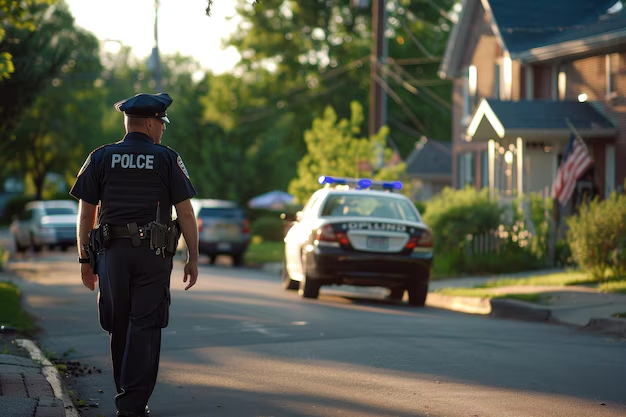
How Safe Is It To Deal With the Atlanta Police Department?
If you live in, work in, or are visiting Atlanta, it’s natural to wonder: “Is the Atlanta Police Department dangerous?” People ask this for different reasons—high‑profile incidents, personal experiences, or general concern about crime and safety.
The reality is more nuanced. The Atlanta Police Department (APD) is a large, urban police agency that operates in a city with both vibrant neighborhoods and serious crime challenges. Interactions with APD can feel very different depending on where you are, who you are, and what’s happening at the moment.
This guide breaks down how APD operates, what risks realistically exist, and how to safely and confidently navigate contact with the department in Atlanta.
Understanding What “Dangerous” Really Means
When people ask whether the Atlanta Police Department is dangerous, they may mean:
- Is APD dangerous to the public? (risk of excessive force, unfair treatment)
- Is working for APD dangerous? (officer safety, high‑crime areas)
- Is it dangerous to call APD or interact with officers?
It helps to separate these ideas:
| Concern | What People Often Worry About | How It Tends to Look in Atlanta |
|---|---|---|
| Public safety & force | Being harmed, threatened, or treated harshly by officers | Use of force incidents can and do happen, especially in high‑risk encounters, but most day‑to‑day contacts are routine and non‑violent. |
| Fair treatment | Bias, discrimination, profiling | Many residents report respectful interactions; others report negative or unfair encounters. Experiences can vary by neighborhood and demographic factors. |
| Crime response | Slow response, no response, or escalating situations | Response time varies by call type and location; officers are trained to control unpredictable scenes, which can feel tense or intimidating. |
| Officer safety | High‑risk calls, armed suspects | Police work in Atlanta can be dangerous, especially in areas with higher violent crime. This affects how officers approach situations. |
Key takeaway: APD is not uniformly “dangerous,” but it operates in a high‑crime urban environment, and some interactions—especially those involving weapons, pursuits, or volatile situations—carry real risk for both officers and civilians.
How APD Is Organized and Where You Might Encounter It
The Atlanta Police Department covers the City of Atlanta, divided into several geographic zones. You’re most likely to encounter APD:
- During traffic stops
- When you call 911 for help
- At large events (sports, concerts, festivals)
- In downtown, Midtown, Buckhead, and neighborhood patrols
- At APD facilities, such as:
- Public Safety Headquarters
226 Peachtree St SW
Atlanta, GA 30303
Main non-emergency: 404‑614‑6544 - Zone precincts (Zone 1–6) throughout the city
- Public Safety Headquarters
Understanding where you are (for example, Zone 1 vs. Zone 5) can explain why police presence feels heavier or more intense in some parts of Atlanta than others.
Is APD Dangerous in Everyday Interactions?
For most people in Atlanta, routine interactions with APD are low-risk, especially when:
- You’re calm and cooperative
- No weapons, drugs, or violence are involved
- You’re calling for help (e.g., a car break‑in, a minor crash)
Common everyday contacts:
Traffic stops
- Typically end in a warning or citation.
- Risk rises if there is suspected DUI, outstanding warrants, or signs of danger.
Minor crashes or property crimes
- Often handled calmly and quickly.
- You might be asked for ID, insurance, or a statement.
Reporting something suspicious
- Officers may ask detailed questions.
- They may ask you to stay on scene for follow‑up, especially if you’re a witness.
In these situations, the main “danger” is usually miscommunication, stress, or escalation—not intentional harm.
When Do Interactions Become Higher Risk?
Some encounters with APD are inherently more dangerous—for everyone involved. Risk tends to increase when:
- Weapons are involved (guns, knives, or even objects that look like weapons)
- Drugs, stolen property, or violent crimes are suspected
- High‑speed pursuits or foot chases occur
- Domestic disputes or emotionally charged conflicts are in progress
- Mental health crises are unfolding in public spaces or homes
In these situations, officers are trained to control the scene quickly, which can mean:
- Drawing weapons
- Giving loud, firm commands
- Handcuffing and detaining first, sorting things out later
From a civilian perspective, this can feel scary and “dangerous,” even if officers are following their training.
How APD Approaches Use of Force
Large city departments like APD use a “use of force continuum” concept, meaning force is supposed to escalate only as needed to gain control of a situation.
In practice, that can include:
- Verbal commands and presence
- Hands‑on control techniques
- Less‑lethal options (such as pepper spray or conducted electrical devices)
- Firearms in high‑risk or life‑threatening situations
Residents in Atlanta may have seen or heard about incidents where force was used in controversial ways. These incidents are serious and sometimes lead to:
- Internal APD investigations
- Review by the Office of Professional Standards
- Public protests and policy changes
For you as a resident or visitor, the main takeaway is that force is most likely when officers believe there is a threat, resistance, or non‑compliance. Avoiding sudden movements, arguing aggressively, or ignoring commands reduces risk in the moment, even if you believe you’re right and plan to challenge things later.
Perceptions of Bias and Unequal Treatment
In Atlanta, conversations about APD often include concerns about:
- Racial profiling or biased treatment
- Heavier enforcement in certain neighborhoods (for example, parts of the Westside or South Atlanta)
- Different outcomes for different demographic groups
Some residents describe positive, community‑oriented relationships with officers; others describe feeling targeted, disrespected, or unsafe around police. Both patterns exist.
What’s helpful to know:
- APD has community policing programs, neighborhood liaison officers, and outreach efforts, especially in areas like Old Fourth Ward, Midtown, and Buckhead.
- Complaints about officer conduct can be made to oversight bodies (more on that below).
- You can request badge numbers and supervisor review if you believe you’re treated unfairly.
This doesn’t erase risk—but it does give you channels to respond if you experience a troubling interaction.
How To Reduce Risk During Any Encounter With APD
Whether you’re being stopped, questioned, or reporting a crime in Atlanta, you can take practical steps to keep things as safe and calm as possible.
During a Traffic Stop in Atlanta
Pull over promptly and safely
Use your signal and stop in a well‑lit area if possible.Stay inside the vehicle
Unless told otherwise, keep both hands visible (e.g., on the steering wheel).Communicate clearly before reaching for anything
- “My license is in my wallet in my back pocket.”
- “My registration is in the glove compartment. Is it okay if I reach for it?”
Avoid sudden movements
Move slowly and deliberately.Stay calm—even if you disagree
You can contest a ticket in court later; arguing on the roadside can escalate tension.
When Officers Come to Your Home
- Ask who they are before opening fully: “Officer, may I see your badge through the window?”
- Step outside only if you feel safe to do so and keep your hands visible.
- If they say they have a warrant, they may lawfully enter; if not, you can ask whether you are required to let them in.
- If you’re uncomfortable, you can respectfully ask for a supervisor to come to the scene.
If You Are Detained or Arrested
- You have the right to remain silent and the right to an attorney.
- You can say: “I want to remain silent. I want to speak with a lawyer.”
- Avoid resisting physically, even if you think the arrest is unfair. Contest it later through legal channels.
Calling 911 in Atlanta: Is It Safe?
Most Atlanta residents will interact with APD through 911 calls—either as the caller or the subject of the call.
Tips to keep 911 interactions safer:
- Be as specific and calm as possible about what’s happening and where.
- If mental health, substance use, or disability is involved, say that clearly:
“The person is in a mental health crisis and not armed,” or “They may be autistic and sensitive to loud commands.” - Follow dispatcher instructions; they’re relaying information to APD units.
If you’re worried that a police response might escalate a situation—especially in a mental or behavioral health crisis—you can say:
- “We are requesting a crisis‑trained officer if available.”
- “There are no weapons present.”
Availability of specialized crisis responses can vary by time and location within the city, but clearly flagging mental health issues can sometimes change how officers approach the call.
APD and Community Policing in Atlanta
APD participates in various community engagement efforts, which aim to reduce tensions and build trust. In Atlanta, that might include:
- Neighborhood Watch and community meetings held through local Neighborhood Planning Units (NPUs)
- Youth programs and outreach in schools and recreation centers
- Officer meet‑and‑greet events at neighborhood festivals, parks, and civic meetings
If you want lower‑stress, non‑emergency contact with APD, these events are usually the safest and most positive setting to interact, ask questions, and voice concerns.
To find local programs, you can contact APD’s community services or ask at:
- Atlanta Police Department – Community Services Division
Typically coordinated through Public Safety Headquarters
226 Peachtree St SW
Atlanta, GA 30303
Main non-emergency line: 404‑614‑6544
What To Do If You Feel Unsafe or Mistreated by APD
If you believe an officer has acted dangerously, unprofessionally, or in violation of your rights in Atlanta, you have several options.
1. Request a Supervisor On Scene (When Safe)
If the situation is still unfolding but not physically volatile, you can say:
- “Officer, I respectfully request a supervisor on scene.”
This doesn’t guarantee a different outcome, but it sometimes helps de‑escalate or clarify what’s happening.
2. Document the Incident Afterwards
As soon as you can, write down:
- Date, time, and location
- Officer names and badge numbers (if known)
- Police car numbers or descriptions
- Names and contact info of witnesses
- Exactly what was said and done
This information is important for any formal complaint or legal consultation.
3. File a Complaint With APD
APD has an Office of Professional Standards (OPS) that investigates officer misconduct.
- Office of Professional Standards
Often reached through Public Safety Headquarters
226 Peachtree St SW
Atlanta, GA 30303
Main line (via APD): 404‑614‑6544 (ask to be directed to OPS)
Complaints can usually be filed:
- In person
- By phone
- In writing or online (check current city resources, as processes can change)
4. Contact External Oversight or Civic Channels
In Atlanta, you may also raise concerns through:
City of Atlanta government offices (Mayor’s Office or City Council)
55 Trinity Ave SW
Atlanta, GA 30303Your local Neighborhood Planning Unit (NPU), which often discusses public safety issues and APD performance in your area.
You can also consult a private attorney for legal advice if you believe your rights were violated.
Is It Safe To Rely on APD for Help?
For most residents and visitors, calling APD is a reasonable and often necessary step when:
- You’re the victim of a crime (robbery, assault, theft, burglary)
- You’re involved in a traffic crash with injuries or major damage
- You witness violence, weapons, or serious danger
- Someone is in immediate danger and needs urgent intervention
While there are always risks when police respond to high‑stress situations, in Atlanta:
- Most 911 calls end without serious harm to callers, bystanders, or officers.
- Not calling when you genuinely need help can sometimes be more dangerous than involving APD, especially in violent or life‑threatening situations.
If you’re uncomfortable involving police for lower‑level issues (like minor disputes or non‑violent neighbor conflicts), you can sometimes start with:
- Mediation or community resources
- Apartment or HOA management in multi‑family buildings
- Local community organizations for neighborhood disputes
But for true emergencies, 911 remains the primary safety resource in Atlanta.
Practical Safety Checklist for Dealing With APD in Atlanta
Use this quick reference any time you anticipate or are in contact with APD:
- ✅ Stay calm, speak clearly, and avoid raising your voice.
- ✅ Keep your hands visible and avoid sudden movements.
- ✅ Follow lawful commands, even if you disagree; challenge them later.
- ✅ State clearly if there is a medical or mental health issue.
- ✅ Ask for a supervisor if you feel something is going wrong and it’s safe to do so.
- ✅ Write down badge numbers and details after any concerning interaction.
- ✅ Use official channels (OPS, city offices, NPUs) if you believe an officer acted dangerously or improperly.
Overall, the Atlanta Police Department is not uniformly “dangerous,” but like any large urban police force, it operates in high‑risk environments and has had serious incidents and controversies. For people living in or visiting Atlanta, understanding how APD works, knowing your rights, and using practical safety steps can significantly reduce your personal risk while still allowing you to access police protection when you need it.