
Is the Georgia Aquarium in Atlanta Ethical? A Local’s Guide for Families
The Georgia Aquarium is one of Atlanta’s biggest attractions for families and kids. If you live in Atlanta or are planning a visit, you may wonder: Is the Georgia Aquarium ethical, and is it a responsible place to take children?
The answer depends on what you value. Many people see the aquarium as a major conservation, education, and research center. Others raise concerns about captivity, animal sourcing, and enclosure size, especially for large marine animals like whales, dolphins, and sharks.
Below is a clear, balanced look at how the Georgia Aquarium operates, what common ethical concerns are, and how you can make an informed decision for your family.
How the Georgia Aquarium Works in Atlanta
The Georgia Aquarium, located in downtown Atlanta at 225 Baker St NW, Atlanta, GA 30313, is a large public aquarium featuring:
- Whale sharks and manta rays
- Dolphins and beluga whales
- Sea lions, penguins, and otters
- Freshwater and saltwater fish from around the world
- Touch pools and interactive exhibits for kids
From an ethical standpoint, three main roles are usually discussed:
- Conservation and rescue
- Education and public outreach
- Entertainment and tourism
Families in Atlanta often weigh these roles differently. Someone focused on animal rights might center the well-being of individual animals, while someone focused on conservation might emphasize species-level benefits and public education.
Key Ethical Questions Parents Commonly Ask
1. Are the Animals at the Georgia Aquarium Wild-Caught or Captive-Bred?
Many visitors worry about whether animals were taken from the wild.
- For some species, especially fish, invertebrates, and smaller animals, aquariums commonly rely on captive breeding programs or partnerships with other facilities.
- For larger marine animals (such as whale sharks and some marine mammals), early collections at many large aquariums often involved sourcing from the wild. Over time, many institutions have moved more toward rescue, rehabilitation, and captive breeding where possible.
- Ethical perspectives vary:
- Some people feel that any wild capture for display is unacceptable.
- Others accept it if it’s linked to conservation, research, or rescue and if animal care standards are high.
If this issue matters strongly to you, a practical step is to ask staff directly about how specific animals were acquired and what policies are in place today.
2. Are the Enclosures Large and Enriching Enough?
Another major concern is whether animals, especially large and highly intelligent ones, have enough space and stimulation.
Common points families consider:
- Tank size and complexity – Larger ocean animals like whale sharks and belugas naturally travel long distances in the wild. Even very large tanks are still limited compared to the open ocean.
- Enrichment and mental stimulation – Many modern aquariums use:
- Varying feeding routines
- Toys and puzzle feeders
- Training sessions that allow animals to make choices
- Animal behavior you can observe – Families often look for:
- Smooth, natural swimming or movement
- Social interaction between animals
- Curiosity about visitors
- Limited signs of stress, such as repetitive pacing or circling
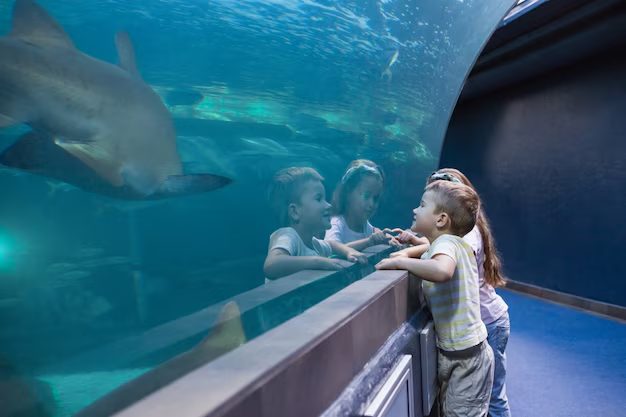
If you’re visiting with kids in Atlanta, you might use this as a teachable moment: talk about what natural behavior might look like in the wild versus in human care.
3. How Does the Aquarium Participate in Conservation?
Many Atlantans see conservation work as a major factor in judging ethics.
Aquariums typically contribute to conservation in a few ways:
- Breeding programs for endangered or vulnerable species
- Funding and support for field research and habitat protection
- Rescue and rehabilitation of injured or stranded animals, when applicable
- Public awareness campaigns about issues like plastic pollution, overfishing, and coral reef loss
Families who view the aquarium as ethical often highlight the educational exhibits and conservation messaging, especially when kids come away more aware of ocean issues and motivated to protect wildlife.
4. Are Animal Shows and Interactions Ethical?
The Georgia Aquarium offers shows and interactive experiences, such as:
- Dolphin or sea lion presentations
- Behind-the-scenes tours
- Animal encounters or touch pools
For some visitors, these are fun and educational. Others are concerned that performances and close-contact experiences might be stressful or unnatural for the animals.
When evaluating:
- What to look for in a show
- Does it focus on education and natural behaviors, or mostly on tricks?
- Does the staff explain why behaviors are being shown and how they help with medical care or enrichment?
- What to consider with interactions
- Are animals given breaks and choice (can they move away)?
- Are group sizes controlled to prevent overcrowding?
- Are staff calm and respectful in how they handle and guide guests?
If this is a concern, you might choose to enjoy the exhibits but skip performance-style shows or hands-on encounters.
Pros and Cons of Visiting the Georgia Aquarium (Ethical Lens)
For Atlanta families, here’s a simple way to think through the decision:
| Aspect | Potential Ethical “Pro” | Potential Ethical “Con” |
|---|---|---|
| Conservation & Research | Supports public awareness and species-focused work | Some feel conservation doesn’t justify keeping animals in tanks |
| Education for Kids | Inspires curiosity and caring about marine life | Concern that it normalizes captivity as “entertainment” |
| Animal Care Standards | Professional, specialized veterinary and husbandry care | Even with good care, space and freedom remain limited |
| Shows & Encounters | Can teach about behavior, training, and animal health | Some see any “performances” or close contact as exploitative |
| Local Impact on Atlanta | Brings tourism, jobs, and educational opportunities | Can feel commercial or crowded, which some link to welfare concerns |
Your personal ethics, and what you want your kids to learn, will shape how you weigh these.
How to Evaluate the Aquarium During Your Visit
If you want to “audit” the Georgia Aquarium yourself, here are practical steps:
Watch the Animals Closely
Look for:
- Relaxed posture and natural behavior (steady swimming, playing, exploring)
- Interaction with environment (toys, rocks, plants, enrichment devices)
- Healthy appearance (clear eyes, smooth movement, no visible injuries)
Take note if you see persistent:
- Repetitive pacing or circling in tight patterns
- Lethargy with little movement over long periods
- Frequent visible conflict between animals
One moment is not always meaningful, but consistent patterns throughout your visit can tell you more.
Talk to the Staff
Staff—especially aquarists, educators, and volunteers—are often open to respectful questions, such as:
- “How was this species acquired?”
- “What kind of enrichment do these animals get?”
- “What conservation projects does the aquarium support for this species?”
- “How do you know when an animal is stressed, and what do you do about it?”
Their willingness and ability to explain can help you gauge the aquarium’s culture of transparency and care.
Notice the Educational Content
Families who care about ethics often pay attention to:
- Clear signs and exhibits about:
- Habitat loss
- Climate change
- Overfishing
- Pollution
- Practical tips for visitors (recycling, reducing plastic, sustainable seafood choices)
- Messaging around respect for wild habitats vs. captivity
If the focus is largely on “fun” with little mention of animal welfare or conservation, you may feel differently than if education and stewardship are front and center.
Considering Your Child’s Age and Sensitivity
For parents in Atlanta, another angle is how your child might emotionally process what they see.
- Younger kids (preschool–early elementary):
- May be mostly excited and curious.
- You can frame the visit around kindness to animals and how people help animals that are sick or in danger.
- Older kids and teens:
- May start asking tough questions about freedom vs. safety for animals.
- This can be a chance to discuss:
- What “ethical” means
- The difference between helping species vs. individual animals
- How humans impact oceans here in Georgia (for example, through local rivers that feed into the Gulf of Mexico)
You can also compare the aquarium experience with visits to local nature areas like the Chattahoochee River, Piedmont Park, or the Atlanta BeltLine to show kids both wild and captive ways of seeing animals.
Alternatives and Complements in the Atlanta Area
If you’re unsure about the ethics of marine animal captivity but still want nature-focused experiences for kids in Atlanta, you can:
- Visit Zoo Atlanta (800 Cherokee Ave SE, Atlanta, GA 30315) to talk about land-animal conservation and how modern zoos manage welfare and breeding programs.
- Explore Fernbank Museum of Natural History (767 Clifton Rd, Atlanta, GA 30307) and its forest to learn about ecosystems without live marine mammals.
- Take short trips to Georgia’s coast (Savannah, Tybee Island, Jekyll Island) to see wild dolphins and coastal ecosystems from a distance and discuss the difference between seeing animals in captivity vs. in the wild.
These experiences can balance or supplement a Georgia Aquarium visit, giving your family a broader view of wildlife and conservation.
How to Make an Informed, Ethical Choice for Your Family
For Atlantans and visitors, whether the Georgia Aquarium is “ethical” is ultimately a personal judgment based on:
- How you feel about captivity vs. conservation
- How important direct animal contact is for you and your kids
- Whether you believe that education and research benefits can outweigh the downsides of confinement
To make your decision:
- Clarify your priorities. Is your main goal fun, education, conservation support, or something else?
- Research ahead of time. Read the aquarium’s own descriptions of its animal care, rescue work, and ethics.
- Visit with a critical but open mind. Observe animal behavior, listen to what staff say, and pay attention to how the experience feels to you and your kids.
- Adjust future choices. After going once, you can decide whether to return, focus on other Atlanta nature options, or support marine conservation in different ways (such as donations to ocean charities or beach cleanups on trips to the coast).
By approaching the Georgia Aquarium thoughtfully, you can either visit in a way that aligns with your values—or choose alternatives in Atlanta that better match your family’s ethical comfort level.