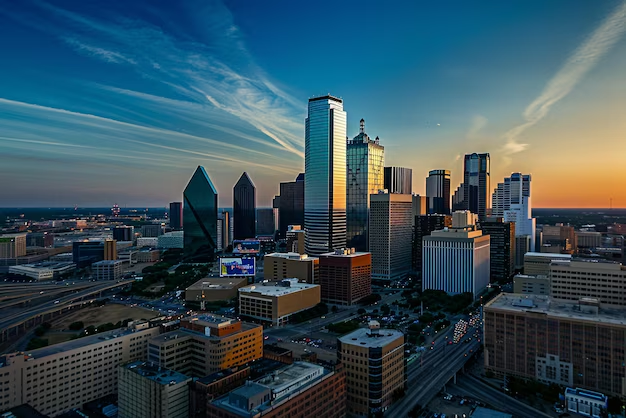
Ellery’s Atlanta: A Local-Style Guide to Enjoying the City Like an Insider
If you’ve searched for “Ellery’s Atlanta”, you might be looking for a local-style guide—the kind of tips you’d get from a friend who knows Atlanta well: where to go, what to eat, how to get around, and how the city really works day to day.
This guide is built to do exactly that, with a focus on Atlanta, Georgia, and the kinds of choices a resident, visitor, or new transplant actually has to make.
Getting Oriented: How Atlanta Is Really Laid Out
Atlanta isn’t a simple grid city. It’s a hub of distinct neighborhoods, major interstates, and a growing network of walkable districts.
Key Areas You’ll Hear About
- Downtown Atlanta – Government buildings, major hotels, tourist sights like the Georgia Aquarium, World of Coca-Cola, and State Farm Arena.
- Midtown – Arts, culture, and high-rises. Home to Piedmont Park, the High Museum of Art, and lots of bars and restaurants.
- Buckhead – Known for higher-end shopping, dining, and business towers.
- Old Fourth Ward & Inman Park – Trendy, walkable, and connected to the Atlanta BeltLine Eastside Trail.
- West Midtown – Warehouses turned into restaurants, breweries, and creative spaces.
- East Atlanta Village, Edgewood, Little Five Points – More relaxed, eclectic, and nightlife-driven.
A simple way to think about the city:
| Area | Vibe | Good For |
|---|---|---|
| Downtown | Busy, event-focused | First-time visits, conventions, arenas |
| Midtown | Urban, artsy, walkable | Dining, nightlife, parks, museums |
| Buckhead | Polished, upscale | Shopping, business, fine dining |
| Old 4th Ward | Trendy, mixed-use, young | BeltLine, food halls, breweries |
| West Midtown | Industrial-chic | Date nights, group outings, breweries |
| East Atlanta | Alternative, local-centric | Live music, bars, neighborhood hangs |
Getting Around Atlanta Without Losing Your Cool
Atlanta’s traffic is famous, and not in a good way. But with realistic expectations and a few local tricks, it’s manageable.
MARTA: Atlanta’s Main Transit System
MARTA (Metropolitan Atlanta Rapid Transit Authority) runs trains and buses through the city and to Hartsfield-Jackson Atlanta International Airport.
- Rail lines connect the airport, Downtown, Midtown, Buckhead, and several neighborhoods.
- Bus routes fill in the gaps, though frequency varies.
- Airport access: The Airport Station is directly inside the domestic terminal.
MARTA Headquarters:
2424 Piedmont Rd NE, Atlanta, GA 30324
Customer Service: (404) 848-5000
For many visitors and some residents, the most practical MARTA routes are:
- Airport ↔ Downtown ↔ Midtown ↔ Buckhead (Red/Gold lines)
- Train to a central area, then short rideshare to more residential neighborhoods
Driving and Parking
If you’re in Atlanta for more than a quick visit, you will often end up driving or riding in a car.
- Major interstates: I‑75, I‑85, I‑20, and the I‑285 “Perimeter” loop.
- Rush hours: Roughly 7–9 a.m. and 4–7 p.m. on weekdays are the toughest times.
- Parking: Varies widely.
- Many intown neighborhoods use metered street parking and private lots.
- Downtown/Midtown/Buckhead have garages and decks, especially near offices and attractions.
Tip ✅: If you’re heading to a big event (concert, game, festival), plan extra time for both parking and walking in from a deck or lot.
Rideshare, Scooters, and Walking
- Rideshare (Uber/Lyft) is common and often the simplest way to hop between dense neighborhoods.
- E-scooters and bikes are usually found in Midtown, Downtown, and along BeltLine segments, with app-based rentals.
- In some cores—Midtown, Downtown, Inman Park, Old Fourth Ward, West Midtown—you can park once and walk for hours.
Where to Stay in Atlanta (By Type of Trip)
Your experience of the city changes dramatically depending on where you stay.
If You’re Visiting for the First Time
Look at:
- Downtown – Walkable to major attractions, Georgia World Congress Center, sports arenas, and the aquarium.
- Midtown – Good balance of restaurants, nightlife, and MARTA access, close to Piedmont Park.
If You’re Here for Work or Conferences
- Downtown and Midtown are closest to large event spaces and many corporate offices.
- Buckhead is convenient for some corporate campuses and offers higher-end hotels.
If You Want a Neighborhood Feel
Short-term rentals and smaller hotels/inns are often found in or near:
- Inman Park
- Old Fourth Ward
- Virginia-Highland
- Grant Park
These areas feel more residential, with local restaurants, coffee shops, and parks within walking distance.
Eating and Drinking in Atlanta: What the City Is Known For
Atlanta’s food scene mixes Southern staples, international flavors, and modern takes on comfort food.
Classic Atlanta-Style Meals
You’ll see a lot of:
- Fried chicken and Southern-style sides
- Barbecue – ribs, pulled pork, brisket
- Soul food – mac and cheese, collards, cornbread, oxtails
- “Meat-and-three” style plates at casual spots
Many intown neighborhoods have food halls or clusters of restaurants, especially in:
- Old Fourth Ward / BeltLine corridor
- West Midtown
- Midtown and Buckhead commercial centers
Coffee, Brunch, and Late-Night
- Brunch is a big deal on weekends—expect waits at popular places, especially in Midtown, Inman Park, and West Midtown.
- Local-style coffee shops are spread across areas like East Atlanta Village, Poncey-Highland, Old Fourth Ward, Grant Park, Virginia-Highland, and West Midtown.
- Late-night food is most easily found around Midtown, Downtown, and certain BeltLine-adjacent spots.
Tip ✅: If you’re going out with a group, make reservations or join waitlists early, especially on Friday and Saturday evenings.
Things to Do in Atlanta: Core Experiences
Whether you live here or are visiting, some activities help you get a feel for Atlanta’s character.
Big-Name Attractions in the City Core
Many major sights cluster around Downtown/Midtown:
- Georgia Aquarium – One of the best-known aquariums in the region.
- World of Coca-Cola – A museum-style attraction about the Coca-Cola brand.
- National Center for Civil and Human Rights – Focused on civil rights history and human rights around the world.
- Centennial Olympic Park – Green space near the above attractions.
- Martin Luther King, Jr. National Historical Park – Includes Ebenezer Baptist Church and King’s birth home area.
- High Museum of Art (Midtown) – Atlanta’s major art museum.
- Fox Theatre (Midtown) – Historic venue for shows, concerts, and events.
Outdoor and Neighborhood Experiences
Atlanta calls itself a “city in a forest” for a reason.
- Piedmont Park (Midtown) – Large central park with walking paths, open fields, a dog park, and seasonal festivals.
- Atlanta BeltLine – A growing loop of multi-use trails connecting neighborhoods, with public art and lots of food and drink along certain segments.
- Grant Park & Zoo Atlanta – Historic neighborhood and city zoo.
- Chattahoochee River National Recreation Area (north of the city) – Offers trails and spots for floating, kayaking, or just walking by the river.
If you’re living in Atlanta, these spaces often become part of your regular weekend rhythm.
Understanding Atlanta’s Culture and Events
Atlanta has a strong music, film, sports, and festival culture.
Sports
Atlanta’s major teams play close to the urban core:
- Atlanta Falcons (NFL) and Atlanta United FC (MLS) at Mercedes-Benz Stadium near Downtown.
- Atlanta Hawks (NBA) at State Farm Arena in Downtown.
- Minor league and college sports are also common throughout the metro.
Game days can heavily affect traffic and parking, especially near:
- Downtown (Mercedes-Benz Stadium, State Farm Arena)
- Midtown and connector routes
Arts, Music, and Film
- Midtown and Downtown host large venues, theaters, and galleries.
- Neighborhoods like East Atlanta Village, Little Five Points, West Midtown, and Old Fourth Ward often have smaller venues featuring local and touring acts.
- Atlanta is a major hub for film and TV production, so it’s not unusual to see streets blocked for filming in intown neighborhoods. Signs, cones, and crew vehicles usually mark production areas.
Festivals and Seasonal Events
Atlanta’s calendar includes:
- Neighborhood festivals (art walks, food festivals, block parties)
- Citywide events in Piedmont Park, Centennial Olympic Park, and BeltLine-adjacent spaces
- Holiday markets and seasonal outdoor events
Tip ✅: Large festivals can create temporary street closures and parking challenges. Checking for event schedules before driving into Midtown, Downtown, or major park areas can save time.
Living in Atlanta: Practical Basics for Residents and Long-Term Stays
If “Ellery’s Atlanta” for you means figuring out everyday life, here are core systems you’ll interact with.
City Services and Local Government
Most in-city services are managed by the City of Atlanta.
Atlanta City Hall
55 Trinity Ave SW
Atlanta, GA 30303
Main line: (404) 330-6000
Through city offices and online portals, you can usually handle:
- Water service (for addresses within city-managed water areas)
- Business licensing within city limits
- Building permits and zoning questions
- Sanitation (trash and recycling) for in-city homes
If you’re outside the City of Atlanta in the metro area (e.g., Sandy Springs, Decatur, Marietta), your city or county government handles local services instead.
Public Safety Basics
Emergencies: Call 911 within Atlanta or anywhere in the metro.
Non-emergency lines:
- Atlanta Police Department (non-emergency): (404) 658-6666
- Atlanta Fire Rescue Department (administrative): (404) 546-7000
For non-urgent concerns—like noise complaints, reporting minor property damage, or requesting patrols—residents often use non-emergency numbers or online reporting options where available.
Airports, Arrivals, and Departures: Using Atlanta as a Hub
Atlanta is home to Hartsfield-Jackson Atlanta International Airport, one of the busiest in the world.
Hartsfield-Jackson Atlanta International Airport
6000 N Terminal Pkwy
Atlanta, GA 30320
Airport Info: (800) 897-1910
Key things to know:
- MARTA’s Airport Station is built into the domestic terminal—no shuttle needed to reach the train.
- Driving from the airport to Downtown can be quick in light traffic but slow during rush hours or bad weather.
- Many hotels in and near the airport corridor offer shuttles, especially for overnight connections.
Residents often treat Atlanta’s airport as a straightforward hub once they get used to:
- Allowing enough time for security
- Choosing between MARTA, rideshare, or parking
- Knowing whether they’re flying from the Domestic or International terminal
Safety, Weather, and Everyday Atlanta Realities
Weather and Seasons
Atlanta has:
- Hot, humid summers – Often with afternoon thunderstorms.
- Mild winters – Occasionally with short bursts of freezing temperatures or light snow/ice.
- Pollen-heavy springs – Many residents are affected by seasonal allergies.
Practical points:
- Summer: Light clothing, sunscreen, and water are important if you’ll be outside for long periods.
- Winter: Cold snaps can affect road conditions if ice appears, even if snowfall is minimal.
General Safety
Like any large city, safety can vary by neighborhood, time of day, and situation.
Common habits among locals:
- Parking in well-lit areas when possible.
- Not leaving valuables visible in vehicles.
- Being aware of surroundings when walking late at night, especially when unfamiliar with the area.
For visitors, staying in well-traveled parts of Downtown, Midtown, Buckhead, and BeltLine-adjacent zones and using reputable transportation options generally makes navigation easier and more comfortable.
How to Plan Your Own “Ellery-Style” Day in Atlanta
To make the city feel approachable, it helps to think in terms of simple, themed days.
Example: First-Timer Core City Day
- Morning: Georgia Aquarium / World of Coca-Cola in Downtown.
- Lunch: Nearby Downtown spot or a short rideshare to Midtown.
- Afternoon: Piedmont Park stroll, BeltLine walk, or High Museum of Art.
- Evening: Dinner in Midtown or along the BeltLine.
Example: Neighborhood and Local Day
- Morning: Coffee and breakfast in Inman Park or Virginia-Highland.
- Late morning: Walk or bike along the Atlanta BeltLine Eastside Trail.
- Afternoon: Explore shops and small venues in Little Five Points, West Midtown, or Old Fourth Ward.
- Evening: Catch live music or a local bar scene in East Atlanta Village, Edgewood, or Old Fourth Ward.
Example: Outdoors-Focused Day
- Morning: Hike or walk at Chattahoochee River area or a large park.
- Lunch: Nearby local restaurant in Sandy Springs, Vinings, or intown.
- Afternoon: Relax in a city park like Piedmont Park or Grant Park.
Quick Reference: Key Atlanta Contacts
Here is a simple reference list that many residents and visitors find useful:
City of Atlanta General Info
55 Trinity Ave SW, Atlanta, GA 30303
Main: (404) 330-6000MARTA Transit Info
2424 Piedmont Rd NE, Atlanta, GA 30324
Customer Service: (404) 848-5000Hartsfield-Jackson Airport
6000 N Terminal Pkwy, Atlanta, GA 30320
General Info: (800) 897-1910Emergency Services
911 (citywide and metro area)Atlanta Police Department (Non-Emergency)
(404) 658-6666
These are stable, widely used contact points if you’re trying to solve day-to-day issues in the city.
If “Ellery’s Atlanta” means understanding how to actually move through, enjoy, and live in Atlanta, the core is simple: know your neighborhoods, plan for traffic, lean on MARTA where it makes sense, and use parks, BeltLine trails, and local districts as your anchors. From there, the city opens up quickly—whether you’re here for a weekend or settling in for the long term.