Full Circle Atlanta: What It Is and How It Fits Into Life in the City
If you live in or are visiting Atlanta, Georgia, you may come across the term “Full Circle Atlanta” in different contexts—community events, wellness offerings, spiritual or social groups, and neighborhood-based initiatives. Unlike a well-known government office or landmark, “Full Circle Atlanta” isn’t one single, universally recognized institution. Instead, it’s a phrase commonly used by local groups, programs, and spaces that focus on ideas like:
- Community and mutual support
- Personal growth or healing
- “Coming full circle” in life—completing a journey, starting over, or reconnecting
This guide breaks down how the phrase “Full Circle Atlanta” typically shows up in the city, how to figure out which one you’re looking for, and how to connect with the right local resources.
What People Usually Mean by “Full Circle Atlanta”
In Atlanta, “Full Circle” is often used as part of the name for:
- Community-focused nonprofits or initiatives
- Faith-based or spiritual groups
- Wellness, yoga, or holistic healing spaces
- Support circles or peer groups
Each may serve different neighborhoods—such as Downtown, Midtown, West End, East Atlanta, or the metro suburbs—and may cater to very different needs. When someone says “Full Circle Atlanta,” they might be talking about:
- A support circle that meets weekly
- A community center that hosts classes and workshops
- A spiritual or meditation group
- A wellness collective or studio
Because there’s no single, official “Full Circle Atlanta” organization that covers all of this, the most useful approach is to understand the types of services or experiences people are usually seeking when they use that phrase, then learn how to track down the specific group you need.
Common Types of “Full Circle” Services and Spaces in Atlanta
1. Community and Support Circles
Many Atlantans use the phrase “full circle” to describe programs that bring people together for healing, sharing, or life transitions. These groups may meet in:
- Community centers (like the ones run by the City of Atlanta or Fulton/DeKalb County)
- Churches or spiritual spaces
- Nonprofit offices or shared workspaces
- Neighborhood hubs in places like Old Fourth Ward, Edgewood, or the West End
These circles often focus on:
- Grief and loss
- Life transitions (new parents, divorce, retirement, relocation)
- Recovery or sober support (nonclinical peer-based spaces)
- Identity-focused groups (men’s circles, women’s circles, LGBTQ+ support, etc.)
Local tip: Many of these are advertised using phrases like “full circle healing,” “full circle support,” or “coming full circle” rather than a single brand name. You’ll often find them promoted through flyers at local libraries, community bulletin boards, or faith institutions.
2. Wellness, Yoga, and Holistic Healing in Atlanta
“Full Circle” is a popular name theme for wellness-focused spaces around Atlanta. These might include:
- Yoga or movement studios
- Meditation circles
- Breathwork or mindfulness groups
- Bodywork and holistic health collectives
You might encounter them in neighborhoods like:
- Midtown and Inman Park – known for wellness studios and walkable, mixed-use spaces
- Decatur and East Atlanta Village – often home to community-oriented wellness and healing spaces
- Westside / West Midtown – where creative, shared spaces and studios are common
If you hear about a “Full Circle” wellness event in Atlanta, it usually involves some combination of:
- Group classes or workshops
- Personal development or inner work themes
- Mind-body practices (movement, meditation, breathwork)
- Sometimes sound baths, journaling, or group reflections
Because business names can change or move locations, it’s always a good idea to confirm the address and schedule directly with the organizer before heading out.
3. Spiritual, Faith, and Conscious Community Groups
The idea of coming “full circle” resonates strongly in spiritual and faith-based communities in Atlanta. A “Full Circle Atlanta” group in this context might be:
- A church or ministry program focusing on restoration or renewal
- A spiritual development circle (non-denominational or interfaith)
- A contemplative group meeting for prayer, meditation, or discussion
These may gather in:
- Church campuses across the city
- Shared event spaces in areas like Downtown, College Park, or East Point
- Private homes or small group meeting rooms
If you hear about “Full Circle” through a pastor, spiritual leader, or faith-based event, it’s likely one of these community ministry or spiritual development offerings, rather than a standalone organization you’ll find listed everywhere.
4. Social Impact, Mutual Aid, and Neighborhood Initiatives
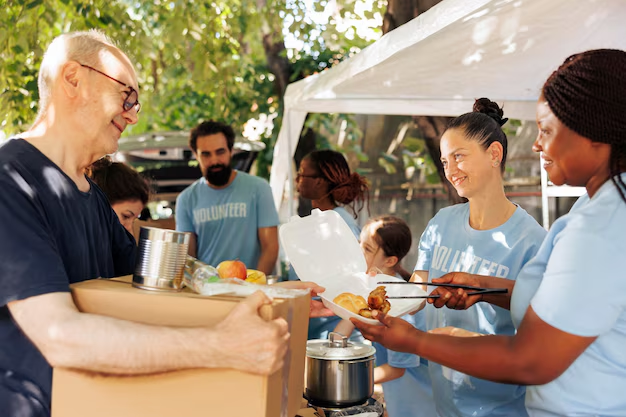
In a city as active and community-minded as Atlanta, “Full Circle” can also be tied to social impact or mutual aid efforts, especially those focused on:
- Food distribution or community fridges
- Clothing or school supply drives
- Neighborhood clean-ups and beautification
- Youth mentorship or reentry support
These efforts may operate out of:
- City of Atlanta recreation centers
- Public libraries
- Nonprofit hubs in places like West End, South Atlanta, and Clarkston (for greater metro activity)
In these settings, “Full Circle” usually reflects a philosophy of giving back, closing the loop, and keeping resources within the community.
How to Figure Out Which “Full Circle Atlanta” You’re Looking For
Because “Full Circle Atlanta” isn’t just one clearly-defined organization, identifying the right one is largely about context. Ask yourself:
1. Who mentioned it to you?
- A therapist, counselor, or support worker?
Likely a support circle or healing-focused group. - A pastor, spiritual leader, or faith-based friend?
Likely a ministry, spiritual circle, or small group. - A coworker, wellness enthusiast, or yoga friend?
Likely a wellness, yoga, or holistic healing space. - A neighbor, teacher, or community organizer?
Likely a community initiative or local program.
2. What neighborhood or side of town was mentioned?
Knowing whether the group is in Downtown, Midtown, Buckhead, East Atlanta, South Atlanta, or a surrounding suburb can help narrow it down. Many small groups brand themselves simply as “Full Circle” + neighborhood name rather than a citywide identity.
3. What type of help or experience are you seeking?
Match your needs with typical offerings:
| Your Need or Interest | Likely Type of “Full Circle Atlanta” Group | Where to Start Looking Locally |
|---|---|---|
| Emotional or life transition support | Support circle / community healing group | Community centers, counseling referrals, faith spaces |
| Yoga, meditation, or mind-body wellness | Wellness or holistic studio / collective | Neighborhood studio boards, local event listings |
| Spiritual growth, prayer, or discussion | Church-based or spiritual development group | Local congregations, faith-based community calendars |
| Volunteering or mutual aid | Social impact or neighborhood initiative | City volunteer hubs, nonprofits, library & rec center boards |
Where in Atlanta to Look for “Full Circle” Style Programs
Even if you don’t know the exact group name, you can often find “full-circle” style programs—healing circles, growth groups, or community-based support—in a few key types of places.
1. City and County Community Centers
Many City of Atlanta and nearby county facilities host community-based groups that may use “full circle” or similar language in their programming.
Examples of places to check for posted groups and flyers:
City of Atlanta Department of Parks and Recreation Centers
These centers often host support groups, youth circles, wellness classes, and neighborhood events.Fulton County and DeKalb County community facilities
These may offer group programs, classes, or partner-hosted circles open to local residents.
Call or visit the front desk of a nearby center and ask if they know of support circles, wellness groups, or “full circle”-type gatherings.
2. Atlanta Public Library Branches
Libraries in Atlanta are not just about books—they’re also hubs for local events, free groups, and informational flyers.
You can:
- Check bulletin boards at branches in neighborhoods like Downtown, Buckhead, Southwest, or East Atlanta.
- Ask a librarian where support, meditation, or community groups typically post their information.
Libraries frequently host or publicize:
- Writing, grief, or life transition circles
- Meditation or book-based spiritual groups
- Wellness talks and workshops
3. Faith and Spiritual Communities
Whether you’re religious or not, many churches, mosques, synagogues, and spiritual centers in Atlanta open some of their support and growth groups to the broader public.
You might find:
- “Full circle” marriage, family, or recovery support programs
- Spiritual growth circles focusing on renewal, healing, or transformation
- Small groups meeting weekly in homes or on campus
Reach out to:
- The community or pastoral care office of a local congregation
- Spiritual centers that advertise meditation or consciousness work
- Neighborhood churches where you’ve seen flyers or heard about community groups
4. Wellness and Holistic Studios
Atlanta’s wellness scene is spread across several neighborhoods and often includes programs with “circle,” “full circle,” or “healing circle” in the name. Look particularly in:
- Midtown and Old Fourth Ward – yoga, movement, breathwork, and wellness collectives
- Decatur and East Atlanta Village – community-oriented wellness and healing spaces
- West Midtown – creative studios and shared therapy/wellness spaces
Services may include:
- Group circles on emotional wellness or life balance
- Guided meditations or full-moon/new-moon circles
- Mindfulness and self-inquiry groups
Always confirm dates, times, and exact locations with the organizing studio or facilitator.
Practical Steps to Find the “Full Circle” Group You Need in Atlanta
If someone mentioned “Full Circle Atlanta” and you’re trying to locate the exact group or something similar, you can:
1. Ask the Referring Person for Specifics
If a friend, counselor, or community worker mentioned it, follow up and ask:
- “What’s the exact name of the group or organization?”
- “Do you know where they meet and on which days?”
- “Is this part of a church, nonprofit, or studio?”
This alone often clears up which “Full Circle” they meant.
2. Contact Local Hubs That Often Know About Circles and Groups
Reach out to:
- Local community centers or recreation centers near your home or workplace
- Atlanta-area counseling practices, many of which keep informal lists of local support and healing groups
- Faith-based community offices, especially if you suspect it may be spiritually oriented
- Wellness/yoga studios in the neighborhood that was mentioned
When you call or visit, you can say something like:
3. Look at Community Boards and Citywide Event Calendars
Around Atlanta, you’ll commonly see flyers, paper postings, and event listings for circles and groups that may include:
- “Full Circle Healing”
- “Women’s Circle / Men’s Circle”
- “Full Moon Circle”
- “Coming Full Circle Support Group”
Check:
- Coffee shops and cafés in Edgewood, Decatur, Grant Park, and West End
- Bulletin boards in libraries, community centers, and coworking spaces
- Neighborhood-focused social media pages and online boards (staying mindful that names and details can change)
If You’re Looking for a Specific Type of Support in Atlanta
Even if you never locate a group that’s literally called “Full Circle Atlanta,” you can often find equivalent or closely aligned offerings by focusing on your goal rather than the exact name.
For Emotional or Mental Health Support
You might look for:
- Peer support circles hosted by nonprofits
- Grief or life transition groups
- Recovery-friendly community spaces (nonclinical, peer-based)
Check with:
- Local mental health organizations
- Counseling practices that host or know about group programs
- Public or faith-based institutions that offer community support
For Wellness, Healing, or Mind-Body Practices
You might explore:
- Yoga studios with regular circles or workshops
- Meditation and mindfulness groups
- Holistic wellness collectives that host group sessions
Focus on neighborhoods with strong wellness activity, and confirm schedules directly with the organizer.
For Spiritual Growth and Reflection
You might find:
- Church small groups or ministries with names referencing renewal or “full circle” concepts
- Interfaith or non-denominational spiritual circles
- Meditation or contemplative groups hosted by spiritual centers
Reach out to the community ministries or adult education offices of nearby institutions.
Key Takeaways for Navigating “Full Circle Atlanta”
“Full Circle Atlanta” is not one single, official organization.
It’s a phrase commonly used across multiple community, spiritual, wellness, and support groups in the city.If you hear it mentioned, context matters:
Who told you about it, where they’re located, and what type of experience you’re seeking will point you toward the right group.To find the right “Full Circle”-type group in Atlanta, focus on:
- Your goal (support, wellness, spiritual growth, or volunteering)
- Your neighborhood
- Local hubs that host or know about circles—community centers, libraries, wellness studios, and faith communities
By starting with what you need and using the city’s many public, community, and wellness spaces as your guide, you can usually find a “full circle” experience in Atlanta that fits your life, even if it goes by a slightly different name.