Homegrown Atlanta: Where to Eat, Shop, and Experience the City’s Local Flavor
When people say “Homegrown Atlanta,” they’re usually talking about two things at once:
- Homegrown businesses, food, and culture created by Atlantans, and
- The actual places named Homegrown in the city, especially the popular restaurant Home grown GA.
If you live in Atlanta, are visiting, or are trying to understand the local scene, “homegrown” is a useful way to think about the city: where does Atlanta feel most authentically Atlanta?
This guide walks you through:
- The well-known Home grown GA restaurant
- Other ways to enjoy homegrown food in Atlanta
- Where to find local makers, artists, and shops
- Tips for experiencing Atlanta like a local, not a tourist
The Classic: Home grown GA Restaurant in Atlanta
One of the most common searches for “Homegrown Atlanta” is really about Home grown GA, an East Atlanta restaurant that’s become a neighborhood staple.
What to Know About Home grown GA
Home grown GA is a casual, Southern-style restaurant known for:
- Hearty breakfast and brunch
- Comfort food with a local twist
- A laid-back, lived-in atmosphere that feels like a true Atlanta diner
You’ll typically find:
- Classic items like biscuits, eggs, and grits
- Southern comfort dishes such as fried chicken, meatloaf, or shrimp and grits
- Seasonal or rotating specials that lean into local ingredients where possible
It’s the kind of place where you might see families, long-time locals, and in-the-know visitors all at the same time.
Location & Practical Tips
Home grown GA is located in the East Atlanta/Edgewood area of the city. Because details like hours and menus can change, it’s wise to:
- Check their current hours before you go
- Expect wait times during prime brunch hours on weekends
- Bring patience and flexibility—this is a small, popular spot
If you’re staying in central neighborhoods like Old Fourth Ward, Inman Park, Downtown, or Midtown, a quick drive or rideshare can get you there.
What “Homegrown” Means in the Atlanta Food Scene
Beyond a single restaurant, “homegrown” in Atlanta usually means:
- Locally owned restaurants, not big national chains
- Chefs and owners who live in the region
- Ingredients sourced from Georgia farms when possible
- Menus that reflect Southern, Black, immigrant, and fusion influences unique to the city
If you want a homegrown experience, you’re looking for places that feel rooted in Atlanta’s neighborhoods and communities, not just places that happen to be located here.
Common Homegrown Food Experiences in Atlanta
You’ll see a few recurring patterns:
- Traditional Southern cooking (fried chicken, collard greens, cornbread)
- Modern Southern and “New South” cuisine (seasonal produce, refined plates, regional seafood)
- Black-owned restaurants preserving and reinventing longstanding food traditions
- Immigrant-owned spots (Caribbean, West African, Korean, Mexican, Vietnamese, Ethiopian, and more) that have become part of Atlanta’s everyday food culture
Homegrown here doesn’t mean one specific style of food—it means the people behind it are part of Atlanta’s story.
Where to Find Homegrown Food in Atlanta
You don’t have to leave the city to get a sense of “Georgia-grown” or “Atlanta-grown” food. Several neighborhoods and venues make it easy to eat local.
Neighborhoods With Strong “Homegrown” Vibes
While you can find local spots across the metro, a few in-city areas stand out:
- East Atlanta & Edgewood – Home grown GA’s area; mix of older establishments and newer neighborhood restaurants.
- Old Fourth Ward & Inman Park – Walkable, lots of independent eateries, cafes, and bars, many highlighting Southern or seasonal menus.
- West End & Westview – A growing mix of Black-owned and community-focused restaurants and coffee shops.
- Grant Park & Summerhill – Small corridors of local bakeries, cafes, and quick-service spots that are almost entirely locally owned.
- Buford Highway corridor (northeast of the city) – Not in the city core, but famous for independently owned immigrant-run restaurants, groceries, and bakeries.
If your goal is “homegrown Atlanta,” lean toward smaller, single-location businesses rather than chains, and ask staff where they like to eat—locals often point you toward places with deep community roots.
Farmers Markets: Direct Access to Georgia-Grown Food
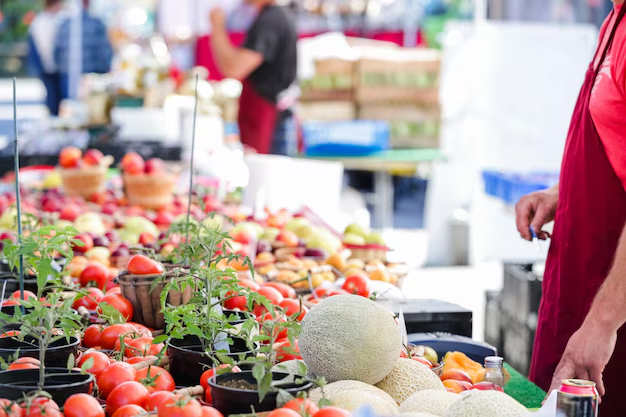
Farmers markets are one of the easiest ways to connect with homegrown produce, meats, and artisanal products in and around Atlanta.
Some options commonly used by Atlanta residents include:
Freedom Farmers Market at the Carter Center
- Neighborhood: Poncey-Highland / Old Fourth Ward area
- Seasonal, typically on weekends
- Features local farms and small food producers
Grant Park Farmers Market
- Neighborhood: Grant Park
- Often operates seasonally on Sundays
- Known for a comfortable, family-friendly atmosphere
Peachtree Road Farmers Market
- Neighborhood: Buckhead
- One of the longest-running farmers markets in the city
Atlanta State Farmers Market (Forest Park)
- Just south of Atlanta proper
- A large, year-round wholesale and retail market for produce
- Good if you’re looking for a wider range of regional fruits and vegetables
Hours and seasons vary, so always check current market information before heading out.
Homegrown Atlanta Shopping: Local Makers, Art, and Goods
“Homegrown” in Atlanta also shows up in handmade products, art, and crafts from local creators. If you’re trying to support Atlanta-based businesses or find something that genuinely comes from here, there are several reliable options.
Where Atlantans Find Local-Made Goods
You’ll commonly see homegrown products in:
- Intown gift shops that prioritize local makers
- Pop-up markets and festivals around Midtown, Old Fourth Ward, and Westside
- Artist studios and galleries in neighborhoods like Castleberry Hill and downtown
While individual shops change over time, certain districts and venues stay consistent as hubs for local creativity:
| Area / Venue | What You’ll Find | Why It Feels “Homegrown” |
|---|---|---|
| Old Fourth Ward / Edgewood | Small boutiques, record shops, art spaces | Strong local culture and independent spirit |
| Westside & West Midtown | Design shops, specialty food, local brands | Many Atlanta-based makers and small brands |
| Castleberry Hill | Galleries, artist studios, arts events | Concentration of working local artists |
| Festivals & pop-up markets | Rotating mix of makers, crafts, and food | Direct contact with the people who made it |
If you want to be sure you’re buying something truly homegrown, ask where the item was made and where the business is based—most local owners are proud to tell you their Atlanta story.
Homegrown Culture: Music, Art, and Neighborhood Identity
Atlanta’s “homegrown” identity is also cultural. Many visitors are familiar with Atlanta as a center for hip-hop, R&B, film, and TV, but the local scene goes much deeper.
Local Music and Venues
For a homegrown music experience, look for:
- Independent music venues that regularly host local bands and artists
- Neighborhood festivals where Atlanta-based performers are on the lineup
- Open mics, jam sessions, and DJ nights that highlight local talent
These events happen all over the city, with frequent activity in:
- East Atlanta Village
- Little Five Points
- Old Fourth Ward / Edgewood
- West End and West Midtown
Search by neighborhood and date, and prioritize venues known for featuring local acts regularly, not only touring headliners.
Street Art and Murals
Atlanta’s murals and public art are a true homegrown highlight:
- You’ll see work by Atlanta-based muralists on buildings, underpasses, and BeltLine sections.
- Neighborhoods like Cabbagetown, Krog Street, and Old Fourth Ward feature some of the city’s most recognizable street art.
Walking or biking along the Atlanta BeltLine Eastside Trail is one of the easiest ways to see a large concentration of local art in a short time.
How to Experience “Homegrown Atlanta” in a Single Day
If you only have a day and want it to feel authentically local, here’s a simple structure you can adapt:
Morning: Breakfast at a local spot
- Consider somewhere like Home grown GA or another neighborhood breakfast restaurant that’s locally owned.
Late Morning: BeltLine or neighborhood walk
- Explore the BeltLine Eastside Trail to see murals, local people out running or biking, and small businesses along the trail.
Lunch: Farmers market or small eatery
- If it’s market day, pick up lunch or snacks at a farmers market; if not, try a single-location restaurant in a residential neighborhood.
Afternoon: Local shopping or art
- Browse an intown district (like Old Fourth Ward, Little Five Points, or Westside) focusing on small shops and local artists.
Evening: Neighborhood dinner + live music
- Choose a homegrown restaurant for dinner and look for a local music venue or bar featuring Atlanta-based musicians or DJs.
This basic outline keeps you away from generic chain-heavy zones and gives you a feel for how Atlantans actually live, eat, and spend their time.
Practical Tips for Supporting Homegrown Atlanta Businesses
To genuinely plug into the “homegrown” side of the city:
- Look for independent ownership. If it has just one or a small handful of locations and is not a national brand, it’s more likely homegrown.
- Ask locals. Bartenders, baristas, rideshare drivers, and shop staff can point you to neighborhood favorites that don’t always show up in generic lists.
- Check for Georgia sourcing. Menus and product labels often mention Georgia farms, roasters, or producers.
- Choose residential neighborhoods. Areas just a little outside the central tourist core (like Grant Park, West End, East Atlanta, or Virginia-Highland) often have a higher concentration of local spots.
- Be flexible. Homegrown places can be smaller, busier, and sometimes more relaxed about timing. Arrive a little early and build in extra time.
Focusing on “Homegrown Atlanta” means choosing locally rooted food, art, and businesses over generic options. Whether you’re lining up for breakfast at Home grown GA, browsing a weekend market, or catching a local band, the city offers plenty of ways to experience Atlanta as Atlantans know it.