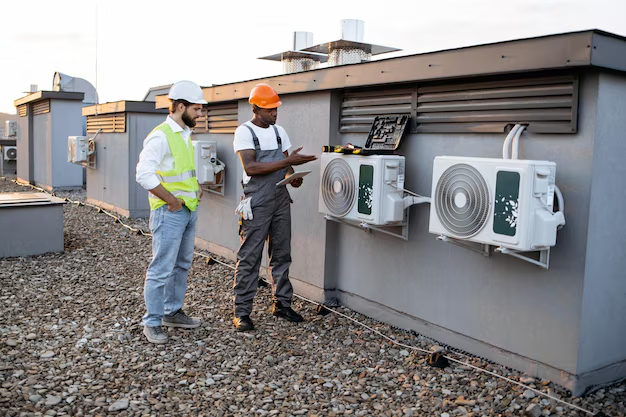
HVAC in Atlanta: How to Keep Your Home Comfortable in Georgia’s Heat and Humidity
Living in Atlanta, Georgia means dealing with hot, humid summers, mild but sometimes chilly winters, and big swings in temperature between seasons. That makes a reliable HVAC system (heating, ventilation, and air conditioning) more of a necessity than a luxury.
This guide walks through what Atlanta residents and property owners should know about HVAC: how systems work here, typical costs, maintenance tips, local codes, and practical steps when you need repair or replacement.
How Atlanta’s Climate Affects Your HVAC Needs
Atlanta has a humid subtropical climate, which strongly shapes HVAC choices:
- Long, hot summers: Extended periods in the 80s–90s °F with high humidity.
- Short, mild winters: Some nights near or below freezing, but long stretches are cool rather than frigid.
- Pollen and air quality: High pollen seasons and occasional poor outdoor air quality.
Because of this, Atlanta homes typically need:
- Strong cooling and dehumidification for summer
- Moderate heating for winter
- Good filtration to handle pollen, dust, and city pollutants
Most homes rely on central air conditioning with a gas furnace, heat pump systems, or a dual-fuel setup that switches between a heat pump and gas heat depending on the temperature.
Common Types of HVAC Systems in Atlanta
1. Central AC + Gas Furnace
One of the most common setups in metro Atlanta, especially in older subdivisions and renovated intown homes.
Pros:
- Powerful cooling for hot summers
- Gas heat can be effective on the coldest nights
- Works well with existing ductwork
Consider if:
- You already have gas service (common in the city and inner suburbs)
- You live in a single-family home or townhome with ductwork
2. Heat Pump Systems
Heat pumps are popular in Atlanta because winters are relatively mild.
What they are:
A heat pump works like an air conditioner in summer and runs in reverse in winter to move heat into your home.
Pros:
- Often more energy-efficient in Atlanta’s climate
- Can reduce reliance on gas
- Good match for moderate winter temperatures
Common setups in Atlanta:
- All-electric heat pump (no gas furnace)
- Dual-fuel (heat pump + gas furnace), which can switch to gas when temperatures drop significantly
3. Ductless Mini-Split Systems
You’ll see ductless mini-splits in older intown homes, garage apartments, basement finishes, or additions that are hard to connect to existing ducts.
Pros:
- No ductwork required
- Zoning (different temperatures in different rooms)
- Can be efficient for small spaces or partial retrofits
Consider if:
- You have a renovated bungalow, attic conversion, or detached structure in neighborhoods like Grant Park, Virginia-Highland, or East Atlanta
- You’re adding cooling to a space your central system doesn’t reach
4. Packaged Roof or Ground Units
More common in small commercial buildings, strip centers, and some multi-unit residential complexes around Atlanta.
You’ll see these on low-rise buildings across areas like Buckhead, Midtown, Downtown, and Perimeter.
Typical HVAC Services Atlanta Residents Need
Common Reasons People Call for HVAC Help
In Atlanta, homeowners often deal with:
- No cooling or weak airflow during summer heat waves
- Indoor humidity problems (sticky, clammy air even when it’s cool)
- Uneven temperatures between floors (especially in two-story homes)
- High energy bills in peak summer months
- No heat or lukewarm air in winter cold snaps
- Unusual noises or smells from the furnace or outdoor unit
When these issues show up, residents typically contact a licensed HVAC contractor for:
- Seasonal maintenance/tune-ups
- Emergency repair
- System replacement when older units fail or become too inefficient
- Ductwork repairs or sealing
- Thermostat upgrades (e.g., smart thermostats)
- Indoor air quality improvements (filters, UV lights, dehumidifiers)
Atlanta-Specific HVAC Maintenance Tips
Because of the heat, humidity, and pollen, Atlanta homeowners benefit from a consistent maintenance routine.
Seasonal Maintenance Schedule
Spring (March–May)
Prepare for cooling season:
- ✅ Have your AC or heat pump inspected and serviced before peak summer
- ✅ Clean or replace air filters (often monthly during heavy pollen)
- ✅ Clear debris around outdoor units (pine straw, leaves, etc.)
Summer (June–September)
Systems work hardest now:
- ✅ Check filters frequently and replace as needed
- ✅ Watch for ice on the outdoor unit, water near indoor units, or sudden changes in cooling
- ✅ Use ceiling fans to help circulate air and reduce load on your AC
Fall (September–November)
Transition season:
- ✅ Have heating components checked (furnace, heat pump in heat mode)
- ✅ Inspect gas connections and burners on gas furnaces
- ✅ Make sure carbon monoxide detectors are in working condition if you have gas heat
Winter (December–February)
Cool, variable temperatures:
- ✅ Keep supply and return vents unblocked
- ✅ Monitor for short-cycling (frequent on/off cycles)
- ✅ Replace filters according to manufacturer guidance
Simple Atlanta Homeowner HVAC Checklist
| Task | Recommended Frequency in Atlanta |
|---|---|
| Replace air filter | Every 1–3 months; monthly in pollen season |
| Professional AC/heat pump tune-up | Once per year (spring) |
| Professional heating system inspection | Once per year (fall) |
| Clear debris around outdoor unit | Monthly or after storms |
| Check thermostat settings | At each season change |
| Inspect visible ductwork for issues | Once per year |
HVAC Efficiency and Energy Bills in Metro Atlanta
Electricity and gas costs in Georgia can add up quickly during July–August cooling and cold snaps in winter.
Ways Atlanta Residents Commonly Improve Efficiency
Upgrade to a higher SEER-rated AC or heat pump
In hotter climates like Atlanta, efficient cooling equipment can reduce energy use compared to older systems.Seal and insulate ductwork
Many homes in areas like Decatur, Sandy Springs, and Smyrna have ducts in attics or crawl spaces. Leaky ducts can waste conditioned air.Improve attic insulation and air sealing
A common upgrade in older intown homes and mid-century houses.Use programmable or smart thermostats
Helpful for commuters and hybrid workers who are out of the home at certain hours.Shade and ventilation
Simple steps like closing blinds on afternoon-sun windows or adding shade trees over time can reduce heat gain.
Local Codes, Permits, and Inspections in Atlanta
HVAC work in Atlanta often has permitting and inspection requirements, especially for major replacements or new installations.
City of Atlanta and Fulton/DeKalb Context
If you live inside the City of Atlanta, permits are typically handled through:
- City of Atlanta Office of Buildings
55 Trinity Ave SW
Atlanta, GA 30303
Main City Information: (404) 330-6000
HVAC contractors usually pull permits for:
- New installations
- System replacements with significant changes to equipment or ductwork
- Major alterations related to mechanical systems
In surrounding jurisdictions (e.g., Sandy Springs, Brookhaven, DeKalb County, Cobb County, Gwinnett County, Clayton County), permitting is handled by each local building or development department. Contractors who work regularly in metro Atlanta are typically familiar with these rules and inspection processes.
Tip: When planning a replacement, ask:
- “Will this job require a permit, and will you handle it?”
- “Will there be a final inspection, and who schedules it?”
Indoor Air Quality Concerns in Atlanta
Atlanta residents often deal with:
- High pollen counts, particularly in spring
- Outdoor air pollutants from traffic and industry
- Humidity-related issues like musty smells or mold risks in damp spaces
Common HVAC-related steps Atlanta homeowners consider:
- Better filtration: Using filters with higher MERV ratings, as appropriate for your system
- Whole-home dehumidifiers: In some homes, especially basements or houses near wooded or low-lying areas
- Regular filter changes during pollen season to maintain airflow and capture particles
- Duct cleaning or inspection in homes with visible dust buildup, recent renovations, or suspected mold
For serious indoor air quality concerns, people sometimes consult with indoor environmental specialists or talk with their healthcare providers for medical guidance.
What to Ask When Hiring an HVAC Contractor in Atlanta
When you contact an HVAC company in metro Atlanta, these questions can help you make an informed choice:
- Are you licensed to work in Georgia?
- Do you carry general liability and worker’s compensation insurance?
- Do you regularly work in my part of Atlanta? (e.g., Westside, South Atlanta, North Fulton, etc.)
- Will you provide a written estimate before work begins?
- Do you perform load calculations for new systems? (to size the system correctly for your home)
- What brands and types of systems do you typically install here?
- How do you handle permits and inspections?
- What are your normal service hours and after-hours policies?
Many Atlanta residents also compare:
- Availability during peak summer heat waves
- Response time for emergency calls
- Whether a contractor services both older intown homes and newer construction (which can have different needs)
HVAC in Different Atlanta Housing Types
Older Intown Homes (Grant Park, Inman Park, Candler Park, West End, etc.)
These homes may have:
- Original construction predating central air
- Retrofits with smaller or creatively routed ductwork
- Attic units or crawlspace air handlers
Common considerations:
- Ductless or mini-split solutions for additions and attic spaces
- Careful attention to insulation and air sealing
- System sizing to avoid short-cycling (turning on and off too quickly)
Newer Suburban Homes (Alpharetta, Johns Creek, McDonough, Dallas, etc.)
Often include:
- Larger, open floor plans
- Multiple HVAC zones (e.g., separate systems for upstairs and downstairs)
- More modern ductwork and better insulation than older stock
Common considerations:
- Balancing temperatures between floors
- Zoning or thermostat strategies
- Planning for eventual replacement of builder-grade systems
Condos, Lofts, and Townhomes (Midtown, Buckhead, Old Fourth Ward, Atlantic Station)
These may use:
- Shared or packaged systems
- Individual split systems with limited outdoor space
- Building rules about access, timing, and equipment placement
Consider:
- Checking your HOA or building guidelines before replacing or relocating equipment
- Coordinating service visits through building management where required
Who Oversees HVAC Licensing and Standards in Georgia?
HVAC professionals in Atlanta operate under state-level licensing.
Key contacts include:
- Georgia State Licensing Board for Residential and General Contractors
237 Coliseum Drive
Macon, GA 31217
For code questions related to building and mechanical systems, many contractors refer to the Georgia State Minimum Standard Codes, as adopted and enforced locally by cities and counties such as Atlanta, Fulton County, DeKalb County, and others.
Consumers often:
- Verify a contractor’s status through state licensing channels
- Ask for license numbers and confirm active status
- Check whether a contractor is familiar with local Atlanta code enforcement and inspection practices
When to Repair vs. Replace an HVAC System in Atlanta
Atlanta homeowners commonly weigh repair vs. replacement when:
- Their system is 10–15+ years old
- Repairs are becoming frequent or costly
- Cooling or heating is no longer reliable in peak seasons
- Energy bills have risen noticeably over time
Typical factors people consider:
- Age and condition of existing equipment
- Cost of repair compared to a new system
- Comfort issues (hot upstairs, cold spots, humidity problems)
- Whether they plan to stay in the home long term
- Potential benefits of newer, more efficient systems designed for climates like Atlanta’s
A licensed HVAC professional familiar with Atlanta homes and weather can help size a system correctly and explain options in practical terms.
By understanding how Atlanta’s climate, housing stock, and local rules affect HVAC systems, you can make clearer decisions about maintenance, repair, or replacement—and keep your home more comfortable through the city’s hot summers and variable winters.