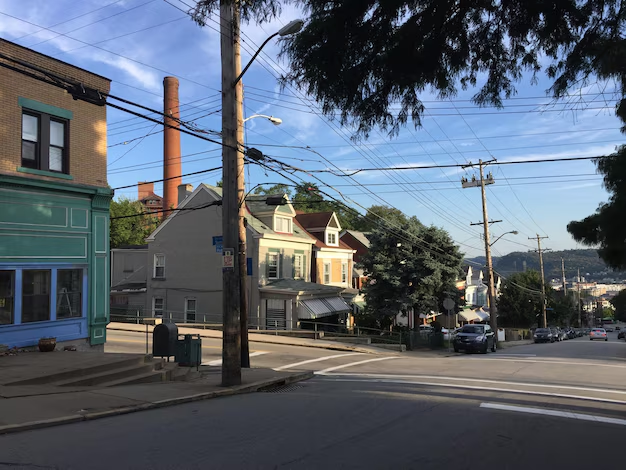
Old Fourth Ward, Atlanta: A Local’s Guide to One of the City’s Most Dynamic Neighborhoods
Old Fourth Ward (often shortened to O4W) is one of Atlanta’s most storied and fast-changing neighborhoods. It’s where Martin Luther King Jr. grew up, where old industrial buildings turned into lofts and food halls, and where the Atlanta BeltLine Eastside Trail transformed an area once defined by warehouses and rail lines into one of the city’s most walkable districts.
If you live in Atlanta, are thinking about moving here, or are planning a visit, this guide walks through what you need to know about Old Fourth Ward in Atlanta, Georgia—from history and housing to parks, food, safety, and practical tips.
Where Exactly Is Old Fourth Ward?
Old Fourth Ward sits on the east side of downtown Atlanta, just a short drive or rideshare from the central business district.
In general, O4W is bordered by:
- North: Ponce de Leon Avenue (near Ponce City Market)
- South: Edgewood Avenue and DeKalb Avenue (near the Edgewood bar district)
- West: Boulevard and the Martin Luther King Jr. National Historical Park area
- East: The Atlanta BeltLine Eastside Trail and the Inman Park / Poncey-Highland edges
You’ll often see O4W broken into informal pockets, such as:
- Historic residential streets with older homes and small apartment buildings
- BeltLine-fronting mixed-use areas around Ponce City Market and North Avenue
- Commercial corridors along Edgewood Avenue and Boulevard
For most everyday purposes, if you’re around Ponce City Market, Historic Fourth Ward Park, or the MLK Jr. National Historical Park, you’re in or right next to Old Fourth Ward.
Why Old Fourth Ward Matters in Atlanta
Old Fourth Ward is important to Atlanta for three big reasons:
- Civil Rights history – It’s closely tied to the life and work of Dr. Martin Luther King Jr.
- Urban renewal and redevelopment – It’s a prime example of how the Atlanta BeltLine reshaped neighborhoods.
- Lifestyle and culture – It’s a hub for walkability, nightlife, and intown living.
If you’re trying to understand how Atlanta has changed over the last few decades, spending time in O4W gives a clear picture.
A Quick History of Old Fourth Ward
From Streetcar Suburb to Civil Rights Landmark
Old Fourth Ward gets its name from the Fourth Ward, one of the old political divisions of Atlanta in the late 1800s and early 1900s. It developed as a streetcar suburb and business area east of downtown.
The neighborhood is historically significant because:
- Dr. Martin Luther King Jr. was born and raised here, on Auburn Avenue.
- “Sweet Auburn” Avenue (just on the southern edge of O4W) became a major center of Black business, culture, and faith.
- Churches, fraternal organizations, and community groups in and around O4W played major roles in the Civil Rights Movement.
Today, parts of the area have federal protection and recognition through the Martin Luther King Jr. National Historical Park.
Decline, Disinvestment, and Renewal
Like many intown Atlanta neighborhoods, O4W experienced:
- Mid-20th-century disinvestment and population decline
- Impacts from highway building and urban renewal
- Vacant industrial sites and aging housing
By the late 20th century, many blocks were underused or in poor condition. That began to change with:
- Loft conversions and early adaptive reuse of warehouses
- The launch and gradual build-out of the Atlanta BeltLine Eastside Trail
- New parks and stormwater projects, especially Historic Fourth Ward Park
The result is a neighborhood that now mixes longtime residents, newer luxury apartments, and ongoing redevelopment. That mix brings both opportunities and tensions, especially around affordability and displacement.
Living in Old Fourth Ward: Housing, Feel, and Everyday Life
What It’s Like to Live in O4W
Residents often describe Old Fourth Ward as:
- Walkable by Atlanta standards – especially near the BeltLine and Ponce City Market
- Urban and active – with restaurants, bars, and traffic that stay busy into the night
- Mixed-income but rapidly changing – with public housing sites replaced by mixed-income developments and larger apartment complexes
You’ll see a mix of:
- Older bungalows and small homes on side streets
- Townhomes and condos
- Newer mid-rise and high-rise apartment buildings
- Loft conversions in historic industrial buildings
Many people choose Old Fourth Ward to be close to:
- Downtown and Midtown jobs
- The BeltLine for biking and walking
- Cultural and nightlife areas like Edgewood, Poncey-Highland, and Inman Park
Housing Types You’ll Commonly Find
| Housing Type | Where You’ll See It | Who It Often Suits |
|---|---|---|
| Luxury & mid-range apartments | Along the BeltLine, North Ave, Ralph McGill | Young professionals, couples, roommates |
| Loft-style units | Near Ponce City Market and converted warehouses | Renters wanting “industrial” aesthetic |
| Older single-family homes | Interior residential streets off Boulevard, Glen Iris | Longtime residents, families, renovators |
| Townhomes & condos | Side streets near park/BeltLine | Buyers wanting low-maintenance intown living |
If you’re considering moving to Old Fourth Ward, it’s helpful to walk or drive the area at different times of day to get a feel for noise levels, traffic, and BeltLine activity.
Getting Around: Traffic, Transit, and Parking
By Car
Old Fourth Ward is convenient for drivers, but traffic can be heavy around:
- North Avenue, Ponce de Leon Avenue, and Boulevard
- Event times at Ponce City Market or large BeltLine weekends
- Rush hour, especially near ramps feeding into downtown and the Connector
Parking varies:
- Larger apartment buildings and Ponce City Market typically have parking decks (paid or included in leases).
- Street parking in residential areas may be limited, especially near the BeltLine and major attractions.
If you’re visiting, allow extra time for:
- Weekends around Historic Fourth Ward Park
- Big event days and Atlanta festivals
By Transit
Old Fourth Ward doesn’t have its own MARTA rail station inside the neighborhood, but it’s accessible:
- MARTA Rail (nearby stations):
- North Avenue Station (Red/Gold lines) – west of O4W
- King Memorial Station (Blue/Green lines) – south of O4W
From these stations, many people use:
- Connecting MARTA bus routes
- Rideshare or bikes/scooters for the “last mile” into O4W
Walking, Biking, and Scooters
This is where O4W stands out:
- The Atlanta BeltLine Eastside Trail runs right through the neighborhood and is heavily used by walkers, runners, and cyclists.
- Sidewalk coverage is relatively strong in the central parts of the neighborhood, though some side streets can be uneven or under construction.
- E-scooters and bike rentals are frequently used for short trips between Inman Park, O4W, Midtown, and downtown.
🚲 Tip: If you’re biking or scootering on the BeltLine, keep right, signal when passing, and be ready for heavy pedestrian traffic during peak hours.
Parks and Green Spaces in Old Fourth Ward
Historic Fourth Ward Park
This is the neighborhood’s signature park and a centerpiece of its revitalization.
Location: Generally between North Avenue and Ralph McGill Blvd, east of Boulevard and just off the BeltLine.
What you’ll find:
- A large lake and stormwater basin designed to help manage flooding
- Open lawns for picnics and casual sports
- A playground and splash pad area
- Walking paths connecting to the BeltLine Eastside Trail
It’s popular with:
- Families and dog owners
- Residents relaxing after work
- Visitors coming from Ponce City Market and neighboring intown neighborhoods
Access to Nearby Green Spaces
Just beyond O4W, you’re close to:
- Freedom Park (stretching toward Candler Park and the Carter Center)
- Inman Park’s smaller neighborhood greenspaces
- The linear greenspace of the BeltLine itself
For residents, this concentration of parks and trails is a major reason the neighborhood is appealing.
Culture, History, and Things to See
Martin Luther King Jr. National Historical Park
While technically centered along Auburn Avenue, this historic area is directly connected to Old Fourth Ward by geography and history.
Key sites include:
- Dr. King’s birth home
- The Ebenezer Baptist Church where he preached
- The King Center and tomb
- Historic firehouses and neighborhood structures that tell the story of the area
This district is a core stop for Atlanta visitors and a place where local residents bring out-of-town guests to understand the city’s role in civil rights history.
Street Art and Murals
Old Fourth Ward and the nearby BeltLine corridor are known for murals and public art. You’ll see:
- Large-scale murals on building sides
- Rotating pieces along the BeltLine tunnel sections and underpasses
- Artistic signage and installations at parks and mixed-use buildings
Many people combine a walk on the BeltLine with food, drinks, and mural-spotting in O4W and neighboring areas.
Food, Nightlife, and Everyday Amenities
Old Fourth Ward has become one of Atlanta’s most reliable areas for eating, drinking, and going out—especially along the BeltLine and Edgewood.
Dining and Drinks
You’ll find:
- Food hall options in redeveloped historic buildings
- Casual and upscale restaurants lining the BeltLine
- Coffee shops and bakeries tucked into side streets
- Bars and nightlife along avenues like Edgewood and within short distance of O4W’s core
Many locals use Old Fourth Ward as a starting point for a night out, walking from dinner to drinks to dessert without needing to move the car.
Everyday Errands
For daily life, O4W and its immediate surroundings include:
- Grocery options along major corridors
- Pharmacies and convenience stores
- Gyms, fitness studios, and health clubs
- Pet care, salons, and basic service businesses
Residents can often meet most daily needs without leaving the intown east side, which is a major draw for car-light or car-optional living.
Schools, Community Services, and Local Institutions
Public Schools
Old Fourth Ward is served by Atlanta Public Schools (APS). Exact school zoning can change, so families typically:
- Use APS’s school zone tools to confirm assigned schools based on address
- Consider a mix of neighborhood schools, charter options, and nearby magnets
Because zoning and school performance can shift, parents often talk directly with:
- APS central offices
- Local school administrators
- Neighborhood parents’ groups
Community and City Services
As an intown neighborhood, O4W has relatively straightforward access to:
- City of Atlanta services (sanitation, water, code enforcement)
- Public safety services through Atlanta Police and Fire stations serving the eastside area
- Nearby branches of Fulton County and City of Atlanta government offices within a short drive or transit ride downtown or midtown
Community associations and neighborhood organizations also play a role in:
- Zoning discussions and development feedback
- Public safety meetings
- Park stewardship and clean-ups
Residents who want a voice in ongoing changes often plug into neighborhood planning units (NPUs) and local neighborhood associations that cover Old Fourth Ward.
Safety, Noise, and Quality-of-Life Considerations
Like many central Atlanta neighborhoods, Old Fourth Ward combines:
- Busy nightlife and commercial areas
- Quiet residential blocks
- Ongoing construction and redevelopment
Residents and visitors commonly factor in:
- Nighttime noise along bar-heavy corridors and near major mixed-use properties
- Pedestrian and bike traffic along the BeltLine, especially on weekends
- Normal big-city safety habits, such as locking cars, being aware when walking at night, and using well-lit routes
People deciding whether O4W is right for them often:
- Visit at different times (morning, afternoon, late night)
- Talk to current residents
- Check how close their home or hotel is to busy nightlife areas vs. quieter residential streets
Old Fourth Ward for Visitors
If you’re visiting Atlanta and want a snapshot of intown life, O4W is an easy area to explore in a half-day or full day.
Sample Half-Day in Old Fourth Ward
- Walk or bike the BeltLine Eastside Trail between Inman Park and Midtown.
- Stop at Historic Fourth Ward Park for a break and views of the lake.
- Grab lunch or coffee in a nearby mixed-use development.
- Head toward Auburn Avenue and the MLK Jr. National Historical Park to learn about civil rights history.
For those staying elsewhere in the city, rideshare, MARTA plus a short walk, or biking in from nearby neighborhoods are all workable options.
Key Takeaways About Old Fourth Ward, Atlanta
- Location: East of downtown, anchored by the BeltLine Eastside Trail, Historic Fourth Ward Park, and the MLK Jr. historic area.
- Character: Historic, rapidly redeveloping, and among the most walkable parts of Atlanta.
- Appeal: Mix of civil rights history, urban lifestyle, parks, and easy access to surrounding intown neighborhoods.
- Considerations: Rising housing costs, busy streets and nightlife in certain zones, and ongoing construction are part of the day-to-day reality.
Whether you’re relocating, already living in Atlanta and considering a move within the city, or visiting for a few days, spending time in Old Fourth Ward offers a clear view of how Atlanta’s past and present meet in one compact, walkable neighborhood.