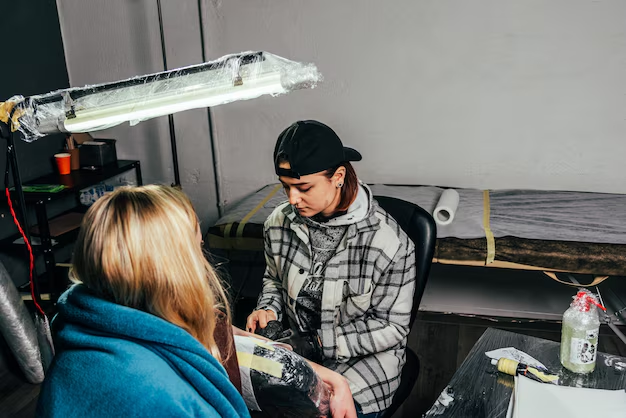
Piercing in Atlanta: Where to Go, What to Know, and How It Works Locally
Thinking about getting a piercing in Atlanta, Georgia—or wondering how the piercing scene works here? Whether you live in the city, just moved to the area, or are visiting for the weekend, Atlanta offers a wide range of options, from simple ear piercings to more advanced body work.
This guide walks you through how piercing works in Atlanta, local age rules, what to look for in a studio, typical costs, and where to go if something doesn’t seem right.
How Piercing Works in Atlanta
Atlanta has a large and active body art community. You’ll find piercing services in:
- Dedicated professional piercing studios
- Tattoo and piercing combo shops
- Some jewelry stores and mall kiosks (primarily for earlobes)
Quality and standards can vary, so your main job as a consumer is to focus on:
- Licensing and cleanliness
- Professional training
- Jewelry quality
- Safe aftercare guidance
Most reputable Atlanta piercers will:
- Use single-use, sterilized needles (not piercing guns for body or cartilage piercings).
- Open tools from sealed, sterilized pouches in front of you.
- Wear gloves and clean the area thoroughly.
- Explain the process and aftercare in detail and answer questions calmly and clearly.
Age Rules for Piercing in Atlanta
In Georgia, including Atlanta, age regulations for piercing are taken seriously. While individual studios may have stricter policies, general patterns look like this:
Common Age Guidelines
| Type of Piercing | Typical Minimum Age | Usually Requires |
|---|---|---|
| Earlobe (basic) | 14–16 | Parent/guardian in person + ID |
| Cartilage (ear) | 16–18 | Parent/guardian in person + ID |
| Facial (nose, eyebrow) | 16–18 | Parent/guardian in person + ID |
| Navel (belly button) | 16–18 | Parent/guardian in person + ID |
| Oral (tongue, lip) | 18+ | Government-issued ID |
| Nipple / genital | 18+ | Strict proof of age; no minors allowed |
Studios in the City of Atlanta and surrounding counties often require:
- Government-issued photo ID (driver’s license, state ID, passport) for adults.
- For minors:
- Minor’s ID if available (school ID, state ID, or other photo ID).
- Parent or legal guardian’s ID.
- Proof of relationship (birth certificate, guardianship papers, etc.).
Studios may refuse service if:
- Documents don’t match.
- The guardian cannot prove legal custody.
- The piercing requested is considered too advanced or risky for the minor’s age.
Always call ahead to confirm a studio’s specific age and ID policies before you go.
Types of Piercings Popular in Atlanta
Atlanta’s piercing trends reflect both Southern style and big-city fashion, so you’ll see everything from subtle to very bold.
Common Piercing Types You’ll Find
Ear piercings:
- Earlobe (single, double, or multiple)
- Helix, forward helix
- Tragus, anti-tragus
- Conch, rook, daith, industrial
Facial piercings:
- Nostril and septum
- Eyebrow
- Bridge (less common, more advanced)
Oral and surrounding area:
- Lip (labret, Monroe, Medusa, etc.)
- Tongue (often limited to 18+)
Body piercings:
- Navel (belly button)
- Nipple (18+)
- Surface and dermal/microdermal (varies by studio and piercer)
In trend-focused neighborhoods like Little Five Points, East Atlanta Village, and Midtown, you’ll see more curated ear projects and multiple facial piercings. In suburban areas around Sandy Springs, Dunwoody, or Decatur, studios often lean toward classic, minimal looks—but still usually offer more advanced options upon request.
Choosing a Piercing Studio in Atlanta
With so many options, focus on safety, professionalism, and comfort, not just price or location.
What to Look For
Visible licenses and permits
- Studios should display business licenses and any required local permits.
- While Georgia doesn’t regulate piercing as tightly as some states, many Atlanta studios follow industry best practices similar to those used for tattooing and body art.
Clean, professional environment
- Floors and counters should be tidy.
- Workstations should look organized and free of clutter.
- There should be a dedicated sterilization area, not just a back room with minimal equipment.
Sterilization standards
- Ask if they use an autoclave (a medical-grade sterilizer).
- Tools should be in sealed, dated pouches.
- Needles must be single-use and safely disposed of after each piercing.
Well-trained piercers
- Look for piercers who can explain:
- Placement options
- Jewelry materials
- Healing expectations and risks
- Many reputable Atlanta piercers keep portfolios (photos of their work) at the front desk or online.
- Look for piercers who can explain:
Jewelry quality
- Professional studios typically use:
- Implant-grade titanium
- High-quality surgical steel
- Solid gold (often 14k or higher)
- Avoid low-cost “mystery metal” jewelry, especially from non-specialist kiosks.
- Professional studios typically use:
Clear aftercare instructions
- You should leave with written aftercare instructions and verbal guidance.
- If the advice is rushed or unclear, consider that a red flag.
Piercing Needles vs. Piercing Guns in Atlanta
In Atlanta, you’ll find both needle-based piercing and piercing guns, especially in malls and big retail centers.
Needle-based piercing (at professional studios):
- Typically used for:
- All body piercings
- Cartilage piercings
- Many professional earlobe piercings
- Advantages:
- More precise placement
- Sharper, cleaner entry
- Generally considered gentler on tissue
Piercing guns (mostly in malls/jewelry stores):
- Often used for:
- Basic earlobe piercings
- Considerations:
- Guns can be harder to sterilize thoroughly.
- They may put more blunt force through the tissue.
- Many professional piercers in Atlanta recommend needles, even for earlobes.
If you’re in areas like Lenox Square, Perimeter Mall, or Cumberland Mall, you’ll see gun-based services for earlobes. If you prefer needle-based piercing or want cartilage or body piercings, it’s usually better to visit a dedicated piercing studio in town.
Typical Piercing Costs in Atlanta
Prices vary by neighborhood, studio reputation, piercer experience, and jewelry choice. Here’s a general idea of what you might see:
- Basic lobe or nostril piercing: Often in the $30–$60 range for the service, plus jewelry.
- Cartilage, eyebrow, lip, or navel: Often $40–$80.
- Septum, dermal, or more complex work: Frequently $60–$100+.
Factors that affect price:
- Jewelry material (titanium or gold costs more than basic steel).
- Custom or designer pieces.
- Whether the studio includes jewelry in the base price or charges separately.
- Location (busy neighborhoods like Midtown or Buckhead may run higher than some outer areas).
Many Atlanta studios also expect a tip for the piercer, similar to tipping a hair stylist or tattoo artist, though policies and expectations vary.
What to Expect During Your Appointment
A typical piercing appointment in Atlanta follows a clear process:
Check-in and paperwork
- You’ll show ID and fill out a consent form.
- If you’re a minor, your parent/guardian will also sign forms.
Consultation
- The piercer discusses:
- Placement
- Jewelry options
- Healing time and possible risks
- They may mark the spot and give you a mirror to confirm.
- The piercer discusses:
Setup and sterilization
- Work area is cleaned.
- Tools are unwrapped from sterile pouches in front of you.
- The piercer puts on gloves and cleans your skin.
The piercing itself
- Typically quick—often just a few seconds.
- You may feel a sharp pinch or pressure.
Jewelry insertion and aftercare talk
- Jewelry is inserted immediately.
- The piercer explains how to clean and care for it and may send you home with printed instructions.
⏱️ Time estimate: From check-in to walking out, most single piercings in Atlanta take 20–45 minutes, depending on how busy the studio is and how many questions you have.
Aftercare Basics (Non-Medical Guidance)
Piercing studios around Atlanta tend to give broadly similar aftercare advice, usually focused on:
- Keeping the area clean
- Often with a gentle saline solution, used as directed.
- Avoiding unnecessary touching
- Touch only with clean hands when needed.
- Not rotating or twisting the jewelry
- Many modern piercers advise against twisting, as it can irritate the channel.
- Avoiding pools, lakes, and hot tubs early in healing
- Public water can introduce bacteria into a new piercing.
Healing times vary:
- Earlobes: often several weeks to a few months.
- Cartilage, navel, and some others: often several months or longer.
If your piercing is near sweaty areas (for example, if you work out frequently at a local gym or run in Atlanta’s heat and humidity), you’ll want to be especially consistent about cleaning and avoiding friction from clothing or gear.
When to Seek Medical Help in Atlanta
Piercers can help with jewelry questions and basic troubleshooting, but if you suspect infection, allergic reaction, or more serious problems, it’s important to contact a licensed healthcare provider rather than relying on the studio alone.
If you’re in Atlanta and feel unwell or concerned about a piercing, you can:
- Contact your primary care provider or pediatrician.
- Visit an urgent care center (there are many across Atlanta, including in Midtown, Buckhead, Decatur, and the Westside).
- In serious situations, seek help at a hospital such as:
- Grady Memorial Hospital – 80 Jesse Hill Jr. Dr SE, Atlanta, GA 30303, Phone: (404) 616-1000
- Emory University Hospital – 1364 Clifton Rd NE, Atlanta, GA 30322, Phone: (404) 712-2000
For non-emergencies, it’s generally better to call ahead and describe what’s going on so the provider can guide you on whether you should come in and how urgently.
Piercing and Atlanta’s Climate & Lifestyle
Atlanta’s hot, humid summers and active lifestyle can affect how you care for a new piercing.
Local Factors to Keep in Mind
Heat and sweat
- If you’re outdoors at concerts, festivals, or BeltLine walks, sweat can interact with a new piercing.
- Clean the area gently afterward as recommended by your piercer.
Sports and fitness
- If you play at local gyms, rec centers, or on school teams, piercings can get bumped or pulled.
- Many people in Atlanta use bandages or protective coverings for contact sports—ask your piercer about safe options.
Pollen and allergies
- In spring, Atlanta’s pollen can be intense.
- Nasal and facial piercings may feel more irritated if you’re blowing your nose frequently or rubbing your face a lot, so be extra gentle.
Tips If You’re Visiting Atlanta and Want a Piercing
If you’re only in town for a few days:
- Schedule early in your trip
- This gives you a day or two to check in with the studio if you have basic questions before you leave.
- Choose something that’s easier to care for while traveling
- Earlobes or simple nostril piercings may be easier than complex cartilage or body piercings.
- Plan around activities
- If you’re swimming at hotel pools, visiting water parks, or hitting outdoor festivals, consider whether you can keep the piercing reasonably clean.
Ask the studio for written aftercare instructions you can take home to follow once you’re back in your own city.
Where Local Rules and Support Come From
While piercing in Atlanta is often guided by industry practice rather than detailed state-level micromanagement, local and state bodies are involved in broader safety and public health issues.
If you have broader questions about sanitation standards, you can contact:
- Georgia Department of Public Health – Fulton County Board of Health
- 10 Park Place South SE, Atlanta, GA 30303
- Main phone: (404) 613-1205
They may not regulate every detail of piercing practices, but they are a resource for understanding public health expectations in the area and where to submit general health or sanitation concerns.
Quick Checklist Before You Get Pierced in Atlanta
Use this as a fast pre-appointment guide:
- ✅ Studio looks clean, organized, professional
- ✅ Licenses/permits are visible
- ✅ Piercer opens sterile, sealed tools in front of you
- ✅ Only single-use needles, not reused tools, are used
- ✅ Jewelry is quality material (titanium, surgical steel, or solid gold)
- ✅ Age and ID requirements are clearly explained and followed
- ✅ You feel comfortable asking questions and getting clear answers
- ✅ You leave with written aftercare instructions
If a studio in Atlanta doesn’t meet these basic standards, it’s reasonable to keep looking. You have plenty of options across the city and surrounding areas, so there’s no need to compromise on safety or professionalism.