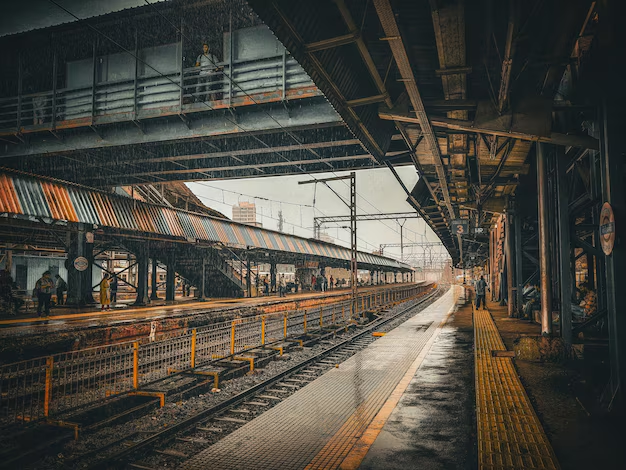
Exploring Pullman Yards in Atlanta: History, Experiences, and What to Know Before You Go
Pullman Yards (often called Pullman Yard or the Pratt-Pullman District) is one of Atlanta’s most interesting historic sites turned entertainment destination. If you live in the city, are visiting, or just want to understand what happens here, it helps to know both its past as a rail yard and its current role as a creative, event-focused space.
This guide walks through what Pullman Yards is, where it is, what you can typically do there, and how it fits into Atlanta’s broader neighborhood and arts scene.
What Is Pullman Yards in Atlanta?
Pullman Yards is a former industrial rail complex in the Kirkwood/Edgewood area of Atlanta, now used for:
- Immersive art and pop-up exhibitions
- Film and TV production
- Concerts and festivals
- Food, drink, and occasional community events
The site is known for its expansive brick buildings, rail-era structures, and open industrial feel that regularly appears as a backdrop in movies and shows filmed in Atlanta.
Pullman Yards is not a traditional single-purpose venue like a museum or stadium. Think of it more as a multi-use creative campus where the specific attractions can change over time.
Where Is Pullman Yards Located?
Pullman Yards sits on the east side of the city, close to several in-town neighborhoods.
General area:
- In/near Kirkwood and Edgewood
- East of Inman Park and Cabbagetown
- North of East Atlanta and Reynoldstown
You’ll typically see it described as being in Northeast Atlanta or in the Kirkwood area.
Because events and access points can vary, it’s smart to confirm current entry gates, parking lots, and directions with the event organizer or the official Pullman Yards information page before you go.
A Quick History of Pullman Yards
Understanding the history helps make a visit more meaningful, especially if you’re into Atlanta’s industrial past.
From Industrial Hub to Creative District
Pullman Yards started as a rail-related industrial complex, used for:
- Manufacturing and repair related to Pullman Company rail cars
- Heavy industrial work tied to the region’s railroad network
Over time, as rail operations declined, the site became underused and partly abandoned, though the buildings remained visible from nearby roads and rail lines. For years, Atlantans saw it as one of those atmospheric, off-limits industrial sites with huge potential.
In recent years, developers and arts/entertainment groups have begun restoring and repurposing the site, turning it into:
- A production-friendly location for Atlanta’s booming film and TV industry
- A destination for immersive exhibits and seasonal events
- A gathering place for food, music, and cultural programming
The combination of historic structures and adaptable open space is what makes Pullman Yards different from many other venues in the city.
What You Can Typically Do at Pullman Yards
Because Pullman Yards hosts rotating and temporary experiences, what you’ll find on any given month can be different. However, activities generally fall into a few categories.
1. Immersive Art and Themed Experiences
One of the main draws in recent years has been large-scale, immersive exhibitions, for example:
- Multi-room interactive art displays
- Themed or story-driven walkthrough exhibits
- Light, sound, and projection-based installations
These events usually:
- Require timed tickets
- Have set end dates (they’re not permanent)
- Offer family-friendly daytime slots and sometimes evening sessions
If you live in Atlanta, it’s worth checking periodically to see what’s currently running, since these experiences often change every few months.
2. Concerts, Festivals, and Markets
Pullman Yards hosts a variety of live and seasonal events, such as:
- Small to medium-sized concerts or DJ sets
- Food and drink festivals
- Art markets and holiday pop-ups
These events often use both indoor warehouse-style spaces and outdoor courtyards or greenspaces, depending on the programming and weather.
For Atlanta residents, Pullman Yards can feel like:
- An alternative to more traditional venues like larger arenas or theaters
- A place to catch niche events, curated markets, or themed nights
3. Film and TV Production
You might not always see it happening, but Pullman Yards is regularly used as a filming location. The mix of:
- Old rail structures
- Open industrial interiors
- Large, adaptable lots
makes it attractive for Atlanta’s production industry. Occasionally, this can affect public access to certain areas or parking, depending on what’s being filmed.
4. Food, Drinks, and Socializing
Depending on the current build-out and event schedule, Pullman Yards may feature:
- On-site bars or drink stations during events
- Food vendors, food trucks, or pop-up kitchens
- Outdoor seating or social hangout zones
This can make it an appealing spot for:
- Date nights
- Group outings before or after visiting nearby neighborhoods
- Pre- or post-event meetups
Always check whether an event is 21+, family-friendly, or mixed-age before bringing kids.
Pullman Yards vs. Other Atlanta Destinations
For an Atlanta resident or visitor, it helps to compare Pullman Yards to other well-known locations:
| Place | What It Feels Like | How Pullman Yards Is Different |
|---|---|---|
| Ponce City Market | Redeveloped retail/food hall in an old Sears building | Pullman is more event-based and less retail-centered |
| Krog Street Market | Compact indoor food hall with nearby BeltLine access | Pullman is larger, more open, and more focused on events and art |
| Atlanta BeltLine Eastside Trail | Outdoor trail with permanent public art and bars/restaurants | Pullman offers scheduled, ticketed experiences, not a continuous public trail |
| The Fox Theatre | Historic, fixed-seating performance venue | Pullman Yards is more flexible and industrial, often standing-room and modular |
If you’re planning a weekend in Atlanta, Pullman Yards can be combined with:
- Kirkwood’s local restaurants and bars
- Edgewood Avenue nightlife and music
- A walk or ride over to the BeltLine or Inman Park
Planning Your Visit to Pullman Yards
Because the site is multi-use and event-driven, a little planning goes a long way.
Check What’s On (and When)
Before heading over, verify:
- Current exhibitions or events
- Operating days and hours
- Ticketing requirements (timed entry, general admission, etc.)
- Age restrictions or content warnings for immersive shows
Most major experiences at Pullman Yards use online advance tickets, especially during peak weekend times.
Getting There
For Atlanta locals and visitors, typical options include:
Driving:
- Accessible from I-20 and Moreland Avenue, or via surface streets from Inman Park, Edgewood, and Kirkwood.
- Parking availability and price can change by event, so check details in advance.
MARTA:
- The Edgewood/Candler Park or Inman Park/Reynoldstown stations are often used as starting points, followed by a short rideshare or longer walk, depending on your comfort with distance and terrain.
- Bus routes serving Kirkwood/Edgewood may place you within a reasonable walking radius; exact routes vary.
Rideshare/Taxi:
- Common for evening events and concerts, especially if you plan to drink.
- Helpful if parking is limited during larger festivals.
Accessibility Considerations
Pullman Yards is a historic industrial site, so some surfaces and paths can be:
- Uneven
- Gravelly or partially paved
- Spread across multiple buildings and outdoor areas
If accessibility is a concern:
- Look for specific accessibility notes on the event or venue information.
- Consider contacting the event organizer for details on wheelchair access, drop-off points, and restroom availability.
Tips for Atlanta Locals
If you live in or near Atlanta, Pullman Yards can be more than a one-time stop.
Ways locals often use the space:
- As a rotating art and culture stop, checking in when new immersive shows open.
- As an alternative date-night option that’s different from a typical restaurant or movie.
- As part of a day in the east side: brunch or coffee in Kirkwood, an afternoon exhibit at Pullman Yards, dinner in Inman Park or Edgewood.
Practical habits that help:
- Sign up for event updates from organizers that regularly use Pullman Yards.
- Keep an eye on parking changes during large-scale festivals.
- Note that the vibe, crowd, and noise level can be very different from a weekday afternoon to a Saturday night.
Nearby Atlanta Neighborhoods to Explore
If you’re building an itinerary around Pullman Yards, the surrounding areas offer plenty:
Kirkwood:
- Tree-lined streets, neighborhood restaurants, and a more residential feel.
- Good for a quieter meal or coffee before or after an event.
Edgewood:
- Known for nightlife, bars, and live music venues off Edgewood Avenue.
- Often busier and more energetic, especially late nights and weekends.
Inman Park:
- Historic homes, parks, and access to the Atlanta BeltLine Eastside Trail.
- Lots of popular restaurants and patios.
Reynoldstown & Cabbagetown:
- Walkable, artsy areas with murals, small eateries, and easy access to the BeltLine.
- Good for daytime exploring or casual food stops.
Pullman Yards fits naturally into a daylong exploration of Atlanta’s east side, rather than as an isolated stop.
How to Make the Most of a Visit
To get the best experience out of Pullman Yards:
- ✅ Match the event to your interests. Check whether it’s art-heavy, music-focused, family-oriented, or more nightlife-centric.
- ✅ Book ahead when needed. Popular exhibits and weekend time slots can sell out.
- ✅ Plan your transportation. Decide in advance whether you’re parking, using MARTA, or taking rideshare.
- ✅ Dress for mixed indoor/outdoor space. Weather, walking distances, and industrial floors can all factor in.
- ✅ Explore nearby neighborhoods. Use Pullman Yards as an anchor and build a full east-side Atlanta day or night around it.
For anyone trying to understand “Pullman Yard Atlanta”, think of it as a historic industrial campus reborn as a flexible arts and events district, sitting right in the middle of some of the city’s most interesting in-town neighborhoods.