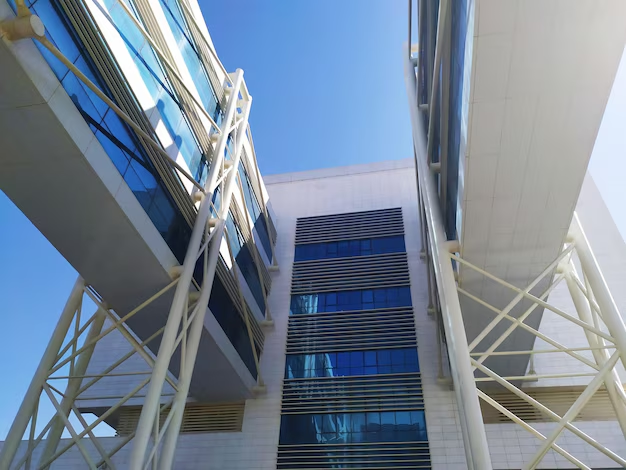
QTS Atlanta: What It Is, Where It Is, and How It Fits Into Atlanta’s Tech Landscape
If you’ve searched for “QTS Atlanta”, you’re almost certainly looking for information about QTS (Quality Technology Services) and its data centers in the Atlanta area. These large, secure facilities are a big part of the region’s technology and business infrastructure, even if most residents never step inside one.
Below is a clear, Atlanta-focused guide to what QTS is, how QTS Atlanta operates, where it’s located, and why it matters if you live in, work in, or do business around Atlanta.
What Is QTS in Atlanta?
QTS (Quality Technology Services) is a major data center and colocation provider with multiple facilities in and around metro Atlanta, Georgia.
In simple terms, a QTS facility is a highly secure building where:
- Companies place their servers and networking equipment (colocation).
- Organizations can lease space, power, and connectivity instead of running their own server rooms.
- Critical digital systems are kept online with redundant power, cooling, and internet connections.
For people in Atlanta, QTS matters because:
- Many websites, apps, and services you use may run through equipment housed in a QTS Atlanta data center.
- Local businesses, hospitals, universities, and government agencies rely on these centers for reliable, high-uptime infrastructure.
- QTS contributes to Atlanta’s reputation as a regional tech and data hub in the Southeastern United States.
Where Are QTS Data Centers in the Atlanta Area?
QTS operates multiple facilities in metro Atlanta. Exact locations and building details can change or expand, but generally, Atlanta-area QTS sites are found in:
- Downtown / Midtown-adjacent areas (close to major fiber routes)
- Suburban tech and industrial corridors, often near highways and power infrastructure
QTS facilities are not walk-in retail locations. Access is typically restricted to:
- Authorized customers
- Approved vendors and contractors
- Pre-scheduled tours or visits
If you need current addresses or directions, the most reliable next step is to:
- Use the QTS corporate contact phone number
- Request directions or visitor instructions specific to the Atlanta data center campus you’re working with
Because these facilities are security-sensitive, they usually do not operate like typical office buildings, and visitors often must:
- Be pre-registered
- Present government-issued identification
- Comply with strict security and escort requirements
What Services Does QTS Atlanta Provide?
While the technical details can get complex, most QTS Atlanta offerings fall into a few main categories:
1. Colocation Services
Businesses can:
- Rent cabinet, cage, or suite space for their own servers
- Use shared building infrastructure (power, cooling, and security)
- Connect to multiple internet and network providers available on-site
This is common for:
- Growing Atlanta startups
- Established corporations with local or national operations
- Organizations that want control of their hardware without building their own data center
2. Cloud and Hybrid Connectivity
QTS facilities in Atlanta are often used as a connectivity hub where companies can:
- Link their on-premises equipment to public cloud platforms
- Create hybrid cloud environments (mix of cloud and on-site systems)
- Access high-speed, low-latency connections to different carriers and networks
For many Atlanta organizations, this helps with:
- Faster access to cloud services
- Improved disaster recovery designs
- Scaling capacity without expanding office server rooms
3. Managed Infrastructure Support
Some customers use value-added services, such as:
- Remote hands and eyes (on-site staff performing physical checks or basic tasks)
- Environment monitoring and incident response coordination
- Support with deployment, cabling, and basic maintenance at the rack level
For an Atlanta business with limited IT staff, this can reduce the need to physically visit the data center for routine tasks.
Why QTS Matters to People and Businesses in Atlanta
Even if you never visit a data center, QTS Atlanta affects everyday life in the region in subtle but important ways.
Supporting Local Businesses and Institutions
Many Atlanta-based companies rely on QTS-type facilities for:
- Point-of-sale systems
- Inventory and logistics software
- Online ordering and customer portals
- Healthcare records and administrative systems
When those servers are hosted in a reliable, redundant data center, Atlanta businesses are better able to:
- Stay online during power outages
- Recover from local disruptions (e.g., storms, building issues)
- Comply with security and data handling requirements
Enabling Atlanta’s Tech & Startup Scene
Atlanta’s growth as a tech and fintech hub is supported by:
- Ready access to data center capacity
- Carrier-dense connectivity that runs through the city
- Facilities like QTS where organizations can scale quickly without major capital construction
For a startup in Midtown, Buckhead, or along the Perimeter, using QTS Atlanta colocation or connectivity can be part of a strategy to grow without the cost and risk of maintaining their own network rooms.
Strengthening Regional Internet Infrastructure
Because QTS facilities often connect many carriers and networks, they become:
- Key exchange points in the region’s internet backbone
- Places where content providers, ISPs, and enterprises interconnect
This can improve:
- Latency (how quickly data moves locally)
- Resilience (multiple routes around outages)
- Capacity (room to grow as more people and businesses come online)
If You’re an Atlanta Business Considering QTS
If you run or manage IT for a business in Atlanta and are looking into QTS data center services, you’ll typically go through a structured process.
Common Steps to Engage with QTS in Atlanta
Define your needs
- How much space (racks, cages) do you need?
- What are your power and cooling requirements?
- Do you need 24/7 access, remote support, or specific compliance frameworks?
Contact QTS Sales or Support
- Reach out via their corporate phone lines or online inquiry form.
- Specify that you’re interested in “QTS Atlanta” or a metro Atlanta facility.
Discuss Technical and Security Requirements
- Power redundancy (e.g., N+1, 2N)
- Connectivity options (carriers, cross-connects, cloud on-ramps)
- Physical and logical security controls
Schedule a Site Tour (If Appropriate)
- These tours typically require:
- Advance scheduling
- Identification and screening
- Agreement to security rules (no photography in many areas, etc.)
- These tours typically require:
Contract, Onboarding, and Migration
- Plan equipment delivery, rack installation, and network cutovers.
- Coordinate with Atlanta-area vendors or your own staff for deployment.
Security, Access, and What to Expect at a QTS Atlanta Facility
Data centers like QTS in Atlanta are tightly controlled environments. While exact features vary by facility, customers and visitors can generally expect:
Physical Security Measures
- 24/7 on-site security personnel
- Controlled building entry (badges, mantraps, biometrics, or multi-factor systems)
- CCTV monitoring throughout common and critical areas
- Segregated customer cages or suites with separate access controls
Environmental and Power Protection
Atlanta is known for:
- Summer heat and humidity
- Occasional severe thunderstorms and power disruptions
QTS-type facilities are built to handle these risks via:
- Redundant cooling systems
- Backup generators and UPS (uninterruptible power supplies)
- Multiple utility feeds where available
- Continuous environment monitoring
For customers, this means their infrastructure is generally far more protected than it would be in a standard office building around Atlanta.
How QTS Fits Into Atlanta’s Broader Data Center Market
Atlanta has become a major Southeast data center hub, helped by:
- Strategic location for regional connectivity
- Access to major fiber routes that run through the metro
- A diverse economy (corporate HQs, logistics, fintech, media, and education)
Within this market, QTS Atlanta is one of several large players offering:
- Massive, carrier-rich data center campuses
- Long-term expansion options for tenants
- A mix of colocation, connectivity, and managed services
For someone comparing options, QTS is typically evaluated alongside other Atlanta-area providers, with decisions based on:
- Location relative to the company’s offices
- Available capacity and scalability
- Network ecosystem and carrier availability
- Pricing structures and contract terms
- Compliance and security needs
Practical Tips If You Need to Work With QTS in Atlanta
Here are a few Atlanta-specific, practical pointers if your organization is planning to use or visit a QTS Atlanta facility:
Plan your travel around Atlanta traffic
Facilities near highways like I-75/I-85, I-285, or GA-400 can be affected by heavy rush-hour congestion. Build extra time into your visit schedule.Coordinate deliveries carefully
Large equipment deliveries (racks, servers, storage arrays) usually must be pre-approved and may have:- Specific loading dock hours
- Security screening steps
- Strict procedures for labeling and handling
Prepare for 24/7 operations
Many organizations use QTS facilities as critical production sites, so:- Ensure you have after-hours access procedures documented.
- Confirm your team knows who to call for onsite assistance if an issue arises outside business hours.
Keep emergency contacts updated
If you’re colocated at a QTS Atlanta center, keep:- Current authorized contact lists
- Up-to-date escalation procedures
on file with your internal team and, where applicable, with QTS.
Who Typically Uses QTS Atlanta?
You’ll rarely see public signage listing customers, but typical users of QTS Atlanta facilities include:
- Corporations with regional or national headquarters in Atlanta
- Financial and payment processing companies
- Healthcare systems and large medical practices
- Media and content providers
- Logistics and transportation firms
- Government and education institutions
For these organizations, the goal is usually to combine:
- Physical reliability (power, cooling, security)
- Network performance
- Regulatory alignment (data handling for finance, health, etc.)
How QTS Atlanta Affects You as a Resident or Visitor
Even if you never interact with QTS directly, if you’re in Atlanta, you’re likely benefiting from:
More reliable local services
Payment terminals, local websites, and apps used by Atlanta businesses are more resilient when their infrastructure is in a professional data center.Stronger digital economy
Atlanta’s attractiveness to tech and enterprise employers is tied to the presence of high-capacity data centers like QTS.Better regional connectivity
When big data hubs operate in the metro, local ISPs and carriers often have better options for peering and interconnection, which can support faster, more reliable internet experiences.
Key Takeaways About QTS Atlanta
QTS Atlanta is:
- A set of large, secure data centers serving metro Atlanta and the broader Southeast.
- A critical part of the city’s technology and business infrastructure.
- Primarily used by organizations, not walk-in consumers.
- Focused on colocation, connectivity, and managed data center services.
- One of the reasons Atlanta is considered a major tech and data hub in the region.
If you are an Atlanta-based organization exploring colocation or data center options, contacting QTS directly and identifying yourself as interested in their Atlanta facilities is the most direct way to get current, detailed information on locations, access, and services.