Snowmageddon in Atlanta: What Happened, What We Learned, and How to Be Ready Next Time
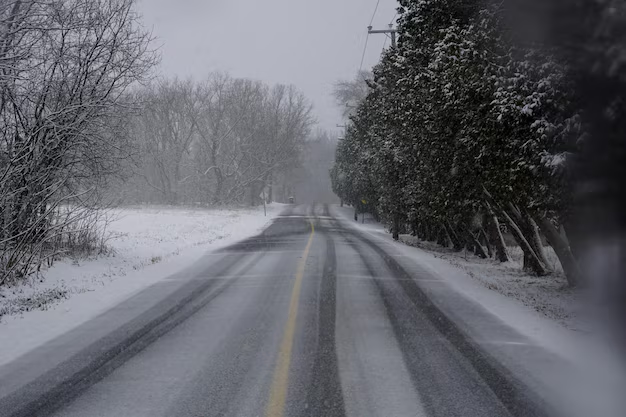
“Snowmageddon Atlanta” usually refers to the January 2014 winter storm that turned metro Atlanta into a traffic and safety nightmare. A couple of inches of snow and ice shut down interstates, stranded thousands of drivers, and forced students to sleep at schools and in businesses.
If you live in Atlanta now—or you’re visiting during winter—you’ve probably heard people reference Snowmageddon as a kind of cautionary tale. This guide breaks down what happened, why Atlanta is vulnerable to winter weather, and how you can realistically prepare if it happens again.
What Was “Snowmageddon Atlanta”?
In late January 2014, a relatively small winter storm hit the Atlanta area. On paper, it didn’t look dramatic: a couple of inches of snow combined with quickly forming ice.
In reality, it caused:
- Mass traffic gridlock on I‑285, I‑75, I‑85, GA‑400, and surface streets
- Thousands of abandoned cars along major roads
- Students stuck overnight in schools and on buses
- Commuters trapped in their vehicles for 6–12+ hours
- Major disruptions at Hartsfield–Jackson Atlanta International Airport
The storm slammed into a region not built for steady ice and snow, especially when everyone tried to leave work and school at the same time.
Since then, “Snowmageddon” has become local shorthand for any serious winter storm that threatens to paralyze Atlanta.
Why Atlanta Struggles So Much With Snow and Ice
Atlanta is not Buffalo or Minneapolis. A few unique local factors make winter storms here especially disruptive.
1. Our Weather Patterns
Atlanta usually has:
- Mild winters with short cold snaps
- Frequent freeze–thaw cycles (freeze overnight, melt during the day, then refreeze)
- Occasional “wintry mix”: rain, sleet, and snow layered together
That means:
- Roads may start as wet, then suddenly freeze into black ice
- A light dusting of snow can hide slick ice underneath
2. Limited Snow and Ice Infrastructure
Because heavy snow is rare, Atlanta typically has:
- Fewer snowplows and salt trucks than northern cities
- Less routine pre-treatment of neighborhood streets and side roads
- More delays as agencies prioritize interstates and major arteries
The Georgia Department of Transportation (GDOT) focuses first on main routes like:
- Interstates (I‑75, I‑85, I‑20, I‑285)
- State routes (GA‑400, US‑78, US‑41, etc.)
Residential streets in places like Grant Park, West End, Inman Park, Buckhead neighborhoods, and surrounding suburbs often stay icy longer.
3. Traffic Volume and Commuter Patterns
The metro area relies heavily on driving:
- Many people commute from surrounding counties (Cobb, Gwinnett, Clayton, DeKalb, Fulton, Henry, Cherokee, etc.)
- When winter weather moves in, schools, offices, and businesses often close all at once
- This sends hundreds of thousands of drivers onto the roads within a short window
That heavy volume on already congested interstates quickly turns into gridlock—especially when lanes start to ice over and even small fender-benders block traffic.
Key Local Agencies and Who Does What in a Winter Storm
Knowing who handles what in Atlanta can help you find accurate information quickly.
Georgia Department of Transportation (GDOT)
Role: State highways, interstates, major corridors.
- Maintains and treats:
- I‑20, I‑75, I‑85, I‑285, GA‑400, and most state routes
- Operates the 511 Georgia traffic information service:
- Phone: 511 (from most phones in Georgia)
- Coordinates road treatment, closures, and incident response in severe weather
City of Atlanta Department of Transportation (ATLDOT)
Role: City streets inside Atlanta (not interstates).
Typical responsibilities:
- Treating priority city roads and major intersections
- Coordinating with Atlanta Police Department and Atlanta Fire Rescue
- Working with neighborhood and public works teams on downed trees and blocked streets
Main office (administrative; not an emergency contact):
Atlanta City Hall
55 Trinity Ave SW
Atlanta, GA 30303
Hartsfield–Jackson Atlanta International Airport
Role: Air travel and operations.
- Handles runway de-icing, aircraft de-icing, and flight schedules
- Winter weather can cause:
- Flight delays and cancellations
- Gate changes and longer check-in/security lines
Airport general info (non-emergency):
6000 N Terminal Pkwy
Atlanta, GA 30320
Phone: Main information lines are typically listed clearly at the airport and on boarding documents.
Local School Systems
Districts like Atlanta Public Schools, Fulton County Schools, DeKalb County Schools, Cobb County Schools, Gwinnett County Schools, and others decide:
- Whether to close schools, release early, or switch to remote learning
- Whether buses will run in icy conditions
They usually share updates via:
- Official websites
- Automated phone calls/texts
- Local news stations
If You Live in Atlanta: How to Prepare for the Next “Snowmageddon”
You do not need a full-blown northern-style winter setup, but a basic, Atlanta-appropriate winter plan is smart.
1. Build a Simple At‑Home Winter Kit
For most Atlanta households, a modest emergency supply is enough to get through a day or two of disruption.
Consider keeping on hand:
- Bottled water and non-perishable food you already eat
- Battery-powered or hand-crank flashlight
- Extra batteries and power bank for phones
- Blankets or warm layers
- Manual can opener
- Basic first-aid essentials
- Pet food and supplies if you have animals
This helps if:
- Roads are unsafe to drive on
- Power briefly goes out
- You can’t easily get to a grocery store in neighborhoods like Midtown, Old Fourth Ward, East Atlanta, or Sandy Springs
2. Prepare Your Car for Atlanta Winter Weather
Even if you rarely see snow, it’s wise to treat your vehicle like you might get stuck in traffic during a storm.
Keep in your car:
- Warm layer (jacket, hat, gloves)
- Small blanket
- Phone charger
- Bottled water and simple snacks
- Ice scraper / small brush
- Basic roadside kit (jumper cables, flashlight, reflective triangle if you use one)
Before winter:
- Check tire tread and pressure
- Make sure wiper blades are in good shape
- Top off windshield wiper fluid
Atlanta usually does not require snow tires or chains for regular city driving, but if you regularly travel into North Georgia mountains (toward Blue Ridge, Dahlonega, etc.), you may want to be more cautious and see what’s recommended for those routes.
3. Have a Work and School Plan
One of the biggest Snowmageddon problems was everyone leaving at once.
Talk with:
- Your employer: Can you work from home if roads are hazardous?
- Your child’s school or daycare: How do they announce early dismissal or closures?
- Family members: If students are delayed, who can safely pick them up, and what’s Plan B?
If your household is scattered between Downtown, Midtown, Buckhead, Decatur, and the suburbs, agree on:
- Who stays put if roads are icy
- Where to meet only if it’s safe to travel
If You’re Visiting Atlanta During Winter
You don’t need to avoid winter travel, but be realistic: a small storm can disproportionately affect your plans.
1. Build Flexibility Into Your Flight Plans
If you’re flying through Hartsfield–Jackson between December and February:
- Allow extra time for:
- Security
- Moving between terminals (Plane Train / walkways)
- If winter weather is in the forecast:
- Monitor your flight status frequently
- Give yourself a cushion for connections when flying through ATL
2. Choose Lodging With Weather in Mind
Consider staying near where you need to be, not just where it’s cheapest:
- If your events are Downtown or Midtown, staying in that area can reduce your driving if I‑75/85 or surface streets become messy.
- If you’re here for business in Perimeter Center, Cumberland, or near the airport, look near those areas to avoid long, potentially icy commutes.
During winter weather, hills in some neighborhoods can be tough to navigate, especially if you’re unfamiliar with driving on ice.
3. Rely on Local Information, Not Just Navigation Apps
Apps can show you traffic and closures, but they can also route you onto untreated neighborhood streets or steep hills.
During winter events:
- Listen to local radio/TV news, or check local government channels for:
- Road closure highlights
- Major incident areas to avoid
- If authorities advise staying off the roads, do not depend on mapping apps alone to find “secret routes.”
Getting Reliable Winter Weather and Road Updates in Atlanta
Atlanta has many information sources, but in a winter storm, focus on official or widely used channels.
Weather Alerts
- Set alerts on your phone for:
- Winter Weather Advisory
- Winter Storm Watch/Warning
- Ice Storm Warning
These alerts help you know when to leave early, stay home, or avoid unnecessary trips.
Road Conditions and Traffic
GDOT 511 Georgia
- Phone: 511 in Georgia
- Offers information on:
- Major accidents
- Lane closures
- Hazardous road conditions on state routes and interstates
Local Governments
- City of Atlanta and other cities (Sandy Springs, Brookhaven, etc.) may share:
- Road treatment plans
- Street closures
- Downed trees or power line issues
Transit
- MARTA (Metropolitan Atlanta Rapid Transit Authority) sometimes adjusts:
- Bus routes and schedules
- Rail frequency
- If you rely on MARTA rail or buses around Downtown, Midtown, Buckhead, Decatur, Airport, check for:
- Service advisories
- Weather-related modifications
Practical Do’s and Don’ts During an Atlanta Snow or Ice Event
A storm doesn’t have to turn into Snowmageddon for your day to get complicated. These guidelines fit Atlanta’s roads and infrastructure.
When Winter Weather Is Approaching
Do:
- ✅ Fill your gas tank or charge your vehicle
- ✅ Pick up regular groceries and medications before the storm, not during
- ✅ Park off steep hills when possible in hilly neighborhoods
- ✅ Bring pets indoors or make sure they have adequate shelter
Don’t:
- ❌ Wait for school/work to close before making any plan
- ❌ Assume “it’s only an inch” means “it’s not serious” in Atlanta
- ❌ Plan a long drive across multiple counties right as the storm is forecast to arrive
If You Must Drive
In Atlanta, the safest winter driving strategy is often not driving at all during peak icing. If you have no choice:
- Drive slowly and smoothly, leave plenty of distance
- Avoid sudden braking or lane changes
- Watch bridges and overpasses (like those on Downtown Connector, I‑285, GA‑400)—they freeze first
- If you begin to skid, steer gently in the direction you want to go and avoid slamming the brakes
If conditions worsen quickly:
- Consider pulling off at a safe, well-lit location (gas station, large parking lot, hotel) rather than risk getting stuck on a bridge or ramp.
How Atlanta Has Changed Since Snowmageddon 2014
After 2014, Atlanta-area governments and agencies made several adjustments aimed at preventing a repeat:
- Increased stock of salt and treatment materials
- More focus on:
- Pre-treating roadways ahead of major storms
- Staggered release times for government offices, schools, and some businesses
- Better communication between:
- State and local agencies
- Schools and emergency management
- Traffic operations and law enforcement
Even with these improvements, the basic vulnerabilities remain: heavy reliance on cars, limited winter road equipment compared to snowy cities, and weather patterns that favor quick-freeze ice events.
That’s why, whenever ice or snow is in the forecast, people in Atlanta still talk about “another Snowmageddon”—and why it’s worth having a personal plan.
Simple Atlanta Winter Weather Readiness Checklist
Use this quick reference to decide if you’re reasonably prepared for a Snowmageddon-style event.
| Area | Key Questions | Ready? |
|---|---|---|
| Home supplies | Do you have food, water, light, and warm layers for 1–2 days at home? | ☐ |
| Car readiness | Do you keep warm clothing, basic supplies, and a charger in your car? | ☐ |
| Work & school plan | Do you know how your job and your child’s school will handle winter weather? | ☐ |
| Information sources | Do you know how to get local weather alerts and road information (e.g., 511)? | ☐ |
| Travel flexibility | If visiting, could you adjust flights or plans if ice impacts Atlanta? | ☐ |
If you can honestly check most of these boxes, you’re in much better shape than many Atlantans were in 2014.
Being ready for Snowmageddon in Atlanta isn’t about expecting a blizzard every year. It’s about recognizing that even a small winter storm can bring the city to a standstill—and making a few simple, local-specific preparations so you can stay safe and avoid getting stuck in the next gridlock.