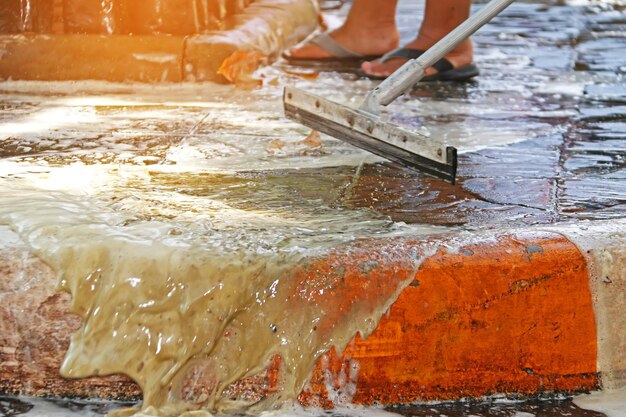
Water Main Breaks in Atlanta: What’s Happening and What You Should Do
Water main breaks in Atlanta, Georgia can disrupt daily life fast—boil water advisories, low pressure, brown water, traffic delays, and school or business closures. Whether you live in the city, work in Midtown, or are visiting downtown near the attractions, it helps to understand how water main breaks work here, who’s responsible, and what you should do when one happens.
What Is a Water Main Break?
A water main is a large underground pipe that carries treated drinking water from treatment plants to homes and businesses. A water main break happens when that pipe cracks, bursts, or splits, causing water to leak into the ground or up to the street.
In Atlanta, you might notice:
- Water bubbling up from the street or sidewalk
- Sudden loss of water pressure or no water at all
- Discolored or cloudy water from your tap
- Road closures and repair crews with heavy equipment
The impact can range from a small block-level issue to large-scale outages affecting parts of Downtown, Midtown, Buckhead, or Southwest Atlanta.
Who Handles Water Main Breaks in Atlanta?
In most of the City of Atlanta, water service is managed by the:
City of Atlanta Department of Watershed Management (DWM)
72 Marietta Street NW
Atlanta, GA 30303
Customer Service / Emergency Line (commonly used): 311 (inside city limits) or 404‑546‑0311 (outside city limits)
Key roles:
- DWM maintains public water mains, valves, and many roadside meters.
- Private property owners are usually responsible for plumbing and service lines on their property, typically from the water meter into the building.
- Neighboring jurisdictions like DeKalb County or Fulton County have their own water departments. If you’re in an unincorporated area or a nearby city (e.g., Sandy Springs, Brookhaven), your provider may not be the City of Atlanta.
If you’re unsure who serves your address, you can usually find the provider name on your water bill or by calling 311 when you are in the City of Atlanta.
Signs of a Water Main Break Near You
Here are common signs Atlanta residents report when there’s a water main break nearby:
- Street or yard flooding with no obvious cause
- Water flowing from manholes or cracks in the pavement
- Sudden loss of water pressure in your home or business
- No water coming from multiple taps
- Brown or yellow water, especially after pressure returns
- Boil water advisories announced by the city or local news
- Road closures with “Water Main Break” or “Utility Work” signs
If you see a strong flow of water in the street, especially around older neighborhoods like Grant Park, West End, Kirkwood, or Inman Park, it may be a main break or a serious leak.
What To Do If You Suspect a Water Main Break in Atlanta
1. Stay Safe Around Flooded Areas
- Avoid walking or driving through water pooling in the street.
- Watch for hidden hazards: open manholes, loose asphalt, or sinkholes.
- If water is close to power lines, utility boxes, or downed poles, stay away and treat it as unsafe.
2. Report the Issue
If you’re in the City of Atlanta service area:
- Call 311 from within city limits.
- If 311 is not available, call the main customer service/emergency number: 404‑546‑0311.
Provide:
- Exact location (street name, nearest cross street, and address if possible)
- What you see (water gushing, bubbling, flooding, low pressure in your home, etc.)
- How long it’s been happening
If you’re outside the City of Atlanta water service but still in metro Atlanta, call your county or city’s water department (such as DeKalb County Department of Watershed Management or Fulton County Public Works).
3. Reduce Water Use and Protect Your Plumbing
If a main break affects your area:
- Turn off outdoor irrigation and unnecessary water use.
- Avoid running dishwashers or washing machines during severe low-pressure events to prevent possible damage to appliances or sediment clogging.
- If officials recommend it, shut off your main valve temporarily (typically located where the water line enters the house or in a mechanical room) to avoid drawing in sediment.
4. Watch for Boil Water Advisories
When a major water main break occurs in Atlanta, the city may issue a boil water advisory for affected areas to reduce the risk from potentially contaminated water.
You may hear about advisories from:
- Local TV and radio stations
- City of Atlanta announcements and social channels
- School districts and universities (like Atlanta Public Schools, Georgia State University, or Georgia Tech)
- Building managers, HOAs, or landlords
Even if your tap water looks clear, follow the advisory instructions until the city announces it has been lifted.
What a Boil Water Advisory Means (Atlanta Context)
When Atlanta issues a boil water advisory, it generally means:
- Do not drink tap water directly.
- Boil tap water for at least one minute at a rolling boil and then let it cool before using for drinking, making ice, brushing teeth, or preparing food.
- Many people choose to use bottled water until the advisory is lifted.
Avoid relying on refrigerator filters or basic pitcher filters to make unsafe water safe; a typical filter is not the same as boiling.
Boil water advisories are usually lifted only after multiple rounds of testing from the City of Atlanta’s water quality lab confirm that water is safe again.
How Water Main Breaks Are Repaired in Atlanta
The repair process in Atlanta usually follows a pattern:
Initial Response & Assessment
- DWM crews are dispatched after a 311 or emergency report.
- They locate valves, assess the break, and may shut off water to the area.
Traffic & Safety Control
- Streets may be closed or partially blocked.
- In busy corridors like Peachtree Street, Martin Luther King Jr. Drive, or Northside Drive, expect detours and congestion.
Excavation & Repair
- Crews dig down to the main line, pump out water, and inspect the damage.
- They may install clamps, replace pipe sections, or in some cases upgrade valves and fittings.
System Flushing & Testing
- Once repaired, lines are typically flushed to clear sediment and air.
- Water quality is tested before boil advisories are lifted.
Surface Restoration
- Asphalt, concrete, and landscaping are repaired.
- In heavy-traffic or downtown areas, temporary patches may be placed first, with final paving later.
Timelines depend on pipe size, location, age, soil conditions, and traffic. A small break on a neighborhood street in East Atlanta might be fixed in hours, while a major break downtown could take longer and require extended advisories.
Common Causes of Water Main Breaks in Atlanta
Several local factors make water main breaks relatively common in certain parts of the city:
- Aging infrastructure: Some water mains in historic neighborhoods are decades old and more prone to failure.
- Soil and ground movement: Shifting clay soils and ground settling can stress pipes.
- Temperature swings: Rapid changes in temperature—especially when a cold snap hits metro Atlanta—can cause expansion and contraction of pipes.
- High demand: Peak water usage during hot summer days can increase pressure in the system.
- Construction activity: Road work and construction projects can accidentally damage underground lines if utility locations are not properly marked or followed.
How to Tell If It’s a Main Break or a Plumbing Issue at Your Property
Sometimes a problem with water service in Atlanta is inside the property, not in the public main. This matters because:
- The city handles public mains and many meters.
- The property owner is usually responsible for pipes on their side of the meter.
Use these cues:
| What You Notice | Likely Cause |
|---|---|
| Neighbors also have low or no water | Possibly a water main break |
| Water flooding the street or sidewalk | Likely public main or city-owned line |
| Only your house or unit has no water | Possibly a private plumbing issue |
| Higher bill + wet spots in yard only | Possible service line leak on property |
| City crews working down the street | Likely city infrastructure |
If you’re unsure, you can still call 311 or 404‑546‑0311 to report what you see and ask for guidance. City staff can often tell you whether it’s a known main break or something you need a private plumber for.
What to Do if Your Water Looks Brown or Cloudy in Atlanta
After a main break or major repair, it’s common for Atlanta residents to see discolored water. Sediment can get stirred up when pressure changes suddenly.
If your water is brown, yellow, or cloudy:
- Run cold water from the tap closest to where the water enters your home (often a basement or first-floor sink) for several minutes.
- If it is still discolored, wait 30–60 minutes and try again.
- Avoid doing laundry until the water runs clear to prevent staining clothes.
- Follow any current boil water advisories for your area.
If discoloration continues for an extended period or has a strong odor, contact Atlanta Watershed Management Customer Service at 311 or 404‑546‑0311.
How Water Main Breaks Affect Daily Life in Atlanta
A significant break can impact more than just water at the tap:
- Traffic: Major arteries like I‑75/85 connector frontage roads, Peachtree Road, or Joseph E. Lowery Blvd can see lane closures and delays.
- Schools & Universities: Atlanta Public Schools and local colleges may shift to virtual learning or release early if restrooms and kitchens don’t have water.
- Restaurants & Businesses: Food service and hospitality around Downtown, Midtown, Buckhead, East Atlanta Village, and other districts may adjust hours or temporarily close during advisories.
- Events & Attractions: Large events near Mercedes‑Benz Stadium, State Farm Arena, Georgia World Congress Center, Zoo Atlanta, or Piedmont Park may be affected if water service is disrupted or compromised.
If you’re visiting Atlanta and staying in a hotel, check with the front desk if you hear about a break or advisory in the area; hotels usually coordinate directly with the city and provide guidance for guests.
Practical Preparedness Tips for Atlanta Residents
Because water main breaks and boil water advisories can happen with little warning, having a small plan helps:
- Keep a basic water supply on hand (many households set aside a few gallons per person).
- Have a pitcher or large pot available for boiling and cooling water.
- Store a few disposable plates/utensils to use during advisories to reduce dishwashing.
- Know where your main shutoff valve is and make sure all adults in the home know how to use it.
- Save key numbers in your phone:
- City of Atlanta Watershed / 311
- Building manager, HOA, or landlord
- Your county or neighboring city’s water department if you are on the edge of city limits
Key Atlanta Contacts for Water Main Issues
While contact numbers can change, the following are commonly used, stable points of contact:
City of Atlanta Department of Watershed Management
- General Customer Service / Emergencies: 311 (inside city), 404‑546‑0311 (outside)
- Main Office: 72 Marietta Street NW, Atlanta, GA 30303
If you live in nearby but separate jurisdictions (for example, unincorporated DeKalb or North Fulton), your water provider may be:
- DeKalb County Department of Watershed Management – often serves portions of Decatur and surrounding areas.
- Fulton County Public Works – serves several unincorporated parts of Fulton outside the City of Atlanta.
Check your water bill or local government website to confirm your provider if your address is near city–county borders.
By understanding how water main breaks in Atlanta are reported, repaired, and communicated, you can respond calmly, protect your household, and know what to expect when the next break or advisory affects your neighborhood.