
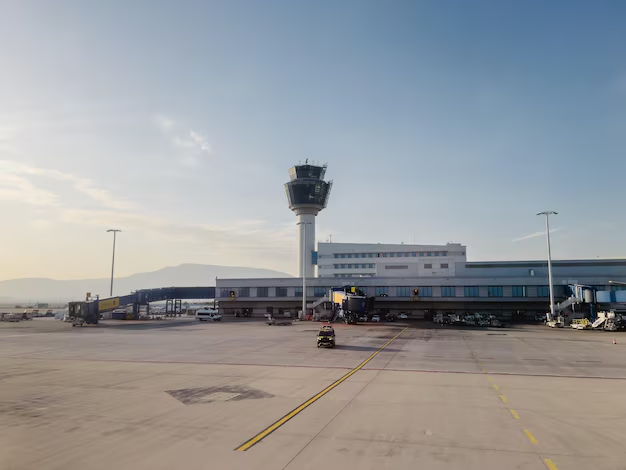
Is Atlanta’s Airport Closing? What Travelers Need to Know About Hartsfield‑Jackson
If you’ve heard rumors about an “Atlanta airport closing” and are wondering whether Hartsfield‑Jackson Atlanta International Airport (ATL) is shutting down, here’s the bottom line:
No — Atlanta’s main airport is not closing.
However, different things can cause temporary closures or disruptions: specific terminals, runways, security checkpoints, roads, or even all flights during severe weather or emergencies. This guide explains what “airport closing” usually means in Atlanta, how it might affect your plans, and how to stay prepared.
Is Hartsfield‑Jackson Atlanta International Airport (ATL) Closing?
There is no permanent closure planned for ATL.
Hartsfield‑Jackson is one of the world’s busiest airports and a major hub for Delta Air Lines and many other carriers. Completely shutting it down would have huge regional and national impacts, so any permanent closure would be widely and clearly announced by government and airport officials.
Instead, when people talk about “Atlanta airport closing,” they usually mean:
- Temporary flight ground stops or delays
- Short‑term terminal, concourse, or gate closures
- Runway closures for construction or maintenance
- Weather‑related suspensions of takeoffs and landings
- Security or power disruptions that pause operations
So if you’re flying into or out of Atlanta, you should assume the airport is operating, but specific parts of it might be affected at times.
Common Reasons the Atlanta Airport Might “Close” Temporarily
1. Severe Weather in Atlanta or Along Flight Paths
Atlanta often experiences:
- Heavy thunderstorms, especially in spring and summer
- Fog that reduces visibility
- Winter weather (ice, freezing rain, occasional snow)
In these cases, you might see:
- Ground stops: Departures are paused for a period.
- Diversions: Flights headed to ATL are rerouted to other airports.
- Cancellations or major delays: Especially for connecting flights.
Weather doesn’t usually “close” the airport building itself. Instead, it slows or stops flight operations until conditions improve.
What to do:
- Check your airline’s app or website starting 24 hours before your flight.
- Sign up for text/email alerts from your airline.
- If driving from Atlanta neighborhoods (Midtown, Buckhead, Decatur, etc.), allow extra time when bad weather is expected.
2. Security Incidents or Checkpoint Closures
From time to time, TSA security checkpoints at ATL have to be:
- Partially closed
- Temporarily evacuated
- Re-routed through different lines or areas
This can lead to:
- Very long security lines
- Gate changes
- Passengers being held away from certain concourses for a period
In rare, serious cases, parts of a terminal may be cleared, which some travelers perceive as the airport “closing.”
What to do if this happens while you’re at ATL:
- Follow instructions from TSA, airline staff, and airport police.
- Watch the overhead monitors and listen for announcements about:
- New security entry points
- Updated boarding times
- Gate changes
- Use your airline’s app to confirm gate and departure time before walking across concourses.
3. Power Outages or Infrastructure Problems
Large airports like ATL rely on complex systems for:
- Power and backup power
- Baggage handling
- Air traffic control equipment
- Elevators, escalators, trams (Plane Train), and more
In a major power or systems disruption, the airport might:
- Stop boarding temporarily
- Slow or halt baggage delivery
- Limit access to certain concourses or trains
- Ask passengers to remain in place in certain areas
These situations are typically temporary and resolved as maintenance teams and utility providers restore service.
4. Construction, Renovations, and Runway Closures
Hartsfield‑Jackson is almost constantly upgrading terminals, concourses, and runways. That can mean:
- Runway or taxiway closures for maintenance
- Construction in parking decks or roads near the terminal
- Closed restrooms, food courts, or boarding areas during renovation
Travelers sometimes interpret these limited closures as the airport “shutting down,” but overall operations continue.
If you live in the Atlanta area and drive to the airport regularly, keep in mind:
- Road patterns near Domestic Terminal – North and South can change.
- Signs may direct you to temporary detours or alternate parking areas.
- Some shuttle stops or pick‑up lanes may move during projects.
5. Airspace or Federal-Level Restrictions
In rare cases, the federal government or aviation authorities may temporarily restrict flights into or out of ATL, for example:
- Nationwide aviation system issues
- Major national security concerns
- Air traffic control system disruptions
In those situations, ATL may have limited or no takeoffs and landings for a time, but the airport building itself usually stays open, with passengers waiting inside.
How to Check If Atlanta’s Airport Is Closed or Flights Are Affected
If you’re worried about an “Atlanta airport closing,” focus on verifying your specific flight and airport access rather than broad rumors.
1. Use Your Airline’s Official Channels
Most airlines serving ATL provide real‑time updates via:
- Airline mobile apps
- “Flight status” pages on their websites
- Text/email notifications if you’re subscribed
Check for:
- “Canceled,” “Delayed,” or “Gate change” next to your flight number
- Notes about weather, crew availability, or operational disruptions
2. Monitor the Airport’s Information Sources
Hartsfield‑Jackson’s official communications typically include:
- Flight status boards inside the terminals
- Overhead audio announcements
- Posted signs about construction or security changes
If you’re already at the airport, look for:
- Departure and arrival boards near ticketing and concourses
- Uniformed staff at information desks and airport ambassadors
3. Listen to Local Atlanta News and Traffic Updates
Atlanta‑area news and traffic outlets often report on:
- Widespread flight cancellations at ATL
- Major delays due to storms or system issues
- Highway congestion getting to and from the airport
This can help if you’re deciding whether to leave your home, hotel, or office for the airport or delay departure.
Key Areas of ATL That May Be Affected (Without the Whole Airport Closing)
Different parts of ATL can operate independently. Understanding the layout helps you interpret what’s really “closed.”
Domestic vs. International Terminals
Domestic Terminal (North & South)
- Handles most U.S. flights.
- Houses many of the main TSA security checkpoints.
Maynard H. Jackson Jr. International Terminal (Concourse F)
- Dedicated to many international arrivals and departures.
- Has its own check‑in, security, and customs areas separate from Domestic.
If you hear something like “international flights are affected” or “security at the South Terminal is closed,” it usually does not mean the entire airport is out of service—only certain areas.
Concourses A–F and T
ATL’s gates are grouped into concourses connected by the Plane Train and walkways:
- Concourse T – closest to the Domestic Terminal
- Concourses A, B, C, D, E – main domestic and some international gates
- Concourse F – international terminal
Occasionally, a specific concourse may:
- Have limited access during maintenance
- Experience power or air‑conditioning problems
- See temporary security holds for certain flights
Flights are often reassigned to different gates or concourses instead of being canceled completely.
Quick Reference: What “Closing” Usually Means at ATL
| Situation Type | What Actually Happens at ATL | How It Affects You |
|---|---|---|
| Severe weather (storms, ice, fog) | Ground stops, delays, some cancellations | Longer waits, possible missed connections |
| Security incident | Checkpoint or concourse briefly closed/evacuated | Longer lines, alternate checkpoints, gate changes |
| Power or systems outage | Slower operations, limited services in some areas | Disrupted boarding, baggage delays |
| Construction/renovation | Runway, road, or terminal sections closed | Detours, different gates, noise or crowding |
| Nationwide aviation issue | Temporary halt or limitation on flights nationwide | Flight schedule changes, rebooking needed |
In almost all of these, the physical airport stays open, even if operations are temporarily reduced.
Tips for Atlanta Travelers During Disruptions
If you live in Atlanta or are visiting and have a flight scheduled, you can reduce stress when rumors of an “airport closing” start circulating.
1. Plan Extra Time to Reach the Airport
Atlanta traffic is frequently congested, especially on:
- I‑75, I‑85, and the Downtown Connector
- Roads around the Domestic and International terminals
If you suspect weather or other disruptions:
- Leave earlier than usual from Midtown, Buckhead, Sandy Springs, Decatur, or other neighborhoods.
- Consider MARTA to the Airport Station at the Domestic Terminal if train service is running normally.
2. Check Security Wait Times and Concourse Status
TSA and the airport sometimes share current wait times and checkpoint information. Even without exact times:
- Assume longer lines during major disruptions or holidays.
- If one checkpoint is closed, staff will direct you to others.
Inside the airport, follow:
- Overhead signs for alternate checkpoints
- Staff instructions for changed routes to concourses or gates
3. Be Flexible With Your Flight Plans
If your flight from ATL is canceled or heavily delayed:
- Use your airline’s app or website first to rebook—lines at airport customer service can be long.
- If you’re based in Atlanta, check if later flights or even flights from nearby days are available.
- If you’re already visiting Atlanta, you may need to extend your stay at your hotel or shift ground transportation bookings.
What Atlanta Residents Should Know About Long-Term Changes at ATL
While outright closure is not on the table, ATL does go through long‑term changes that can feel disruptive if you fly frequently.
You may see:
- Ongoing runway and taxiway construction with shifting flight paths over certain neighborhoods
- Periodic parking lot closures or relocations
- Updates to the Plane Train, escalators, and walkways
- Renovations of restrooms, seating areas, and restaurants
These projects are usually phased to keep the airport operating while improvements are made. If you fly regularly for work from Atlanta, it may help to:
- Build an extra 15–30 minutes into your normal airport routine.
- Check parking and terminal updates before each trip.
- Keep airline and airport alerts enabled on your phone.
How to Get Help While You’re at Atlanta’s Airport
If you’re already at ATL during a disruption and worried the airport is “closing,” look for in-person assistance:
- Airline ticket counters and gates: For rebooking, seat changes, and flight advice
- Airport information desks: Located in main terminal areas and some concourses
- TSA staff: For security line guidance and checkpoint routing
- Airport police or security personnel: For safety‑related concerns and directions
When in doubt, ask airport staff directly rather than relying on social media or rumors from other passengers.
In practical terms, “Atlanta airport closing” almost always refers to temporary, limited disruptions and not a full shutdown. If you monitor your flight, give yourself extra time, and stay alert to official announcements, you can usually navigate even a disrupted day at Hartsfield‑Jackson Atlanta International Airport with a workable plan.