
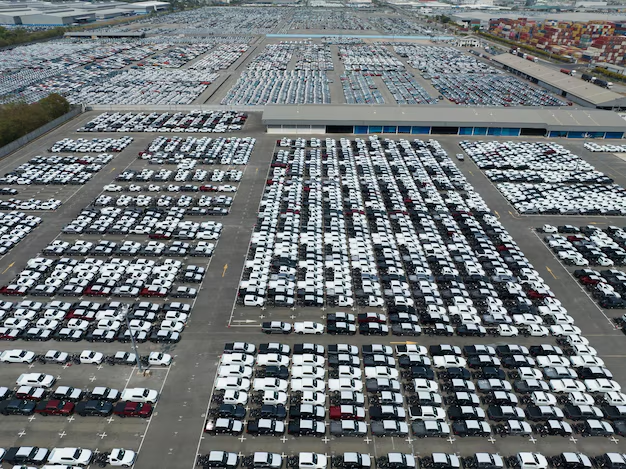
Car Lots in Atlanta: Where to Shop, What to Expect, and How to Get a Good Deal
If you’re looking for car lots in Atlanta, you have no shortage of options—from massive new-car dealerships along I‑285 to small used lots tucked into neighborhoods like Decatur, Marietta, and South Atlanta. The key is knowing which type of lot fits your needs, how to compare them, and what to watch for under Georgia’s rules and Atlanta’s local market.
This guide walks through how car lots work in Atlanta, where they tend to be clustered, and practical steps to shop confidently whether you live here, just moved to the city, or are flying in to buy a car.
Main Types of Car Lots in Atlanta
Atlanta has a mix of new, used, and specialty car lots. Knowing the difference helps you narrow your search quickly.
1. Franchise New-Car Dealerships
These are the large dealerships selling new vehicles from a specific manufacturer (Honda, Toyota, Ford, etc.), usually with a big service center on-site.
Common characteristics:
- Location patterns:
- Along I‑85, I‑285, and major corridors like Cobb Parkway, Peachtree Industrial Blvd, and Buford Highway
- Clusters in suburbs like Sandy Springs, Doraville, Marietta, Gwinnett, and along the Cobb Galleria area
- Inventory: New cars, certified pre-owned (CPO), lease returns, plus some regular used cars taken on trade.
- Pros:
- Manufacturer-backed warranties on new and CPO vehicles
- Access to recalls and official service
- More consistent vehicle history documentation
- Cons:
- Prices usually run higher than independent used lots
- Add-ons and fees can increase the final cost
These lots are best if you want new or nearly new vehicles, prefer CPO, or want long-term service support in or near Atlanta.
2. Independent Used Car Lots
Independent used car dealers are all over the Atlanta metro area, from Fulton and DeKalb out to Clayton and Cobb.
Typical traits:
- Location examples (general areas, not specific lots):
- South Atlanta / Jonesboro Rd / Metropolitan Pkwy
- Buford Highway corridor
- Moreland Ave SE and Memorial Dr areas
- Around Marietta, Norcross, Forest Park, and Morrow
- Inventory: Wide range—from inexpensive older sedans to trucks and SUVs, sometimes luxury trade-ins.
- Pros:
- Lower prices and more room for negotiation
- Better options for buyers with limited budgets
- Many are familiar with Atlanta commuters’ needs (e.g., long I‑75 / I‑85 drives)
- Cons:
- Vehicle condition and reconditioning quality can vary
- Warranties may be short or limited, if available at all
Independent lots are useful if you want a budget-friendly car, are open to higher mileage, or want something specific (like an older truck) that big dealers may not stock.
3. “Buy Here, Pay Here” (BHPH) Lots
These lots finance the car directly instead of sending you to a separate lender. They are common in various parts of metro Atlanta, including South Atlanta, South DeKalb, and South Cobb.
Key features:
- On-lot financing: Payments go to the dealership, not a bank.
- Often no traditional credit check: They may focus on proof of income, residence, and down payment.
- Pros:
- Option for people with no credit or damaged credit
- Faster approvals, often same-day decisions
- Cons:
- Higher interest rates and total cost of ownership
- Strict payment schedules (weekly or biweekly are common)
- Vehicles may be older with higher mileage
If you’re using a BHPH lot in Atlanta, pay close attention to interest, total price, repossession terms, and any GPS/kill switch devices mentioned in the contract.
4. Specialty and Niche Car Lots
Atlanta also has specialty lots focused on:
- Luxury and performance cars (often in Buckhead, Alpharetta, Sandy Springs, and near Cobb Parkway)
- Trucks and work vehicles (common along industrial corridors and near airport-area businesses)
- Electric vehicles (EV-focused dealers and mainstream dealers with EV sections)
These lots may offer more tailored expertise, but pricing can reflect niche demand.
Where Car Lots Are Commonly Found Around Atlanta
While car lots exist across the metro, certain corridors and pockets have especially high concentrations. Use these areas as starting points when shopping:
| Area / Corridor | What You’ll Mostly Find | Why It’s Helpful |
|---|---|---|
| I‑85 North / Doraville / Norcross | New + used imports, volume dealers | Large inventories, competitive pricing |
| Cobb Pkwy / I‑75 (Marietta���Kennesaw) | New-car franchises, trucks, used lots | Easy to compare multiple dealers in one trip |
| Buford Highway | Independent used lots, imports | Wide price range, good for budget shoppers |
| Moreland Ave SE / Memorial Dr | Independent used, BHPH, budget lots | Options for lower down payments |
| South Atlanta / Jonesboro Rd / Forest Park | BHPH, used-car clusters | Concentrated in-town and southside options |
| Buckhead / Sandy Springs | Luxury, high-end used, EVs | Premium inventory and specialty vehicles |
When driving to these zones, plan for Atlanta traffic—peak congestion on I‑75/I‑85, I‑285, and GA‑400 can add a lot of time to what looks like a short trip on the map.
What You Need to Buy a Car at an Atlanta Lot
Car lots across metro Atlanta tend to ask for similar basics, especially if you’re financing.
Common Requirements
Most dealers will want:
- Valid driver’s license (Georgia or out-of-state if you’re just visiting)
- Proof of income (pay stubs, bank statements, or benefits documentation)
- Proof of residence (utility bill, lease, or similar)
- Down payment (amount varies widely by vehicle and lender)
- Insurance information (especially if you’re driving the car off the lot that day)
For out-of-state buyers visiting Atlanta, ask ahead about:
- Temporary tags
- Whether they can handle title work for your home state
- Any extra documentation needed (for example, proof of address in your home state)
Title, Registration, and Tags in Atlanta (Fulton County and Beyond)
After you buy a car at an Atlanta car lot, you’ll need to handle title and registration through your county’s tag office. Car lots often submit some paperwork, but responsibility ultimately falls on you to ensure it is completed.
Fulton County (City of Atlanta Residents)
If you live in the City of Atlanta within Fulton County, the primary local resource is:
- Fulton County Tax Commissioner – Motor Vehicle Division
- Main Office (Downtown Atlanta area):
141 Pryor Street SW, Suite 1085
Atlanta, GA 30303
Phone: 404‑613‑6100
- Main Office (Downtown Atlanta area):
Fulton also has additional tag offices (e.g., in Sandy Springs, South Fulton). Locations and hours can change, so it’s best to call ahead.
Other Atlanta-Area Counties
Depending on where you live in the metro, you’ll use your local county tag office:
DeKalb County Tax Commissioner – Motor Vehicle Division
4380 Memorial Dr, Suite 100
Decatur, GA 30032Cobb County Tax Commissioner – Motor Vehicle
700 South Cobb Dr SE
Marietta, GA 30060Clayton County Tax Commissioner – Motor Vehicle
121 South McDonough St
Jonesboro, GA 30236Gwinnett County Tax Commissioner – Tag Office (Main)
750 South Perry St
Lawrenceville, GA 30046
Most county tag offices allow you to:
- Transfer title into your name
- Register the vehicle and get a Georgia license plate
- Pay Title Ad Valorem Tax (TAVT)
Always bring:
- Bill of sale or buyer’s order
- Title signed over to you
- Georgia driver’s license (or acceptable ID, if applicable)
- Proof of Georgia insurance
- Any forms provided by the dealer
Emissions Testing and Car Lots in Metro Atlanta
In the 13-county Atlanta emissions area, many 1999–newer gasoline-powered cars must pass annual emissions testing before registration renewal. This includes Fulton, DeKalb, Cobb, Gwinnett, and Clayton counties, among others.
How This Affects Buying from a Car Lot
- Dealers often sell cars with a recent emissions certificate if they know you’ll need it. Ask to see it.
- If the car fails emissions after purchase and the sale agreement promised a “pass,” you may have leverage to request repairs or reconsideration depending on your contract.
- When buying an older or high-mileage vehicle, factor in potential emissions repairs—especially common on vehicles driven hard in city traffic.
You can find emissions testing stations throughout Atlanta; many are along major corridors and near gas stations in neighborhoods like Decatur, Smyrna, East Point, and Norcross.
Tips for Comparing Car Lots in Atlanta
Because there are so many car lots in Atlanta, comparison is essential.
1. Look Beyond the Sticker Price
Ask for a written breakdown of:
- Vehicle price
- Dealer fees (documentation, electronic filing, etc.)
- Title and registration fees
- Optional add-ons (extended warranties, service plans, GAP insurance)
Some Atlanta dealers heavily advertise a low price but add large documentation or “reconditioning” fees at signing. Review all numbers before signing anything.
2. Check Vehicle History and Condition
Atlanta’s climate is usually easier on vehicles than areas with heavy snow and salt, but there are still risks:
- Flood damage:
- Heavy rains, storms, and flooding in metro Atlanta can affect vehicles.
- Look for musty smells, water lines, rust in odd places, and ask if the dealer has a vehicle history report.
- City wear and tear:
- Stop-and-go traffic on the Downtown Connector and local streets can cause extra brake and transmission wear.
- Inspect tires and brakes carefully.
👀 Ask for:
- A third-party pre-purchase inspection at a mechanic you choose (many shops in Atlanta offer this for a flat fee).
- Any service records the dealer has on the vehicle.
3. Evaluate Financing Options
In the Atlanta market, you’ll often have multiple financing choices:
- Dealer-arranged financing (through banks/credit unions they work with)
- Pre-approved loans from your own bank or a local credit union
- BHPH in-house financing
To compare:
- Focus on APR, loan term, and total amount paid, not just the monthly payment.
- Be wary if a dealer only talks about “What can you pay per month?” without showing the full breakdown.
4. Consider Commute and Use Case
Traffic and geography matter in Atlanta. Ask yourself:
- Will you commute daily on I‑75/I‑85, I‑20, or GA‑400?
- A more fuel-efficient, comfortable highway car may be worth extra.
- Do you live in intown neighborhoods like Midtown, Inman Park, or West End?
- A smaller car can be easier to park and navigate.
- Do you work in construction, film production, or trades around Hartsfield‑Jackson or industrial areas?
- A truck or van lot near those zones may offer vehicles better suited to heavy use.
How to Spot Red Flags at Atlanta Car Lots
Most dealers operate within Georgia law, but you still should protect yourself.
Watch for:
- Incomplete paperwork: Missing title details, seller signatures, or unclear sales conditions.
- Pressure to “sign now or lose the deal” without time to read documents.
- Refusal to allow an independent inspection.
- Inconsistent stories about the car’s history.
- “As-is” used cars where the dealer won’t allow you to even test drive the vehicle on city streets.
If you feel uncomfortable, there are plenty of other car lots in the Atlanta area; you are not limited to one.
What If You Have a Problem After Buying?
If an issue arises with a car you purchased at an Atlanta lot, there are a few local resources that can help you understand your options:
- Georgia Department of Law – Consumer Protection Division
2 Martin Luther King Jr. Dr SE, Suite 356
Atlanta, GA 30334
Phone: 404‑651‑8600
They can provide guidance on consumer rights and how to file a complaint if you believe a dealer acted improperly.
For title and registration disputes (for example, if the dealer doesn’t provide paperwork in a reasonable time), your county tag office can often clarify what’s missing and what steps you can take.
Practical Step-by-Step Plan for Shopping Car Lots in Atlanta
To make use of Atlanta’s many car lots without getting overwhelmed:
- Define your budget and needs.
- Price range, vehicle size, new vs. used, mileage limits.
- Choose 1–2 areas of the city to shop.
- For example: I‑85 North dealers one day, Buford Highway used lots another day.
- Call ahead.
- Confirm that specific cars you see listed are still available and ask about fees and financing.
- Visit multiple lots in the same area.
- This lets you compare options without driving all over metro Atlanta in heavy traffic.
- Test drive on real Atlanta roads.
- Include highway, stop‑and‑go, and hills where possible.
- Get an independent inspection on any used car you’re serious about.
- Review all financing terms and dealer fees before signing.
- Complete title, registration, and emissions at your county tag office as soon as possible after purchase.
By using the clusters of car lots in and around Atlanta strategically and understanding how Georgia’s title, registration, and emissions rules work, you can navigate the city’s car market with confidence—whether you’re buying your first car here or upgrading for a new Atlanta commute.