
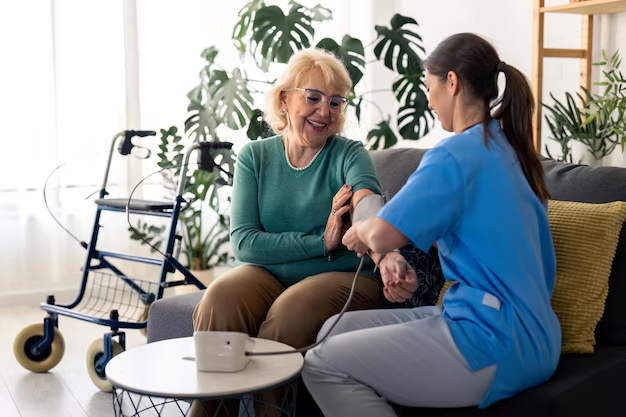
Atlanta Home Care: How In‑Home Support Works in Atlanta, Georgia
Finding the right home care in Atlanta can feel overwhelming, especially if you’re making decisions for an aging parent, a family member with a disability, or yourself after an illness or surgery. Atlanta offers many options, but the systems (and price tags) can be confusing if you’re not familiar with how care works here.
This guide walks through how home care works in Atlanta, the main types of services, costs and payment options, key local resources, and practical steps to choose and manage care.
What “Home Care” Means in Atlanta
In Atlanta, people often say “home care” to describe several different services. It helps to sort them into two broad categories:
1. Non‑medical home care (personal & companion care)
This is what most people mean when they say home care:
- Help with bathing, dressing, grooming
- Assistance with toileting and incontinence care
- Meal prep, light housekeeping, and laundry
- Companionship, conversation, and supervision
- Transportation to appointments, errands, and social activities
- Medication reminders (but not complex medical management)
These services are usually provided by caregivers or personal care aides, not nurses. They’re designed to help someone stay safely at home and remain as independent as possible.
Services may be:
- Hourly, a few times a week
- Daily, for several hours
- Live‑in or 24‑hour care in some situations
2. Home health care (skilled medical care at home)
This is medical, short‑term, and typically ordered by a doctor. In Atlanta, home health care may include:
- Skilled nursing (wound care, injections, monitoring conditions)
- Physical, occupational, or speech therapy
- Post‑surgery or post‑hospitalization recovery support
- Monitoring of serious or chronic medical conditions
Home health agencies are licensed and often bill Medicare, Medicaid, or private insurance if the person meets criteria. These visits are usually intermittent rather than ongoing all‑day care.
Common Home Care Situations in Atlanta
People in Atlanta typically explore home care when:
- An older adult in Buckhead, Decatur, or Sandy Springs wants to age in place instead of moving to assisted living.
- A family caregiver in South Atlanta or East Point needs help a few days a week to avoid burnout.
- Someone is discharged from Grady Memorial Hospital, Emory University Hospital, Northside Hospital, or Piedmont Atlanta and needs help at home during recovery.
- A person with a disability needs long‑term in‑home support through Medicaid or state waiver programs.
Understanding which situation applies helps you decide whether you primarily need non‑medical home care, home health, or a combination of both.
Types of Home Care Services Available in Atlanta
Personal care & companion care
These services focus on daily living and social support:
- Bathing, showering, and grooming assistance
- Dressing and undressing
- Help moving around the home or transferring from bed to chair
- Meal planning, cooking, and feeding support if needed
- Light housekeeping and organizing
- Companionship, games, and conversation
- Safety checks for people living alone
These services are common in neighborhoods across the metro area—from Midtown condos to single‑family homes in Southwest Atlanta.
Respite care for family caregivers
If you’re the primary caregiver, respite care provides temporary help so you can:
- Rest or sleep
- Work outside the home
- Handle your own appointments
- Take a short trip
Respite can be:
- A few hours at a time
- Overnight
- A short multi‑day stretch
Some respite options in Atlanta are funded through state aging services or veteran programs, especially for caregivers of older adults or people with disabilities.
Live‑in and 24‑hour care
For individuals who cannot be safely left alone—such as those with advanced dementia or significant mobility issues—some agencies in the Atlanta area offer:
- Live‑in caregivers who sleep in the home and provide care during waking hours.
- Round‑the‑clock shifts, with different caregivers rotating over 24 hours.
These services can be costly but may still be less disruptive than moving into a facility, especially for people with strong ties to their Atlanta neighborhoods.
Specialized dementia or Alzheimer’s care
In Atlanta, many non‑medical home care agencies train caregivers to support:
- Memory loss and confusion
- Behavior changes or agitation
- Wandering and safety concerns
- Structured, calming routines
Families in areas like Druid Hills, Westside, or East Atlanta may choose in‑home dementia care if a loved one becomes distressed in unfamiliar environments.
Post‑surgery and short‑term recovery care
After procedures like joint replacement or heart surgery at an Atlanta hospital, people often arrange:
- Home health care (skilled nursing, therapy)
- Non‑medical support (help with showering, meal prep, errands)
Coordinating both can make discharge from the hospital smoother and reduce stress at home.
Who Provides Home Care in Atlanta?
You’ll typically encounter three main options:
1. Licensed home care agencies
These are businesses that:
- Hire and manage caregivers
- Handle payroll, taxes, and scheduling
- Provide some level of training and supervision
- Are licensed by the Georgia Department of Community Health (for certain service types)
Benefits:
- Easier for families who want less administrative responsibility
- Often have backup caregivers if someone is sick
- May help with care planning and coordination
2. Independent caregivers
These are individuals you might find through:
- Word of mouth
- Community boards
- Online classifieds or social platforms
Families who hire independently usually:
- Handle pay, taxes, and scheduling themselves
- Need to conduct background checks and reference checks
- Should clarify tasks, hours, and expectations in writing
Some Atlanta families choose this path to closely select their caregiver or manage costs, but it involves more work and responsibility.
3. Publicly funded aides (through Medicaid or VA programs)
Certain Medicaid waivers and veterans’ programs may pay for in‑home support. In these cases:
- The caregiver may be assigned through an approved agency, or
- Some programs allow self‑directed care, where you may help choose your caregiver (sometimes even a family member, depending on rules).
These programs are administered at the state and regional level but serve residents throughout metro Atlanta.
Costs of Home Care in Atlanta
Costs vary widely depending on:
- Type of care (non‑medical vs. medical)
- Hours per week
- Level of skill and experience
- Agency vs. independent caregiver
To give a general sense (not a quote or guarantee):
| Type of Service | How It’s Usually Charged | Notes in Atlanta Context |
|---|---|---|
| Non‑medical home care (agency) | Hourly, often a minimum per visit | Rates can differ across metro counties and by shift time. |
| Independent caregivers | Hourly (negotiated) | May be lower than agencies but with more employer responsibilities. |
| Home health (skilled care) | Billed to Medicare/Medicaid/insurance when eligible | Often limited to specific visits per week and ordered by a physician. |
| Live‑in or 24‑hour support | Daily or flat 24‑hour rate | Typically one of the most expensive options. |
Because prices and policies change, many families in Atlanta:
- Call several agencies to compare typical hourly rates
- Ask if there are minimum hours per shift
- Clarify evening, weekend, or holiday rate differences
How to Pay for Home Care in Atlanta
1. Out‑of‑pocket (private pay)
Many Atlanta families pay directly, using:
- Personal savings
- Help from family members
- Retirement funds
This is especially common for non‑medical home care, which is often not covered by traditional health insurance.
2. Medicare
Important distinctions:
- Medicare does NOT cover long‑term non‑medical home care just for help with daily tasks.
- Medicare may cover home health care (nurse or therapist visits) if:
- A doctor orders it
- The person meets “homebound” and medical necessity criteria
- An approved home health agency provides the care
Atlanta hospitals and doctors’ offices frequently refer to local Medicare‑certified home health providers when needed.
3. Georgia Medicaid & waiver programs
For low‑income adults and people with disabilities in Atlanta, Medicaid and specific waivers can help with in‑home services.
Key programs to know:
SOURCE (Service Options Using Resources in a Community Environment)
Long‑term care program coordinating in‑home services for adults with disabilities and older adults who qualify.CCSP (Community Care Services Program)
Offers services like personal care, adult day health, and respite to help older or disabled adults remain in the community instead of entering a nursing home.
Eligibility and enrollment are managed by the Georgia Department of Community Health and regional partners.
4. Veterans’ benefits
Veterans living in Atlanta may qualify for:
- VA Aid and Attendance (an enhanced pension benefit) to help pay for caregivers
- VA‑provided or VA‑contracted home care and home health services
- Respite and in‑home support for caregivers of eligible veterans
Local contact:
- Atlanta VA Medical Center
1670 Clairmont Road, Decatur, GA 30033
Main phone: 404‑321‑6111
Veterans or spouses can ask about home and community‑based services and caregiver support options.
5. Long‑term care insurance
If you or a family member has a long‑term care policy:
- Review the policy for home care or home health coverage
- Ask what documentation is required (care plan, invoices, care notes)
- Confirm any waiting periods, daily caps, and benefit limits
Key Atlanta‑Area Resources for Home Care Information
Here are some official and widely used resources that can help you plan and navigate home care in Atlanta:
Atlanta Regional Commission – Aging & Independence Services
The Atlanta Regional Commission (ARC) serves as the Area Agency on Aging for much of metro Atlanta. It can:
- Provide information on home- and community‑based services
- Explain CCSP, SOURCE, and other Georgia programs
- Connect you with local providers and support resources
ARC Aging & Independence Services
229 Peachtree Street NE, Suite 100
Atlanta, GA 30303
Main line: 404‑463‑3333
Ask for the Aging and Disability Resource Connection (ADRC) for guidance.
Georgia Division of Aging Services
State‑level resource for older adults and caregivers, including:
- Information on community care programs
- Elder rights and protective services
- Caregiver support resources
Central contact (for routing to local help):
Georgia Division of Aging Services
2 Peachtree Street NW, Suite 33.384
Atlanta, GA 30303
Main phone: 404‑657‑5258
Fulton County & DeKalb County Senior Services
If the person needing care lives in Atlanta city limits, they may reside in Fulton or DeKalb County. Both counties have senior services departments that can:
- Offer or coordinate in‑home services for eligible residents
- Provide information on transportation, meals, and senior centers
Examples:
Fulton County Senior Services
141 Pryor Street SW, Suite 3030
Atlanta, GA 30303
Main line: 404‑613‑6000DeKalb County Office of Aging
30 Warren Street, Atlanta, GA 30317
Main line: 770‑322‑2950
Georgia Department of Community Health (DCH)
Oversees licensing and Medicaid waiver programs.
Georgia Department of Community Health
2 Peachtree Street NW
Atlanta, GA 30303
Main phone: 404‑656‑4507
You can ask about:
- Medicaid long‑term services
- Waiver programs that provide in‑home care
- How to find licensed home health or home care providers
How to Choose a Home Care Provider in Atlanta
When you’re ready to start calling providers, here’s a practical process:
Step 1: Clarify your needs
Write down:
- What help is needed (bathing, meals, walking, medication reminders, transportation)
- What days and hours are realistic
- Any language, cultural, or religious preferences
- Whether you also need skilled medical care (nursing, therapy)
Being specific helps agencies in Atlanta give clear answers.
Step 2: Decide on agency vs. independent caregiver
Consider:
- How much time you have to manage schedules and payroll
- Your comfort with interviewing and vetting someone yourself
- Whether you want a backup plan if the caregiver is sick
- Budget realities
Many Atlanta families start with agencies for structure, then sometimes shift to other arrangements as needs and finances evolve.
Step 3: Ask targeted questions
When you call potential providers, ask:
Licensing & oversight
- Are you licensed in Georgia, and if so, for what types of service?
- How are caregivers screened (background checks, references)?
Staffing
- What training do caregivers receive?
- Can we meet or speak with the caregiver in advance?
- How do you handle no‑shows or emergencies?
Costs & billing
- What is your hourly rate, and is there a minimum number of hours per visit?
- Are there extra fees for nights, weekends, or holidays?
- How is billing handled (weekly, monthly)?
Care process
- Do you create a written care plan?
- How do you communicate with family members?
- Can the schedule or tasks be adjusted as needs change?
Take notes and compare answers across multiple agencies.
Step 4: Check references and reviews thoughtfully
In Atlanta, families often:
- Ask for three references (if possible) from current or recent clients
- Speak directly to other family caregivers when they can
- Look for patterns in feedback, not isolated comments
Remember that online reviews can be helpful but incomplete; direct conversations tend to provide more context.
Step 5: Start with a trial period
Many people in Atlanta:
- Begin with a shorter schedule (e.g., a few days a week) to see how it goes
- Reassess after a couple of weeks
- Adjust hours or caregivers based on the person’s comfort and needs
This can reduce stress and help you fine‑tune the arrangement.
Making Home Safer for Care in Atlanta
Whether you live in an older house in West End or a modern high‑rise in Midtown, it’s worth making the home safer before or as care begins:
Simple safety upgrades:
- Remove or secure loose rugs and clutter to reduce falls
- Install grab bars in the bathroom and near the shower/tub
- Consider shower chairs and non‑slip mats
- Ensure good lighting in hallways and near stairs
- Keep essential items (medications, frequently used dishes) within easy reach
Transportation & access:
- Plan how the person will get to appointments in downtown Atlanta, Emory, Northside, or other locations:
- Family driving
- Caregiver driving
- MARTA or paratransit (for people with disabilities)
- If parking or stairs are tricky in older neighborhoods, discuss this with the caregiver in advance.
Coordinating Home Care with Atlanta Health Providers
To make home care work smoothly:
- Inform doctors: Let primary care doctors and specialists know that home care is in place. They may suggest specific tasks or precautions.
- Request summaries: After hospital stays at places like Grady, Emory, Piedmont, or Northside, ask for clear discharge instructions to share with the caregiver or home health nurse.
- Use one point of contact: Many Atlanta families choose one person (often a local relative) to coordinate communication between:
- The person receiving care
- Family/decision‑makers (local and out‑of‑state)
- Home care agency or caregiver
- Doctors and clinics
When Home Care May Not Be Enough
Sometimes, even with good home care, staying at home safely in Atlanta becomes difficult. Signs might include:
- Frequent falls or near‑falls
- Wandering outside and getting lost
- Increasing agitation or aggression
- Medical needs that become too complex for caregivers at home
At that point, families often explore:
- Assisted living or memory care
- Adult day health programs for daytime supervision
- Nursing home care for intensive medical needs
The Atlanta Regional Commission (404‑463‑3333) and county senior services offices are useful starting points for discussing alternatives if you think home care might not be enough.
By understanding how Atlanta home care works—what services exist, how they’re funded, and which local organizations can guide you—you can make more confident, practical decisions for yourself or your loved one. If you’re unsure where to start, a call to the Atlanta Regional Commission’s Aging and Disability Resource Connection or your county senior services office is often the most direct first step.