
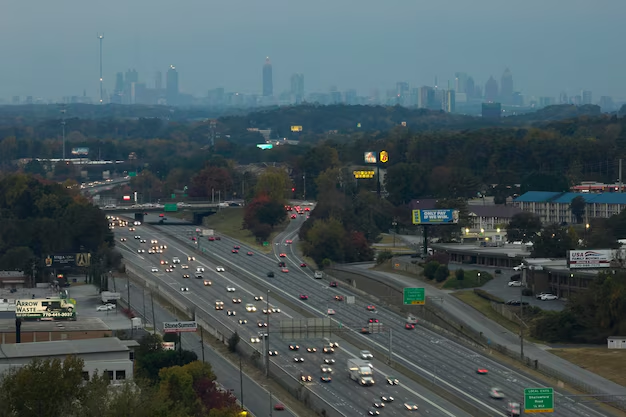
Navigating the Downtown Connector in Atlanta: What Locals and Visitors Need to Know
The Downtown Connector is one of the most recognizable—and sometimes intimidating—stretches of highway in Atlanta, Georgia. If you live here, commute through downtown, or you’re visiting and planning to drive, understanding how the Downtown Connector works can make your trip smoother and less stressful.
This guide breaks down what the Connector is, how it’s laid out, when it’s busiest, and practical tips for safely getting around Atlanta using this major route.
What Is the Downtown Connector in Atlanta?
The Downtown Connector is the name commonly used for the section where Interstate 75 (I‑75) and Interstate 85 (I‑85) merge and run together through Downtown Atlanta.
- It runs roughly from Brookwood (near the I‑75/I‑85 junction by Midtown) south to around I‑20 near the Capitol and Mercedes‑Benz Stadium.
- On maps and road signs, it’s usually labeled I‑75/85.
- Locals often just say “the Connector” when referring to this segment.
It’s one of the busiest roadways in the region, carrying downtown commuters, through traffic, and visitors heading to major attractions.
Key Landmarks Along the Downtown Connector
As you travel the Connector, you pass many of Atlanta’s most important destinations:
Near or visible from the Connector:
- Mercedes‑Benz Stadium (home of the Falcons and Atlanta United)
- State Farm Arena
- Georgia World Congress Center
- Georgia State Capitol
- Georgia State University (GSU) campus
- Georgia Tech (just west of the Midtown portion)
- World of Coca‑Cola and Georgia Aquarium (a short drive from exits)
- Centennial Olympic Park
If you’re driving into downtown to attend a game, concert, convention, or campus visit, there’s a good chance you’ll use the Downtown Connector at some point.
Basic Layout: Northbound vs. Southbound
The Connector can feel confusing, especially where exits are close together. Here’s a simple overview.
Northbound (Heading from South Atlanta Toward Midtown/Buckhead)
When you’re going northbound on the Downtown Connector:
- You’ll pass key exits for:
- Central Avenue / Courtland Street
- Martin Luther King Jr. Drive / Georgia State Capitol
- Williams Street / Ivan Allen Jr. Blvd (access to attractions like the Aquarium and World of Coca‑Cola)
- 10th Street / 14th Street (Midtown)
- After Midtown, I‑75 and I‑85 split:
- I‑75 North heads toward Cobb County, Marietta, and Kennesaw.
- I‑85 North heads toward Brookhaven, Chamblee, and Gwinnett County.
Southbound (Heading from Midtown/Buckhead Toward Downtown and Airport)
When driving southbound:
- I‑75 and I‑85 merge north of Midtown and become the Downtown Connector.
- You’ll find exits that serve:
- 17th Street / 10th Street / 14th Street (Midtown access)
- North Avenue (Georgia Tech, Ponce area)
- Courtland Street / Piedmont Avenue / Andrew Young International Blvd
- Williams Street / Spring Street / Centennial Olympic Park Drive
- Simon Bolivar Drive / Fulton Street / Capitol Ave (Capitol & stadiums)
- After passing the I‑20 junction:
- I‑75 South continues toward Hartsfield‑Jackson Atlanta International Airport, Morrow, and McDonough.
- I‑85 South continues toward East Point, Union City, and Newnan.
Typical Traffic Patterns on the Downtown Connector
The Downtown Connector is famous for congestion. Knowing when and where it slows down can help you plan.
Busiest Times
Traffic conditions can change, but drivers often experience the heaviest congestion:
- Weekday mornings: roughly 6:30 a.m. – 9:30 a.m.
- Weekday evenings: roughly 3:30 p.m. – 7:00 p.m.
- Event days: Evening and weekend surges around big events at:
- Mercedes‑Benz Stadium
- State Farm Arena
- Georgia World Congress Center
Heavy rain, crashes, work zones, and sporting events can make backups last longer.
Common Bottleneck Areas
Drivers frequently see slowdowns:
- Near the I‑75/I‑85 merge north of Midtown
- Around North Avenue and 10th/14th Street exits
- Near the Georgia State Capitol and I‑20 interchange
- Approaches to major exits serving stadiums and arenas
Because exits can be close together, last‑second lane changes are common—and risky—so planning your lane position early is important.
Using the Downtown Connector to Reach Popular Destinations
Here’s a simplified look at how the Connector relates to some major spots in Atlanta.
| Destination/Area | Nearest General Connector Area | Typical Access (Check Signs Locally) |
|---|---|---|
| Downtown business district | Central Connector near Courtland / Peachtree | Courtland St, Peachtree St, Andrew Young Int’l Blvd |
| Mercedes‑Benz Stadium / State Farm Arena | Southwest of Downtown core | Northside Dr, Martin Luther King Jr Dr, Spring St |
| Georgia State Capitol / Gov’t buildings | Central‑South part of Connector near I‑20 | Capitol Ave, MLK Jr Dr, Memorial Dr |
| Georgia State University | Around Courtland St and Central Ave | Courtland St, Piedmont Ave, Jesse Hill Jr Dr |
| Midtown (shops, dining, arts) | North Connector near 10th/14th St | 10th St, 14th St, Spring St, West Peachtree St |
| Georgia Tech | Just west of Midtown Connector | 10th St, 14th St, North Ave |
| Airport (via I‑75 South) | South of downtown, off I‑75 | I‑75 South to domestic/international terminal exits |
Always check current signage as ramp configurations can be updated due to construction or redesign projects.
Safety Tips for Driving the Downtown Connector
Because of the volume of traffic, lane changes, and varying speeds, the Downtown Connector requires extra attention.
1. Plan Your Exit Before You Get On
- Know which exit you need before you enter the Connector.
- Use a navigation app ahead of time so you’re not making last‑second lane changes.
- In the downtown and Midtown stretches, exits come quickly and in succession.
2. Watch for Speed Changes
Traffic can shift from fast‑moving to stop‑and‑go within a short distance. To stay safer:
- Keep a generous following distance.
- Avoid constant lane‑hopping; pick a reasonable lane early and stay alert.
- Be extra cautious in wet weather and near work zones.
3. Use the Right Lanes for Exiting
- Right lanes are typically used for exits to downtown streets.
- If you’re passing through and not exiting in central Atlanta, staying in the middle lanes can sometimes feel smoother, but always follow signs for your route (I‑75 vs. I‑85).
4. Be Mindful of Trucks and Buses
There’s frequent commercial and bus traffic on the Connector:
- Avoid lingering in blind spots.
- Give large vehicles plenty of room to merge or change lanes.
Alternatives to the Downtown Connector
If you’d rather avoid the Connector or it’s heavily congested, there are alternatives within Atlanta.
Surface Street Alternatives
Depending on where you’re headed, you might be able to use:
- Peachtree Street / West Peachtree Street / Spring Street (Midtown to Downtown)
Good for local travel between Midtown, Downtown, and connector‑adjacent neighborhoods. - Northside Drive
Often used to reach stadiums, Georgia Tech, and some west‑of‑downtown areas. - Piedmont Avenue / Courtland Street
Useful for Georgia State and central downtown access.
These streets have traffic lights and urban congestion, but some drivers prefer them to highway congestion during peak times.
Public Transit Options (MARTA)
To avoid driving the Connector entirely, many residents and visitors use MARTA, which serves downtown and Midtown directly.
Key MARTA rail stations near areas commonly accessed from the Connector:
- Peachtree Center Station – core of Downtown business district.
- Five Points Station – transfer hub for all rail lines.
- Dome/GWCC/State Farm Arena/CNN Center Station – near stadiums and convention center.
- Georgia State Station – close to GSU and state offices.
- Midtown Station and North Avenue Station – good for Midtown, Georgia Tech access, and nearby businesses.
MARTA’s administrative offices are typically based near downtown; for system maps or fare info, riders usually rely on MARTA’s website or station kiosks.
What to Know About Construction and Closures
The Downtown Connector regularly undergoes maintenance, repairs, and improvement projects. These can affect:
- Lane closures (often nights or weekends)
- Reduced speeds in active work zones
- Occasional ramp closures or detours
Before a major trip across the Connector—especially if you’re catching a flight or attending a time‑sensitive event—it helps to:
- Allow extra travel time.
- Check a real‑time traffic app for incidents or closures along I‑75/85 in Downtown Atlanta.
- Follow posted detour signs closely; ramp closures may redirect you onto surface streets before you expect them.
If You Have an Incident on the Downtown Connector
Breakdowns or crashes on the Connector can be stressful, but Atlanta has some support systems in place.
HERO/CHAMP Units
Georgia’s HERO (Highway Emergency Response Operators) and related patrols assisted by the Georgia Department of Transportation (GDOT) frequently respond to incidents on I‑75/85 in Atlanta. They help:
- Move disabled vehicles from live lanes when possible
- Provide basic roadside assistance (such as tire changes or fuel support in some cases)
- Increase visibility and safety around a crash or breakdown scene
If you’re involved in a minor crash with no injuries and your vehicle is drivable, it’s commonly encouraged in Georgia to move the vehicles to a safe nearby location rather than staying in live traffic lanes.
Key State Contacts (For Follow‑Up, Not Emergencies)
For non‑emergency questions about highways and road conditions, many Atlantans refer to:
- Georgia Department of Transportation (GDOT) – Atlanta Offices
One longstanding central office location is often listed as:
600 West Peachtree Street NW, Atlanta, GA 30308
Main public numbers and addresses can be confirmed on GDOT’s official channels.
For emergencies, drivers in Atlanta use 911.
Tips for Visitors Driving the Downtown Connector for the First Time
If you’re not used to Atlanta traffic, the Connector can feel overwhelming. A few practical tips:
- Practice your route on a map before you go, especially your exits.
- Avoid rush hour the first time you drive it if you can.
- Consider parking once near a MARTA station and using rail to move around Downtown and Midtown.
- If you’re arriving at Hartsfield‑Jackson Airport and staying in central Atlanta, compare:
- The time it would take to drive via I‑75/85
- Versus taking MARTA from the Airport Station into Downtown or Midtown
When the Downtown Connector Is the Best Option
Despite its reputation, the Downtown Connector remains:
- The fastest through‑route across central Atlanta during off‑peak times.
- The most direct access to many Downtown and Midtown exits.
- A key link between southern metro areas (Airport, Clayton County) and northern suburbs (Cobb, Gwinnett, North Fulton).
For many Atlanta residents, learning to use the Connector confidently—knowing the key exits, busy periods, and alternatives—makes daily life and travel around the city much easier.
By planning ahead, watching signs closely, and staying patient in heavy traffic, you can navigate the Downtown Connector in Atlanta more safely and with less frustration, whether you’re commuting every day or just passing through for a visit.