
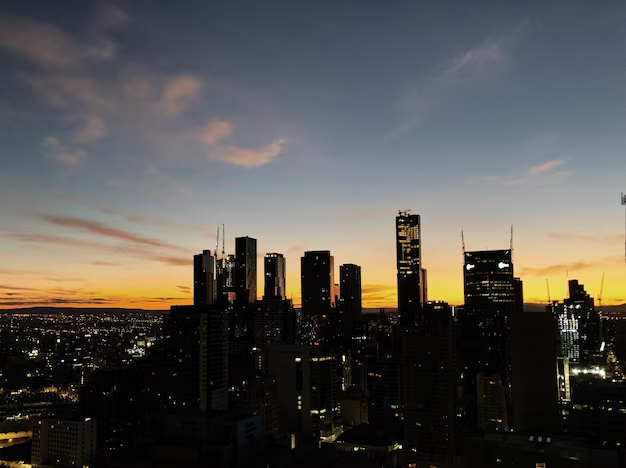
Atlanta, Georgia: A Local’s Guide to the City and How It Works
Atlanta, Georgia—often just called Atlanta or ATL—is a fast-growing city with distinct neighborhoods, major employers, a busy airport, and a unique mix of Southern history and modern urban life. Whether you live here, you’re planning a visit, or you’re trying to understand how the city works, it helps to see Atlanta from a local, practical point of view.
Below is a clear, Atlanta-focused guide to help you navigate the city’s layout, services, transportation, neighborhoods, and everyday logistics.
Getting Oriented: Where Atlanta, Georgia Fits in the Region
Atlanta is the capital of Georgia and the core of the Atlanta metropolitan area, sometimes called “Metro Atlanta” or “the Atlanta Region.”
Key points to know:
- City of Atlanta: A defined municipality with its own government, police, and services.
- Metro Atlanta: Includes multiple surrounding counties (like Fulton, DeKalb, Cobb, Gwinnett, and Clayton) that function as part of the broader “Atlanta area.”
- Downtown, Midtown, Buckhead: Often referred to as Atlanta’s primary business and activity centers, each with its own character and uses.
If you’re moving here, visiting, or doing business, it’s worth noting that a lot of places branded as “Atlanta” are technically in nearby cities or unincorporated areas but share the same regional identity.
City Government and Essential Local Services
Atlanta City Hall and Key Departments
If you need permits, city records, or to handle issues like water billing within city limits, you’ll usually deal with City of Atlanta offices.
Atlanta City Hall
55 Trinity Ave SW
Atlanta, GA 30303
Main line: 404-330-6000
Common reasons residents and visitors interact with city services:
- Water and sewer billing (for addresses served by the City of Atlanta Department of Watershed Management)
- Business licenses and certain permits
- Zoning and planning questions for properties inside city limits
- Municipal Court issues (traffic tickets, local ordinance violations)
Public Safety in Atlanta
For emergencies in Atlanta, residents and visitors use:
- Emergency: 911
- Non-emergency police line (City of Atlanta): Typically accessed through the Atlanta Police Department’s non-emergency number, which is listed on the city’s official site and local materials.
Atlanta is served primarily by:
- Atlanta Police Department (APD)
- Atlanta Fire Rescue Department
- Fulton County Sheriff’s Office and Fulton/DeKalb county agencies for certain court and jail matters, depending on jurisdiction
If you’re unsure which agency applies to you (for instance, if your address is “Atlanta” but you’re actually in Sandy Springs or Brookhaven), checking your county and city on your property tax record or lease is helpful.
Neighborhoods and Areas in Atlanta, Georgia
Atlanta is known for distinct neighborhoods, each offering something different for residents and visitors.
Central Business and Activity Districts
Downtown Atlanta
Home to major attractions like the Georgia Aquarium, Centennial Olympic Park, State Farm Arena, and government buildings. Popular for conventions and sports, with a dense, walkable core.Midtown
A hub for arts, tech, and business, anchored by Piedmont Park, the High Museum of Art, and many high-rise offices and condos. Very popular for young professionals and visitors who like walkability and nightlife.Buckhead
Historically known as an upscale area with major shopping districts and high-rise office and residential buildings. Many visitors know Buckhead for its hotels, dining, and retail options.
Intown Residential Neighborhoods
For people living in or moving to Atlanta, some frequently mentioned neighborhoods include:
- Virginia-Highland (Va-Hi) – Bungalow homes, local shops and restaurants, close to Piedmont Park and the BeltLine.
- Inman Park – Historic homes, walkable streets, close to the Atlanta BeltLine Eastside Trail.
- Old Fourth Ward (O4W) – Mix of historic and new development, home to places like Ponce City Market and sections of the BeltLine.
- Grant Park – Known for its historic homes and proximity to Zoo Atlanta and the city’s oldest park.
- West Midtown / Westside – Industrial-chic feel, many restaurants, creative spaces, and newer apartments/lofts.
Each area has its own feel, school districts (or zoned schools for Atlanta Public Schools), and types of housing, which is important if you’re deciding where to live within Atlanta proper.
Transportation in Atlanta: Getting Around the City
MARTA: Trains and Buses
MARTA (Metropolitan Atlanta Rapid Transit Authority) is the core public transit system serving large parts of Atlanta and some surrounding areas.
Key MARTA features:
- Rail system with major stations in Downtown (Five Points), Midtown (Midtown, Arts Center), Buckhead, and at Hartsfield-Jackson Atlanta International Airport.
- Bus routes that connect neighborhoods to rail stations and employment centers.
- Park-and-ride lots in multiple locations throughout the region.
If you’re flying in or out of Atlanta, you can usually take MARTA directly from the airport to central destinations like Downtown, Midtown, or Buckhead without needing a car.
Driving and Highways
Atlanta is famously car-dependent in many areas, with multiple major interstates:
- I-75 / I-85 (the “Downtown Connector”) running north–south through central Atlanta
- I-20 running east–west
- I-285, the perimeter highway circling much of Metro Atlanta
Typical local experiences:
- Rush hour congestion, especially on the Downtown Connector and along I-285.
- Heavy traffic near major event venues, including Mercedes-Benz Stadium, State Farm Arena, and Georgia World Congress Center.
Residents often plan around traffic patterns, using surface streets, adjustable work hours, or MARTA to avoid peak gridlock.
Walking, Biking, and the BeltLine
The Atlanta BeltLine is a developing network of multi-use trails circling much of the intown area, repurposed from old rail corridors.
For residents and visitors:
- Popular for walking, biking, scooters, and jogging.
- Connects neighborhoods like Inman Park, Old Fourth Ward, Virginia-Highland, Midtown, and the Westside.
- Lined with parks, public art, and access to shops and restaurants.
If you’re staying in central Atlanta and enjoy walking or biking, choosing accommodations near one of the BeltLine segments can make the city feel more accessible without a car.
Hartsfield-Jackson Atlanta International Airport
Atlanta is served by Hartsfield-Jackson Atlanta International Airport (ATL), one of the world’s busiest airports.
Airport location:
South of Downtown Atlanta, in the cities of Atlanta and College Park, with direct access from I-85 and MARTA’s Airport Station on the Red/Gold rail lines.
Why this matters for you:
- Visitors can usually reach Midtown or Downtown in about 20–30 minutes by MARTA train under typical conditions.
- Residents frequently use ATL for both domestic and international flights, so access to MARTA or major highways can be a deciding factor in where to live.
Schools and Education in Atlanta
Public School Systems
Within the city limits of Atlanta, most K–12 public schools are operated by Atlanta Public Schools (APS).
APS central office (commonly referenced location):
130 Trinity Ave SW
Atlanta, GA 30303
Key details:
- School zones depend on your home address.
- Intown Atlanta residents may have options like neighborhood schools, charter schools, or magnet programs depending on their location and eligibility criteria.
- Neighborhood choice is often influenced by school preferences, so checking your specific address against APS zoning is a common step for families moving to Atlanta.
In Metro Atlanta, areas labeled “Atlanta” on mail but outside the city may fall under:
- Fulton County Schools
- DeKalb County School District
- Cobb County School District
- Gwinnett County Public Schools, and others
Always verify both your county and city to understand which system applies.
Higher Education
Atlanta is a significant college and university hub, which affects the city’s culture, housing, and job market.
Some well-known institutions within or very near the city include:
- Georgia State University (Downtown Atlanta)
- Georgia Institute of Technology (Georgia Tech) (Midtown)
- Emory University (Druid Hills area, close to Atlanta city limits)
- Spelman College, Morehouse College, Clark Atlanta University (Atlanta University Center, west of Downtown)
Students and staff add to demand for housing and transit around these campuses, especially in Midtown, Downtown, and Westside neighborhoods.
Jobs, Business, and Economy in Atlanta
Atlanta is a major regional economic center, with many large companies and industries choosing to operate here.
Notable sectors:
- Corporate headquarters and regional offices (including Fortune 500 presence)
- Film and television production, often using locations across Atlanta and nearby counties
- Logistics and transportation, taking advantage of ATL Airport and major interstates
- Technology and startups, especially clustered in Midtown and West Midtown
If you’re moving to Atlanta for work, you’ll often be commuting to:
- Downtown / Midtown / Buckhead business districts
- Perimeter business centers (e.g., Sandy Springs, Dunwoody) reachable via MARTA rail and major highways
This makes proximity to MARTA stations, highways, or flexible commute options a key factor in neighborhood choice.
Housing and Living in Atlanta, Georgia
Types of Housing
Within Atlanta city limits, housing ranges from:
- Historic single-family homes in neighborhoods like Grant Park, Inman Park, and West End.
- Newer townhomes and condos throughout intown areas.
- High-rise apartments and condos concentrated in Midtown, Buckhead, and parts of Downtown.
- Loft-style units in redeveloped industrial areas, especially in West Midtown and Old Fourth Ward.
Nearby suburbs and “near-Atlanta” cities (e.g., Decatur, Sandy Springs, Brookhaven) offer a different mix of single-family homes, apartments, and townhomes with varied tax structures and school systems.
Cost Considerations
Common local factors that affect cost:
- Inside vs. outside city limits – City of Atlanta residents may pay city-specific taxes and fees but also gain access to Atlanta Public Schools and city services.
- Walkable intown locations near the BeltLine, MARTA, or major job centers usually carry a premium.
- Parking costs or limited on-street parking in denser, popular neighborhoods.
When people say they “live in Atlanta,” they may mean:
- Inside the City of Atlanta itself
- In a nearby city within the metro area (e.g., Marietta, Smyrna, East Point) that’s part of the broader “Atlanta” region
Clarifying this distinction is helpful for services, taxes, and schools.
Parks, Recreation, and Culture in Atlanta
Major Parks and Green Spaces
Some of the most prominent parks in and near Atlanta include:
- Piedmont Park – Large central park in Midtown, often compared to a “central park” for Atlanta; popular for festivals, sports, and everyday recreation.
- Grant Park – Historic park in southeast Atlanta, home to Zoo Atlanta.
- Atlanta BeltLine parks and trails – Smaller parks and trail segments connecting multiple neighborhoods.
- Chastain Park (Buckhead area) – Includes an amphitheater, sports facilities, and trails.
Residents often choose neighborhoods based on access to parks and BeltLine segments if they value walking, biking, or dog-friendly spaces.
Arts, History, and Attractions
Atlanta offers a mix of historic sites and modern attractions, especially in or near the city center:
- Martin Luther King Jr. National Historical Park in Old Fourth Ward/Sweet Auburn area
- Atlanta History Center (Buckhead area)
- High Museum of Art (Midtown)
- Georgia Aquarium and World of Coca-Cola (Downtown)
For visitors staying a few days, basing yourself in Downtown or Midtown typically provides the easiest access to many of these destinations, especially if you’re using MARTA or rideshare.
Basic Everyday Logistics for Atlanta Residents and Visitors
Mailing and “Atlanta, GA” Addresses
You’ll see “Atlanta, GA” used in many mailing addresses that are both:
- Inside the City of Atlanta, and
- Outside the city, but still in the region and using “Atlanta” as a preferred or acceptable postal city
To verify your actual city and county (important for taxes, schools, voting, and services), you may need to:
- Check your property tax bill or lease
- Look up your address using your county tax assessor or voter registration tools
Utilities and Services
Inside the City of Atlanta, common local experiences include:
- Water and sewer: Often billed by the City of Atlanta Department of Watershed Management for addresses they serve.
- Electricity: Provided in much of the area by large utility companies that cover broad regions across Georgia.
- Trash and recycling: Typically managed by the City of Atlanta Department of Public Works for homes in Atlanta city limits; in other parts of Metro Atlanta, private haulers or county governments may handle collection.
For new residents, calling both the city (if within Atlanta) and your county can help clarify who serves your address.
Voting and Civic Participation
If you live in Atlanta, your local civic life may be split among:
- City of Atlanta government (for mayor, city council, municipal issues)
- County government (Fulton, DeKalb, or others depending on your address)
- State of Georgia (for statewide elections and services)
Polling locations and districts are tied to where you live, so confirming your exact address, city, and county is essential for accurate information.
Quick Reference: Key Atlanta, Georgia Essentials
| Topic | What to Know in Atlanta, GA |
|---|---|
| Government | City of Atlanta City Hall at 55 Trinity Ave SW; separate from surrounding cities/counties. |
| Public Safety | 911 for emergencies; Atlanta Police & Fire serve city limits; county agencies also involved. |
| Transit | MARTA rail and buses connect Airport, Downtown, Midtown, Buckhead, some suburbs. |
| Airport | Hartsfield-Jackson ATL, south of Downtown; MARTA station inside the airport. |
| Neighborhoods | Intown areas like Midtown, O4W, Inman Park, Grant Park, Westside, Buckhead, Va-Hi. |
| Schools (K–12) | Atlanta Public Schools in city; various county systems in Metro Atlanta. |
| Parks & Recreation | Piedmont Park, Grant Park, BeltLine trails, Chastain Park, multiple neighborhood parks. |
| Housing | Mix of historic homes, townhomes, mid/high-rise apartments and condos, especially intown. |
Atlanta, Georgia is both a specific city with defined services and neighborhoods and the heart of a much larger metro area that operates as a single economic and cultural region. Understanding how the city fits within Metro Atlanta—how government, transit, housing, schools, and daily life actually work on the ground—can help you choose where to live, how to get around, and how to make the most of your time in Atlanta.