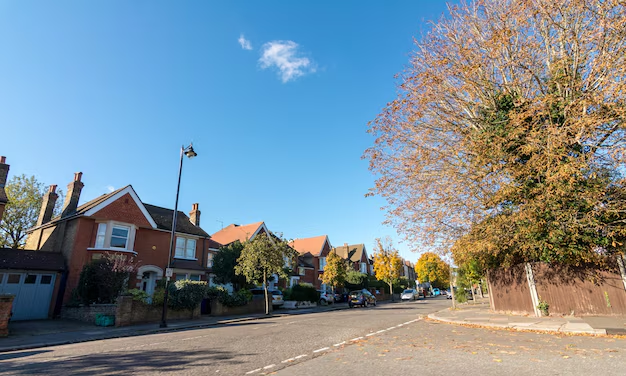
Collier Heights is one of Atlanta’s most historically significant and tight-knit neighborhoods. Located on the city’s west side, it combines deep civil rights history with the feel of a quiet, established residential community.
If you live in Atlanta, are thinking about moving here, or just want to understand what Collier Heights, Atlanta, Georgia is really like, this guide walks through the essentials: location, history, housing, lifestyle, schools, transportation, and what to expect day to day.
Collier Heights is in northwest Atlanta, in Fulton County, within the City of Atlanta limits.
General boundaries (approximate):
You’ll often hear Collier Heights mentioned alongside other nearby westside neighborhoods such as:
From Collier Heights, you’re typically:
Collier Heights stands out as one of the first planned, middle-class Black suburban neighborhoods in the United States. This history is central to its identity and why it’s often highlighted in conversations about Atlanta’s west side.
Starting in the 1950s and 1960s, Collier Heights became home to:
Many residents were active in Atlanta’s civil rights movement and local politics. The neighborhood came to symbolize upward mobility for Black families in an era of segregation and discrimination.
Because of its architectural character and social history, Collier Heights has been recognized as a historic neighborhood. This historic identity influences how residents think about:
If you are planning to buy, renovate, or build in Collier Heights, it’s worth understanding that many locals value preserving the midcentury character of the area.
Despite changes around Atlanta, Collier Heights still feels like a quiet, residential neighborhood with strong community roots.
Expect:
People in Atlanta often describe Collier Heights as one of those places where neighbors:
Housing is one of the main reasons people explore Collier Heights. The neighborhood offers a mix of affordability (relative to some intown areas) and larger lots with mature trees.
You’ll see mostly mid-20th-century single-family homes, including:
These homes typically sit on larger lots than many newer intown developments, which appeals to families, gardeners, and anyone who prefers more space.
While specific prices change over time and should be checked through a local real estate professional or listing service, Collier Heights is usually:
If you’re shopping for a home in Collier Heights, be prepared for:
Like much of Atlanta’s west side, safety perceptions can vary block by block and person by person. Residents tend to emphasize community involvement as a key strength.
Neighborhood life often includes:
If you move here, you can usually plug in by:
Residents in Collier Heights, like many other Atlanta neighborhoods, often focus on:
For non-emergency concerns, people typically contact:
Collier Heights is in the Atlanta Public Schools (APS) system. School zones can change, so residents are usually advised to confirm details directly with APS, but in general:
Commonly associated schools in the broader area include:
Because boundaries and offerings can shift, Atlanta families typically:
In addition to APS, families in and around Collier Heights sometimes consider:
For questions, residents often start with:
Collier Heights is positioned with quick access to major roadways, and some transit options, but daily commute experience depends on where in Atlanta you’re going.
Common routes include:
Typical car trips (subject to traffic):
Residents often rely on:
From Hamilton E. Holmes Station, you can reach:
If you’re considering living in Collier Heights and planning to depend on transit, many locals recommend:
Collier Heights itself is largely residential, but you’ll find green spaces and amenities nearby that serve residents of the neighborhood.
Within a short drive, residents often use:
These offer space for:
For groceries and errands, residents typically head to:
Expect a mix of:
For more extensive dining and shopping, many Collier Heights residents drive to:
As part of the City of Atlanta, Collier Heights residents interact with city and county agencies for daily services.
Common city services that cover Collier Heights include:
For city-related questions:
Because Collier Heights is in Fulton County, residents typically rely on the county for:
Fulton County main contact:
| Topic | What to Know About Collier Heights, Atlanta, GA |
|---|---|
| Location | West/northwest Atlanta, Fulton County, inside city limits |
| Character | Historic Black middle-class neighborhood with a suburban feel |
| Housing | Mainly midcentury single-family homes, ranch and split-level styles |
| History | One of the first planned Black suburbs; strong civil rights ties |
| Commute | Quick car access to I-20, I-285; bus and rail via nearby MARTA |
| Community | Long-time residents, active neighborhood involvement |
| Schools | Served by Atlanta Public Schools; zones should be verified directly |
| Services | Covered by City of Atlanta and Fulton County government agencies |
For someone in Atlanta, Collier Heights tends to appeal if you:
If you’re considering a move, a typical next step is to:
For Atlanta-area residents, Collier Heights represents an important chapter in the city’s history and continues to function as a solid, community-oriented neighborhood on the west side.