
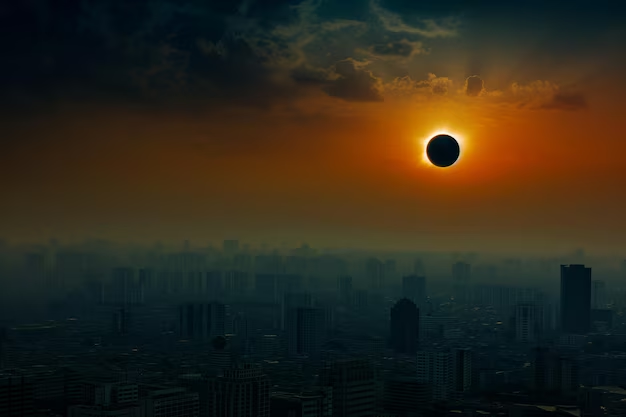
Experiencing an Eclipse in Atlanta, Georgia: What Locals and Visitors Should Know
A solar or lunar eclipse in Atlanta, Georgia is more than just an astronomical event—it can affect how you plan your day, where you go, and what you’ll see in the city’s sky. Whether you live in Atlanta, are visiting, or are planning ahead for a future eclipse, it helps to understand what to expect locally and how to view it safely.
This guide focuses on how eclipses work specifically for Atlanta, where to watch, how to stay safe, and how to make the most of an eclipse day in the city.
Types of Eclipses You Can See in Atlanta
From Atlanta, you may experience several kinds of eclipses over time:
Solar eclipses
A solar eclipse happens when the Moon passes between the Earth and the Sun. In Atlanta, you might see:
- Total solar eclipse – The Moon completely covers the Sun; day briefly looks like dusk. Atlanta is not often directly in the path of totality, but nearby states sometimes are.
- Partial solar eclipse – Only part of the Sun is covered. This is the most common type visible from Atlanta.
- Annular eclipse – The Moon appears slightly smaller, leaving a “ring of fire” around it. Atlanta is more likely to see these as partial rather than full annular events.
Lunar eclipses
A lunar eclipse occurs when the Earth’s shadow falls on the Moon. From Atlanta’s night sky, this can look like:
- Total lunar eclipse – The Moon turns a reddish color (often called a “blood moon”).
- Partial lunar eclipse – Only part of the Moon looks darkened.
- Penumbral eclipse – A subtle shading on the Moon that can be harder to notice from city locations with light pollution.
When Can You See Eclipses in Atlanta?
Eclipses follow predictable paths across the Earth, and Atlanta does not get total solar eclipses frequently. However, the city regularly experiences:
- Partial views of major solar eclipses that cross North America.
- Lunar eclipses visible from most places in the metro area, assuming the sky is clear.
To find the next eclipse visible from Atlanta, you can:
- Check major astronomy websites and planetarium calendars.
- Look at forecast maps that show how much of the Sun will be covered in Atlanta (e.g., 40%, 70%, etc.).
- Follow regional media and local science institutions in the months leading up to widely publicized eclipses.
Because Atlanta’s weather can be unpredictable—especially with clouds and summer storms—it’s wise to:
- Note the time window, not just the peak time.
- Have a few potential viewing spots in mind to avoid local cloud cover if you’re willing to drive a short distance.
Where to Watch an Eclipse in Atlanta
You can often see an eclipse from a backyard or balcony, but Atlanta has several types of locations that can enhance the experience.
1. Science and educational venues
These places often host special eclipse-themed activities, public talks, or group viewing events:
Fernbank Science Center
156 Heaton Park Dr NE, Atlanta, GA 30307
Known for astronomy programs and public telescope nights. Around eclipse dates, they may offer educational sessions or viewing guidance.Fernbank Museum of Natural History
767 Clifton Rd, Atlanta, GA 30307
Sometimes offers science programming tied to major celestial events, including family-friendly activities.Tellus Science Museum (Cartersville, north of Atlanta)
100 Tellus Dr, Cartersville, GA 30120
Outside the city but popular among Atlanta-area residents. Often highlights major sky events with special programs.
Before an eclipse, it’s worth checking schedules or calling ahead to see if a public viewing or talk is planned.
2. City parks and open spaces
Atlanta’s tree canopy is beautiful—but it can also block your view of the sky. For a clear vantage point, consider:
- Piedmont Park – Wide open fields with clear horizons, especially near the Meadow or the Active Oval.
- Historic Fourth Ward Park – Some open sightlines that work well for sky viewing.
- Grant Park – Larger clearings where you can set up a chair and watch.
- Westside Park – Newer park with some broad open areas and views.
✅ Tip: For a solar eclipse, you’ll want a spot where the Sun is visible above trees and buildings during the event hours. Check where the Sun sits in the sky around that time in the days leading up to the eclipse.
3. Rooftops and elevated locations
Some Atlantans prefer rooftop decks or parking garages for better sightlines:
- High decks in Midtown or Downtown can offer wide sky views.
- Parking decks near Georgia Tech, downtown office buildings, or apartment complexes sometimes provide unobstructed horizons.
If you use private or semi-private rooftops, make sure:
- You have permission to be there.
- You follow all safety rules and avoid crowded or unsafe edges.
How Weather and Light Pollution Affect Viewing in Atlanta
Atlanta’s climate and city lighting both affect eclipse visibility.
Weather considerations
- Cloud cover is the main issue. Afternoon thunderstorms are common in warmer months.
- Spring and fall eclipses may offer clearer skies, but conditions always vary.
- For a morning or midday solar eclipse, watch the forecast the day before. Some Atlantans will drive 30–90 minutes out of the city to find clearer skies in North Georgia if necessary.
Light pollution
- Solar eclipses are rarely impacted by light pollution since they occur during daylight.
- Lunar eclipses, however, can be harder to appreciate in brightly lit parts of the city like Downtown or Buckhead.
- For a richer view of a lunar eclipse, many residents head to darker areas on the outskirts of the metro, such as:
- Outer parts of Cobb, Cherokee, Henry, or Paulding counties.
- Rural spots in North Georgia if you are willing to drive farther.
Safety: Viewing an Eclipse Without Damaging Your Eyes
The most important thing Atlanta residents and visitors should understand about solar eclipses is eye safety.
Never look directly at the Sun without protection
Even when the Sun is mostly covered by the Moon, the remaining visible light can seriously damage your eyes.
Do:
- Use certified solar eclipse glasses that meet accepted safety standards.
- Use solar filters on telescopes, binoculars, and camera lenses specifically designed for eclipse viewing.
- Practice putting on and taking off eclipse glasses before the event, especially with kids.
Do NOT:
- Look at the Sun through regular sunglasses, smoked glass, or camera lenses without a solar filter.
- Look through binoculars or a telescope without appropriate filters—this can concentrate the light and be far more dangerous.
Safe indirect viewing methods
If you don’t have eclipse glasses, you can use indirect methods that are commonly recommended:
- Pinhole projector – A simple card with a small hole that projects the Sun’s image onto a flat surface.
- Leaf shadows – During a partial eclipse, small gaps in tree leaves naturally project crescent Sun shapes on the ground.
These are easy to set up in Atlanta parks, schoolyards, or backyards and are especially popular with families and school groups.
How Atlanta Schools, Workplaces, and Public Spaces May Adapt
For large, well-publicized eclipses, daily routines in Atlanta can shift slightly.
Schools and universities
Atlanta-area schools sometimes:
- Adjust outdoor recess or sports schedules.
- Incorporate eclipse viewing into science lessons with proper eye protection.
- Send messages to parents about safety guidelines.
Colleges and universities in the Atlanta area, such as those in Midtown and Decatur, may host public or campus-specific viewing events with telescopes and guided commentary.
Workplaces
Some Atlanta offices:
- Organize short outdoor breaks so employees can step outside with eclipse glasses.
- Use rooftop decks or courtyards for brief viewing gatherings.
- Remind employees to prepare with protective eyewear if they plan to watch.
If you work in a downtown or Midtown building, check in advance whether your company or building management has any viewing plans or policies.
Traffic and crowds
If an eclipse is especially notable:
- Parks and popular viewpoints may be more crowded than usual.
- Major roads leading out of the city (toward areas in the path of totality, if applicable) can see heavier traffic before and after the event.
If you intend to drive out of Atlanta to a prime viewing location, plan:
- Extra travel time.
- Fuel, water, and snacks in case of slow traffic.
- Return routes that avoid bottlenecks when everyone is leaving at once.
Family-Friendly Eclipse Activities in Atlanta
Eclipses can be a memorable learning experience for kids and families in Atlanta.
Some activity ideas:
- Visit a local science center in the days before the eclipse to build excitement and background knowledge.
- Have children help make pinhole projectors at home or in a park.
- Keep a sky journal – Kids can draw what the Sun or Moon looks like at different stages.
- Take advantage of local library or community center programs if they offer eclipse-themed story times or craft sessions.
Many Atlanta-area libraries and schools sometimes distribute eclipse glasses around major events, so it can be useful to check announcements weeks in advance.
Practical Planning Checklist for an Eclipse Day in Atlanta
Use this simple reference to prepare:
| Task / Consideration | What to Do in Atlanta |
|---|---|
| Find eclipse time for Atlanta | Check local media, science centers, or planetarium-style resources for exact timing. |
| Choose a viewing location | Pick a park, rooftop, or open area with clear skies and a good horizon. |
| Get safe viewing gear | Obtain certified eclipse glasses or solar filters; prepare pinhole projectors. |
| Watch the weather | Check cloud forecasts the day before; consider alternate spots if needed. |
| Plan transport & timing | Leave early if going to popular parks or out of town; expect possible delays. |
| Consider kids & groups | Bring snacks, water, and simple activities; review safety rules with children. |
| Capture memories safely | Use proper solar filters if photographing; don’t stare through an unfiltered lens. |
Local Resources and Contacts That Can Help
If you want more information about upcoming eclipses and sky events specific to Atlanta, consider:
Fernbank Science Center
156 Heaton Park Dr NE
Atlanta, GA 30307
Phone: (404) 875-9431Fernbank Museum of Natural History
767 Clifton Rd
Atlanta, GA 30307
Phone: (404) 929-6300Local parks and recreation departments
City of Atlanta Department of Parks and Recreation and surrounding county park systems can share details on any organized eclipse events at major parks.Local libraries
Fulton County, DeKalb County, and other metro-area library systems often provide educational programming or information displays for major astronomical events.
Living in or visiting Atlanta gives you many opportunities to experience eclipses with a mix of city convenience and educational support. By planning ahead, choosing a good viewing spot, and protecting your eyes, you can enjoy the next eclipse over Atlanta, Georgia safely and memorably.