
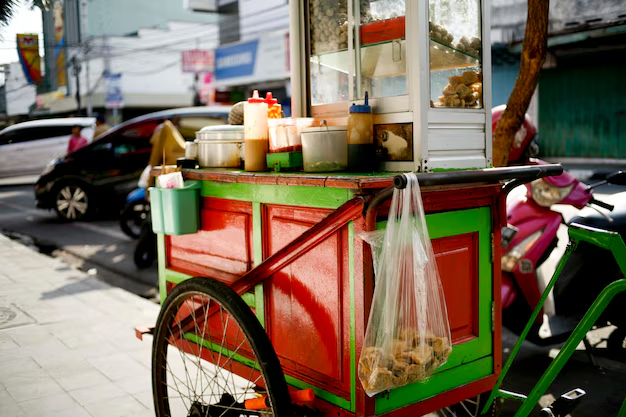
How To Open a Food Cart in Atlanta, Georgia: Step‑by‑Step Guide
Launching a food cart in Atlanta can be a smart way to test a concept, build a following, and tap into the city’s strong street food and festival scene. But Atlanta (and Georgia) have very specific rules about mobile food units, permits, and where you can legally operate.
This guide walks you through, step by step, how to open a food cart in Atlanta, what agencies you’ll deal with, and how to avoid common roadblocks.
1. Understand What Counts as a “Food Cart” in Atlanta
Before anything else, you need to know how local regulators classify your business, because the rules and fees depend on it.
In Georgia and the Atlanta area, you’ll typically see terms like:
- Mobile Food Service Unit (MFSU) – A fully self-contained unit (often a truck or trailer) that can move from place to place and prepare food.
- Pushcart / Food Cart – A smaller cart that may need support from a separate base of operation (commissary kitchen) for water, storage, and cleaning.
- Temporary Food Service – Short-term operations at festivals, fairs, or special events.
If you’re planning a small cart pulled by hand that serves items like hot dogs, tacos, coffee, or snacks, you’re usually looking at the pushcart / cart category. However, rules can vary between the City of Atlanta and Fulton/DeKalb County health departments, so your first step is to clarify your classification with the county health department where your base kitchen will be located.
2. Choose Your Concept and Cart Setup
Regulation aside, you need a clear, realistic concept that fits Atlanta’s environment and rules.
Key decisions for your Atlanta food cart
- Menu type:
- Simple, low-risk foods (hot dogs, prepackaged snacks, coffee, shaved ice, pre-wrapped baked goods) are generally easier to get approved for a cart.
- More complex menus (raw meats, seafood, made-to-order dishes) usually demand more equipment and stricter review.
- Cart design and equipment:
- Handwashing sink with hot and cold water (often required).
- Proper refrigeration if you handle perishable foods.
- Overhead covering if the cart is outdoors.
- Storage for utensils, single-use items, and cleaning supplies.
- Power and water source:
- Will you rely on commissary water tanks, or does your cart have its own system?
- Battery, generator, or plug-in power?
A simpler menu and cart setup often makes it easier to get health approval and to operate in varied locations throughout Atlanta.
3. Pick a Base of Operation (Commissary Kitchen)
In the Atlanta area, most food carts are required to have a licensed base of operation, often called a commissary kitchen. This is where you:
- Store food and supplies
- Wash utensils and equipment
- Dump wastewater
- Fill potable water tanks
- Do any prep work not allowed on the cart
You cannot typically use your home kitchen as a base for a mobile food cart.
What counts as a commissary in Atlanta?
Common options include:
- Shared or commercial kitchens
- Existing restaurants willing to host you
- Catering kitchens or food production facilities
The commissary must:
- Have a valid health department permit
- Be located in the county health district that will oversee your cart
- Sign a commissary agreement or base of operation letter that you’ll submit with your mobile unit paperwork
Because Atlanta is split between Fulton County and DeKalb County, your commissary location affects which health department you work with.
4. Register Your Business in Georgia
Before you get local permits, you’ll need to set up your business on the state level.
Basic steps to register your business
Choose a business structure
Common options in Atlanta:- Sole proprietorship
- LLC (popular for liability protection)
- Corporation
Register with the Georgia Secretary of State (if required)
LLCs and corporations are typically filed with:- Georgia Secretary of State – Corporations Division
2 Martin Luther King Jr. Dr. SE
Floyd West Tower, Suite 313
Atlanta, GA 30334
Phone: (404) 656-2817
- Georgia Secretary of State – Corporations Division
Get an EIN
Most businesses will obtain a Federal Employer Identification Number (EIN) for tax and banking purposes.Open a business bank account
This helps you keep tax and expense tracking separate from personal finances.
5. Get a City of Atlanta Business License (Occupational Tax Certificate)
If you’re operating your food cart within the City of Atlanta limits, you generally need an Occupational Tax Certificate (often called a business license).
You’ll typically go through the City’s business permitting process, which may involve:
- Business registration forms
- Zoning verification (to ensure your planned operations are allowed)
- Paying an annual occupational tax based on gross receipts or a flat minimum
Atlanta’s business licensing process is usually handled through the city’s finance or revenue office, or via an online portal. Be prepared to provide:
- Business name and structure
- Owner information
- Federal EIN (if applicable)
- Estimated Atlanta-based revenue
If you plan to operate your cart in surrounding cities (Decatur, Sandy Springs, etc.), confirm their local business license requirements as well.
6. Obtain Health Department Approval and a Food Service Permit
For any food cart in Atlanta, health department approval is one of the most important steps.
Which health department will you deal with?
That depends on your base of operation (commissary) location:
Fulton County Board of Health – for commissaries in Fulton County, including most of the City of Atlanta west of the DeKalb line.
Common contact location:
Fulton County Board of Health – Environmental Health
10 Park Place South SE
Atlanta, GA 30303
Phone: (404) 613-1303 (main line – ask for Environmental Health)DeKalb County Board of Health – for commissaries in DeKalb County, including some eastern parts of Atlanta.
Common contact location:
DeKalb County Board of Health – Environmental Health
445 Winn Way, Suite 320
Decatur, GA 30030
Phone: (404) 508-7900
These offices oversee Food Service Permits for Mobile Units and Pushcarts.
Typical health permitting steps
While the exact process can change, you can usually expect:
Plan Review
- Submit cart layout, equipment list, and menu.
- Submit your commissary agreement.
- Show how you will handle:
- Food storage
- Hot/cold holding
- Handwashing and sanitation
- Wastewater disposal
Mobile Unit / Pushcart Application
- A specific application form for mobile/temporary food service units.
- Application fees.
Inspection
- A health inspector checks your cart and commissary setup.
- They verify temperatures, sinks, equipment, and food safety procedures.
Permit Issuance
- Once approved, you receive a Food Service Establishment Permit (or mobile food permit) that you must display on your cart.
Health permits are usually not transferable; if you sell your cart or change ownership, a new permit is typically required.
7. Food Safety Training and Manager Certification
Atlanta-area health departments often require at least one person associated with the food operation to have a Certified Food Safety Manager credential recognized in Georgia.
You may need:
- A ServSafe Manager or similar accredited certification.
- Proof of certification available during inspections or on the cart.
Even if not strictly required for every worker, having at least one certified manager involved in your food cart makes permitting smoother and helps you run a safer operation.
8. Zoning, Location Rules, and Where You Can Park Your Cart
Getting your cart permitted is only half the battle. You also have to follow local zoning and location rules in Atlanta.
Common Atlanta location considerations
Sidewalk vending – Selling on sidewalks or public right-of-way may be restricted, and may require a specific vending permit from the City of Atlanta or not be allowed at all in some areas.
Private property – Many cart owners set up on:
- Parking lots
- Outside office buildings
- Near shopping centers
- On brewery or bar patios (with permission)
In these cases, you typically need:
- Written permission from the property owner or manager
- Compliance with any zoning and parking regulations
Downtown and Midtown Atlanta – These areas can have special rules or restrictions on street vending, congestion, and food carts.
Near schools, parks, or public facilities – Some locations limit vending near entrances or in certain zones.
Because Atlanta’s zoning code is detailed, it’s smart to contact the city’s planning or zoning office (or check with the business license office) and clearly explain:
- That you’re operating a food cart/mobile food unit
- Where you intend to park or operate
- Whether you’ll move throughout the day or stay in a fixed spot
9. Operating at Atlanta Events, Festivals, and Farmers Markets
Many new food carts in Atlanta start by selling at events and markets before locking down a daily location.
Common event-based options
- Street festivals and neighborhood events (Inman Park, Old Fourth Ward, Grant Park, etc.)
- Farmers markets around the metro area
- Concerts or brewery events
For these settings, you may need:
- A temporary event permit or vendor permit from:
- The event organizer
- The City of Atlanta
- The local health department (for temporary food service)
- Proof of:
- Health department food service permit
- Liability insurance
- Business license
Many event organizers in Atlanta will clearly list their vendor requirements and fees. Your existing mobile food permit may cover you, but some events also require event-specific health department notification or forms, so verify this well before the event date.
10. Insurance and Risk Management
Operating a food cart in a busy city like Atlanta carries risks: foodborne illness claims, injuries around the cart, or equipment damage.
Common insurance types for Atlanta food carts include:
- General liability insurance – Covers bodily injury and property damage claims.
- Product liability – Often part of general liability, related to the food you serve.
- Commercial auto insurance – If you tow or transport the cart with a vehicle.
- Property/equipment coverage – For the cart itself, equipment, and supplies.
Event organizers and property owners in Atlanta frequently require proof of insurance and may ask to be added as an additional insured on your policy.
11. Budgeting: Typical Cost Categories for an Atlanta Food Cart
Actual costs vary widely, but it helps to understand where your money will go.
Common cost categories
| Cost Category | What It Covers |
|---|---|
| Cart purchase/build-out | Cart, equipment, sinks, refrigeration, signage |
| Commissary fees | Monthly rent for shared kitchen or base of operation |
| Business registration | State registration, EIN (no cost), any legal fees |
| City license / occupational tax | City of Atlanta business license and related fees |
| Health department permits | Plan review, mobile unit permit, inspections |
| Insurance | Liability, property, maybe commercial auto |
| Supplies and inventory | Food, packaging, utensils, cleaning supplies |
| Utilities and fuel | Propane, gas for generators or transport, ice, etc. |
| Marketing and branding | Logo, menu boards, basic advertising or social media assets |
Planning these costs realistically helps you set menu prices that work in Atlanta’s market.
12. Day-to-Day Operating Rules in Atlanta
Once your cart is open, you must follow ongoing requirements to stay compliant.
Typical expectations include:
- Keep your permits visible on the cart.
- Maintain temperature control:
- Hot foods at safe temperatures
- Cold foods properly refrigerated
- Consistent handwashing using your onboard sink.
- No food prep that isn’t allowed on the cart (some items must be prepped at the commissary only).
- Wastewater disposal only at your commissary or approved locations.
- Regular commissary use:
- Many health departments require you to return to your base of operation daily or as specified.
- Health inspections:
- Your cart may be inspected unannounced by the county health department while operating anywhere in their jurisdiction.
If you plan to operate your cart in multiple counties around Atlanta, verify whether you need additional permits or recognition from each county’s health department.
13. Practical Tips for Success in Atlanta’s Food Cart Scene
A few Atlanta-specific considerations can make your food cart more successful and easier to manage:
Plan for Georgia weather
Summers in Atlanta are hot and humid; you’ll need:- Reliable refrigeration
- Shade and hydration for yourself and staff
- Contingency plans for afternoon thunderstorms
Target high-foot-traffic zones
Popular areas include:- Near MARTA stations
- Around office clusters (Downtown, Midtown, Buckhead)
- Outside event venues and parks (when allowed)
Always comply with local rules and property permissions.
Align hours with local patterns
- Morning coffee and breakfast near commuter routes.
- Lunch in office-heavy areas.
- Evenings near nightlife, breweries, or event spaces.
Build relationships with property owners
Many successful Atlanta carts operate on private lots with long-term agreements. Clear communication and reliability go a long way.Stay on top of renewals and rule changes
Local regulations can change. Keep in contact with:- Your county Environmental Health office
- The City of Atlanta business licensing office
to stay updated.
14. Quick Action Checklist for Opening a Food Cart in Atlanta
Use this as a high-level roadmap:
- Define your concept and menu (lean toward simpler, cart-friendly items).
- Find and secure a commissary kitchen in Fulton or DeKalb County.
- Confirm with the local health department how your cart will be classified.
- Register your business with the State of Georgia and get an EIN.
- Apply for a City of Atlanta business license (if operating in city limits).
- Submit plans and applications for a mobile food service permit to the appropriate county health department.
- Complete any required food safety manager training.
- Purchase/build and equip your cart to meet health code standards.
- Schedule and pass your health inspection for the cart and commissary.
- Secure insurance that meets landlord and event requirements.
- Secure locations or event bookings within Atlanta and nearby areas.
- Open for business, keep permits current, and follow daily food safety and commissary requirements.
By working step by step through these Atlanta-specific requirements, you can move from idea to an operational food cart that’s properly licensed, inspected, and ready to serve customers across the city.