
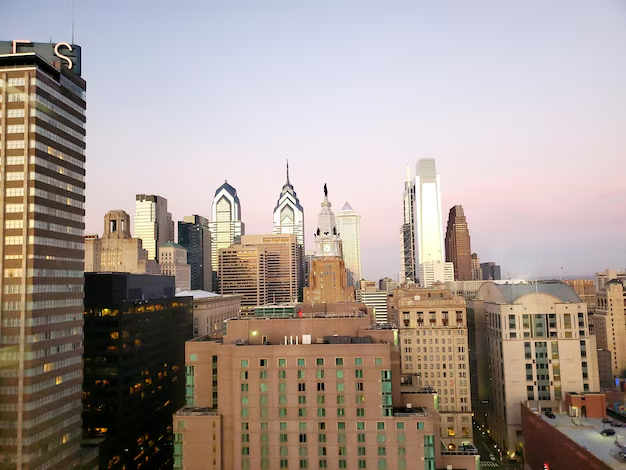
Best Places To Go in Atlanta, Georgia: A Local’s Guide to the City
Atlanta packs a lot into its neighborhoods, from world-class attractions to quiet parks, historic sites, and food destinations. Whether you live here, you’re planning a visit, or you’re trying to understand what makes Atlanta, Georgia unique, this guide walks through some of the best places to go and how to make the most of them.
Big-Name Attractions You Shouldn’t Skip
These are the places people usually picture when they think of things to do in Atlanta. They’re popular for a reason and are especially useful if you’re short on time.
Centennial Olympic Park & the Downtown “Attraction Cluster”
Downtown Atlanta offers a cluster of attractions you can walk between:
Centennial Olympic Park – 265 Park Ave W NW
A central green space with fountains, playgrounds, and skyline views. Great as a “home base” between attractions or a picnic stop.Georgia Aquarium – 225 Baker St NW
Known for large marine exhibits and kid-friendly touch zones. Expect lines on weekends and school holidays; early morning visits are usually calmer.World of Coca-Cola – 121 Baker St NW
A museum-style attraction covering the brand’s history, memorabilia, and tasting room. Good for 1.5–2 hours of exploring.National Center for Civil and Human Rights – 100 Ivan Allen Jr Blvd NW
A powerful museum connecting Atlanta’s role in the Civil Rights Movement with global human rights issues. Allow at least 2–3 hours.
Tip: ���� Most of these attractions are a short walk from each other. If you’re driving, plan for parking garages rather than street parking, and check posted rates and time limits.
Culture, Museums, and History
Atlanta has a deep civil rights history and a strong arts scene. These places help you understand the city beyond its skyline.
Martin Luther King Jr. National Historical Park
- Visitor Center & Historic Sites – around 450 Auburn Ave NE
This area in the Sweet Auburn neighborhood includes:
- Dr. King’s birth home (guided tours often require advanced sign-up at the Visitor Center)
- Ebenezer Baptist Church
- The King Center and reflecting pool
- Exhibits on the Civil Rights Movement
It’s a walkable, reflective area and a must-visit for anyone wanting to understand Atlanta’s role in U.S. history.
Atlanta History Center
- Address: 130 W Paces Ferry Rd NW (Buckhead)
This large campus includes:
- Exhibits on Atlanta’s past and regional history
- Swan House, a historic mansion
- Beautiful gardens and walking paths
It’s one of the best places to go in Atlanta if you want a broad, structured overview of how the city developed.
High Museum of Art
- Address: 1280 Peachtree St NE (Midtown)
Known for modern and classic art collections, rotating exhibits, and family programming. Easy to reach via MARTA (Arts Center Station) and near other Midtown attractions.
College Football Hall of Fame
- Address: 250 Marietta St NW (Downtown)
Interactive displays, memorabilia, and activities that appeal especially to sports fans and families. Convenient if you’re already in the Centennial Olympic Park area.
Neighborhoods Worth Exploring
In Atlanta, neighborhood-hopping is one of the best ways to experience the city. Each area has a distinct feel.
Midtown: Arts, Green Space, and Nightlife
Midtown is walkable by Atlanta standards and packed with places to go:
Piedmont Park – 1320 Monroe Dr NE
The city’s signature park, with trails, dog parks, sports fields, and skyline views. Popular for festivals, weekend picnics, and jogging.Atlanta Botanical Garden – 1345 Piedmont Ave NE (inside/adjacent to Piedmont Park)
Known for seasonal displays, nighttime light shows, and children’s garden areas. Timed-entry is common for major events.
Midtown also offers:
- A range of restaurants and bars along Peachtree St NE and 10th St
- Access to the BeltLine Eastside Trail via nearby entrances
- Easy MARTA access (Midtown and Arts Center Stations)
Buckhead: Shopping and Upscale Dining
Buckhead is one of Atlanta’s major commercial districts:
- Lenox Square – 3393 Peachtree Rd NE
- Phipps Plaza – 3500 Peachtree Rd NE
Known for:
- High-end and mainstream shopping
- Upscale restaurants and steakhouses
- Business hotels and office towers
Traffic can be heavy, especially near Peachtree Rd during rush hour and weekends.
Old Fourth Ward & Inman Park: Trendy, Walkable, and BeltLine Access
If you’re looking for places to go in Atlanta with a mix of food, parks, and local character, this cluster stands out.
Key stops:
Ponce City Market – 675 Ponce De Leon Ave NE
A repurposed historic building with a food hall, shops, and rooftop amusement-style area (separate admission). Direct access to the Atlanta BeltLine Eastside Trail.Krog Street Market – 99 Krog St NE
Smaller than Ponce City Market but very popular for food stalls, drinks, and people-watching.Historic Fourth Ward Park – near 680 Dallas St NE
A modern park with a lake, splash pad, and green space close to Ponce City Market.
These areas are very walkable around the BeltLine, but street parking is limited; garages and pay lots are common.
Little Five Points: Alternative and Eclectic
Centered around Moreland Ave NE and Euclid Ave NE, Little Five Points is known for:
- Vintage and record shops
- Street art and murals
- Casual cafes, pubs, and music venues
It’s a good stop if you’re interested in the more creative, alternative side of Atlanta.
Outdoor Places To Go in Atlanta
Atlanta is known as a “city in a forest,” and there are many ways to step into nature without leaving the metro area.
The Atlanta BeltLine
The Atlanta BeltLine is a growing network of multi-use trails circling the city. For most visitors and many locals, the most useful segments include:
- Eastside Trail – connects Piedmont Park, Ponce City Market, Inman Park, and Krog Street Market. Very popular for walking, biking, and scooters.
- Westside Trail – passes through neighborhoods like West End and Adair Park, with growing restaurant and brewery options.
The BeltLine is ideal for:
- Casual strolls and bike rides
- Patio dining along the route
- Viewing public art and murals
🚲 Tip: Weekend afternoons can be crowded. If you’re biking, ride slowly and be courteous to pedestrians.
Chattahoochee River National Recreation Area
While some sections are outside city limits, many Atlanta residents use nearby access points like:
- Palisades (Northside Dr area)
- Powers Island & Cochran Shoals (just over the city line in Cobb County)
Common activities:
- Walking and hiking along river trails
- Kayaking or tubing in warmer months
- Bird-watching and photography
Parking at popular trailheads can fill up on weekends; arriving early helps.
Local Parks and Greenspaces
Some other useful in-city parks include:
Grant Park – 840 Cherokee Ave SE
One of Atlanta’s oldest parks, home to Zoo Atlanta, playgrounds, and open fields.Freedom Park – runs between neighborhoods like Candler Park, Inman Park, and Poncey-Highland
Good for cycling and running, with wide open lawns and public art.Westside Park – 1660 Johnson Rd NW
One of Atlanta’s newer large parks, featuring a reservoir overlook and trails.
Family-Friendly Places To Go in Atlanta
If you’re visiting with kids or planning local outings, these are consistent family favorites.
Zoo Atlanta
- Address: 800 Cherokee Ave SE (Grant Park)
Offers:
- Animal exhibits and educational programs
- Play areas and seasonal events
- Shaded paths, which help during hot summer days
Pairing a zoo visit with a picnic or playground time in Grant Park works well for a half-day outing.
Children’s Museum of Atlanta
- Address: 275 Centennial Olympic Park Dr NW (Downtown)
A hands-on museum geared to younger children, with interactive exhibits that encourage play, movement, and basic STEM and arts activities. Convenient if you are already near the Georgia Aquarium and Centennial Olympic Park.
Fernbank Museum of Natural History & Fernbank Forest
- Address: 767 Clifton Rd
(Technically in unincorporated DeKalb County but widely treated as “Atlanta” for planning purposes.)
Features:
- Dinosaur and natural history exhibits
- Giant screen theater
- Access to Fernbank Forest, a large old-growth forest with trails
Good for families and anyone interested in nature and science.
Dining, Food Halls, and Nightlife Areas
Atlanta’s food scene is wide-ranging. Instead of listing individual restaurants, it’s often more helpful to know the areas where you can reliably find options.
Food Halls and Multi-Restaurant Spaces
Ponce City Market – 675 Ponce De Leon Ave NE
Large food hall with a broad range of cuisines, dessert shops, and coffee spots.Krog Street Market – 99 Krog St NE
Smaller, more compact, good for sampling multiple vendors in one place.The Municipal Market (Sweet Auburn Curb Market) – 209 Edgewood Ave SE
Historic indoor market with produce, meat counters, and prepared food vendors. Closer to Downtown and Georgia State University.
These are helpful if you’re with a group and want lots of choices without driving between multiple places.
Areas Known for Evening and Nightlife Options
- Midtown – Bars, lounges, and restaurants around Peachtree St NE and 10th St NE.
- Inman Park / Edgewood Ave – Mix of casual bars, late-night spots, and nearby restaurants.
- Buckhead Village – Higher-end restaurants and bars in a compact district.
As with any major city, it’s wise to plan your route, use reputable transportation services, and pay attention to parking rules and posted closing times.
Shopping and Markets
If shopping is part of your Atlanta plan, there are several distinct options.
Malls and Major Retail Centers
Lenox Square – 3393 Peachtree Rd NE (Buckhead)
Large indoor mall with a mix of mainstream and luxury stores.Phipps Plaza – 3500 Peachtree Rd NE (Buckhead)
More upscale, with high-end retailers and dining.
Both are accessible via MARTA’s Buckhead Station, though many people still drive due to the spread-out nature of the area.
Intown Shopping Districts
Virginia-Highland – Intersection of Virginia Ave NE & N Highland Ave NE
Boutiques, home goods, small cafes.Inman Park & Krog District – Along Elizabeth St NE, Lake Ave NE, and Krog St NE
Smaller shops and local brands, walkable from the BeltLine.Little Five Points – Euclid Ave NE & Moreland Ave NE
Vintage clothing, records, books, and alternative fashion.
Performing Arts, Music, and Events
Atlanta has a strong performance and music scene that spreads across multiple venues.
Major Performing Arts Venues
Fox Theatre – 660 Peachtree St NE (Midtown)
Historic theater known for concerts, touring Broadway shows, and special events. It’s an experience by itself, even before you factor in the performance.Woodruff Arts Center – 1280 Peachtree St NE
Home to the High Museum of Art, Alliance Theatre, and Atlanta Symphony Orchestra. Conveniently located near the Arts Center MARTA Station.
Music Venues and Smaller Stages
Atlanta’s music venues range from intimate clubs to mid-sized halls. A few consistently active areas include:
- Midtown and Downtown for larger concert venues
- Eastside neighborhoods (like Little Five Points and Edgewood Ave) for smaller shows and local acts
For any performance, it’s useful to:
- Check the venue’s official site for current schedules and policies
- Confirm parking details or transit routes in advance
Practical Overview: Matching Places to Interests
Below is a simple summary table to help you figure out where to go in Atlanta based on what you’re looking for:
| If you want… | Consider going to… |
|---|---|
| Iconic Atlanta attractions | Georgia Aquarium, World of Coca-Cola, Centennial Olympic Park |
| Civil Rights history & context | MLK Jr. National Historical Park, National Center for Civil and Human Rights |
| Art and museums | High Museum of Art, Atlanta History Center, Fernbank Museum |
| Walkable food + shopping | Ponce City Market, Krog Street Market, Virginia-Highland, Inman Park |
| Large green spaces in the city | Piedmont Park, Grant Park, Westside Park, Freedom Park |
| Family-friendly outings | Zoo Atlanta, Children’s Museum of Atlanta, Georgia Aquarium, Fernbank Museum |
| River and nature trails | Chattahoochee River National Recreation Area, BeltLine trails |
| Upscale shopping & dining | Lenox Square, Phipps Plaza, Buckhead Village |
| Nightlife and evening activity | Midtown, Buckhead, Edgewood Ave, Inman Park |
Getting Around to These Places in Atlanta
Because Atlanta is spread out, planning how you’ll move between places is important.
MARTA Rail:
Useful for reaching Downtown, Midtown, Buckhead, the airport, and some stadium and arena stops. Stations like Peachtree Center, Midtown, Arts Center, and Buckhead are close to many destinations listed above.Street and Garage Parking:
Common around major attractions and neighborhoods. Look for clearly marked garages, read posted signs carefully, and allow extra time on busy weekends or during major events.Walking and Biking:
More practical within specific neighborhoods (Midtown, Downtown, Old Fourth Ward, Inman Park) and along the Atlanta BeltLine than across the whole city.Rideshare and Taxis:
Frequently used by both residents and visitors, especially at night or when moving between neighborhoods that are not easily connected by rail.
By focusing on a mix of signature attractions, neighborhood exploration, and green spaces, you can build an Atlanta itinerary—or local weekend plan—that matches your interests and time. Whether you’re here for a day or you’ve lived in the city for years, these are some of the most useful, reliable places to go in Atlanta, Georgia.