
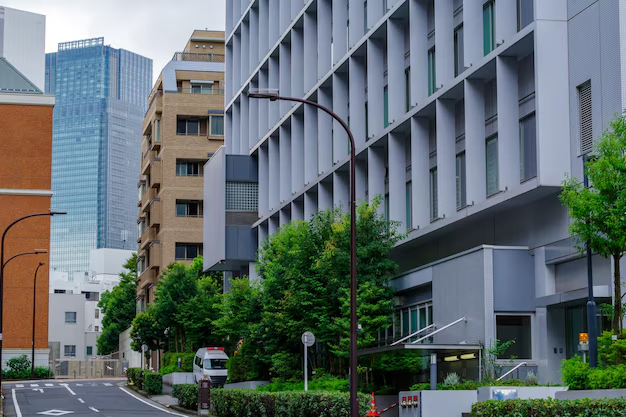
New Apartment Complexes in Atlanta: Where to Look, What to Expect, and How to Choose
Atlanta’s skyline keeps changing, and so do its apartment options. If you’re searching for new apartment complexes in Atlanta, you’re entering a market full of sleek high-rises, mixed‑use developments, and boutique buildings in almost every intown neighborhood.
This guide walks through where new apartments are being built, what they typically offer, how pricing and parking usually work, and how to narrow down your search based on your lifestyle, commute, and budget.
Where New Apartment Complexes Are Concentrated in Atlanta
Across the metro, new complexes tend to cluster in a few key areas where you’ll see active construction, cranes, and rapid development.
1. Midtown
Midtown is one of Atlanta’s hottest areas for new high‑rise apartment buildings.
What to expect here:
- Tall towers with city or Piedmont Park views
- Walkable access to MARTA’s Midtown and Arts Center stations
- Easy access to Georgia Tech, Peachtree Street, and major employers
- Many buildings above or near restaurants, coffee shops, and retail
Typical renter here: Professionals who want walkability, nightlife, and transit access, and are willing to pay more for location and amenities.
2. Buckhead
Buckhead continues to see new luxury apartment complexes, especially near Peachtree Road, Lenox Square, and Phipps Plaza.
Common features:
- High‑end finishes, concierge services, and resort‑style pools
- Proximity to Lenox and Buckhead MARTA stations
- Better access to GA‑400 and I‑85 than many intown spots
- Heavier car traffic, especially around the malls and main corridors
Typical renter here: Those who value upscale amenities, shopping, and dining and don’t mind busier traffic patterns.
3. Old Fourth Ward & BeltLine Eastside
The Old Fourth Ward (O4W) and the Eastside BeltLine trail area have seen a wave of mid‑rise and mixed‑use developments.
Why these new complexes are popular:
- Walking access to the BeltLine, Ponce City Market, and Krog Street Market
- A mix of loft‑style and modern apartments
- Strong appeal for renters who want an active, walkable lifestyle
- Frequent bike and scooter use instead of driving everywhere
Typical renter here: People who prioritize BeltLine access, outdoor activity, and local food spots over quieter, more suburban surroundings.
4. West Midtown & Howell Mill
West Midtown (near Howell Mill Road and Marietta Street) has transitioned from industrial to trendy, with many newly built complexes.
Expect:
- Mid‑rise buildings near restaurants, breweries, and creative spaces
- Access to Georgia Tech, Westside Provisions District, and the Atlanta BeltLine Westside expansion
- Often easier parking than Midtown/Buckhead high‑rises
- Less direct MARTA rail access, so most renters rely on cars or rideshare
Typical renter here: Those who like trendy, less “corporate” urban living, often working in tech, creative, or nearby campuses.
5. Downtown & South Downtown
Downtown has gained new and renovated buildings, especially around Georgia State University, Mercedes‑Benz Stadium, and the South Downtown revitalization area.
Highlights:
- Growing number of student‑friendly and professional complexes
- Close to Five Points, Peachtree Center, and Georgia State MARTA stations
- Good for people who work in courthouses, government, or corporate towers
- The area can feel more business‑oriented during the day and quieter at night in some pockets
Typical renter here: Students, government workers, and professionals who want short commutes to downtown offices and transit hubs.
6. Inman Park, Edgewood, and Reynoldstown
Eastside intown neighborhoods like Inman Park, Edgewood, and Reynoldstown have several newer complexes, often near the BeltLine or MARTA.
What stands out:
- Walkable access to Inman Park/Reynoldstown MARTA, parks, and local shops
- Mix of new construction alongside historic homes and duplexes
- A more neighborhood‑like vibe vs. Midtown’s dense high‑rise feel
Typical renter here: People who want an intown feel without high‑rise living, plus easy access to Little Five Points, the BeltLine, and local restaurants.
7. Perimeter Center / Sandy Springs / Dunwoody
While technically outside Atlanta city limits in some parts, Perimeter Center and nearby Sandy Springs/Dunwoody are major hubs for new apartments, especially around Perimeter Mall.
Good to know:
- Many new garden‑style and mid‑rise complexes with parking garages
- Job centers nearby (corporate campuses and medical facilities)
- Access to Dunwoody, Sandy Springs, and Medical Center MARTA stations
- More suburban feel with large roadways and office parks
Typical renter here: Those who work in Perimeter or North Fulton and want a newer place without commuting from intown.
What New Apartment Complexes in Atlanta Typically Offer
While every building is different, new complexes in Atlanta tend to share a few consistent features.
Modern Amenities You’re Likely to See
Most new developments highlight amenity spaces as major selling points. Common features include:
- Resort‑style pool with loungers, cabanas, and grilling areas
- Fitness center with modern equipment; some even include yoga or spin rooms
- Clubhouse or resident lounge with Wi‑Fi, TVs, and workspaces
- Co‑working areas or conference rooms for remote work
- Rooftop decks or sky lounges (especially in Midtown and Buckhead)
- Pet amenities like dog parks and pet‑washing stations
- Package lockers and secure mailrooms for deliveries
Amenities are built into your rent, so it’s worth asking yourself: “Will I really use these?” If not, you might decide to look for a simpler building to balance cost.
In‑Unit Features in New Atlanta Apartments
Inside the unit, many new Atlanta apartments include:
- In‑unit washer and dryer
- Stainless steel appliances
- Quartz or granite countertops
- Hard surface flooring (LVP or hardwood‑style) in living areas
- Walk‑in closets in many 1‑ and 2‑bedroom units
- Balconies or patios in a portion of the units
- Keyless or smart locks, and sometimes smart thermostats
If you’re touring, ask whether what you see in the model unit matches the specific floor plan and floor you’re considering, as finishes can occasionally vary.
Parking, Transit, and Commuting
In Atlanta, your commute and parking situation can matter as much as your floor plan.
Parking basics in new complexes:
- Many new buildings offer structured parking garages
- Parking may cost extra per month per vehicle
- Some buildings offer assigned spots; others are first‑come, first‑served
- Electric vehicle (EV) chargers are increasingly common, sometimes at an additional cost
Transit access to consider:
- If you rely on MARTA rail, look for complexes near stations like:
- Midtown, Arts Center, North Avenue (Midtown)
- Lenox, Buckhead, Lindbergh Center (Buckhead)
- Inman Park/Reynoldstown, King Memorial, Peachtree Center
- Bus routes can be useful but vary in frequency; check how far the stops are from the building.
In heavy traffic corridors like I‑85, GA‑400, I‑75, and the Downtown Connector, even a small distance can add a lot of time to your commute. When you tour, consider driving the route during your typical rush‑hour window.
Typical Rent Ranges for New Complexes (Big Picture)
Exact prices change often, but you can expect newer buildings to sit at the higher end of the local market in most Atlanta neighborhoods.
In general:
- Studios in new intown buildings: often higher than older 1‑bedrooms in the same area
- One‑bedrooms in high-amenity buildings: usually priced at a premium for location and features
- Two‑bedrooms: often targeted to roommates or couples who want extra space, so priced accordingly
- Three‑bedrooms: less common in brand‑new intown high‑rises, more likely in suburban or mid‑rise developments
To compare value, look at:
- Square footage (cost per square foot, not just monthly price)
- Whether parking, trash, or amenity fees are included
- Length of lease and any short‑term lease fees
How to Compare New Apartment Complexes in Atlanta
With so many choices, having a simple comparison framework can make your search more manageable.
Key Factors to Evaluate
Location & Commute
- Distance and drive time to work/school
- Proximity to MARTA, BeltLine, or bus routes
- Nearby grocery stores (e.g., Kroger, Publix, Trader Joe’s), pharmacies, and essentials
- Noise levels (near major roads, clubs, or train lines)
Cost
- Base rent
- Utilities responsibility (water, sewer, trash, pest control, gas, electricity)
- Parking fees and pet fees
- One‑time costs: application fees, admin fees, security deposit
Amenities & Lifestyle Fit
- Pool, gym, co‑working, rooftop, pet facilities
- Rules around guests, quiet hours, and common areas
- Community events or on‑site activities (if that matters to you)
Building Type & Atmosphere
- High‑rise vs. mid‑rise vs. garden‑style
- Pet‑friendly vs. more quiet/strict
- Mix of residents (students, professionals, families, etc.)
Management & Maintenance
- Responsiveness to service requests
- On‑site management office hours
- Security features: controlled access, cameras, gate systems
Quick Comparison Table for New Atlanta Apartments
Use this as a simple checklist when touring or researching:
| Factor | What to Look For in Atlanta | Questions to Ask the Leasing Office |
|---|---|---|
| Location | Proximity to work, MARTA, BeltLine, grocery, highways | How long does it really take to get to Midtown/Downtown at rush hour? |
| Total Monthly Cost | Rent + utilities + parking + pet/amenity fees | What is the average all‑in monthly cost for this floor plan? |
| Parking | Garage vs. surface, assigned spots, visitor options | Is parking included? Are guest passes limited? |
| Amenities | Pool, gym, co‑working, pet areas, package lockers | Are any amenities temporarily closed or have extra fees? |
| Unit Features | Washer/dryer, flooring, balcony, natural light | Does this exact unit match the finishes shown in the model? |
| Noise & Surroundings | Nearby construction, bars, busy streets | Are there any planned developments or road projects nearby? |
| Lease Terms | 12–15 month common; shorter leases may cost more | What are penalties for breaking a lease early? |
| Management & Security | On‑site staff, entry systems, patrols | How do you handle after-hours emergencies or lockouts? |
Practical Tips for Touring New Apartment Complexes in Atlanta
Time Your Visit
- Visit at rush hour to test real commute times along I‑75/85, GA‑400, or I‑285.
- Walk or drive around at night and on weekends to get a feel for noise, lighting, and crowds.
Ask About Move‑In Specials (Without Relying on Them)
New buildings sometimes offer:
- One month free
- Reduced security deposits
- Discounted parking for early renters
These can help with upfront costs, but remember to calculate your effective monthly cost after the special ends.
Understand Additional Fees
In Atlanta, new complexes often charge:
- Admin or community fees
- Trash/valet trash fees
- Amenity fees (sometimes monthly, sometimes one‑time)
- Optional storage unit or garage fees
Always ask for a written breakdown of all monthly and one‑time charges before applying.
Consider Sound and Construction
With so much development happening, look out for:
- Nearby empty lots or older buildings likely to become future construction sites
- Existing construction noise, especially on weekdays
- Proximity to freight train lines and major highways
If you’re sensitive to noise, ask whether you can tour units on different sides or floors of the building.
Resources and Local Offices That Can Help
You won’t find a single “official” apartment registry for Atlanta, but certain public offices and services can support your search and tenant rights questions.
City and County Contacts
City of Atlanta – Department of City Planning
Often helpful for information on zoning and development activity.
55 Trinity Ave SW
Atlanta, GA 30303
Phone: (404) 330‑6150Fulton County Government (for much of Atlanta)
Can direct you to property records and related resources.
141 Pryor St SW
Atlanta, GA 30303
Phone: (404) 612‑4000DeKalb County Government (for East Atlanta neighborhoods within DeKalb)
1300 Commerce Dr
Decatur, GA 30030
Phone: (404) 371‑2000
These offices are not apartment finders, but they can help you verify property records, understand zoning and development trends, and sometimes clarify code enforcement questions.
Tenant‑Oriented Help
If you run into issues with a lease, deposits, or habitability:
- Georgia Department of Law – Consumer Protection Division
2 Martin Luther King Jr. Dr SE, Suite 356
Atlanta, GA 30334
Phone: (404) 458‑3800
They provide general consumer guidance and can point you to resources on renter rights and landlord‑tenant issues in Georgia.
How to Narrow Down Your Search Based on Your Situation
If you’re still overwhelmed by choices, filter based on your top priority.
If you care most about walkability and nightlife:
Focus on Midtown, Old Fourth Ward, Inman Park, parts of Buckhead near Peachtree and Lenox, and BeltLine‑adjacent complexes.If you want a newer place but quieter surroundings:
Look at new construction in Perimeter Center, Sandy Springs, Dunwoody, West Midtown away from main strips, and certain pockets of Edgewood or Reynoldstown.If transit access is critical:
Prioritize buildings walking distance to MARTA rail stations (Midtown, Downtown, Lenox/Buckhead, Inman Park/Reynoldstown) and cross‑check bus routes.If budget is tight but you want something newer:
Consider:- Slightly older but still modern complexes (5–10 years old) just outside the most in‑demand hubs
- Neighborhoods a bit farther from the BeltLine core but still intown or near I‑285 for flexibility
Living in a new apartment complex in Atlanta can mean modern finishes, big amenity lists, and walkable access to many of the city’s best spots. By focusing on location, total cost, commute, and management quality, you can narrow down the many options and find a place that fits how you actually live in Atlanta—today and over the length of your lease.