
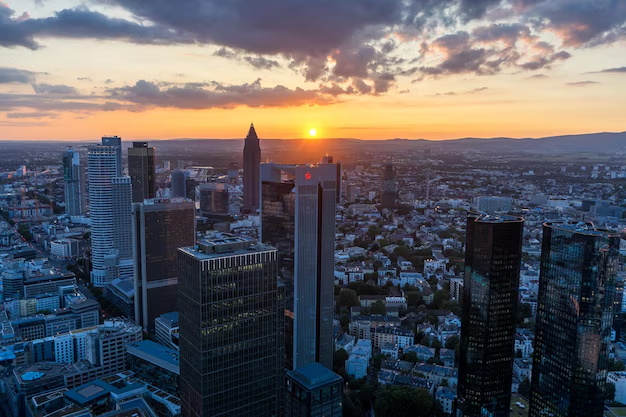
Atlanta by the Numbers: Key Stats Every Local and Visitor Should Know
Atlanta is one of the South’s most dynamic cities, and understanding a few core Atlanta stats can make it easier to live here, visit, or decide whether to move. From population and neighborhoods to transportation and cost of living, these numbers help explain how the city really works day to day.
Big-Picture Atlanta Stats
Population and Growth
Atlanta is the capital of Georgia and the center of the state’s largest metro area.
- City of Atlanta population: Roughly in the hundreds of thousands, making it a mid-sized city by population but with a large regional influence.
- Metro Atlanta population: In the millions, stretching across multiple counties including Fulton, DeKalb, Cobb, Gwinnett, and Clayton.
- Growth pattern: The metro area has grown steadily for years, driven by jobs, universities, and relatively affordable housing compared with some other major U.S. cities.
For someone living in Atlanta, this growth shows up as new apartment buildings, busier roads, and ongoing construction projects across neighborhoods like Midtown, Buckhead, and the Westside.
Neighborhood Snapshot: How Atlanta Is Shaped
Atlanta is known for its distinct neighborhoods, each with its own feel, price point, and pace. While exact numbers shift over time, you can think of Atlanta’s neighborhoods in a few broad groups.
Urban Core
These areas are closest to downtown and midtown:
- Downtown – Government buildings, major attractions (State Farm Arena, Georgia Aquarium), many office towers.
- Midtown – High-rise living, arts and culture (Fox Theatre, Woodruff Arts Center), walkable streets.
- Old Fourth Ward & Inman Park – Trendy, walkable neighborhoods near the BeltLine Eastside Trail, with a mix of apartments and restored homes.
Intown Residential Areas
Closer to the city center but more residential:
- Virginia-Highland, Morningside, Grant Park, Candler Park – Historic homes, neighborhood parks, strong local identity.
- Westside/West Midtown – Rapidly redeveloping industrial area, now full of lofts, restaurants, and tech/creative offices.
Buckhead and North Atlanta
- Buckhead – Often viewed as one of Atlanta’s more affluent areas, with luxury retail, high-rise condos, and single-family homes.
- Brookhaven, Sandy Springs (just outside city limits) – Suburban-style communities closely tied to Atlanta’s job market.
Southwest and Southeast Atlanta
- Southwest Atlanta – Long-established neighborhoods, HBCUs such as Clark Atlanta University and Morehouse College, and a strong cultural history.
- Southeast Atlanta – Includes areas like East Atlanta Village and Ormewood Park, often popular with younger residents and families.
Key takeaway: When someone talks about “Atlanta stats,” they often really mean “which neighborhood fits my lifestyle and budget?” Understanding the different parts of the city is just as important as any single number.
Atlanta Demographics: Who Lives Here?
Atlanta is widely viewed as:
- Racially and culturally diverse, with a strong Black majority within the city itself and a mix of communities across the metro area.
- A major hub for Black professionals, entrepreneurs, and creatives, especially in industries like music, film, media, and tech.
- Home to a large LGBTQ+ community, particularly visible in Midtown and nearby neighborhoods.
Everyday life reflects this diversity in restaurants, festivals, churches, nightlife, and neighborhood events throughout the city.
Economy and Jobs in Atlanta
Key Industries
Atlanta’s job market is anchored by several major sectors:
- Transportation and logistics – Thanks to Hartsfield–Jackson Atlanta International Airport, one of the busiest in the world.
- Corporate headquarters – Many large U.S. and global companies have regional or national offices in Atlanta.
- Film and television production – Atlanta is one of the country’s leading film hubs, with major studios and frequent on-location shoots.
- Technology and startups – Growing presence in Midtown, Buckhead, and West Midtown.
- Higher education and healthcare – Major universities and hospital systems employ thousands.
Where to Look for Local Job and Business Information
If you want official economic or job-related Atlanta stats, helpful starting points include:
City of Atlanta – Office of the Mayor
55 Trinity Avenue SW
Atlanta, GA 30303
Phone: (404) 330-6100Invest Atlanta (City’s economic development authority)
133 Peachtree Street NE, Suite 2900
Atlanta, GA 30303
Phone: (404) 880-4100
Residents and business owners often use these agencies for information on incentives, small business programs, and major development projects that shape the city’s economic landscape.
Cost of Living in Atlanta
Compared with some coastal cities, Atlanta can feel relatively affordable, but costs vary widely by neighborhood and lifestyle.
Typical Cost Patterns
- Housing: Often the biggest expense. Intown neighborhoods and Buckhead tend to be more expensive; areas further from the core or in some southwest/southeast neighborhoods can be more budget-friendly.
- Transportation: Many households own cars, but some residents manage with MARTA, biking, rideshares, and walking in dense, transit-served neighborhoods.
- Utilities and services: Generally around national averages, with some variation in summer due to air conditioning needs.
Simple Cost Snapshot (Approximate, Relative View)
| Category | Within City Core (e.g., Midtown, Buckhead) | Outer/More Affordable Areas |
|---|---|---|
| Rent | Higher | Lower to Moderate |
| Parking | Often paid, limited street space | More free or included |
| Groceries | Moderate to higher near premium stores | Moderate |
| Dining Out | Wide range, more high-end options | More local, lower-cost spots |
These are relative patterns, not exact prices, but they give a sense of how costs change across the city.
Housing and Real Estate Trends
People often look for Atlanta housing stats when deciding where to live.
Ownership vs. Renting
- Many residents in areas like Downtown, Midtown, and Buckhead live in apartments or condos, either rented or owned.
- Single-family homes are more common in neighborhoods like Virginia-Highland, Grant Park, West End, Kirkwood, and Southwest Atlanta.
- The metro area beyond the city limits includes a large number of suburban-style single-family homes.
Property and Housing Information Sources
For local property and housing details:
Fulton County Board of Assessors
235 Peachtree Street NE, Suite 1400
Atlanta, GA 30303
Phone: (404) 612-6440City of Atlanta Department of City Planning
55 Trinity Avenue SW, Suite 3350
Atlanta, GA 30303
Phone: (404) 330-6070
These offices provide public information on property assessments, zoning, permits, and planning trends that influence housing options across Atlanta.
Transportation Stats: How Atlanta Gets Around
Atlanta is known for both its traffic and its transportation options.
Driving and Traffic
- Interstates I‑75, I‑85, and I‑20 meet near Downtown, forming the core of Atlanta’s highway network.
- I‑285 forms a loop (“the Perimeter”) around the city.
- Commuters often experience heavy rush hour traffic, especially on the downtown connector (where I‑75 and I‑85 merge) and major interchanges.
Public Transit (MARTA)
The main public transit system is MARTA (Metropolitan Atlanta Rapid Transit Authority), which runs rail and bus services.
- Rail lines connect Downtown, Midtown, Buckhead, the airport, and several suburban stations.
- Bus routes cover many parts of Atlanta that rail does not reach.
- Many residents combine MARTA + rideshare + walking for daily commuting, especially if they live near a station.
MARTA Headquarters:
2424 Piedmont Road NE
Atlanta, GA 30324
Customer Service: (404) 848-5000
Airport
Hartsfield–Jackson Atlanta International Airport (ATL) is a major regional and international hub:
- Located just south of downtown Atlanta.
- Directly connected to the city by the MARTA Red and Gold rail lines, making it relatively easy to reach without a car.
Education and Universities in Atlanta
Atlanta’s education stats are shaped by both K–12 schools and a significant number of colleges and universities.
Public Schools
The city is served by Atlanta Public Schools (APS):
- APS Central Office
130 Trinity Avenue SW
Atlanta, GA 30303
Phone: (404) 802-3500
APS oversees elementary, middle, and high schools within city limits, with performance and enrollment varying by school and neighborhood.
Major Colleges and Universities
Atlanta is home to several major institutions, including:
- Georgia State University (Downtown Atlanta)
- Georgia Institute of Technology (Georgia Tech) (Midtown)
- Emory University (in nearby unincorporated DeKalb County, close to Atlanta)
- Morehouse College, Spelman College, Clark Atlanta University (part of the Atlanta University Center in Southwest Atlanta)
These schools help drive student housing demand, research activity, and local business growth near campuses.
Public Safety and City Services
Residents often want stats about crime rates, emergency response, and city services to understand everyday safety.
Police and Fire Services
Atlanta Police Department (APD) Headquarters
226 Peachtree Street SW
Atlanta, GA 30303
Non-Emergency Line: (404) 614-6544
Emergency: 911Atlanta Fire Rescue Department (AFRD)
404 Ashby Street SW
Atlanta, GA 30314
Non-Emergency: (404) 546-7000
Crime rates and patterns differ by neighborhood and time of day. Many residents use neighborhood associations, APD zone meetings, and city dashboards to track local safety trends and report concerns.
Parks, Green Space, and Recreation
One of Atlanta’s standout stats is its substantial tree canopy and growing network of parks and trails.
Major Parks and Green Spaces
- Piedmont Park – Large urban park in Midtown with trails, fields, and festivals.
- The Atlanta BeltLine – A developing loop of trails and transit (in progress) that connects multiple intown neighborhoods.
- Grant Park – Historic park that also hosts Zoo Atlanta.
- Numerous neighborhood parks across the city radius.
City parks are managed by:
City of Atlanta – Department of Parks and Recreation
233 Peachtree Street NE, Suite 1700
Atlanta, GA 30303
Phone: (404) 546-6813
These spaces are a major part of Atlanta’s quality of life, especially for residents who value walking, biking, and outdoor events.
Government and Civic Stats: How the City Is Organized
Atlanta’s local government includes:
- Mayor–Council system with a citywide elected mayor and city council members representing various districts and at-large seats.
- Multiple departments overseeing planning, public works, transportation, watershed management, and public safety.
Key contact point:
City of Atlanta – City Hall
55 Trinity Avenue SW
Atlanta, GA 30303
General Information: (404) 330-6000
Residents typically interact with the city for:
- Water and sewer service
- Building permits and inspections
- Business licenses
- Neighborhood planning meetings
Where to Find Reliable Atlanta Stats
If you want up-to-date or detailed numbers specific to Atlanta—such as exact population figures, housing data, or transit ridership—focus on official and stable sources:
- City of Atlanta (City Hall and department websites) – local government data and reports
- Fulton County and DeKalb County offices – property, courts, and local services records
- MARTA – transit ridership, routes, and schedules
- Atlanta Regional Commission (ARC) – regional planning data (population, transportation, housing patterns)
When you’re making practical decisions—where to live, how to commute, or where to start a business—combining these official stats with on-the-ground impressions of specific neighborhoods usually gives the clearest picture of what life in Atlanta is really like.