
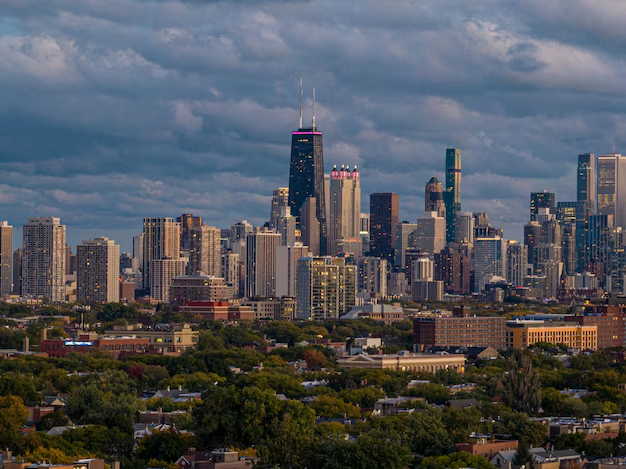
A Local’s Ultimate List for Exploring Atlanta
When someone searches for “a list Atlanta,” they’re usually looking for a clear, organized overview of what Atlanta has to offer — neighborhoods, attractions, essentials, and local services. This guide brings together practical lists that help whether you live in Atlanta, are moving here, or are visiting for a few days.
Key Things to Know About Atlanta at a Glance
Atlanta, Georgia is a major Southern city known for its history, culture, traffic, and trees. Before diving into the detailed lists, here’s a quick reference:
| Category | Atlanta Highlights |
|---|---|
| Nickname | The ATL, A-Town, “City in a Forest” |
| County | Primarily Fulton County, with some neighborhoods in DeKalb County |
| Major Airport | Hartsfield-Jackson Atlanta International Airport (ATL) |
| Key Downtown Area | Around Peachtree St NW, Five Points, and Centennial Olympic Park |
| Local Government | City of Atlanta – 55 Trinity Ave SW, Atlanta, GA 30303 |
| Main Public Transit | MARTA bus and rail system |
A List of Atlanta’s Major Neighborhoods & Areas
Atlanta is a city of distinct neighborhoods. This list focuses on areas most residents and visitors commonly navigate.
Intown & Central Neighborhoods
These are close to Downtown and Midtown and are popular with both residents and visitors:
- Downtown Atlanta – Government buildings, State Capitol, major hotels, sports arenas, Centennial Olympic Park.
- Midtown – Arts district, high-rises, nightlife, Piedmont Park, Fox Theatre.
- Old Fourth Ward (O4W) – Historic area with the Martin Luther King Jr. National Historical Park and access to the Eastside BeltLine.
- Inman Park – Charming historic homes, walkable, lots of restaurants, BeltLine access.
- Virginia-Highland (VaHi) – Bungalows, bars, shops, and a neighborhood feel close to Midtown.
- Poncey-Highland – Adjacent to Ponce City Market and the BeltLine; mix of apartments and single-family homes.
- West Midtown / Westside – Former industrial area turned into a hub for dining, lofts, and design shops.
- Castleberry Hill – Historic warehouse district just southwest of Downtown, known for lofts and art galleries.
- Cabbagetown & Reynoldstown – Artsy neighborhoods near the BeltLine, with colorful houses and street art.
Popular Residential & Family-Friendly Areas
These are often considered by people moving to or around Atlanta:
- Buckhead – Upscale shopping, office towers, and residential pockets; considered a major business and retail hub.
- Brookhaven (just north of city limits) – Popular with families, mix of single-family homes and townhomes.
- Morningside-Lenox Park – Quiet, residential, close to Midtown.
- Grant Park – Historic homes, close to Zoo Atlanta and the park itself.
- Kirkwood – Intown, community-oriented, with a village-style main street.
- East Atlanta Village (EAV) – Lively nightlife, music, and independent shops.
- West End – Historic neighborhood, Atlanta University Center nearby, connected to the BeltLine Westside Trail.
- College Park / East Point – Just south of the city, near the airport, with older neighborhoods and growing development.
A List of Top Things to Do in Atlanta
If you’re visiting or showing guests around, these frequently recommended attractions are a good starting point.
Major Attractions & Landmarks
- Georgia Aquarium – One of the largest aquariums in the world, located in Downtown near Centennial Olympic Park.
- World of Coca-Cola – Interactive exhibits on the Coca-Cola brand, also near Centennial Olympic Park.
- College Football Hall of Fame – Popular with sports fans, located Downtown.
- National Center for Civil and Human Rights – Museum focused on the civil rights movement and global human rights.
- Martin Luther King Jr. National Historical Park – Includes MLK’s birth home, Ebenezer Baptist Church, and The King Center in Old Fourth Ward.
- Atlanta History Center (Buckhead) – Exhibits on Atlanta’s history, plus the historic Swan House and gardens.
- Zoo Atlanta (Grant Park) – Well-known regional zoo with a variety of animal exhibits.
Outdoor & Green Spaces
- Piedmont Park – Atlanta’s “central park,” near Midtown, used for festivals, running, dog-walking, and sports.
- Atlanta BeltLine – A growing network of trails and parks circling the city; Eastside and Westside Trails are most used.
- Centennial Olympic Park – Downtown greenspace built for the 1996 Olympics.
- Chattahoochee River National Recreation Area (north of the city) – Trails and river access for tubing, kayaking, and walking.
Arts, Entertainment & Culture
- Fox Theatre (Midtown) – Historic theater hosting touring Broadway shows, concerts, and events.
- High Museum of Art (Midtown) – Major regional art museum.
- Alliance Theatre – Professional theatre company at the Woodruff Arts Center.
- Tabernacle, Variety Playhouse, Masquerade – Well-known music venues across the city.
- State Farm Arena & Mercedes-Benz Stadium – Large venues for sports and concerts.
A List of Atlanta Sports, Teams & Venues
Sports are a big part of Atlanta life, with several major teams:
- Atlanta Falcons (NFL) – Play at Mercedes-Benz Stadium, 1 AMB Dr NW, Atlanta, GA 30313.
- Atlanta Hawks (NBA) – Play at State Farm Arena, 1 State Farm Dr, Atlanta, GA 30303.
- Atlanta Braves (MLB) – Play at Truist Park, 755 Battery Ave SE, Atlanta, GA 30339 (Cumberland area).
- Atlanta United FC (MLS) – Also play at Mercedes-Benz Stadium.
- College sports – Georgia Tech (Midtown), Georgia State University (Downtown) host various NCAA events and games.
A List of Key Government & Public Service Offices in Atlanta
For residents and those relocating, knowing where to handle official business is important.
City of Atlanta Government
- Atlanta City Hall
55 Trinity Ave SW
Atlanta, GA 30303
Handles: City ordinances, permits, city council meetings, and general city administration.
County Government (Mostly Fulton County)
- Fulton County Government Center
141 Pryor St SW
Atlanta, GA 30303
Handles: Property records, taxes, county courts, and various county services.
Georgia State Government in Downtown Atlanta
Georgia State Capitol
206 Washington St SW
Atlanta, GA 30334
Houses: Governor’s office, state legislature, and public tours.Georgia Department of Driver Services (DDS) – Nearby Centers
While not all inside city limits, nearby locations often used by Atlanta residents include:- Atlanta Customer Service Center – 400 Whitehall St SW, Atlanta, GA 30303
Services: Driver’s licenses, ID cards, and testing (check current availability before visiting).
- Atlanta Customer Service Center – 400 Whitehall St SW, Atlanta, GA 30303
A List of Atlanta Transportation Options
Getting around Atlanta can feel overwhelming without a basic overview.
Public Transit: MARTA
Metropolitan Atlanta Rapid Transit Authority (MARTA) runs buses and trains:
- Rail Lines – Red, Gold, Blue, and Green lines connect:
- Airport (ATL) to Downtown, Midtown, Buckhead, and North Springs/Doraville.
- East/West along I-20 corridor through Inman Park, Edgewood/Candler Park, Decatur (outside city).
- Bus Routes – Cover more neighborhoods and connections between rail stations and residential areas.
Main office (administrative):
- MARTA Headquarters
2424 Piedmont Rd NE
Atlanta, GA 30324
Airport
- Hartsfield-Jackson Atlanta International Airport (ATL)
6000 N Terminal Pkwy
Atlanta, GA 30320
Key notes:
- Direct MARTA rail access from the Airport Station.
- One of the world’s busiest airports, with extensive domestic and international flights.
Highways & Driving
Atlanta is intersected by several major interstates:
- I-75 / I-85 (Downtown Connector) – Runs north–south through the city center.
- I-20 – Runs east–west across the city.
- I-285 – Perimeter highway circling metro Atlanta.
Residents commonly talk about traffic on these routes, especially during rush hours morning and evening.
A List of Essential Services for Atlanta Residents
These basics help new residents and long-term Atlantans manage daily life.
Utilities & City Services (City of Atlanta)
Most city of Atlanta residents interact with:
City of Atlanta Department of Watershed Management
72 Marietta St NW
Atlanta, GA 30303
Handles: Water and sewer service accounts, billing, and maintenance.Solid Waste Services
Overseen by the City of Atlanta Department of Public Works
Handles: Garbage, recycling, and yard trimmings pickup schedules (vary by neighborhood).
Public Safety (Non-Emergency)
For emergencies, residents dial 911. For non-emergencies:
- Atlanta Police Department – Non-Emergency Line
Commonly used for reporting non-urgent incidents or seeking information. - Atlanta Fire Rescue Department Headquarters
226 Peachtree St SW
Atlanta, GA 30303
Check current non-emergency numbers or precinct contacts before calling.
A List of Major Hospitals & Medical Centers in Atlanta
For general informational purposes, these are well-known hospital systems serving the Atlanta area:
Grady Memorial Hospital
80 Jesse Hill Jr Dr SE
Atlanta, GA 30303
Large public hospital and Level I trauma center serving downtown and beyond.Emory University Hospital Midtown
550 Peachtree St NE
Atlanta, GA 30308
Major teaching hospital near Midtown.Piedmont Atlanta Hospital
1968 Peachtree Rd NW
Atlanta, GA 30309
Large hospital serving Buckhead/Midtown area.Children’s Healthcare of Atlanta (CHOA) – Multiple campuses, including:
- Egleston (near Emory University) – pediatric specialty care.
For medical issues, individuals typically choose a provider or facility based on insurance, location, and type of care needed.
A List of Atlanta Colleges & Universities
Atlanta is a regional education hub, with several well-established institutions:
- Georgia Institute of Technology (Georgia Tech) – Midtown Atlanta
- Georgia State University (GSU) – Downtown Atlanta and additional campuses
- Emory University – Just outside city limits in Druid Hills, but closely tied to Atlanta
- Morehouse College – Part of the Atlanta University Center (West End)
- Spelman College – Also in the Atlanta University Center
- Clark Atlanta University – Another key AUC institution
- Atlanta Metropolitan State College – South of Downtown
These schools contribute significantly to Atlanta’s student population, research environment, and cultural life.
A List of Popular Shopping & Dining Areas in Atlanta
Atlanta has many pockets of restaurants, shops, and nightlife. Some of the best-known areas include:
- Buckhead Village & Lenox/PHIPPS area – Upscale malls and dining.
- Ponce City Market – Food hall, retail, offices, and BeltLine access, in the Old Fourth Ward/Poncey-Highland area.
- Atlantic Station – Mixed-use district with shops, restaurants, and residential buildings, just west of Midtown.
- Little Five Points (L5P) – Alternative shops, vintage stores, music venues, and casual dining.
- Westside Provisions District – Trendy restaurants and boutiques in West Midtown.
- Edgewood Avenue – Known for nightlife and bars, especially around the Edgewood/Inman Park area.
A List of Annual Events & Festivals in Atlanta
Specific dates change each year, but certain events are regularly recognized in or near Atlanta:
- Atlanta Dogwood Festival – Usually in spring at Piedmont Park.
- Atlanta Jazz Festival – Typically held over Memorial Day weekend in Piedmont Park.
- Music Midtown – Major music festival in Midtown (timing and status can vary year to year).
- Peachtree Road Race – Large 10K race usually held on July 4 along Peachtree Road.
- Dragon Con – Multi-genre convention held in Downtown hotels around Labor Day weekend.
- Atlanta Pride Festival – Generally takes place in October, centered around Piedmont Park and Midtown.
A List of Helpful Contacts & Next-Step Resources (Atlanta-Focused)
If you’re trying to live, work, or get things done in Atlanta, these core points of contact often come up:
City of Atlanta General Information
City Hall – 55 Trinity Ave SW, Atlanta, GA 30303MARTA Customer Service
For bus/rail schedules, fares, and route planning for moving around Atlanta.Atlanta Convention & Visitors Information
Visitor information centers are typically located in Downtown near Centennial Olympic Park and at Hartsfield-Jackson Airport, offering maps and local guidance.Fulton County Information
Fulton County Government Center – 141 Pryor St SW, Atlanta, GA 30303
Using this organized list of Atlanta essentials—from neighborhoods and attractions to government offices and transit—makes it easier to navigate the city, plan a visit, or settle in as a new resident.