Common Features of Atlanta Lofts
Most people looking for a loft in Atlanta are hoping for a certain look and feel. Typical features include:
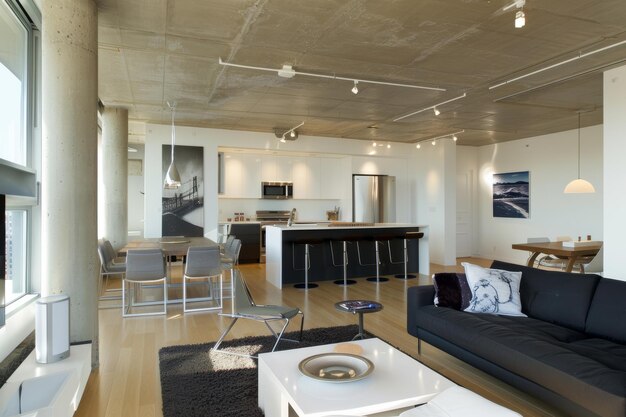
- High ceilings (often 10–14 feet, sometimes higher in true industrial buildings)
- Big windows with lots of natural light
- Open layouts with few interior walls
- Exposed elements like brick, ductwork, beams, and concrete
- Minimalist or industrial finishes – metal railings, concrete or hardwood floors
But there are two main types you’ll see in the Atlanta market:
“True” Industrial-Style Lofts
These are usually converted commercial or industrial buildings. In Atlanta, you might find:
- Original brick walls
- Concrete or old hardwood floors
- Very high ceilings, often with old beams or columns
- Giant warehouse-style windows
They often feel more unique and may offer larger open spaces, but they can also come with quirks: older windows, noise from neighboring units, or limited closet space.
New “Loft-Style” Apartments and Condos
These are modern buildings built to look like lofts, especially common around Midtown, West Midtown, Buckhead, and along key corridors like Ponce de Leon Avenue.
You may see:
- One or two bedrooms but still relatively open layouts
- Exposed ductwork or “faux” industrial finishes
- More conventional amenities (pool, gym, parking decks, package rooms)
- Better soundproofing and energy efficiency than many older conversions
In Atlanta, many listings call themselves “lofts” even if they’re closer to stylish open-plan apartments than raw industrial spaces.
Where to Find Lofts in Atlanta
Lofts tend to cluster in certain Atlanta neighborhoods and corridors. Here are key areas where people commonly look:
Downtown & Castleberry Hill
- Who it suits: People who want to be near Mercedes-Benz Stadium, State Farm Arena, the Georgia World Congress Center, and downtown offices.
- Loft feel: A mix of converted historic buildings and newer loft-style projects.
- What to expect:
- Shorter commute if you work downtown
- Walkability to restaurants and entertainment
- Some buildings with older systems or parking limitations
Midtown & Old Fourth Ward
- Who it suits: Anyone who wants to be near Piedmont Park, the BeltLine, cultural venues, tech and corporate offices.
- Loft feel: Many loft-style apartments and condos, some with genuine industrial features.
- What to expect:
- Higher rents than some outer neighborhoods
- Good access to MARTA (North Avenue, Midtown, and Civic Center stations)
- Easy access to restaurants, nightlife, and bike-friendly routes
West Midtown & Howell Mill / Marietta Street Corridor
- Who it suits: Residents who like a creative, industrial vibe near tech hubs, design studios, and restaurants.
- Loft feel: This area has some of the strongest “real loft” vibes in Atlanta, with former warehouses and commercial spaces turned into housing or studios.
- What to expect:
- Access to art galleries, breweries, and dining
- A mix of old industrial and brand-new construction
- Driving is common, though bus lines serve the main roads
Ponce de Leon Corridor & Near the BeltLine
Areas near Ponce City Market, Inman Park, and Old Fourth Ward are popular.
- Who it suits: People who want to live near the Eastside Trail of the BeltLine, restaurants, and retail.
- Loft feel: Many units marketed as lofts are modern but open-plan, often with tall ceilings and big windows.
- What to expect:
- Strong demand, so pricing can be higher
- Great for walking and cycling
- Easy access to grocery, dining, and fitness options
Other Pockets Around the City
You may also find loft-style spaces in:
- Buckhead (more upscale, often in high-rise buildings)
- Grant Park / Summerhill (fewer lofts, but some modern open-plan units)
- East Atlanta / Kirkwood / Edgewood (scattered options, often smaller buildings or unique projects)
Renting a Loft in Atlanta: What to Know
If you’re searching for a loft to rent in Atlanta, here are key points to consider:
Typical Rent Expectations
Prices change over time and by neighborhood, but in general:
- Areas like Midtown, Old Fourth Ward, and BeltLine-adjacent neighborhoods tend to be more expensive.
- Neighborhoods a bit farther from the core or with fewer amenities might offer more space for the money.
Because many lofts are unique or in smaller buildings, rent can vary a lot even within a few blocks.
What’s Usually Included
Loft rentals in Atlanta may or may not include:
- Parking: In-town locations often charge separately for a parking spot in a deck or lot.
- Utilities: Some buildings bundle water, trash, and sometimes gas into a flat fee; others bill it separately.
- Amenities: Gyms, pools, rooftop decks, shared workspaces, and package lockers are common in newer loft-style complexes.
🔎 Tip: Ask specifically about parking, pet fees, and amenity charges when comparing lofts. Those “extras” can change your total monthly cost more than you’d expect.
Noise, Privacy, and Light
Open layouts are part of the appeal—but in Atlanta lofts:
- Noise can travel more easily across an open space and between units, especially in concrete or brick buildings.
- Bedroom walls may not go all the way up to the ceiling in true lofts, limiting sound privacy.
- Large windows are great for light but can bring heat and street noise, especially near busy roads or train tracks.
If you’re noise-sensitive or work from home, tour at different times of day to see how the space feels.
Buying a Loft in Atlanta
If you’re looking to buy a loft in Atlanta, expect to see:
- Loft condos in midrise or high-rise buildings
- Units in small converted buildings with fewer residences
- Some live–work lofts zoned for both residential and limited commercial use
Things Buyers Commonly Evaluate
HOA Fees and Rules
- Many loft buildings are part of a condominium association.
- Check monthly fees, what’s covered, rental restrictions, and any planned assessments.
Building Age and Maintenance
- Converted industrial buildings may have older systems (plumbing, elevators, roofs).
- Newer loft-style buildings may feel less “authentic” but offer modern systems and amenities.
Parking and Guests
- Confirm whether your unit includes deeded parking or assigned spaces.
- Ask how guest parking works—important if you plan to host often.
Resale Appeal
- In Atlanta, open-plan lofts can be very attractive to certain buyers and less appealing to others who want traditional bedrooms and storage.
- Look at layout flexibility—can a future owner easily add or reconfigure rooms?
Live–Work Lofts in Atlanta
Some buildings in Atlanta are designed—or zoned—as live–work spaces. These can be useful for:
- Artists, designers, or photographers needing studio and living space in one
- Therapists, consultants, or solo practitioners who want a professional area plus residence
- Small e-commerce or creative businesses that do light production or inventory storage
If you’re considering this type of loft:
- Confirm zoning with the City of Atlanta Department of City Planning (55 Trinity Ave SW, Atlanta, GA 30303; main city information line is often reached via 311 from within city limits).
- Check whether your type of business is allowed and what signage, parking, and client-visit rules apply.
Loft Event Spaces in Atlanta
Sometimes when people say “a Loft Atlanta,” they mean a loft-style event venue for a:
- Wedding or reception
- Corporate gathering or launch
- Photoshoot, film, or creative event
Atlanta has several warehouse-style and loft-inspired venues, mostly clustered around:
- West Midtown / Howell Mill / Marietta Street
- Downtown and Castleberry Hill
- Areas near the BeltLine
When comparing loft event spaces in the city, people often ask about:
- Capacity and layout options (ceremony vs. reception vs. breakout rooms)
- Catering rules (in-house only, preferred vendors, or open catering)
- Parking and rideshare access
- Noise and cutoff times, especially if the venue is near residential buildings
For permits or questions tied to large events, you may interact with City of Atlanta special event offices or neighborhood planning units depending on the scale.
Is a Loft Right for You in Atlanta?
A loft in Atlanta can be a great fit if you:
- Like open, flexible space and lots of light
- Want to be relatively close to in-town neighborhoods, job centers, and transit
- Enjoy industrial or modern design more than traditional layouts
You might want to reconsider if you:
- Need maximum sound privacy between rooms
- Prefer defined, separate rooms and large closets
- Are very sensitive to street noise, downtown traffic, or nightlife nearby
Quick Comparison: Loft vs. Traditional Apartment in Atlanta
| Feature | Typical Atlanta Loft | Traditional Atlanta Apartment |
|---|
| Layout | Open, fewer walls | More rooms, defined spaces |
| Style | Industrial / modern | Varies (traditional to modern) |
| Privacy | Less room-to-room sound separation | More separation between bedrooms |
| Natural Light | Often large windows, bright | Varies; may have smaller windows |
| Location | Often in or near in-town neighborhoods | Citywide, including suburbs |
| Building Age | Mix of older conversions and newer builds | Mostly newer in many complexes |
| Personality / Uniqueness | Often high | Varies; some feel more standardized |
Practical Next Steps in Atlanta
If you’re actively looking for a loft in Atlanta:
Narrow your neighborhoods first
- Decide whether being near Midtown, Downtown, the BeltLine, or West Midtown matters most for your commute and lifestyle.
Decide on rent vs. buy
- If you’re new to the city, many residents choose to rent a loft first to get a feel for Atlanta’s neighborhoods before buying.
Tour at different times
- Visit once during daylight and once in the evening to check light, noise, parking, and traffic flow.
Ask targeted questions
- How is parking handled?
- What are the utility and amenity fees?
- Are there noise concerns (train tracks, busy roads, nightlife)?
- For condos, what are the HOA rules and fees?
Check local regulations if using as a business or event space
- For live–work or event use, contact City of Atlanta offices or consult with a local real estate or planning professional familiar with zoning, licensing, and permitting.
By focusing on location, layout, and how you’ll actually use the space day to day, you can turn the broad idea of “a loft in Atlanta” into a specific home or venue that fits the way you live, work, or host events in the city.