
Can You See the Northern Lights in Atlanta? What Locals and Visitors Should Know
If you’re in Atlanta, Georgia and wondering whether you can see the Northern Lights (aurora borealis) here, the honest answer is:
Usually no — but very rarely, yes.
And when it is possible, it takes a strong solar storm, perfect timing, and very dark skies.
This guide explains how Northern Lights visibility works in Atlanta, how to know if a rare event might be visible, and what practical steps you can take if you want your best chance of seeing them from the metro area or nearby.
Why Northern Lights Are Rare in Atlanta
The Northern Lights are most commonly visible near the polar regions. Atlanta, by contrast, sits at a much lower latitude, which means:
- The aurora “oval” (the zone where lights are commonly visible) usually stays far north of Georgia.
- Under normal conditions, the aurora is not strong enough to be seen from Atlanta.
- Only during unusually intense geomagnetic storms can the aurora extend far enough south to reach the southeastern United States.
In practical terms, this means:
- Most years, Atlanta residents will not see Northern Lights at all.
- During severe solar storms (sometimes associated with the peak of the solar cycle), there may be rare opportunities when a faint glow or low-horizon aurora becomes visible from dark locations in Georgia, including areas outside the Atlanta metro.
Has Atlanta Ever Seen the Northern Lights?
People in Georgia, including areas not far from Atlanta, do sometimes report aurora sightings during strong space weather events. When these happen:
- The lights are often faint and close to the northern horizon.
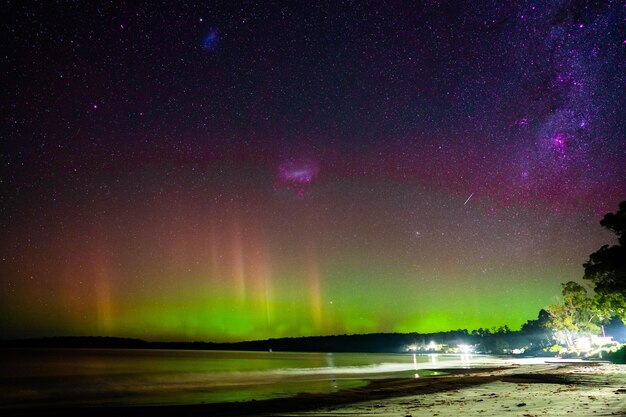
- They may look more like a diffuse glow, pillars, or subtle color bands, rather than the dramatic curtains seen in places like Alaska.
- Light pollution from the city often makes them hard or impossible to see inside the core of Atlanta.
Many longtime skywatchers around metro Atlanta keep an eye on space weather alerts specifically because, a few nights per solar cycle, the aurora can reach unusually far south. On those rare nights, people in rural North Georgia have a much better chance than someone standing along Peachtree Street.
Key Factors That Control Aurora Visibility in Atlanta
To realistically see the Northern Lights from Atlanta or nearby, you usually need all of the following working in your favor:
1. Strong Geomagnetic Activity
The Northern Lights are driven by charged particles from the Sun interacting with Earth’s magnetic field.
For Atlanta:
- You typically need a strong or severe geomagnetic storm.
- Space weather forecasts sometimes use a Kp index (a scale of geomagnetic activity from 0–9).
- Aurora is commonly visible at high latitudes at lower Kp values, but for Atlanta latitude, people generally look for very high Kp readings (often around Kp 7 or higher) to have any realistic chance.
You don’t have to know the exact numbers, but if forecasters say aurora could be visible “as far south as the southern United States,” that’s when Atlanta residents should pay attention.
2. Dark, Clear Skies
Even if a strong storm is happening, you also need:
- Clear skies (minimal clouds).
- Very low light pollution.
Inside downtown or midtown Atlanta, bright city lights can easily drown out a faint aurora. The best chances are in:
- Suburban edges of the metro area with darker skies.
- Rural areas north or east of the city, where there are fewer streetlights and large developments.
3. Unobstructed View to the North
In Atlanta, the aurora — if visible — will likely be:
- Low on the northern horizon, not high overhead.
- Easier to see if you have a clear northern view, free of large buildings, hills, or trees.
A wide, open field or high overlook facing north is much better than trying to peek between skyscrapers.
Where Around Atlanta Could You Try to See the Northern Lights?
When a major solar storm is predicted to potentially bring auroras unusually far south, people in the Atlanta area often look for nearby darker-sky locations.
Below is a general overview of how different Atlanta-area spots compare for aurora chances:
| Location Type | Example Areas (Atlanta Region) | Aurora Viewing Potential* |
|---|---|---|
| City Center / Urban Core | Downtown, Midtown, Buckhead | Very low – heavy light pollution |
| Inner Suburbs | Decatur, Sandy Springs, Smyrna, Brookhaven | Low – slightly better than downtown |
| Outer Suburbs / Exurbs | Cumming, Douglasville, McDonough, Newnan | Moderate – better if skies are clear |
| Rural North Georgia (best bet) | Areas toward Dahlonega, Ellijay, Blue Ridge | Highest chance from the region |
*Even in the “best” regional spots, aurora viewing remains rare and not guaranteed.
Dark-Sky–Oriented Destinations Near Atlanta
While not specifically designed for aurora (since that’s still rare), North Georgia is popular for stargazing:
- Amicalola Falls State Park (near Dawsonville)
- Vogel State Park (near Blairsville)
- Fort Mountain State Park (near Chatsworth)
- Cloudland Canyon State Park (farther northwest, near Rising Fawn)
These locations are generally darker than metro Atlanta, give you a broader northern horizon, and are often used by local amateurs when any sort of special sky event is expected.
If the forecast suggests a strong aurora that might reach Georgia, heading toward dark, rural areas north of the city will almost always be more effective than trying to watch from inside I-285.
How to Know When the Northern Lights Might Be Visible from Atlanta
Because aurora visibility depends on space weather, local Atlantan skywatchers often rely on:
- National space weather forecasts and alerts.
- Aurora apps or alert services that send notifications when activity is strong enough to reach lower latitudes.
- Local astronomy and stargazing communities that share real-time information.
Local Organizations and Resources to Watch
Here are some ways someone in Atlanta might stay informed:
Fernbank Science Center
156 Heaton Park Dr NE, Atlanta, GA 30307
Their planetarium and educational programs sometimes discuss space weather and night-sky events, which can help you understand when special viewing opportunities could occur.Georgia State University Astronomy Programs (Atlanta campus)
University astronomy departments often share information about significant sky events of public interest.Local astronomy clubs and meetups
Groups based in and around Atlanta sometimes organize viewing nights at dark-sky–friendly locations in North Georgia when major celestial events are expected. These can be useful networks for timely alerts and practical tips, even if the specific focus is usually not aurora.
While you may need to search current contact details, these types of organizations are good starting points if you want to be “in the loop” about unusual events like a potential aurora visible from Georgia.
Practical Tips if a Rare Aurora Is Forecast for Atlanta
If forecasts indicate that the Northern Lights might be visible unusually far south, here’s how to maximize your chances from Atlanta:
1. Get Away from Bright City Lights 🌃
Try to move:
- Outside the Perimeter (I-285), if possible.
- Toward rural or semi-rural areas where streetlights and commercial lighting are sparse.
- To higher ground or open fields with a clear view north.
Even a 30–60 minute drive from central Atlanta can make a big difference in sky darkness.
2. Check the Sky Before You Commit
Before a long drive:
- Look outside to confirm cloud cover isn’t too heavy.
- If the sky is mostly overcast over the metro area, chances are low you’ll see anything, even if aurora activity is strong.
3. Allow Your Eyes to Adjust
When you reach a darker spot:
- Turn off car lights and avoid looking at phone screens (or use red-light mode if available).
- Give your eyes 15–30 minutes to adapt to the dark.
- Subtle auroras can appear as faint glows that are easier to see once your night vision is fully adjusted.
4. Look North, Low on the Horizon
In Georgia, if aurora is present at all, it often shows up:
- As a band of faint greenish, reddish, or whitish light near the northern horizon.
- Sometimes as vertical pillars or slow-moving structures, rather than dramatic overhead curtains.
If you’re unsure whether what you’re seeing is aurora or just distant light pollution, you can try taking a longer-exposure photo with your phone or camera; auroras sometimes show up more clearly in photos than to the naked eye.
Should You Plan a Trip from Atlanta Just to See the Northern Lights?
If your primary goal is to experience bright, frequent Northern Lights:
- Relying on a rare, strong storm over Atlanta is not practical.
- Many people from Atlanta who are serious about seeing auroras choose to travel to higher-latitude destinations where aurora displays are common in winter.
Atlanta can be a great starting point for flights to those aurora-focused destinations, but the city itself should be considered a bonus-only location: if you see the Northern Lights from Atlanta, you’re experiencing something unusual and special, not a predictable event.
Quick Answers for Atlanta Residents and Visitors
Can you normally see the Northern Lights in Atlanta?
No. Under typical conditions, the aurora is not visible from Atlanta due to its lower latitude and bright city lights.
Can the Northern Lights ever be seen from Atlanta or nearby?
Yes, but only during rare, strong geomagnetic storms, and usually best from darker, rural areas north of the city.
Where around Atlanta should I go if a strong aurora is forecast?
Head away from city lights, ideally toward North Georgia (state parks and rural areas) with a clear northern horizon and minimal light pollution.
Do I need special equipment?
No special gear is required, but a tripod and camera/phone capable of low-light or long-exposure photos can help capture faint auroras that your eyes might barely detect.
If you live in or are visiting Atlanta, you should not expect to see the Northern Lights on a typical night. But on those rare occasions when solar activity is unusually strong and skies are dark and clear, keeping an eye on alerts and heading to a darker, northern-facing location outside the city may give you a slim yet real chance to witness this phenomenon from Georgia.