
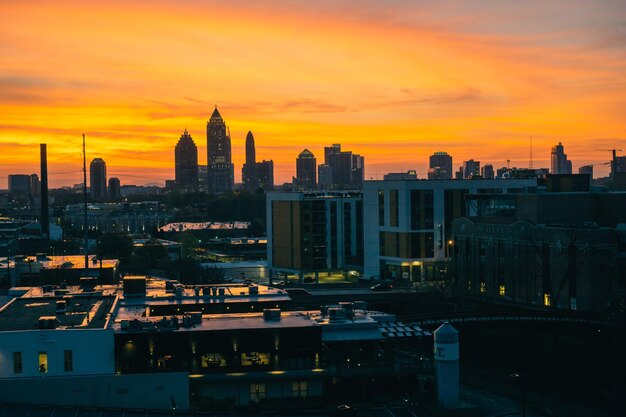
How Many Skyscrapers Are in Atlanta? A Local’s Guide to the Skyline
Atlanta’s skyline is one of the most recognizable in the Southeast, and if you live here or you’re visiting, it’s natural to wonder: how many skyscrapers does Atlanta actually have?
The Short Answer: How Many Skyscrapers Are in Atlanta?
Atlanta has dozens of skyscrapers, depending on where you draw the line between a “tall building” and a true “skyscraper.”
Using common high-rise and skyscraper definitions:
- Over 300 feet (roughly 25+ stories): Atlanta has around 40–50 buildings in this range or taller.
- Over 400 feet: You’ll find roughly 25–30 major towers.
- Over 700–1,000 feet: A small group of landmark towers dominates the skyline.
The exact count shifts over time as new towers are built and older buildings are renovated or reclassified, but Atlanta consistently ranks among the tallest skylines in the United States, especially in the Southeast.
If you’re looking for a simple takeaway:
Where Are Atlanta’s Skyscrapers Located?
Atlanta’s tallest buildings are heavily clustered in three main business districts:
1. Downtown Atlanta
Downtown is Atlanta’s historic core and home to some of the city’s tallest and most famous towers.
Key features:
- Dense cluster of office skyscrapers
- Close to State Farm Arena, Mercedes-Benz Stadium, and the Georgia World Congress Center
- Directly served by several MARTA rail stations (Five Points, Peachtree Center, etc.)
Notable skyscrapers here include:
- Bank of America Plaza – The tallest building in Atlanta and one of the tallest in the U.S.
- Westin Peachtree Plaza Hotel – Famous cylindrical tower with a rotating restaurant and dramatic views.
- 191 Peachtree Tower – Twin-column style façade, a classic piece of the skyline.
2. Midtown Atlanta
Midtown has seen rapid high-rise growth in recent years. It’s known for a mix of:
- Office towers
- Luxury residential high-rises
- Hotels and mixed-use developments
This area is walkable and tied to:
- Midtown and Arts Center MARTA stations
- Cultural institutions like the High Museum of Art and the Fox Theatre
You’ll find some of the city’s most modern skyscrapers here, and many of the new towers are turning Midtown into Atlanta’s fastest-growing vertical neighborhood.
3. Buckhead
Buckhead, in north Atlanta, is a major financial and upscale retail district with:
- Corporate towers
- High-end hotels
- Residential and mixed-use skyscrapers
It’s more spread out than Downtown and Midtown, but from Peachtree Road or GA-400 you can clearly see Buckhead’s cluster of tall buildings rising above the surrounding neighborhoods.
Atlanta’s Tallest Skyscrapers: A Quick Look
Here’s a simple overview table of some of Atlanta’s best-known skyscrapers. Heights are approximate and widely accepted as general reference points.
| Building Name | Approx. Height | Main Use | Primary District |
|---|---|---|---|
| Bank of America Plaza | ~1,023 ft | Office | Midtown/Downtown edge |
| SunTrust Plaza (now Truist) | ~871 ft | Office | Downtown |
| One Atlantic Center | ~820 ft | Office | Midtown |
| 191 Peachtree Tower | ~770 ft | Office | Downtown |
| Westin Peachtree Plaza | ~723 ft | Hotel | Downtown |
| Promenade II | ~691 ft | Office | Midtown |
| Four Seasons Hotel Atlanta | ~609 ft | Hotel/Res. | Midtown |
These are just a few of the most recognizable skyscrapers; many more towers in the 300–600 ft range fill out the skyline.
What Counts as a “Skyscraper” in Atlanta?
When people in Atlanta ask how many skyscrapers the city has, they’re usually thinking about tall, high-density towers that shape the skyline, not every mid-rise apartment building.
Common informal guidelines:
- High-rise: Often any building 10–12 stories or more
- Skyscraper: Frequently used for towers 25–30 stories or more, or roughly 300+ feet
Because of this, different sources may list slightly different numbers. For everyday purposes, most locals and visitors focus on the most prominent tall towers in Downtown, Midtown, and Buckhead instead of an exact, technical count.
How Atlanta’s Skyline Grew Over Time
Understanding how Atlanta ended up with so many skyscrapers helps make sense of the numbers.
Early Growth
- Atlanta started as a railroad hub, not a coastal port city, so its early downtown developed around transportation and commerce.
- Mid-20th century modernization brought some of the first significant high-rises to Downtown.
The Boom Years
- From the 1970s through the 1990s, Atlanta experienced major high-rise construction, especially:
- Leading up to the 1996 Olympic Games
- As national corporations established offices and headquarters here
This is when many of the signature skyscrapers that define today’s skyline were built.
Recent and Ongoing Development
- In the last 10–15 years, Midtown and Buckhead have seen:
- New office towers
- Numerous residential high-rises
- Mixed-use skyscrapers that combine living, working, dining, and shopping
As a result, while Downtown holds many of the classic towers, Midtown and Buckhead are driving much of the new vertical growth.
How Atlanta Compares to Other Cities
For residents and visitors, it’s helpful to know how Atlanta stacks up:
- Within the Southeast, Atlanta is often seen as having one of the largest, most impressive skylines, alongside cities like Miami.
- Nationally, while Atlanta doesn’t have as many super-tall towers as New York or Chicago, its tallest buildings rival or exceed those in many other major U.S. metros.
- Because the city is spread out and largely built around car travel, the impact of its skyscrapers can feel especially dramatic when you approach by highway or MARTA.
Seeing Atlanta’s Skyscrapers Up Close
If you’re in Atlanta and want to experience the skyscrapers rather than just read about them, there are several practical ways to do it.
Best Spots to View the Skyline
Jackson Street Bridge (near Old Fourth Ward)
One of the most popular skyline-view spots, especially at sunset and at night.Freedom Parkway Overlook
Offers a broad, postcard-style view of the skyline.Westin Peachtree Plaza’s upper floors
If you’re staying or dining there, you’ll get a panoramic look over Downtown and beyond.Rooftop bars and restaurants in Midtown or Buckhead
These often give a closer, more immersive perspective of the towers around you.
Exploring by Transit
Because parking and driving in skyscraper-heavy areas can be congested, many locals and visitors choose MARTA:
- Downtown stations: Five Points, Peachtree Center, Georgia State
- Midtown stations: North Avenue, Midtown, Arts Center
- Buckhead stations: Buckhead, Lenox, Lindbergh Center
Riding MARTA through these areas lets you see clusters of towers from multiple angles without dealing with traffic and parking.
Why Skyscrapers Matter to People in Atlanta
For someone living in or visiting Atlanta, skyscrapers aren’t just background scenery; they affect:
- Where you work: Many of Atlanta’s largest employers and regional offices are headquartered in high-rise towers.
- How you commute: Skyscraper clusters often line major transit corridors and influence traffic patterns.
- Where you stay: Visitors frequently book hotels in Downtown, Midtown, or Buckhead high-rises for walkability and views.
- City identity: The skyline is part of Atlanta’s brand—you see it on sports broadcasts, tourism materials, and local artwork.
So when you ask “How many skyscrapers are in Atlanta?” you’re really asking about how big, dense, and vertical the city has become—and how that shapes everyday life here.
If You Want Exact or Updated Counts
If you’re interested in a precise, up-to-date number (for a project, school report, or personal research), the best approach is to:
Define your cut-off
Decide whether you’re counting:- Over 10 stories?
- Over 300 feet?
- Only office towers, or also hotels and residential high-rises?
Check building databases and city resources
Many architecture and real-estate databases track:- Building heights
- Uses (office, residential, hotel)
- Year built and status (completed, under construction, proposed)
Compare Downtown, Midtown, and Buckhead separately
Breaking it down by area makes it easier to understand where the bulk of the skyscrapers are and how each district contributes to the overall count.
In practical terms, if you’re in Atlanta or planning a visit, you can safely think of the city as having several dozen true skyscrapers, anchored by a small group of very tall, iconic towers. Most of them are concentrated in Downtown, Midtown, and Buckhead, and together they form the Atlanta skyline you see on postcards, TV, and from the highway as you drive into the city.