
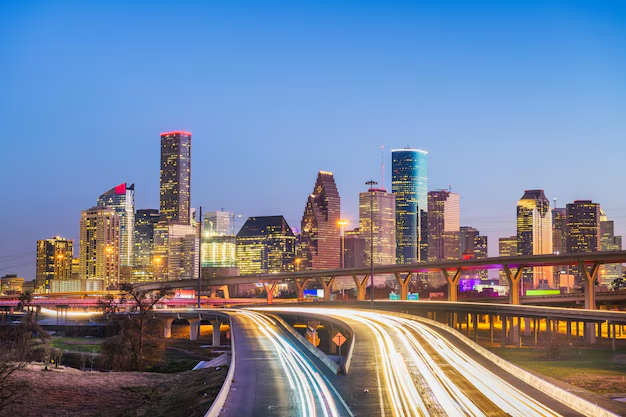
Is Atlanta Bigger Than Chicago? A Local’s Guide to How the Two Cities Really Compare
If you live in Atlanta or you’re thinking about moving here, it’s natural to wonder how it stacks up against a long-established giant like Chicago. People often ask, “Is Atlanta bigger than Chicago?”—but the answer depends on what kind of “bigger” you mean.
From city limits population, Chicago is clearly larger.
From metro area growth, influence, and footprint, Atlanta feels a lot bigger than many visitors expect.
Below is a clear breakdown, tailored specifically to what an Atlanta resident, visitor, or newcomer would want to know.
Quick Answer: Is Atlanta Bigger Than Chicago?
If you’re talking about city population and size within city limits:
No – Chicago is bigger than Atlanta.
If you’re talking about overall metro region influence and growth:
Atlanta’s metro area is one of the largest and fastest-growing in the country and is often mentioned in the same breath as Chicago when people talk about major U.S. cities.
Simple Comparison at a Glance
| Measure | Atlanta (City) | Chicago (City) |
|---|---|---|
| City population (approximate) | Hundreds of thousands | Several million |
| Metro area population (approximate) | Several million | Several million (larger than Atlanta) |
| Land area (city limits) | Smaller than Chicago | Larger than Atlanta |
| National perception | Major Sun Belt hub, fast-growing | Long-established “big city” |
Figures are rounded and generalized; exact numbers change over time, but the overall relationship stays the same: Chicago’s city is larger, Chicago’s metro is also larger, and Atlanta is a rapidly growing major metro.
Atlanta vs. Chicago by City Population
When people say, “Is Atlanta bigger than Chicago?” they often mean population inside the city limits.
- Chicago is one of the largest cities in the United States by population.
- Atlanta—the City of Atlanta itself—is much smaller in population than Chicago.
Even though Atlanta is the center of a huge region, the official city boundaries are relatively compact. A big part of Atlanta’s population lives in surrounding cities and counties, not within Atlanta city limits.
So if you’re comparing:
- City of Atlanta vs. City of Chicago
→ Chicago wins in population and physical size.
Metro Area: Where Atlanta Starts to Feel Much Bigger
For people who live in Metro Atlanta, the size question feels very different. When you think of everything that’s “Atlanta” in everyday life—the traffic, job market, airport, suburbs, and regional culture—you’re really thinking about the Atlanta metropolitan area, not just the city.
What Counts as “Metro Atlanta”?
The Atlanta metro area generally includes:
- The City of Atlanta
- Surrounding counties such as Fulton, DeKalb, Cobb, Gwinnett, Clayton, and many more
- Suburban cities like Sandy Springs, Marietta, Decatur, Roswell, Alpharetta, College Park, East Point, and others
This is the “Atlanta” people mention when they talk about:
- Hartsfield–Jackson Atlanta International Airport
- Major employers clustered along Perimeter Center, Midtown, Downtown, Buckhead
- Sports teams like the Atlanta Falcons, Atlanta Hawks, and Atlanta Braves (who play in nearby Cobb County)
How That Compares to Chicago’s Metro
Chicago also has a massive metro region, including parts of:
- Illinois (like Cook, DuPage, Lake, and Will Counties)
- Indiana and Wisconsin
Overall, Chicago’s metro area is still larger than Atlanta’s metro area in population. But the gap is not as dramatic as the gap between the two cities strictly by city limits.
In practical terms, both feel like large urban regions with:
- Extensive freeways
- Dense job centers
- Multiple suburban cities that function as part of a single economic area
Land Area: Which City Covers More Ground?
If you’re asking whether Atlanta spreads out more than Chicago within official city boundaries, Chicago again is larger.
However, if you live in Metro Atlanta, you know the region spreads out for dozens of miles in every direction. Many residents commute from:
- Gwinnett County to Midtown
- Cobb County to Downtown
- Henry, Fayette, or Cherokee Counties into the core city
So:
- Legally defined city area → Chicago is bigger.
- Lived experience of regional sprawl → Metro Atlanta feels extremely large, especially with traffic and commuting times.
Why Atlanta Feels “Big” Even If It’s Smaller on Paper
Even though Chicago’s numbers are higher, Atlanta often feels like one of the biggest cities in the country to people who live here or visit. That’s because of a few key factors:
1. The Airport
Hartsfield–Jackson Atlanta International Airport (ATL) is routinely ranked among the busiest airports in the world by passenger volume. For many travelers, “going through Atlanta” is simply part of flying within the U.S.
- If you live here, you know that ATL:
- Connects Atlanta to almost every major city in the country
- Helps support a large number of hotel, transportation, and logistics jobs
- Makes Atlanta feel like an international gateway, not just a regional city
2. Corporate and Economic Presence
Atlanta is home to or closely associated with major corporate headquarters and major regional offices. This creates:
- A large white-collar job market concentrated in areas like Midtown, Downtown, Buckhead, and the Perimeter
- Strong demand for housing in neighborhoods like Virginia-Highland, Old Fourth Ward, Inman Park, and nearby suburbs
In everyday life, this means lots of people move to Atlanta from all over the country—sometimes directly comparing it to Chicago, New York, Dallas, and other big hubs.
3. Cultural and Media Influence
Atlanta has a strong presence in:
- Music and entertainment (especially hip-hop, R&B, and film production)
- Television and digital media
- National conversations around civil rights history, with institutions like:
- The Martin Luther King Jr. National Historical Park
- The National Center for Civil and Human Rights in Downtown Atlanta
This cultural significance can make Atlanta feel like a much larger player than its city population alone would suggest.
For Visitors: How “Big” Atlanta Feels Compared to Chicago on the Ground
If you’ve visited Chicago and now you’re coming to Atlanta, here’s what many people notice:
Density and Skyline
- Chicago: Very dense downtown and lakeshore areas, tall skyscrapers clustered close together.
- Atlanta: Three major skyline clusters—Downtown, Midtown, Buckhead—with more space between them and more trees and neighborhoods in between.
For a visitor in Atlanta:
- You may drive or ride MARTA through stretches of trees and low-rise neighborhoods between skyline clusters, which can make Atlanta feel spread out rather than dense.
Getting Around
- Chicago has an extensive rail transit system (the “L”) reaching many neighborhoods.
- Atlanta’s MARTA rail lines are more limited in coverage but are still valuable for:
- Going between Airport–Downtown–Midtown–Buckhead–Perimeter
- Reaching major event venues like State Farm Arena and Mercedes-Benz Stadium
In Atlanta, you’ll likely:
- Rely more on cars, rideshares, or buses outside the core MARTA rail corridors.
- Experience a lot of driving between destinations, which makes the city and suburbs feel large and spread out.
For Residents: What “Size” Means for Daily Life in Atlanta
Even if Chicago is technically bigger, what matters to most Atlantans is how large and complex the region feels day-to-day.
Commuting and Traffic
Metro Atlanta’s size really shows up in traffic patterns:
- Long commutes from:
- Gwinnett County into Midtown or Buckhead
- Cobb County into Downtown
- South Fulton or Clayton County to perimeter job centers
- Reliance on interstates like:
- I-285 (the Perimeter)
- I-75, I-85, I-20, GA-400
For many people, “how big Atlanta is” translates directly to how long it takes to get across town.
Neighborhood Variety
Atlanta’s metro size also shows in its range of communities:
- Intown neighborhoods like Grant Park, Kirkwood, West End, Cabbagetown
- Close-in suburbs like Smyrna, Decatur, Brookhaven, Chamblee
- Outer suburbs and exurbs in Cherokee, Henry, Paulding, and Coweta Counties
Compared to Chicago, where many neighborhoods are packed into a single large city, Atlanta’s variety is spread across multiple cities and counties that all function as part of “Atlanta” in everyday language.
Why the Answer Matters for Anyone Considering a Move to Atlanta
If you’re comparing moving to Atlanta vs. Chicago, understanding “bigger” helps you picture what daily life could look like.
Housing and Neighborhood Feel
- Chicago: Many dense neighborhoods within city limits, lots of multiunit buildings, classic urban blocks.
- Atlanta:
- More single-family homes and tree-lined streets, even not far from Downtown.
- Many people choose where to live based on highway access and commute patterns more than on detailed city vs. suburb borders.
Perception of size plays into:
- How people choose schools (city vs. suburban districts)
- How they think about property taxes (which vary by county)
- How strongly they identify with “Atlanta” even if they technically live in a nearby city
Job Market and Opportunities
Even though Chicago’s metro is larger overall:
- Atlanta’s role as a regional hub makes it feel like a “big opportunity” city:
- Corporate headquarters and regional offices
- Logistics and transportation tied to the airport
- Growing tech and creative sectors in Midtown and West Midtown
So while Chicago is bigger on paper, plenty of people see Atlanta as a national-scale city for careers, not just a local or regional destination.
How to Think About “Atlanta vs. Chicago” If You Live Here
If you’re an Atlantan trying to describe your city to someone from Chicago (or anywhere else), a fair, simple way to put it is:
- City size: “Chicago is a bigger city by population and land area.”
- Metro size and role: “Atlanta is one of the biggest and most important metro areas in the South, with a large and growing regional footprint.”
- Everyday feel: “Atlanta feels more spread out, less dense in many areas, but extremely busy and connected because of the airport, highways, and job centers.”
That framing is accurate, easy to understand, and matches what most residents experience.
Key Takeaways for Atlanta Residents and Visitors
Is Atlanta bigger than Chicago by city population?
No. Chicago has a significantly larger city population and land area within its official borders.Is Metro Atlanta a major region comparable to big metros like Chicago’s?
Yes. While Chicago’s metro is larger, Atlanta’s metro is one of the largest in the U.S. and plays an outsized role in the Southeast and nationwide.What will you feel on the ground in Atlanta?
A large, spread-out, fast-growing metro with major traffic, big job centers, and an airport that connects Atlanta to practically everywhere.
So, on paper, Chicago is bigger—but if you live in Atlanta, your everyday world is still part of a huge and influential metropolitan area that many people see as one of the country’s most important urban hubs.