
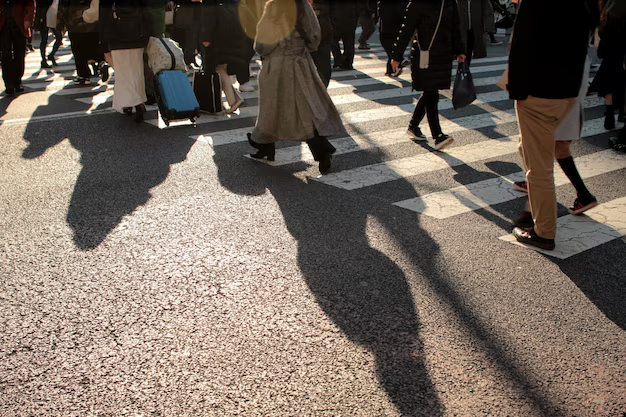
Is Atlanta Walkable? A Local Guide to Getting Around on Foot
Atlanta’s reputation is built on cars and highways, so it’s natural to wonder: is Atlanta walkable?
The honest answer: some parts of Atlanta are very walkable, others are not. If you plan carefully and stick to the right neighborhoods, you can absolutely live, work, or visit here and enjoy a lot on foot—often with help from MARTA trains, buses, and the Atlanta Streetcar. But you can’t assume the whole city is easy to navigate without a car.
Below is a practical, Atlanta-specific breakdown of where you can walk, where it’s tricky, and how to make the most of walking in the city.
How Walkable Is Atlanta Overall?
Atlanta is a spread-out, car-oriented city with pockets of strong walkability. That means:
- Inside the core intown neighborhoods, you’ll find sidewalks, mixed-use developments, and easy access to shops, restaurants, and parks.
- Outside the core, especially in suburban-style areas, you’ll often see:
- Wide roads and fast-moving traffic
- Limited sidewalks or gaps in sidewalk networks
- Big distances between homes, stores, and transit
If you’re visiting or relocating and care about walking, it’s important to choose your neighborhood carefully and understand how walking links with MARTA transit and the Atlanta BeltLine.
Most Walkable Neighborhoods in Atlanta
These areas are commonly considered among Atlanta’s most walkable for daily life, errands, and going out, especially if you combine walking with MARTA.
Midtown
Midtown is one of Atlanta’s most walkable districts:
- Dense mix of apartments, offices, shops, and restaurants
- Sidewalks on most streets, lots of crosswalks and signals
- Easy access to MARTA rail (Arts Center, Midtown, and North Avenue stations)
- Walkable to Piedmont Park, the Atlanta BeltLine Eastside Trail, and cultural spots like the High Museum of Art
If you want a “park the car and leave it” lifestyle, Midtown is one of your best bets.
Downtown
Downtown Atlanta is walkable during the day, especially for:
- Business and government offices
- Tourist attractions like Georgia Aquarium, World of Coca-Cola, Centennial Olympic Park, and State Farm Arena
- MARTA rail stations (Five Points, Peachtree Center, Dome/GWCC, and others)
- The Atlanta Streetcar, which connects parts of Downtown and the Sweet Auburn area
Downtown walkability can feel more business-oriented and is busiest on weekdays and during events.
Inman Park & Old Fourth Ward
These connected intown neighborhoods are heavily used by walkers and cyclists:
- Direct access to the Atlanta BeltLine Eastside Trail
- Short walks to restaurants and bars along Highland Avenue, North Highland Avenue, Edgewood Avenue, and Auburn Avenue
- Near Krog Street Market and Ponce City Market, both popular mixed-use hubs
- Side streets are generally calmer and residential, with sidewalks
These areas are great if you want neighborhood charm plus BeltLine access.
Virginia-Highland, Poncey-Highland & Morningside
These neighborhoods offer:
- Tree-lined streets with sidewalks
- Small commercial clusters with restaurants, boutiques, and services
- Easy walking access to Piedmont Park and, from some sections, the BeltLine
They are very walkable within the neighborhood, but you may rely on a car or transit for certain trips.
West Midtown / Westside
This area has transformed from industrial to a walkable entertainment and dining district:
- Clusters of restaurants, breweries, and shops around Howell Mill Road and 14th Street
- Increasingly more sidewalks, crosswalks, and multi-use paths
- Connections to the future Atlanta BeltLine Westside Trail expansion
It’s more walkable inside the core district than in the surrounding blocks, which can still feel car-heavy.
Where Atlanta Is Less Walkable
Even within the city limits, large areas are not convenient or comfortable for walking:
- Suburban-style corridors like parts of Buford Highway, Roswell Road, and Cobb Parkway feature:
- Wide, busy roads
- Long distances between crosswalks
- Strip malls and parking lots instead of connected street grids
- Hilly, residential-only areas in some parts of Buckhead, southwest Atlanta, or far southeast Atlanta may have:
- Narrow or missing sidewalks
- Steep grades that make walking strenuous for some people
- Few nearby shops or services
Walking for exercise can still work in many of these areas, but walking as your main mode of transportation can be difficult.
Walkability vs. the Atlanta BeltLine
The Atlanta BeltLine is a major reason many people experience Atlanta as more walkable than they expect.
What the BeltLine Does for Walkability
The BeltLine is a network of multi-use trails (for walking, jogging, biking, and rolling) that connect many intown neighborhoods. It:
- Offers a traffic-free way to move between neighborhoods
- Links to parks, playgrounds, and outdoor spaces
- Connects to commercial nodes like Ponce City Market, Krog Street Market, and multiple dining and shopping clusters
- Makes it easier to live in one neighborhood and walk to another for errands or outings
Key BeltLine Segments for Walking
- Eastside Trail: Runs through Inman Park, Old Fourth Ward, Poncey-Highland, and near Virginia-Highland and Midtown. This is the most heavily used trail and a major walking and biking corridor.
- Westside Trail: Connects West End, Adair Park, and surrounding areas, with improving access to restaurants, breweries, and new development.
- Northside & Southside segments: Portions are open and expanding, but are less continuous than the Eastside Trail.
For many residents, “Is Atlanta walkable?” becomes “Is my home near the BeltLine?” If you are near a completed BeltLine segment, your functional walkability usually goes up significantly.
How MARTA and Transit Affect Walkability
Atlanta’s walkability improves a lot if you combine walking with MARTA rail, buses, and the Atlanta Streetcar.
MARTA Rail
MARTA rail stations often act as walkable anchors. Areas around these stations—especially on the Red and Gold lines passing through Midtown and Downtown—tend to have:
- Higher-density housing
- Greater sidewalks and crosswalks
- More nearby services and shops
Key intown stations for walkable living and visiting include:
- Midtown, Arts Center, North Avenue – Midtown area
- Peachtree Center, Five Points, GWCC/Dome/CNN – Downtown
- Inman Park/Reynoldstown, King Memorial – Near Old Fourth Ward, Inman Park, and Edgewood/Auburn corridors
If you’re choosing a place to stay or live, looking within a short walk of a MARTA station can dramatically increase your practical walkability.
Atlanta Streetcar
The Atlanta Streetcar operates in a loop around parts of Downtown and the Sweet Auburn district. While limited in coverage, it:
- Helps bridge distances that might feel too long to walk repeatedly
- Connects to attractions and historic sites in the core city
It’s not a full solution but can make Downtown walking more manageable.
Day-to-Day Life Without a Car in Atlanta
Walking only is challenging for most people in Atlanta, but a mix of walking + MARTA + rideshare or occasional car use can be realistic in certain areas.
Realistic Car-Light or Car-Free Spots
You are more likely to manage a car-light or car-free lifestyle if you live in:
- Midtown
- Downtown
- Inman Park / Old Fourth Ward
- Parts of Virginia-Highland, Poncey-Highland, and West End (especially near the BeltLine and MARTA stations)
In these areas, you can often walk to:
- Grocery stores or small markets
- Restaurants, cafes, and bars
- Parks and recreation areas
- Basic services (pharmacies, dry cleaners, gyms)
You may still need a rideshare, taxi, or occasional rental for big-box shopping, medical appointments, or trips outside the core.
Less Practical for Car-Free Living
Neighborhoods that are:
- Far from MARTA rail
- Not connected to a BeltLine trail or multi-use path
- Designed around large arterial roads
are much harder to navigate daily without a vehicle. Walking may still be pleasant in residential pockets, but reaching jobs, schools, and services solely on foot can be difficult.
Walking Safety and Comfort in Atlanta
“Walkable” is not only about distance—it’s also about safety, comfort, and accessibility.
Common Experiences
Residents commonly notice:
- Well-maintained sidewalks in newer, dense developments and along major intown streets
- Older or inconsistent sidewalks in some neighborhoods, with cracks, gaps, or obstructions
- Busy intersections where crossing times feel short or turning vehicles require extra attention
- Significant heat and humidity in summer that can make longer walks uncomfortable, especially midday
📝 Tip: Many locals plan errands and walks for early morning or late evening in summer and carry water, especially when using the BeltLine.
Accessibility Considerations
If you use a wheelchair, walker, stroller, or have mobility limitations, you may want to:
- Focus on Midtown, Downtown, and newer mixed-use districts, which typically have better curb ramps and smoother sidewalks
- Use parks and the BeltLine, which are generally designed for multi-use access
- Check your exact route in advance, as steep hills and incomplete sidewalks can appear unexpectedly in older parts of town
Quick Comparison: More Walkable vs. Less Walkable Atlanta Areas
| Area Type | What You’ll Typically Find | How Walkable It Feels |
|---|---|---|
| Midtown / Downtown Core | Dense, mixed-use, transit-rich, many sidewalks | High, car optional for some |
| BeltLine-Adjacent Neighborhoods | Trails, parks, growing retail, decent sidewalks | Moderate to High |
| Intown Residential (Va-Hi, O4W) | Sidewalks, local retail clusters, older street grid | Moderate, car helpful |
| Transit-Adjacent Outer Areas | Some sidewalks near stations, less dense overall | Variable, depends on block |
| Suburban-Style Corridors | Wide roads, strip malls, limited crossings | Low, car usually necessary |
Helpful Local Resources for Walkers
These Atlanta-based offices and agencies can be helpful if you want to understand or improve walking options near you:
City of Atlanta – Department of Transportation (ATLDOT)
- Handles city streets, sidewalks, and many pedestrian improvements
- City Hall: 55 Trinity Ave SW, Atlanta, GA 30303
- Main City information line: 404-330-6000
Atlanta BeltLine, Inc.
- Oversees planning and development of BeltLine trails and related projects
- Main office: 100 Peachtree St NW, Suite 2300, Atlanta, GA 30303
- Main phone: 404-477-3003
MARTA (Metropolitan Atlanta Rapid Transit Authority)
- Rail, bus, and paratransit services that often pair with walking
- Headquarters: 2424 Piedmont Rd NE, Atlanta, GA 30324
- Customer information: 404-848-5000
Atlanta Police Department – Non-Emergency Line
- For non-urgent safety issues you may encounter while walking
- Non-emergency: 404-658-6666
- Emergency: 911
These organizations can offer maps, project updates, and guidance about current or planned walking infrastructure.
So, Is Atlanta Walkable?
Atlanta can be walkable—if you’re in the right place and use the right tools.
- In Midtown, Downtown, and BeltLine-adjacent neighborhoods, you can walk to a lot of what you need and want to do, especially with MARTA as backup.
- In many other parts of the city, walking is more suited to exercise or recreation than to everyday transportation.
If you are planning a move or a visit and walkability is important, focus on intown neighborhoods near MARTA stations and BeltLine trails, and treat walking as a partner to transit rather than a full replacement for other transportation.